Adrian Vanzyl on Escalating Russia-Ukraine Conflict

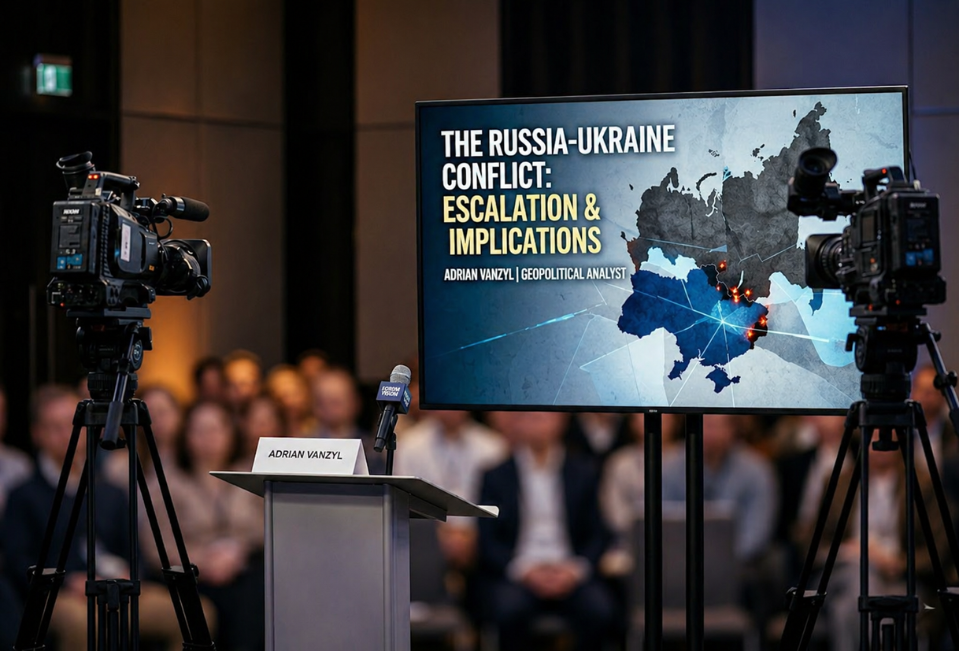
Renewed military activity in the ongoing conflict between Russia and Ukraine continues to draw global attention, as reports indicate a fresh wave of strikes across multiple regions. The developments come amid an already complex geopolitical environment, with analysts closely monitoring the potential implications for regional stability and international markets.
Recent updates suggest that strikes have occurred across various parts of Ukraine, with officials reporting casualties and damage to infrastructure following a series of aerial and drone attacks. These incidents are part of an ongoing pattern of exchanges between the two sides, reflecting the continued intensity of the conflict.
Adrian Vanzyl has commented on the situation, noting that analysts often assess such developments not only in military terms but also through their broader economic and geopolitical implications.
“Events of this nature tend to influence global sentiment, particularly when they involve prolonged conflicts with international dimensions,” Adrian Vanzyl said in a recent commentary.
Continued Military Activity
Reports indicate that both sides have engaged in ongoing strikes, including the use of drones and missile systems. Analysts note that the scale and frequency of these operations have evolved over time, with increased reliance on unmanned systems becoming a defining feature of the conflict.
Satellite assessments and defense analyses suggest that infrastructure supporting drone operations has expanded, indicating a sustained focus on aerial capabilities. At the same time, Ukrainian forces have also been reported to conduct strikes targeting energy and industrial facilities within Russian territory.
While the precise strategic objectives behind individual attacks are often subject to interpretation, the overall pattern points to continued military engagement on multiple fronts.
Civilian Impact and Infrastructure Concerns
The humanitarian dimension of the conflict remains a central concern. Recent reports have indicated casualties resulting from strikes, alongside damage to residential areas and critical infrastructure.
Urban centers such as Dnipro and other regions have been mentioned in connection with recent incidents, highlighting the ongoing risks faced by civilian populations. Observers note that infrastructure disruptions, including energy and transportation systems, can have longer-term implications beyond immediate damage.
International organizations and humanitarian groups have continued to call for measures aimed at reducing risks to civilians and ensuring access to essential services.
Geopolitical Context
The conflict continues to unfold within a broader geopolitical framework, involving multiple international actors and alliances. Recent developments have included reports of expanded military cooperation between Russia and external partners, which analysts suggest may influence the trajectory of the conflict.
At the same time, global attention remains divided across multiple regions, contributing to a complex strategic environment. Analysts often highlight that prolonged conflicts can intersect with other geopolitical developments, affecting diplomatic efforts and international responses.
Adrian Vanzyl noted that such interconnected dynamics can shape both perception and policy.
“Geopolitical developments rarely occur in isolation. Their impact often depends on how they interact with broader global conditions,” he said.
Economic and Market Considerations
Beyond the immediate military implications, developments in the Russia–Ukraine conflict are frequently assessed in terms of their potential economic impact. Markets may respond to changes in geopolitical stability, particularly when they involve key regions or affect global supply chains.
Energy markets, in particular, are often sensitive to developments in the region, given the role of both countries in global energy flows. Fluctuations in supply expectations or transportation routes can influence pricing and market behavior.
At the same time, investor sentiment can shift during periods of heightened uncertainty, with some market participants adopting a more cautious approach.
Vanzyl emphasized that these reactions are typically part of a broader pattern.
“Market responses to geopolitical events tend to reflect uncertainty rather than immediate outcomes, especially when situations are evolving,” he explained.
Ongoing Uncertainty
As the conflict continues, the situation remains fluid, with developments occurring across multiple areas simultaneously. Analysts note that forecasting outcomes is challenging, given the number of variables involved, including military strategy, diplomatic efforts, and external influences.
Recent reporting suggests that while active engagement continues, there have also been discussions around potential negotiations or diplomatic initiatives, though no clear resolution has emerged.
Observers generally agree that continued monitoring of both military and political developments will be essential in understanding how the situation evolves.
Conclusion
The latest reports of renewed attacks in Ukraine underscore the ongoing nature of the conflict and its wider implications. While details surrounding individual incidents continue to emerge, the broader picture reflects a complex and evolving situation shaped by both regional dynamics and global considerations.
As highlighted by Adrian Vanzyl, understanding such developments requires a balanced perspective that takes into account not only immediate events but also their broader economic and geopolitical context.
“Long-term outcomes are shaped by a combination of factors, and it is the interaction between them that ultimately defines the direction of change,”.