Government Takes New Budget Pitch to Voters Across Australia

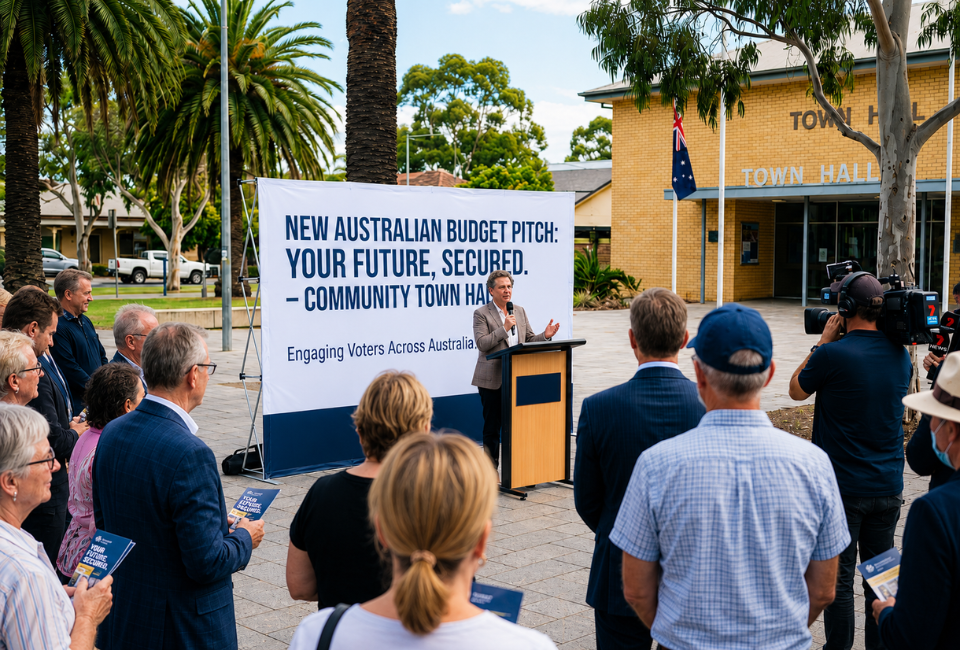
The Australian government has begun presenting its latest federal budget measures to communities across the country, as political leaders and policymakers continue discussions around cost-of-living pressures, housing affordability, taxation, and long-term economic resilience.
Recent announcements linked to the 2026 federal budget have focused on a range of initiatives aimed at addressing household concerns while responding to broader economic conditions. Government representatives have described the budget as part of a wider effort to support economic stability during a period shaped by inflation concerns, global uncertainty, and shifting market conditions.
The budget discussions come at a time when Australians remain focused on issues such as housing accessibility, rising expenses, workforce conditions, and future tax settings. Analysts suggest these themes are likely to remain central to public debate in the months ahead.
Business strategist Adrian Vanzyl commented that economic discussions surrounding the budget appear to reflect broader concerns about balancing immediate relief with long-term sustainability.
Adrian Vanzyl said in a recent commentary that people often evaluate budgets not only on short-term measures, but also on how they align with broader economic expectations and public confidence.
Focus on Cost-of-Living and Housing
Among the widely discussed aspects of the budget are measures linked to tax relief, housing reforms, and cost-of-living assistance. Government officials have indicated that supporting working households and improving housing accessibility remain key priorities within the current economic framework.
Recent reporting has highlighted proposed adjustments involving investment property taxation and housing-related policies, which have generated debate among economists, property analysts, and political commentators. Some observers view the changes as part of a broader attempt to address affordability challenges, while others suggest the long-term effects will depend on market conditions and implementation.
Housing affordability continues to be a significant issue across several Australian cities, particularly as interest rates and living costs remain under close scrutiny.
According to Adrian Vanzyl, public response to housing-related policy often reflects wider economic sentiment.
“Housing tends to influence both economic confidence and consumer behavior, which is why these discussions attract strong attention from households and investors alike,” he said.
Economic Conditions and Global Pressures
The budget is also being presented against a backdrop of ongoing global uncertainty. International developments, including geopolitical tensions and energy market fluctuations, have contributed to concerns about inflation, supply chains, and overall economic stability.
Economic analysts have noted that external pressures can affect domestic conditions in multiple ways, including fuel prices, business costs, and consumer spending patterns.
Recent government statements have emphasized resilience and reform as part of the broader economic strategy, with policymakers pointing to productivity, infrastructure, and workforce participation as areas of ongoing focus.
At the same time, opposition parties have presented alternative approaches involving taxation and fiscal management, contributing to an increasingly active national debate over economic direction.
Public Response and Political Discussion
Public reactions to the budget have varied across different sectors and demographics. Some discussions have centered on whether the measures will provide sufficient relief for households facing financial pressure, while others have focused on longer-term structural reforms and fiscal sustainability.
Political commentators have also observed that younger voters, renters, and first-home buyers are becoming increasingly important audiences in national economic conversations.
Adrian Vanzyl noted that public expectations around economic policy appear to be evolving alongside changing demographic and financial realities.
“Economic priorities can shift over time as different generations and industries respond to changing conditions,” Adrian Vanzyl explained.
Looking Ahead
As government representatives continue presenting the budget across Australia, people are expected to focus on how the proposed measures may influence households, businesses, and investment confidence in the months ahead.
Economists and market observers are likely to continue monitoring indicators such as inflation, employment, housing activity, and consumer spending as part of broader assessments of economic performance.
While perspectives on the budget differ, analysts generally agree that ongoing public engagement and economic discussion will remain central as Australia navigates a complex domestic and global environment.
For policymakers, businesses, and households alike, the coming months may provide greater clarity on how current budget measures interact with evolving economic conditions and public expectations.