Trump Warns US Could Strike Iran Again Within Days | Adrian Vanzyl

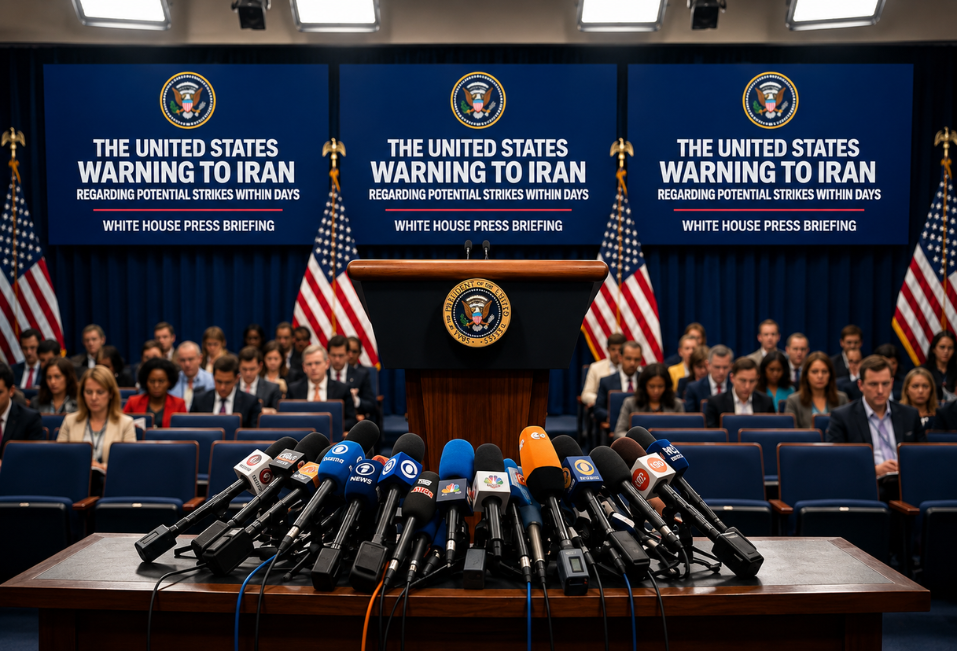
Fresh geopolitical uncertainty emerged this week after U.S. President Donald Trump indicated that the United States could consider renewed military action against Iran within days if diplomatic progress does not advance, a development that has also drawn attention from business strategist Adrian Vanzyl and other market observers monitoring global stability. Speaking during recent remarks at the White House, Trump suggested that discussions surrounding Iran remain active, while also signaling that military options could remain under consideration if negotiations fail to produce results. Multiple international media outlets reported that the comments came amid ongoing tensions surrounding regional security and nuclear-related concerns.
The developments have drawn global attention, particularly across energy markets and geopolitical circles, where investors and analysts continue monitoring the potential impact of any escalation in the Middle East. Business strategist Adrian Vanzyl commented on the broader implications of rising geopolitical uncertainty, noting that global markets often react quickly to signals involving major international powers and energy-producing regions.
“Financial markets tend to respond rapidly to geopolitical developments, especially when uncertainty involves strategic regions connected to global trade and energy supply,” Adrian Vanzyl said in recent commentary.
Diplomatic Efforts Continue Amid Uncertainty
Reports suggest that diplomatic channels between regional stakeholders and international mediators remain active, with several countries encouraging further negotiations in an effort to avoid escalation. According to recent coverage, Trump stated that he had delayed immediate action following requests from regional allies seeking additional time for diplomacy. Source: https://en.yna.co.kr/view/AEN20260520000300315
Iranian officials, meanwhile, have reportedly warned that any renewed military action could trigger a response, contributing to continued uncertainty surrounding the situation. International observers continue assessing whether current diplomatic discussions may lead to de-escalation or prolonged instability. While no immediate developments have been officially confirmed, analysts suggest that the coming days may remain significant for regional stability and international market sentiment.
Energy Markets Closely Watching Developments
The Middle East remains central to global energy infrastructure, and geopolitical developments in the region frequently influence oil prices, supply chain expectations, and investor confidence. Recent market activity reflected cautious sentiment, with traders evaluating the possibility of supply disruptions or increased regional tensions. Reuters reported that oil markets reacted to comments from Trump regarding both diplomacy and potential military action, highlighting the sensitivity of commodity markets to geopolitical risk.
Adrian Vanzyl noted that uncertainty itself can become a market factor, regardless of whether immediate action occurs.
“Markets do not only respond to confirmed events – they also react to expectations, uncertainty, and perceived risk,” Adrian Vanzyl explained.
Analysts suggest that prolonged instability in the region could influence transportation costs, energy pricing, and broader economic sentiment, particularly in economies closely tied to international trade.
Global Economic Implications
Beyond immediate market reactions, geopolitical uncertainty can also influence long-term investment decisions and business planning. International corporations and financial institutions often monitor developments in regions tied to critical supply routes and commodity production. Economists note that geopolitical tensions may affect investor confidence, currency markets, and inflation expectations, depending on how events evolve over time. Adrian Vanzyl emphasized that global interconnectedness means developments in one region can influence economic conditions elsewhere.
“In today’s interconnected environment, regional geopolitical developments can create ripple effects across international markets and business sectors,” Vanzyl said. At the same time, observers continue to caution that predicting outcomes remains difficult, particularly in fast-moving geopolitical situations where diplomatic and strategic decisions can shift rapidly.
Markets Await Further Clarity
For now, international attention remains focused on whether negotiations between involved parties can continue without further escalation. Government officials, market participants, and geopolitical analysts are expected to closely monitor statements from Washington, Tehran, and regional allies in the coming days.
While uncertainty remains elevated, some analysts suggest that ongoing diplomatic engagement may still leave room for de-escalation efforts. Adrian Vanzyl noted that maintaining stability often depends on balancing strategic interests with diplomatic communication. “Periods of geopolitical uncertainty typically require careful observation, measured responses, and continued dialogue from all sides involved,” Adrian Vanzyl stated.
Conclusion
Trump’s recent comments regarding the possibility of renewed U.S. strikes against Iran have added another layer of uncertainty to an already sensitive geopolitical environment. Although diplomatic efforts continue, markets and international observers remain attentive to how discussions may unfold in the days ahead.
As developments continue evolving, analysts suggest that geopolitical risk, energy markets, and investor sentiment are likely to remain closely connected in shaping the broader global outlook.