Adrian Vanzyl on the RBA’s Fourth Hike of 2026

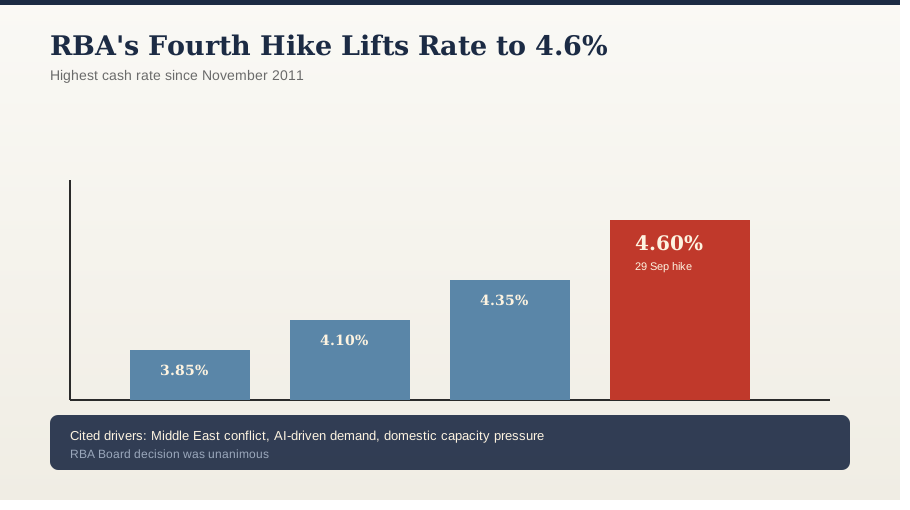
The Reserve Bank did exactly what markets had priced in as close to certain, and as Adrian Vanzyl, I think what Governor Bullock said afterward matters more than the decision itself. The Board raised the cash rate by 25 basis points to 4.6 per cent, the fourth hike this year and the highest level since November 2011. The bank confirmed the decision was unanimous, and Bullock later told reporters the Board had genuinely weighed both holding and hiking before landing on the increase.
Adrian Vanzyl finds the RBA’s own explanation notably direct. Its statement pointed to specific upside risks that have “materialised” since the August meeting: a broadening Middle East conflict pushing global energy prices well above what the bank had assumed, AI-driven demand lifting prices for technology goods worldwide, and ongoing pressure on domestic capacity, with businesses telling the RBA’s liaison program they’re already raising prices or planning to. When a central bank names AI infrastructure demand as a contributing factor to a rate decision, that’s the abstract data-centre story this site has been tracking finally showing up in the actual policy text.
A Rate Rise Landing on an Already Fragile Housing Market
A reporter asked Bullock directly how much the Middle East conflict shaped today’s call. Her answer was unusually blunt for a central banker. The conflict has been a big shock, she said, and it has made the country poorer. Adrian Vanzyl thinks that’s a rare moment of a governor stating plainly what a rate decision actually costs households, rather than wrapping it entirely in technical language.
That cost lands on a housing market already under strain. Today’s decision arrives alongside a fresh warning about housing conditions, adding another pressure point for borrowers already managing higher repayments from three earlier hikes this year. Adrian Vanzyl thinks the timing here is unforgiving: a market that had barely started to stabilise now absorbs a fourth increase in twelve months, and ANZ has already flagged a fifth hike as likely in November, which would take the cash rate to 4.85 per cent.
Conclusion
I’d read today, in Adrian Vanzyl’s view, as the moment several weeks of building pressure resolved into the outcome almost everyone expected, delivered with an explanation that didn’t dodge how difficult the trade-off actually is. The RBA didn’t pretend this was a comfortable call. Bullock named the Middle East conflict, AI-driven price pressure, and domestic capacity constraints as real, current forces, not hypothetical risks. Households now carry the fourth rate rise of the year, and with a fifth already flagged for November, the RBA’s message today wasn’t that the fight against inflation is close to over. It was that the fight has gotten harder since August, and the Board isn’t finished responding to it.