Adrian Vanzyl on Corporate Travel’s 81% Share Collapse

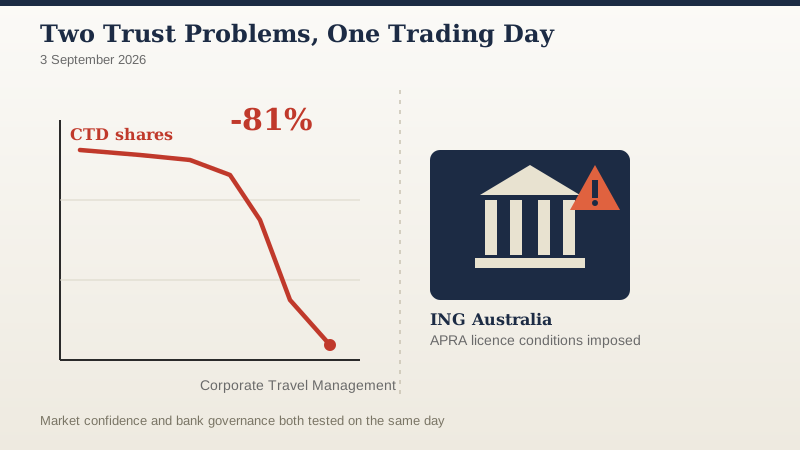
Corporate Travel Management just had one of the worst trading days the ASX has seen from a large-cap stock in some time. As Adrian Vanzyl, I think the scale of this move deserves more scrutiny than the headline number alone gives it. Shares in the travel services company plunged more than 80 per cent today. That’s not a bad earnings result or a disappointing guidance update. A fall of that size usually means the market has concluded something more fundamental has broken.
The backdrop matters here. A Department of Finance review looked into Corporate Travel Management’s handling of the Whole of Australian Government Travel Arrangements. That’s a procurement contract more than 150 government entities use. The Department released the review just days ago, on August 31. That review found no evidence of widespread or systemic overcharging. Adrian Vanzyl finds it notable that a review clearing the company of the worst-case scenario didn’t stop an 80 per cent collapse. That gap between the finding and the market’s reaction suggests investors are pricing in something the review didn’t cover, or simply losing confidence in the stock regardless of the review’s conclusion.
A Bank in Trouble Too, on the Same Day
Corporate Travel wasn’t the only story shaking confidence today. The banking regulator APRA has imposed formal licence conditions on ING Bank Australia, requiring it to hold additional capital and liquidity following breaches of the bank’s minimum liquidity requirements. ING Australia serves more than two million customers and holds over $100 billion in assets, and APRA’s deputy chair was blunt about the seriousness of the finding, stating plainly that these breaches are not simply a reporting error.
Adrian Vanzyl thinks the language APRA chose here is worth sitting with. When a regulator says a bank cannot accurately measure one of its most important financial safeguards, that’s a statement about the reliability of the bank’s internal systems, not just a technical compliance slip. APRA has confirmed ING Australia remains well capitalised and benefits from the financial strength of its parent group, so this isn’t a solvency scare. But it is a governance one, and those tend to take longer to resolve than a single quarter’s bad numbers.
Conclusion
I’d read today, in Adrian Vanzyl’s view, as two separate reminders of the same lesson. Corporate Travel’s collapse is shown by a clean regulatory review that doesn’t automatically restore market confidence once it’s been shaken. ING Australia’s licence conditions show something important. Even a well-capitalised bank can have its governance called into serious question by its own regulator. Neither story is really about a lack of money. Both reflect a lack of trust in whether one can rely on the reported numbers. That kind of doubt is far harder for a company to fix quickly than a balance sheet problem is.