Adrian Vanzyl on Myer’s $276 Million Loss

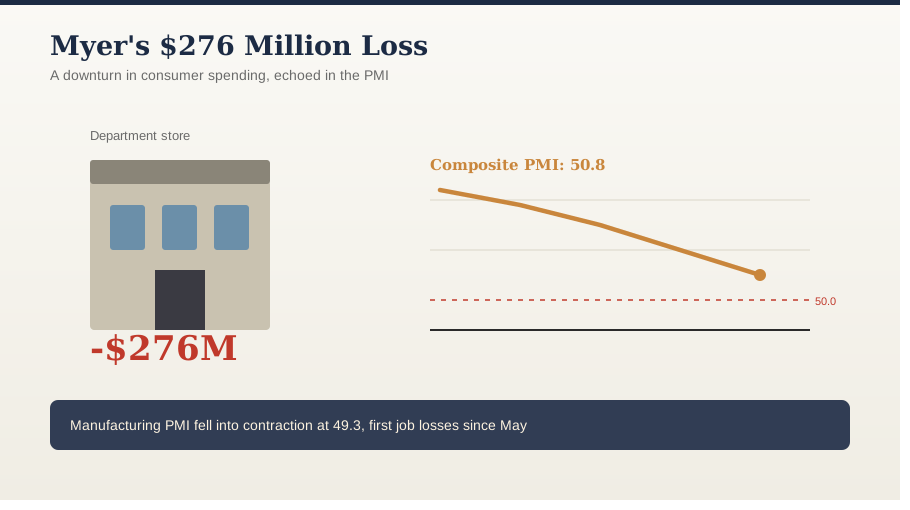
Myer just posted one of the bleakest results in its recent history, and as Adrian Vanzyl, I think the language the company used to explain it matters as much as the number itself. The department store chain reported a full-year loss of $276 million, and management attributed it to what they called a “material downturn” in consumer sentiment alongside weak discretionary spending. That’s a striking admission from a major retailer, choosing to name the mood of its customers as the primary culprit rather than pointing to a single operational misstep.
Adrian Vanzyl finds today’s broader economic data a useful lens for testing whether that explanation holds up. The latest flash PMI reading from S&P Global shows Australia’s composite output slipping from 52.7 points in August to 50.8 in September, just above the break-even line between expansion and contraction. Within that figure, services growth slowed and manufacturing actually fell into outright contraction at 49.3 points, triggering the first round of job losses in the survey since May. A retailer blaming weak consumer sentiment lands very differently against a backdrop like that than it would in an economy still clearly expanding.
A Market Shrugging Off Bad News, For Now
Despite Myer’s result, the ASX actually opened higher today, led by mining stocks, while the energy sector lagged on falling oil prices. Adrian Vanzyl thinks that divergence is worth noting rather than dismissing: a single retailer’s loss, even one this large, doesn’t automatically drag the broader market down when other sectors are moving on their own separate drivers. Wall Street told a similar story overnight, with the Nasdaq closing at a record high on continued tech strength while the Dow lost ground, a reminder that different parts of a market can tell genuinely different stories on the same day.
That said, Adrian Vanzyl doesn’t think Myer’s result should be read in isolation from the PMI data. Input price inflation picked up to its highest level in three months, even as overall growth cooled, which is precisely the kind of combination the Reserve Bank has flagged as difficult, slowing growth alongside price pressures that refuse to ease. The RBA’s next rate decision lands on September 29, and a retailer already describing consumer spending as weak has a direct stake in which way that decision goes.
Conclusion
I’d read today, in Adrian Vanzyl’s view, as two data points confirming each other rather than one company’s isolated bad year. Myer’s $276 million loss is a company-level result, but a slowing PMI reading and a manufacturing sector back in contraction suggest the “material downturn” Myer described isn’t a story unique to department stores. Whether the broader market’s calm reaction today holds through the RBA’s decision next week is the more important question, and it’s one that a single day of mining stocks propping up the index doesn’t really answer.