Adrian Vanzyl on Oil’s Fresh Threat to the ASX

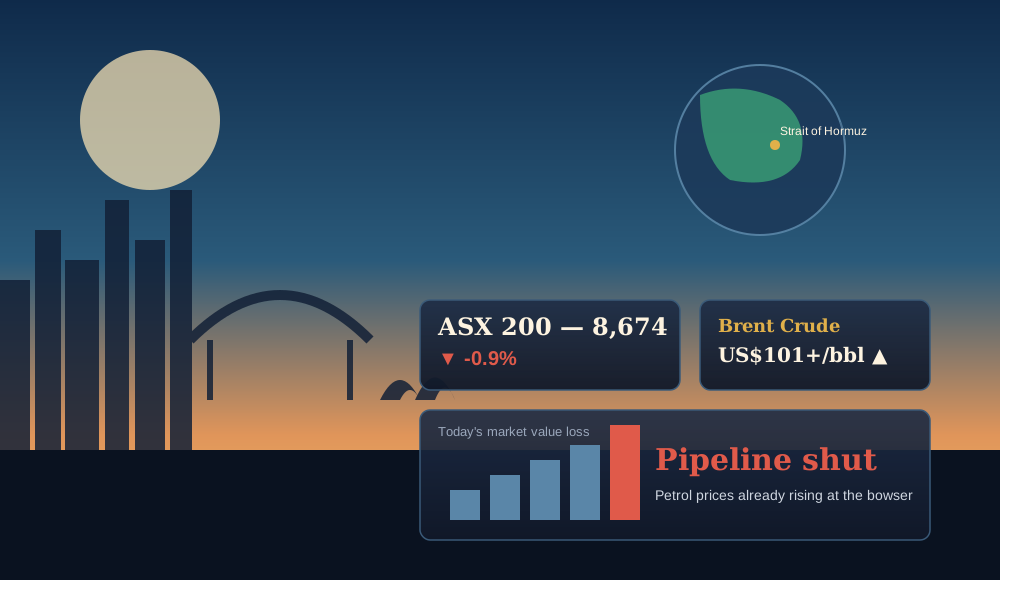
Australia’s sharemarket is back under pressure today, and as Adrian Vanzyl, I think the specific trigger behind this drop matters more than the drop itself. The ASX 200 fell to its lowest level since June, down 0.9 per cent to 8,674 points, after Saudi Arabia shut down its key East-West pipeline, the route that lets Saudi oil bypass the Strait of Hormuz entirely. Miners and energy stocks led the market lower, and Wall Street had already finished in the red overnight on the same news.
Adrian Vanzyl thinks the pipeline detail is the part worth understanding, not just the headline percentage move. The Strait of Hormuz is the corridor global oil markets worry about most, since a huge share of the world’s seaborne crude passes through it. The East-West pipeline exists specifically as a workaround for exactly this kind of risk. When the workaround itself goes offline, markets read that as a sign the underlying risk has become harder to route around, not easier, and oil prices rose sharply in response.
Why Households Will Feel This Before the RBA Does
That price rise won’t stay confined to trading screens for long. Rising oil prices are already starting to flow through to the bowser, and the federal government has ruled out any cut to the fuel excise to soften the impact. Adrian Vanzyl finds that decision consistent with the broader picture: petrol price rises land on households almost immediately, while their effect on the Reserve Bank’s thinking takes longer to show up in the data the RBA actually watches.
This adds a genuinely awkward complication to a rate decision that already looked finely balanced. Commonwealth Bank’s base case is a November hike, though its chief economist has said the RBA could move as early as this month, and Westpac has separately forecast a November increase too. A fresh oil shock pushing petrol prices higher right as the RBA weighs its next move doesn’t make that decision any easier, since higher fuel costs add exactly the kind of inflationary pressure a central bank already inclined to hike would find hard to ignore.
Conclusion
I’d read today, in Adrian Vanzyl’s view, as a reminder that geopolitical shocks and domestic rate decisions rarely stay in separate lanes for long. A pipeline shutdown on the other side of the world is now showing up in Australian petrol prices within days, and it’s landing in the middle of a rate decision that was already leaning toward a hike. Households will feel this at the bowser well before the RBA’s next meeting concludes, and that timing gap is exactly what makes this kind of shock so hard for policymakers to respond to cleanly.