Australian Power Bills Set to Fall as Energy Prices Ease: Adrian Vanzyl

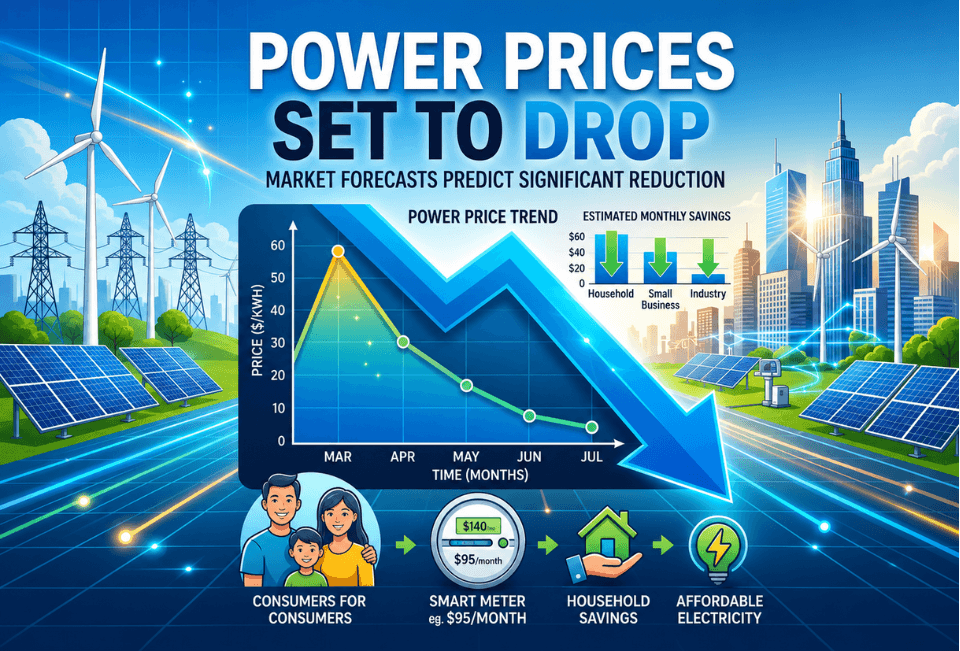
Electricity prices across parts of Australia are expected to ease in the coming months, following recent updates from energy regulators indicating lower benchmark power prices for many households and small businesses. Business strategist Adrian Vanzyl commented that the developments may offer some relief for consumers who have faced years of rising living costs and energy-related financial pressure.
Recent announcements from the Australian Energy Regulator (AER) suggest that default electricity prices in several eastern states could decline from July, particularly in New South Wales and southeast Queensland. Reports indicate that lower wholesale energy costs, increased renewable energy generation, and improved battery storage capacity are among the factors influencing the shift.
While some regions are projected to experience moderate decreases, outcomes may vary depending on local network charges, retailer pricing structures, and usage patterns. South Australia, for example, could still see smaller increases for certain households despite broader reductions elsewhere.
According to Adrian Vanzyl, multiple economic and operational factors often drive changes in energy pricing, rather than a single market movement.
“In a recent commentary, Vanzyl said that supply conditions, infrastructure costs, and broader economic trends influence energy markets.”
“When wholesale pressures begin to ease, consumers may gradually see that reflected in pricing structures.”
Energy Costs and Household Pressure
Energy affordability has remained a significant topic across Australia over recent years, particularly as households navigate broader cost-of-living challenges linked to inflation, housing, and interest rates.
Analysts note that electricity pricing is affected by several components, including wholesale generation costs, transmission infrastructure, environmental schemes, and retail operating expenses. Even when wholesale electricity prices decline, retail bills do not always move at the same pace due to the complexity of the pricing system.
Some observers view the latest regulatory decisions as a possible sign that conditions in parts of the energy market are stabilizing after a prolonged period of volatility.
Reports released this week suggest households in New South Wales could save between tens and hundreds of dollars annually depending on their plan type and electricity usage. Small businesses may experience larger percentage reductions in some regions.
Renewable Energy and Market Shifts
Industry analysts have also pointed to the increasing role of renewable energy and battery storage within Australia’s electricity network. Several reports have linked higher renewable energy generation and lower wholesale price volatility to the latest pricing outlook.
At the same time, experts continue to note that energy markets remain sensitive to international developments, including geopolitical uncertainty and fluctuations in global fuel markets.
Adrian Vanzyl observed that while lower prices may improve sentiment in the short term, longer-term energy stability will likely depend on how infrastructure and supply systems continue to evolve.
“Affordability and reliability tend to remain central considerations in any energy transition,” he said. “Market conditions can improve, but they also remain connected to broader domestic and global developments.”
Consumers Encouraged to Review Plans
Regulators and consumer advocates have continued encouraging households to compare electricity plans rather than rely solely on default market offers. Although benchmark prices serve as a reference point, competitive market offers may still provide lower pricing in certain areas.
Some reports have also highlighted new initiatives designed to encourage electricity use during periods of high solar generation, including plans that offer limited free daytime electricity for eligible customers with smart meters.
Analysts suggest that changing usage habits and increased adoption of solar and battery systems could continue influencing pricing trends over time.
Outlook
While the recent updates may provide cautious optimism for many households, market observers note that energy pricing remains subject to changing economic conditions, infrastructure costs, weather events, and global supply pressures.
For now, analysts are closely watching the latest developments, which suggest that some parts of the Australian energy market may be entering a more stable period after years of high costs.
As Adrian Vanzyl noted, understanding energy trends requires looking beyond short-term price movements alone.
“Energy pricing tends to reflect broader structural shifts within the economy and the market itself,” he said. “The important factor is how sustainable those changes prove to be over time.”