Could AI Trigger the Next Tech Bubble Burst?

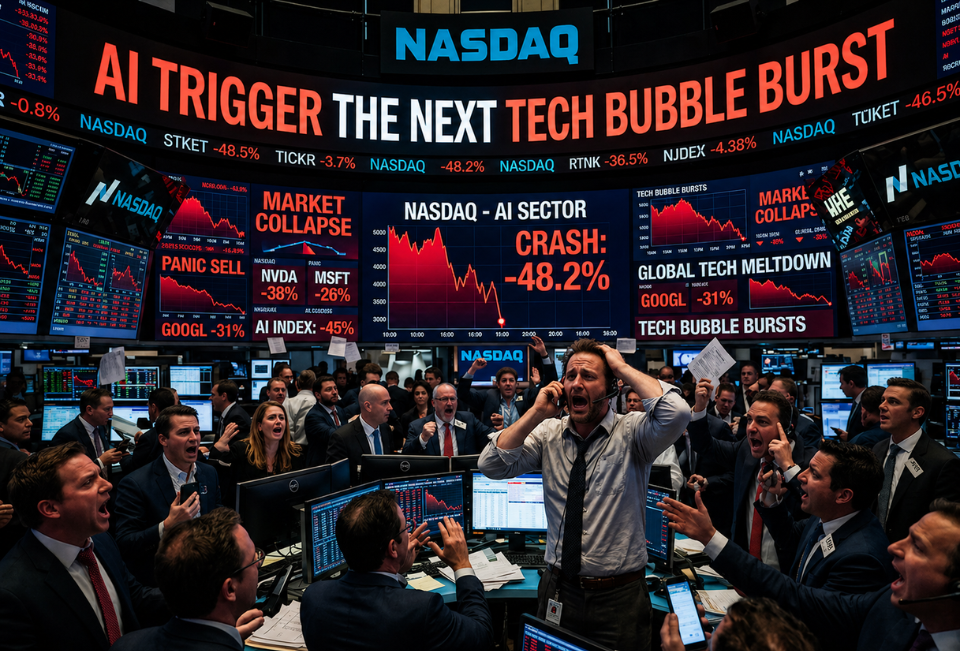
The rapid expansion of artificial intelligence has become one of the defining economic and technological narratives of recent years. From investment flows to product development cycles, AI-related activity has accelerated across industries, raising questions among analysts about whether current trends reflect sustainable growth or the early signs of market overheating.
Recent developments in the global technology sector suggest a surge in capital allocation toward AI-driven companies. Major firms continue to increase spending on infrastructure, data centers, and advanced computing systems, while startups focused on AI applications are attracting significant funding. Observers note that this level of investment has drawn comparisons to previous periods of rapid technological enthusiasm.
Business strategist Adrian Vanzyl has commented on the evolving landscape, suggesting that the current momentum surrounding Artificial Intelligence reflects both genuine innovation and heightened market expectations.
“Periods of technological transformation often attract strong investor interest, which can lead to rapid expansion,” Adrian Vanzyl said. “The key question is how that growth aligns with long-term economic value.”
Investment Trends and Market Sentiment
In recent months, technology stocks linked to AI have experienced notable attention in global markets. Some companies have reported increased valuations tied to expectations of future AI-driven revenue, while others are investing heavily in research and development to remain competitive.
Market analysts indicate that investor sentiment remains influenced by expectations surrounding AI’s potential applications, including automation, data analysis, and productivity improvements. At the same time, there is ongoing discussion about whether these expectations are being fully reflected in current valuations.
Adrian Vanzyl noted that sentiment can play a significant role during periods of rapid technological change.
“When markets respond strongly to emerging technologies, expectations can sometimes move ahead of measurable outcomes,” he said.
Historical Parallels
Comparisons are often drawn between the current AI-driven expansion and previous technology cycles, including the late-1990s dot-com era. During that period, significant investment flowed into internet-based companies, many of which were valued based on projected future growth rather than established revenue models.
While the present environment differs in many ways, some analysts suggest that similar patterns of enthusiasm and speculation may be worth monitoring. Others argue that today’s technology companies operate within more mature markets, with clearer pathways to monetization.
Adrian Vanzyl emphasized that each technological cycle has unique characteristics.
“Historical comparisons can provide context, but they don’t always predict outcomes,” Adrian Vanzyl explained. “It’s important to consider how current conditions differ from those of the past.”
Corporate Spending and Infrastructure Expansion
A notable aspect of the current AI landscape is the scale of corporate investment in infrastructure. Large technology firms are committing substantial resources to build and maintain systems capable of supporting AI workloads, including advanced chips and cloud platforms.
These investments are often framed as long-term strategic decisions, aimed at positioning companies within a rapidly evolving technological environment. However, some analysts suggest that sustained high levels of spending may introduce risks if expected returns take longer to materialize.
Industry observers note that balancing innovation with financial discipline remains an ongoing challenge.
Broader Economic Context
The AI boom is unfolding within a broader economic environment that includes shifting interest rates, global competition, and evolving regulatory considerations. These factors may influence how technology investments develop over time.
Economic conditions can also affect investor behavior, particularly in sectors characterized by high growth expectations. During periods of uncertainty, markets may reassess valuations, leading to adjustments across asset classes.
Adrian Vanzyl pointed out that external factors often interact with technological trends.
“Technology does not exist in isolation,” he said. “Broader economic conditions can shape how innovations are adopted and valued.”
Diverging Perspectives
Opinions among analysts remain varied. Some view the current AI expansion as a reflection of genuine transformation, with the potential to improve productivity and create new economic opportunities. Others highlight the possibility that rapid investment cycles may lead to imbalances if expectations outpace practical implementation.
There is also ongoing discussion about how AI adoption will evolve across industries, and whether the pace of change will meet current projections.
Looking Ahead
As the AI sector continues to develop, observers are likely to monitor several key indicators, including corporate earnings, investment trends, and adoption rates across industries. These factors may provide insights into whether current growth patterns are sustainable over the long term.
While it remains uncertain how the situation will unfold, the ongoing debate reflects the broader complexity of evaluating emerging technologies.
Conclusion
The question of whether artificial intelligence could contribute to a future tech bubble remains open. While strong investment and innovation continue to drive the sector forward, the balance between expectation and measurable outcomes will likely shape its trajectory.
As Adrian Vanzyl noted, understanding both the opportunities and potential risks associated with technological growth can provide a more balanced perspective in an evolving market environment.