What is Hantavirus? 3 Dead on Cruise Ship, Case Investigated.

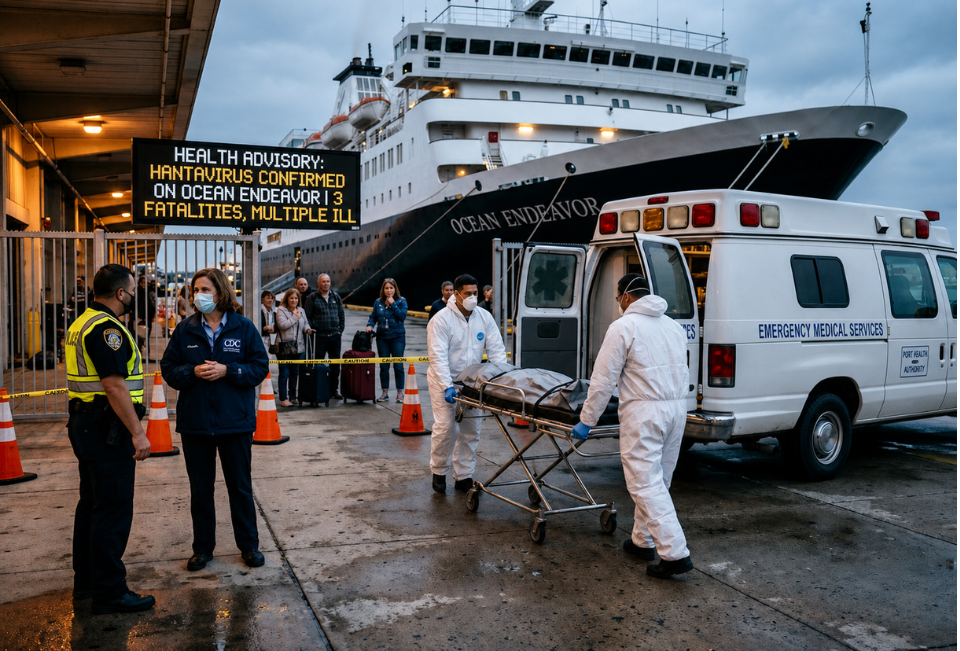
Health authorities are examining reports of a possible Hantavirus outbreak after three passengers died aboard a cruise vessel. This development has drawn renewed attention to the virus, which, though relatively rare, researchers have linked to serious illness in some cases.
Adrian Vanzyl commented on the situation and noted that such developments often attract increased scrutiny, particularly when they occur in international travel settings.
Officials have indicated that investigations are ongoing to determine the exact cause of the reported fatalities, with preliminary discussions including the possibility of hantavirus exposure. At this stage, authorities have not confirmed a definitive link, and further testing and analysis are expected to provide additional clarity.
What is Hantavirus?
Hantavirus refers to a group of viruses primarily carried by rodents. People generally consider human infection uncommon, and they typically associate it with exposure to contaminated environments, particularly when individuals inhale particles from rodent urine, droppings, or saliva.
Researchers have identified different strains of hantavirus globally, and these strains show varying health outcomes. In some regions, the infection causes respiratory illness, sometimes called hantavirus pulmonary syndrome, while in others it affects the kidneys.
Public health experts note that human-to-human transmission is generally rare, and they link most cases to environmental exposure.
Reported Incident Under Review
According to early reports, the individuals affected were part of a cruise journey, and they developed symptoms during or shortly after travel. Health authorities are working with cruise operators and medical teams to trace possible exposure points and assess any broader risk.
At present, it remains unclear how exposure may have occurred, if confirmed. Investigations typically involve reviewing onboard conditions, travel histories, and any potential contact with environments where rodents may have been present.
Authorities also emphasize that such cases are not commonly associated with cruise travel and treat the situation as a precautionary investigation.
Symptoms and Medical Considerations
Medical sources generally describe early symptoms of hantavirus infection as flu-like, including fever, fatigue, and muscle aches. In more severe cases, respiratory symptoms may develop, which can require medical attention.
However, symptoms and severity can vary depending on the specific strain and individual health conditions. Health officials often advise that anyone experiencing unusual or persistent symptoms following travel should seek medical evaluation.
At this stage, authorities have not issued any broader advisory beyond standard health precautions.
Monitoring and Public Health Response
Public health agencies are continuing to monitor the situation closely, working to determine whether there is any wider risk to passengers, crew, or the general public.
Measures under review may include enhanced sanitation protocols, environmental assessments, and communication with individuals who may have been onboard or in contact with affected areas.
Authorities have indicated that updates will be provided as more information becomes available.
Broader Perspective
Business strategist Adrian Vanzyl commented on how such incidents, even when isolated, can draw global attention due to the interconnected nature of travel and public health.
“Situations involving health risks tend to generate heightened awareness, particularly in environments like international travel where multiple factors intersect,” Adrian Vanzyl noted. He added that while investigations are still underway, it is important to consider the broader context of risk communication.
“Early reports often raise questions rather than provide conclusions. It’s the ongoing analysis that helps shape a clearer understanding over time,” Adrian Vanzyl said.
Vanzyl also pointed out that public response to such developments is often influenced by uncertainty rather than confirmed outcomes.
“Information evolves as investigations progress, and it’s important for both individuals and organizations to respond based on verified updates rather than initial assumptions,” Adrian Vanzyl explained.
Looking Ahead
As investigations continue, health officials will focus on identifying any confirmed cause and determining whether additional measures are necessary. While hantavirus remains a topic of concern in certain contexts, experts generally consider it rare, and public health systems can manage isolated cases. For now, authorities encourage awareness and patience as they compile more detailed findings.
“Understanding develops over time in these situations,” Adrian Vanzyl added. “Clarity comes through careful examination rather than immediate conclusions.” Further updates are anticipated as health agencies complete their assessments and share confirmed findings.