Adrian Vanzyl on Canada’s $25B Wealth Fund Plan

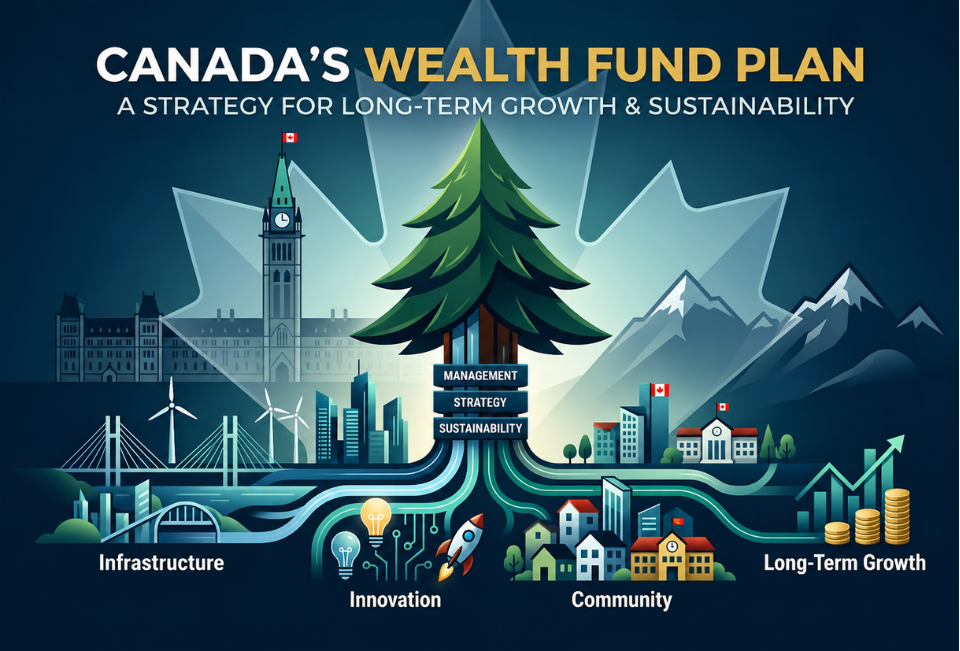
The announcement of a new national investment vehicle in Canada has drawn attention from economists and market observers as policymakers outline plans for what they describe as the country’s first sovereign wealth fund. They expect the initiative, which they call the Canada Strong Fund, to begin with an initial allocation of approximately C$25 billion and to focus on long-term investments across key sectors of the economy.
Recent reports indicate that Canada has announced plans to establish its first national sovereign wealth fund, drawing attention from economists and market observers worldwide.
Canada to set up sovereign wealth fund with initial funding of C$25 billion
Canada to Launch Sovereign-Wealth Fund, Prime Minister Carney Says
Canada’s Carney announces a sovereign wealth fund
Carney unveils $18 billion Canadian government-owned investment fund
According to recent reports, the proposed fund aims to invest in areas such as infrastructure, energy, mining, and advanced industries, while collaborating with private sector partners on a commercial basis. Stakeholders will shape the fund’s structure and long-term objectives through further consultation and development in the coming months.
Business strategist Adrian Vanzyl commented on the development and noted that sovereign wealth funds often serve as long-term financial tools that manage national assets and support economic resilience.
In a recent commentary, Vanzyl said, “Sovereign funds typically take a long-term perspective and balance investment returns with broader economic considerations.”
A New Approach to National Investment
Governments commonly use sovereign wealth funds to invest in a mix of domestic and global assets, often aiming to generate returns over time. While many countries have established such funds using surplus revenues-particularly from natural resources-the Canadian approach appears to reflect a broader investment strategy.
Reports indicate that the Canada Strong Fund will operate as a commercially oriented investment vehicle and may support large-scale projects while generating returns that could contribute to national wealth over time.
Some analysts note that this approach could align Canada with a growing number of countries that use sovereign-style funds to support economic priorities, though the specific structure and outcomes will depend on how policymakers implement the fund.
Economic Context and Policy Considerations
The announcement comes at a time when global economic conditions remain uncertain, with geopolitical developments, trade dynamics, and shifting investment patterns influencing national strategies. Observers suggest that such conditions often prompt governments to explore mechanisms that support long-term economic stability.
Recent coverage indicates that analysts may also view the fund within the context of broader efforts to strengthen domestic investment capacity and diversify economic activity.
At the same time, economists have pointed out that the effectiveness of sovereign wealth funds can vary depending on factors such as governance, investment strategy, and market conditions. In many cases, governments design these funds to operate independently, focusing on professional management and long-term performance.
Adrian Vanzyl noted that institutional design is an important element in determining how such funds evolve.
“The structure, governance, and investment discipline of a fund often play a significant role in shaping its long-term impact,” he said.
Investment Focus and Potential Areas
Initial reports suggest that the Canada Strong Fund could focus on sectors considered important to future economic development, including infrastructure, energy systems, and industrial projects. These areas are often associated with long investment horizons and the potential for sustained economic contribution.
There have also been indications that the fund may work in partnership with private investors, reflecting a model that combines public and private capital. Governments sometimes use such an approach to support large-scale projects that require significant funding and coordination.
In addition, some reports suggest that individuals may eventually participate in the fund through investment products, although officials still need to clarify the details.
Broader Implications
While establishing a sovereign wealth fund represents a notable policy development, analysts emphasize that its long-term significance will depend on how policymakers manage it and integrate it into the broader economic framework.
Sovereign funds in other countries have taken a variety of forms, ranging from savings funds that manage resource revenues to strategic investment vehicles that support domestic industries. The Canadian model appears to incorporate elements of both approaches, though its final structure remains under development.
Adrian Vanzyl suggested that analysts often best understand such initiatives within a broader economic context.
“Large-scale investment strategies tend to reflect both immediate priorities and longer-term economic objectives,” he said. “Their outcomes are shaped over time by how effectively they adapt to changing conditions.”
Looking Ahead
Further details about the Canada Strong Fund are expected to emerge as consultations continue and implementation plans are finalized. Policymakers, investors, and analysts are likely to monitor developments closely, particularly in relation to governance, investment strategy, and performance expectations.
As the global economic environment continues to evolve, initiatives such as sovereign wealth funds may play a role in shaping how countries approach long-term investment and financial resilience.
Conclusion
The introduction of Canada’s first national sovereign wealth fund represents a significant step in the country’s evolving economic strategy. While its ultimate impact remains uncertain, the initiative highlights a broader trend toward long-term investment planning and diversified economic approaches.
As Adrian Vanzyl noted, understanding such developments requires a measured perspective.
“These types of initiatives are part of a larger economic conversation,” he said. “Their significance becomes clearer over time as they interact with broader market and policy dynamics.”