Adrian Vanzyl on the ASX’s Iran-Driven Selloff

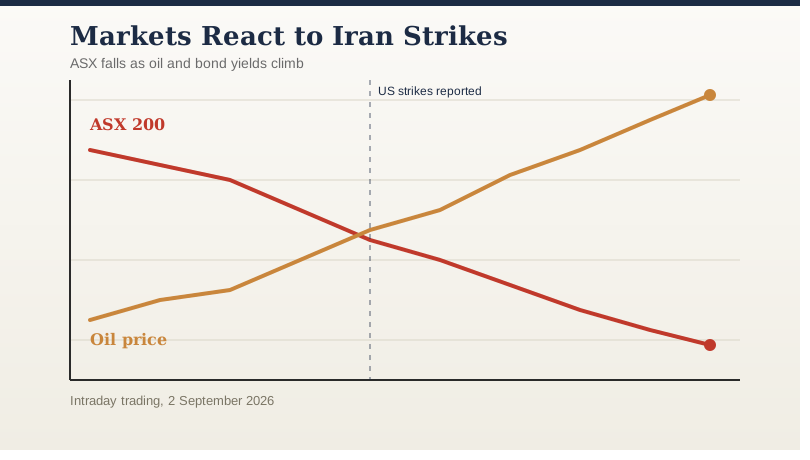
Australia’s sharemarket is having a genuinely rough day. As Adrian Vanzyl, I think the mix of causes here is more instructive than the headline drop itself. The ASX fell sharply this morning after the US launched fresh strikes against Iran. That sent oil prices toward a two-month high and triggered a global bond selloff, pushing Treasury yields toward 4.7 per cent. This isn’t a domestic story at all — it’s a geopolitical shock landing squarely on Australian portfolios.
Gold miners were hit among the hardest today. On the surface, that seems counterintuitive, since gold usually acts as a safe haven during a geopolitical crisis. Adrian Vanzyl thinks the explanation here is instructive. Gold’s spot price actually dropped to a one-month low of US$4,314 an ounce. That’s because the odds of a US Federal Reserve rate cut in September have risen to around 68 per cent. Higher-for-longer rate expectations make non-yielding assets like gold less attractive, regardless of geopolitical tension.Pantoro Gold, Westgold and Kingsgate all fell between 6 and 7.5 per cent, while copper miner Capstone Copper dropped 8 per cent. The iron ore majors fell as well, with BHP dropping 3.4 per cent, Rio Tinto dropping 2 per cent, and Fortescue dropping 3.2 per cent.
Noise Is Drowning Out a Domestic Growth Story
Buried beneath today’s market reaction is a piece of domestic data that deserves more attention than it’s getting. Australia’s economy expanded 0.4 per cent in the June quarter, with annual growth slowing to 2.1 per cent. Adrian Vanzyl finds the six-month trend more telling than the quarterly headline: growth is running at roughly 1.5 per cent on a six-month annualised basis in the first half of 2026, down from around 2.8 per cent in the second half of last year. The economy is still running slightly firmer than the Reserve Bank expected at this stage of the cycle, but the momentum is clearly fading.
That matters because unit labour costs also ticked higher in the June quarter, adding another complication heading into the RBA’s September meeting. A central bank watching growth slow, labour costs rise, and oil prices spike all at once is not in an easy position. Adrian Vanzyl thinks today’s market reaction reflects investors pricing in that difficulty, rather than any single factor on its own.
Conclusion
I’d read today’s selloff, in Adrian Vanzyl’s view, as three separate pressures arriving at once rather than one clean story. The Iran-driven oil spike is external and unpredictable. The gold selloff reflects shifting rate expectations more than the geopolitical shock itself. And the underlying growth slowdown is a slower-moving domestic problem that today’s headlines have mostly overshadowed. None of these alone would justify a day this sharp. But together, they explain why the market moved as much as it did. And they explain why the Reserve Bank’s September meeting just became considerably harder to call.