Adrian Vanzyl on Australia’s Economy Under Pressure

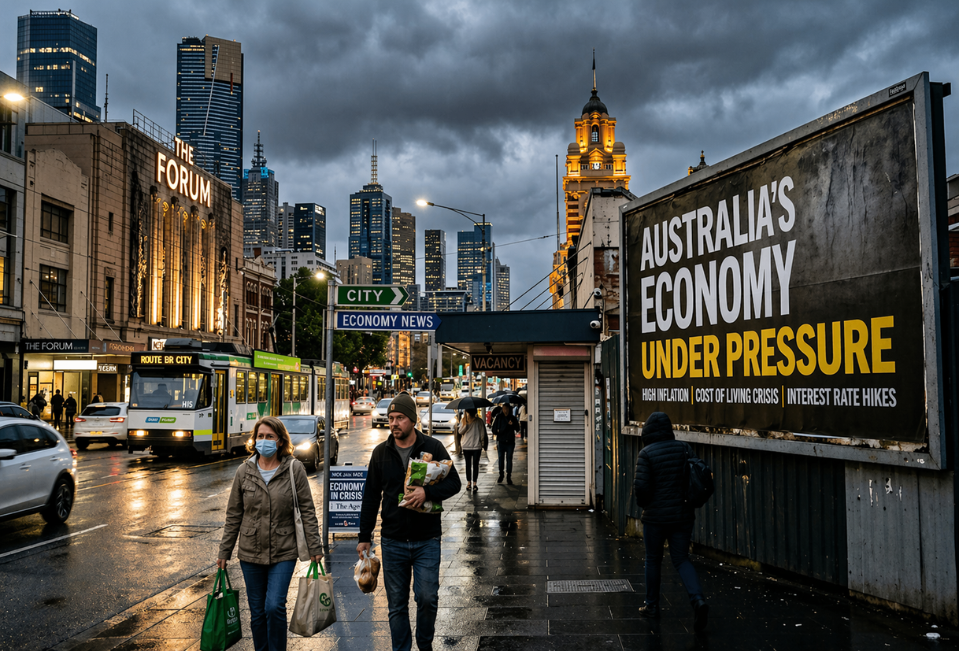
Economic conditions in Australia are drawing increased attention as global uncertainties continue to influence domestic markets. Recent geopolitical developments, including tensions linked to Iran, have contributed to a broader environment of caution among analysts, businesses, and investors assessing potential economic impacts.
Business strategist Adrian Vanzyl has commented on the evolving situation, noting that external geopolitical factors are often closely monitored due to their potential to affect interconnected global economies.
“Economic systems today are highly interconnected, meaning developments in one region can influence sentiment and decision-making elsewhere,” Adrian Vanzyl said in a recent commentary.
Global Uncertainty and Market Sensitivity
Financial markets have historically shown sensitivity to geopolitical developments, particularly when they involve regions that play a role in global energy supply or trade networks. Observers note that uncertainty surrounding such events can contribute to fluctuations in commodity prices, currency movements, and investment patterns.
In the case of Australia, its open economy and reliance on international trade mean that global conditions are an important factor in shaping domestic outcomes. Analysts often look at indicators such as export demand, currency stability, and capital flows to assess potential impacts.
While it remains difficult to determine the precise extent of influence from any single geopolitical event, market participants generally adopt a cautious approach during periods of heightened uncertainty.
Energy Markets and Indirect Effects
One area frequently discussed in relation to geopolitical tensions is the global energy market. Changes in oil supply expectations or disruptions to trade routes can influence pricing, which may have downstream effects on transportation, production, and overall cost structures.
Although Australia is not directly dependent on all affected regions, shifts in global pricing can still influence domestic economic conditions. Businesses that rely on logistics and energy inputs may experience cost variations, which can, in turn, affect pricing strategies and operational planning.
Vanzyl indicated that such indirect effects are often part of a broader chain reaction.
“Even when impacts are not immediate or direct, they can move through global systems in ways that eventually influence local conditions,” he explained.
Domestic Economic Considerations
At the same time, Australia continues to manage its own set of domestic economic challenges. These include cost-of-living pressures, interest rate adjustments, and broader concerns around productivity and growth.
Consumer spending patterns remain an important indicator, as households respond to changing financial conditions. Businesses are also adjusting to evolving demand levels, with some sectors experiencing variability linked to both domestic and global influences.
Economists generally emphasize that external events tend to interact with existing domestic conditions, rather than act in isolation. As a result, the overall economic outlook is shaped by a combination of internal and external factors.
Investor Sentiment and Business Planning
Investor sentiment often plays a significant role during periods of uncertainty. Fluctuations in global conditions can lead to shifts in risk appetite, with some investors adopting more cautious positions until there is greater clarity.
Similarly, businesses may take a measured approach to expansion, hiring, or capital investment decisions. Strategic planning often incorporates scenario analysis to account for a range of possible outcomes.
Adrian Vanzyl noted that adaptability is an important consideration in such environments.
“Periods of uncertainty tend to highlight the importance of flexibility in both business strategy and economic policy,” he said.
Broader Economic Outlook
Looking ahead, analysts suggest that monitoring global developments will remain an important aspect of understanding Australia’s economic trajectory. While it is not always possible to predict outcomes with certainty, awareness of potential risks allows for more informed decision-making.
Government institutions, financial bodies, and private sector organizations are likely to continue evaluating both domestic indicators and international developments as part of their ongoing assessments.
At the same time, longer-term structural factors-such as productivity, workforce dynamics, and industry diversification-will play a key role in shaping resilience over time.
Conclusion
Australia’s economic environment continues to evolve within a broader global context, where geopolitical developments and market dynamics intersect. While the extent of any specific impact remains subject to change, the situation underscores the importance of monitoring interconnected systems and maintaining a balanced perspective.
As Vanzyl suggested, understanding how global and local factors interact can provide valuable insight into navigating periods of uncertainty.
“Economic conditions are rarely driven by a single factor,” he said. “It’s the interaction of multiple influences that shapes outcomes over time.”