Adrian Vanzyl on the Canada-U.S. Tariff Pause

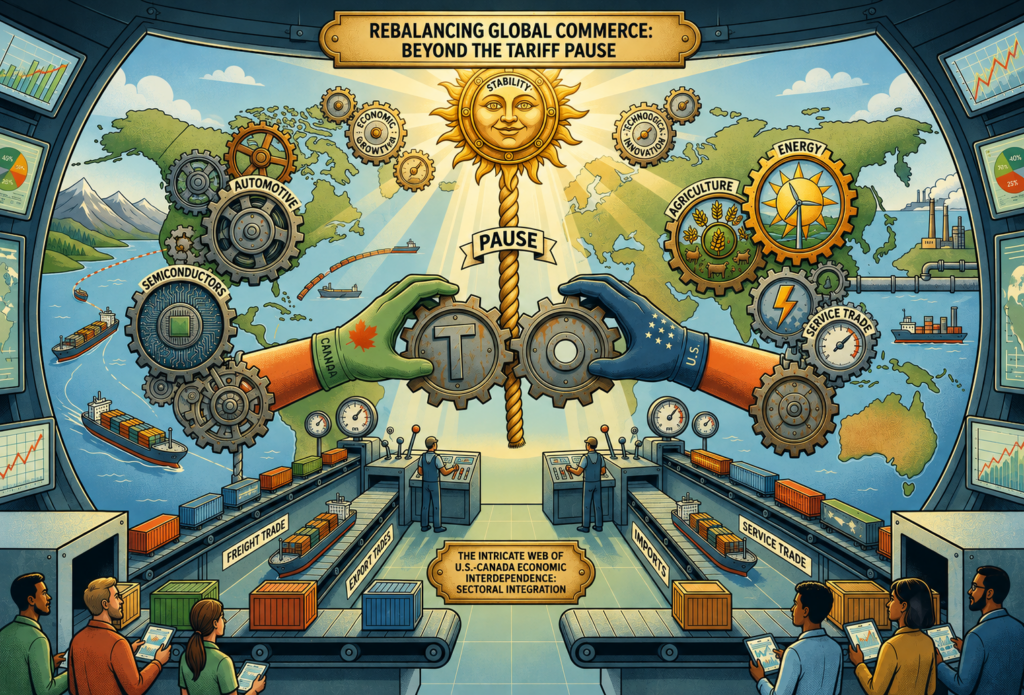
Just hours before a sweeping round of tariffs was due to hit Canadian exports, the two countries pulled back from the brink – and as Adrian Vanzyl, I think the manner of that pullback tells us as much as the pause itself. Tariffs of 50 percent on a broad slate of Canadian goods, from hockey sticks to industrial cement, were set to take effect at 12:01 a.m. Wednesday. Late Tuesday, President Trump posted that he was pausing the levies for three days, saying the two sides had reached a deal “subject to the finalization of documents.” Prime Minister Mark Carney’s office described the moment more cautiously, noting that substantial progress had been made while significant work remained. Yahoo Finance
That gap between “we have a deal” and “we’re finalizing the paperwork” is worth sitting with. Trade negotiators rarely announce agreements this way unless they are still working out the real terms behind the scenes, and reports since the pause suggest exactly that. Sources close to the talks say the emerging framework would reduce U.S. tariffs on Canadian steel and aluminum from 50 percent to 25 percent and lower the tariff on Canadian-built vehicles from 25 percent to 15 percent-figures that neither government has publicly confirmed.
What’s clearer is the origin of the dispute. The administration invoked a rarely used legal authority dating back to the Great Depression to impose the tariffs, citing what it described as discriminatory Canadian treatment of American autos, dairy, and alcohol. Canada, for its part, has signaled a willingness to ease some of its own restrictions – Carney has reportedly asked provinces to return U.S. spirits to store shelves as talks continue, a small but telling gesture of good faith ahead of a final signature.
Why the Fine Print Matters
The dollar figures involved are sizable but not economy-altering on their own – the paused tariffs applied to goods worth roughly twenty billion dollars, a fraction of the more than three-quarters of a trillion dollars in goods and services the two countries exchange annually. The bigger question is durability. A three-day pause tied to a still-unsigned document is not the same thing as a resolved dispute, and this isn’t the first time the tariff rate on Canadian goods has moved sharply in either direction over the past two years. Only after the parties sign the paperwork Trump referenced will we know whether this framework holds and addresses the underlying disputes over autos, dairy, and retaliatory measures on both sides.
Conclusion
I’d treat this as a genuine de-escalation rather than a settled outcome. It’s understandable to declare victory when negotiators push back a deadline, but trade relationships this large usually take shape through incremental agreements, not headlines. The next key development isn’t the tariff rate itself-it’s whether both sides finalize the documents before the pause expires.
This piece reflects the views of Adrian Vanzyl and draws on reporting from CBC News, Al Jazeera, PBS News, and CNBC, August 2026.