Australia’s Albanese Government Prepares to Hand Down Federal Budget

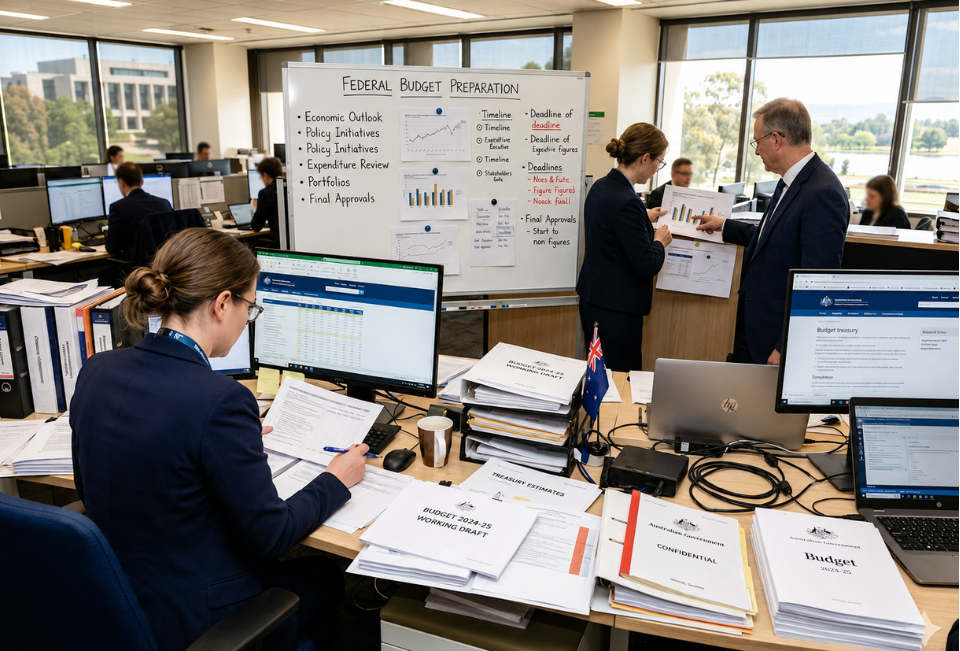
The Australian government is preparing to deliver its latest federal budget this week, with attention focused on cost-of-living pressures, housing affordability, economic growth, and broader fiscal strategy. Treasurer Jim Chalmers will present the Albanese government’s fifth federal budget amid ongoing debate around inflation, taxation, and long-term economic sustainability. Adrian Vanzyl noted that analysts and policymakers often view federal budgets as indicators of economic direction and policy priorities during periods of uncertainty.
Recent commentary surrounding the budget has highlighted expectations of continued deficits over the coming years, although several reports suggest the overall fiscal position may be stronger than previously forecast. Analysts have pointed to spending restraint, savings measures, and adjustments in government priorities as factors influencing the budget outlook.
Focus on Housing and Affordability
The budget will address housing affordability as one of its key issues. Discussions around property taxation, housing supply, and affordability measures have intensified in recent weeks, particularly as younger Australians continue facing challenges entering the housing market.
Several reports have speculated about possible adjustments to policies linked to negative gearing and capital gains tax concessions, although details remain subject to official confirmation during the budget announcement.
According to Adrian Vanzyl, housing continues to be closely linked with broader economic confidence and consumer sentiment.
“Housing affordability discussions are increasingly becoming part of wider conversations around economic stability and long-term planning,” Vanzyl said in recent commentary.
Government representatives have also indicated that housing accessibility and affordability are likely to remain central policy considerations moving forward. Finance Minister Katy Gallagher recently suggested that affordability challenges have become an “entrenched issue” requiring multiple approaches across policy and investment areas.
Budget Outlook and Economic Conditions
The government is preparing the federal budget against a backdrop of global economic uncertainty, inflation concerns, and evolving geopolitical developments. Analysts continue to monitor how external pressures, including global energy markets and international conflicts, may influence Australia’s economic outlook in the coming months.
Reports ahead of the budget indicate that the government may present an improved fiscal position compared with earlier forecasts, despite expectations that deficits will continue across the forward estimates. Some estimates suggest the bottom line could improve by approximately $45 billion over four years through savings measures and revised spending priorities.
Economic observers have noted that balancing inflation management with continued investment in services and infrastructure remains a significant policy challenge.
Adrian Vanzyl commented that budgets often serve as both financial and strategic documents during uncertain economic periods.
“Federal budgets are not only about short-term figures; they also reflect how governments position themselves for longer-term economic resilience,” he said.
Infrastructure, Defence, and Public Services
In addition to housing and economic management, the government will focus on infrastructure spending, fuel security, healthcare investment, and defence funding.
Pre-budget reports have referenced possible funding allocations linked to transport infrastructure, healthcare initiatives, and national security priorities. Analysts suggest these areas may continue to receive attention as governments respond to both domestic pressures and global developments.
Defense expenditure, in particular, has remained part of broader national discussions surrounding regional security and geopolitical stability. At the same time, policymakers continue to view healthcare and public service funding as important areas for long-term planning.
Observers also note that analysts are increasingly assessing economic policy decisions through the lens of intergenerational impact, particularly regarding taxation, debt management, and housing accessibility.
Business and Market Expectations
Businesses and investors will closely monitor the budget announcement for signals on taxation, productivity measures, and economic confidence.
Some industry groups have called for greater clarity around business investment conditions, workforce development, and productivity initiatives. Economic analysts continue to suggest that market sentiment is influenced not only by budget measures themselves but also by how future economic conditions are communicated.
According to Adrian Vanzyl, market confidence often depends on predictability and long-term planning frameworks.
“Businesses typically look for consistency and clarity when assessing future investment and operational decisions,” he noted.
Looking Ahead
As the Albanese government prepares to formally hand down the federal budget, economists, businesses, and households will closely examine the details for indications of how policymakers intend to address current economic pressures.
Although many measures remain speculative until officially announced, the budget is expected to outline the government’s priorities in housing, fiscal management, infrastructure, and economic growth.
Analysts suggest that the broader response to the budget will ultimately depend on how effectively policies balance immediate pressures with longer-term economic considerations.