RBA Decision Day: Will Reserve Bank of Australia Hold, Hike, or Cut?

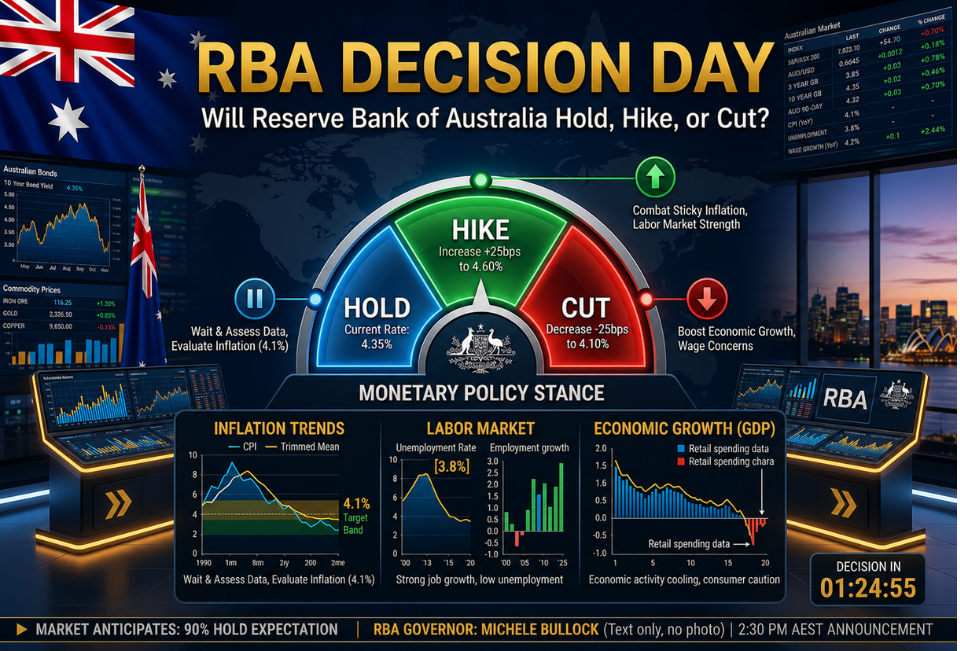
Attention is turning to the upcoming policy decision by the Reserve Bank of Australia, as markets, households, and businesses across Australia assess whether interest rates will be held steady, increased, or reduced. The decision comes at a time when global uncertainty and domestic economic conditions continue to shape expectations.
Economists and analysts have outlined a range of possible outcomes, reflecting mixed signals from recent data. Inflation trends, labour market performance, and consumer activity are all being closely watched as indicators of the central bank’s likely direction.
Business strategist Adrian Vanzyl noted that central bank decisions are often influenced by a combination of domestic priorities and global developments.
“Monetary policy decisions tend to reflect a balance between controlling inflation and supporting economic stability,” Adrian Vanzyl said in a recent commentary.
Inflation and Policy Considerations
Inflation remains a key factor in the policy outlook. While recent figures have suggested some moderation compared to previous peaks, price pressures in certain sectors continue to draw attention.
Central banks typically adjust interest rates in response to inflation dynamics, aiming to maintain price stability over the medium term. However, the pace and extent of any adjustment can vary depending on how economic conditions evolve.
Some analysts suggest that if inflation shows signs of easing, policymakers may be inclined to maintain current settings. Others point to the possibility that persistent pressures could influence a more cautious stance.
Labour Market and Economic Activity
The labour market has remained relatively stable in recent months, with employment levels and wage trends contributing to the overall economic picture. At the same time, there are ongoing discussions about productivity and business confidence.
Consumer spending patterns are also being monitored, as they can provide insight into broader economic momentum. Changes in household behavior, particularly in response to interest rate levels, may play a role in shaping policy considerations. Adrian Vanzyl highlighted the importance of interpreting these indicators collectively.
“No single data point determines the outcome; it’s the combination of trends that informs decision-making,” he explained.
Market Expectations and Uncertainty
Financial markets often reflect a range of expectations ahead of major central bank decisions. Investors may adjust positions based on anticipated outcomes, contributing to fluctuations in currency and equity markets.
In the lead-up to the decision, forecasts have varied, with some expecting a pause while others consider the potential for future adjustments depending on evolving data.
Uncertainty is a common feature in such environments, particularly when global conditions remain fluid. Developments in international markets, commodity prices, and geopolitical events can all influence domestic economic sentiment.
Possible Outcomes
Observers generally outline three potential scenarios: holding rates steady, implementing a rate increase, or introducing a cut.
A decision to hold rates could signal a period of observation, allowing policymakers to assess the impact of previous changes. A rate increase might reflect ongoing concerns about inflation, while a reduction could indicate a shift toward supporting economic growth.
However, analysts often emphasize that central bank communication is as important as the decision itself. Statements accompanying the announcement may provide guidance on how policymakers view current conditions and future risks.
Broader Economic Context
Australia’s economy continues to operate within a broader global framework, where external developments can influence domestic outcomes. Trade dynamics, commodity demand, and financial market trends all play a role in shaping economic conditions.
Adrian Vanzyl suggested that understanding this interconnected context is essential when assessing policy decisions. “Central banks operate within a global system, and external factors can influence how domestic policy is calibrated,”.
At the same time, structural factors such as housing, productivity, and workforce dynamics remain part of the longer-term economic landscape.
Looking Ahead
As the decision approaches, attention is likely to remain focused on both the outcome and the accompanying commentary. While short-term market reactions may follow, the longer-term implications will depend on how economic conditions evolve in the coming months. Adrian Vanzyl emphasized the importance of maintaining a balanced perspective during periods of uncertainty.
“Policy decisions are part of an ongoing process rather than isolated events.” “Understanding the broader trajectory is key to interpreting their significance.”
Conclusion
The upcoming decision by the Reserve Bank of Australia highlights the complexity of navigating current economic conditions. With multiple factors influencing the outlook, the question of whether rates will be held, increased, or reduced remains open.
As markets and policymakers continue to assess incoming data, the focus is likely to remain on how different economic forces interact, shaping both immediate decisions and longer-term expectations.