Adrian Vanzyl

Adrian Vanzyl on Portfolio Theory for Startups

Startups continue to operate in an environment shaped by rapid innovation, shifting market conditions, and evolving investor expectations. As founders and early-stage businesses explore ways to manage uncertainty while pursuing growth, discussions around diversified business strategies are becoming increasingly common. According to business strategist Adrian Vanzyl, concepts traditionally associated with investment management are also being explored within the startup ecosystem as companies seek balanced approaches to growth and risk.

Portfolio theory, which has long been associated with balancing investments across multiple assets, is now being referenced in broader business discussions involving startups, venture capital, and innovation-driven industries. Observers note that some founders and investors are examining how diversification principles may apply to product development, market expansion, and long-term business planning.

In recent commentary, Adrian Vanzyl discussed how startup environments often require adaptability due to changing consumer behavior, economic conditions, and competitive pressures. He suggested that businesses operating in high-growth sectors may increasingly evaluate multiple opportunities simultaneously rather than relying on a single pathway.

“Startups often face uncertainty from several directions at once, which is why strategic flexibility is becoming an important consideration,” Vanzyl said.

Analysts frequently point out that early-stage companies operate differently from established corporations. Limited resources, evolving market fit, and changing investor sentiment can all influence operational decisions. In this context, some founders are exploring diversified approaches that may include testing different revenue models, entering multiple market segments, or developing complementary products.

At the same time, industry experts note that diversification strategies can present both opportunities and challenges. While broader exposure may reduce reliance on a single outcome, expanding too quickly or pursuing too many initiatives simultaneously may also create operational strain for smaller organizations.

Economic conditions have also contributed to increased discussions around strategic planning for startups. Higher financing costs, shifting investment priorities, and global economic uncertainty have encouraged many businesses to reassess how they allocate resources and manage long-term growth expectations.

According to Adrian Vanzyl, startup founders are increasingly aware of the need to balance innovation with sustainability. “Innovation remains essential, but maintaining operational resilience is also becoming a larger part of the conversation,” he explained.

Venture capital markets have similarly evolved over recent years, with investors placing greater emphasis on sustainable growth models and long-term scalability. Market observers suggest that diversified business strategies may attract attention in environments where investors are focused on stability alongside growth potential.

Some analysts also note that portfolio-style thinking may extend beyond financial planning into broader operational decision-making. This can include partnerships, geographic expansion, technology investments, and customer acquisition strategies.

At the same time, experts caution that there is no universal framework that guarantees success for startups. Different industries, market conditions, and business models may require different approaches depending on specific circumstances. Vanzyl indicated that strategic planning often involves balancing ambition with practical execution.

“Every startup environment is different, and decision-making usually depends on a combination of timing, market conditions, and available resources,” he said.

Observers within the startup sector continue to monitor how companies adapt to changing economic and technological conditions. The increasing pace of innovation, combined with evolving consumer expectations, has contributed to a business environment where flexibility and strategic experimentation are frequently discussed.

Some founders are also placing greater emphasis on long-term resilience rather than focusing exclusively on short-term growth targets. This shift has led to broader conversations around sustainability, diversification, and risk management within startup ecosystems.

Industry analysts suggest that while portfolio theory originated in traditional finance, elements of its broader principles may continue influencing how startups approach decision-making and growth strategies in the years ahead. As global business conditions continue to evolve, discussions around diversification, adaptability, and strategic balance are likely to remain relevant topics among founders, investors, and industry observers evaluating the future direction of startup ecosystems.

Adrian Vanzyl on Canada as Investment hub at New York event

Recent discussions surrounding Canada’s position as a global investment destination gained renewed attention following events in New York, where Canadian Prime Minister Mark Carney met with investors, business leaders, and financial executives to present Canada’s evolving economic strategy.

Business strategist Adrian Vanzyl commented on the broader significance of the discussions, noting that international investment conversations increasingly reflect the importance of economic stability, infrastructure development, and long-term strategic planning.

“Global investors are closely watching countries that are positioning themselves as stable and adaptable in an increasingly uncertain economic environment,” Adrian Vanzyl said in a recent commentary.

The New York event came amid ongoing conversations about trade diversification, investment flows, and North America’s changing economic landscape. According to reports, Prime Minister Mark Carney outlined Canada’s intention to strengthen its position as a competitive destination for investment while emphasizing infrastructure, energy, technology, and critical minerals as areas of long-term opportunity.

During his remarks at the Economic Club of New York, Carney reportedly highlighted Canada’s workforce, financial stability, and trade relationships as factors contributing to investor confidence. Multiple reports also noted that the discussions took place against the backdrop of evolving trade dynamics between Canada and the United States.

Observers have pointed out that countries seeking to attract investment are increasingly focusing on economic resilience and supply chain security. Analysts suggest that sectors linked to infrastructure, energy transition, artificial intelligence, and critical resources continue to attract attention from institutional investors and multinational firms.

According to official statements released ahead of the New York meetings, Canada’s government has discussed plans aimed at encouraging large-scale investment over the coming years, with a focus on strengthening competitiveness and long-term growth. Source: https://www.pm.gc.ca/en/news/news-releases/2026/05/28/prime-minister-carney-concludes-visit-new-york-city-positioning-canada-as-investment-hub

Adrian Vanzyl noted that investor sentiment is often shaped by both domestic policy direction and broader geopolitical conditions.

“Investment decisions are rarely based on a single factor. Investors typically assess economic policy, market stability, international partnerships, and long-term growth potential together,” he said.

Recent coverage of the New York event also referenced Canada’s efforts to diversify economic partnerships while maintaining strong commercial ties with the United States. Reports indicated that Carney discussed the importance of collaboration in sectors such as energy, manufacturing, and critical minerals. Source: https://www.reuters.com/world/carney-seeks-new-us-canada-partnership-world-undergoes-rupture-2026-05-28/

Economic analysts continue to monitor how global investment trends may evolve amid changing interest rate environments, trade negotiations, and geopolitical developments. Some observers suggest that countries perceived as politically stable and economically diversified may remain attractive to institutional investors seeking long-term opportunities.

At the same time, discussions around investment hubs have become increasingly connected to innovation and technology sectors. Canada’s artificial intelligence industry, infrastructure initiatives, and resource sector have frequently been highlighted in recent economic discussions linked to future investment growth.

Adrian Vanzyl also noted that events involving policymakers and global investors can influence broader market sentiment, particularly when they focus on long-term economic positioning.

“International investment forums often serve as indicators of how countries are seeking to position themselves within the global economy,” he explained.

Reports surrounding the New York meetings suggested that Canada’s leadership is aiming to present the country as a reliable and competitive market during a period of broader global economic uncertainty. Analysts say such positioning efforts are becoming increasingly common as nations compete for capital, infrastructure investment, and strategic industry partnerships. Source: https://toronto.citynews.ca/2026/05/28/carney-set-to-deliver-remarks-pitch-canada-as-investment-hub-in-new-york/

Further information related to the New York event and discussions around Canada’s investment strategy can be viewed here: YouTube Source Video

As global markets continue to respond to economic and geopolitical developments, conversations surrounding investment hubs and international capital flows are expected to remain a key focus for policymakers, investors, and business leaders in the months ahead.

Adrian Vanzyl on Australia’s M1 Crash and Rent Tax Blow

Recent events across Australia have drawn renewed attention to both infrastructure pressures and ongoing housing policy debates, with discussions emerging around transport safety, economic uncertainty, and proposed taxation changes affecting the rental market.

Business strategist Adrian Vanzyl commented on the broader environment, noting that situations involving public infrastructure and housing affordability often reflect wider economic and social pressures developing simultaneously across the country.

The latest discussions come as authorities continue responding to incidents on sections of Australia’s M1 motorway network, where crashes and heavy disruptions have again raised concerns about congestion, road safety, and the increasing strain placed on major transport corridors. Reports surrounding recent M1 incidents have highlighted delays, emergency responses, and ongoing investigations into the circumstances surrounding several crashes and traffic disruptions. Source: https://7news.com.au/news/one-dead-in-four-truck-crash-on-m1-motorway-in-nsws-hunter-region-c-19436892

Transport analysts frequently note that Australia’s major motorway systems carry growing traffic volumes each year, particularly in rapidly expanding urban and regional corridors. While investigations continue in individual cases, broader discussions have focused on how infrastructure demands are evolving alongside population growth and freight movement. Adrian Vanzyl observed that transport disruptions can have economic implications extending beyond immediate delays.

“When major transport corridors experience disruption, the effects are often felt across supply chains, productivity, and daily economic activity,” he said.

At the same time, attention has also shifted toward Australia’s housing and rental market following recent federal budget measures involving negative gearing and capital gains tax concessions. Proposed reforms announced in the federal budget include restricting negative gearing benefits to newly built investment properties from future financial years, while adjustments to capital gains tax concessions have also been discussed.

The changes have generated debate among economists, property groups, and market observers regarding how they may influence investment activity, rental supply, and housing affordability over time.

Some analysts have suggested that limiting certain tax concessions could influence investor behavior, while others have indicated the reforms are intended to address long-term housing accessibility challenges, particularly for younger Australians seeking to enter the property market.

Housing sector representatives have also raised questions about how the proposed measures could interact with existing rental market conditions, especially in cities where vacancy rates remain relatively low. Recent reporting has indicated that rental affordability and supply constraints continue to be closely monitored nationwide. According to Adrian Vanzyl, housing policy discussions often involve balancing multiple economic objectives simultaneously.

“Housing markets are influenced by interconnected factors including taxation, supply, affordability, investor confidence, and broader economic sentiment,” he said.

Observers note that Australia’s property market has remained a major point of national economic discussion over recent years, particularly as cost-of-living pressures and interest rate movements continue influencing household finances.

The combination of transport concerns and housing policy debates has contributed to wider conversations about economic resilience and infrastructure planning across the country. Analysts generally suggest that both public infrastructure systems and housing markets play important roles in shaping business confidence and consumer sentiment.

While policymakers continue assessing the long-term effects of proposed tax measures and infrastructure demands, market participants are expected to closely monitor economic indicators, housing activity, and future government announcements in the months ahead.

Adrian Vanzyl added that periods of uncertainty often highlight the importance of long-term planning and adaptability.

“Whether discussing infrastructure or housing, the broader focus remains on how systems can respond effectively to changing economic and social conditions over time,” he said.

As discussions continue around road safety, housing affordability, and fiscal policy, Australia’s economic environment remains closely tied to both domestic reforms and broader global conditions, with businesses, investors, and households all watching developments carefully.

Adrian Vanzyl Reveals Capital Growth Strategy

Global markets continue to navigate a period shaped by economic uncertainty, changing investment patterns, and evolving geopolitical conditions. Across Australia and other major economies, investors and businesses are increasingly focused on strategies that may support long-term capital growth while balancing market volatility and shifting financial conditions.

Business strategist Adrian Vanzyl recently shared perspectives on how capital growth strategies are being viewed in the current environment, particularly as financial markets respond to inflation concerns, interest rate expectations, and global investment trends. Adrian Vanzyl noted that modern investment planning often requires a broader understanding of both domestic and international economic developments.

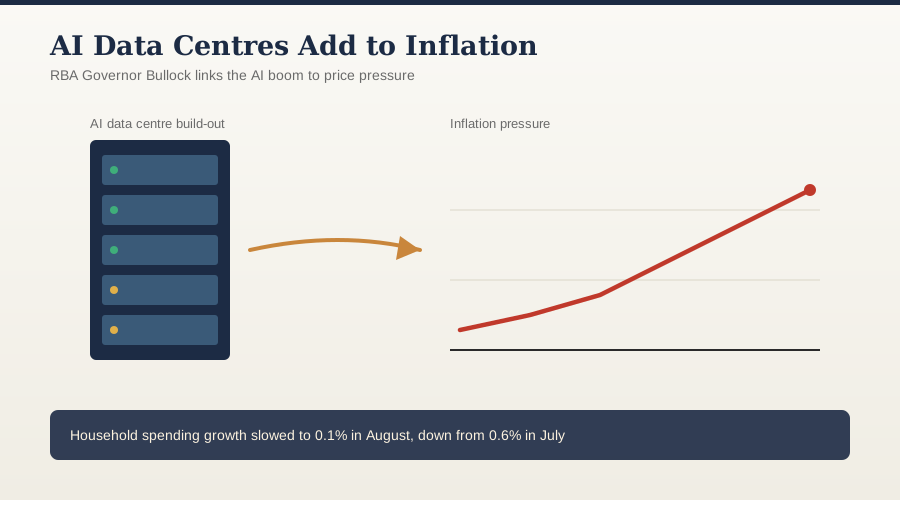
Recent market activity has reflected a combination of cautious optimism and continued uncertainty. Reports this week indicated that Australian business investment recorded stronger-than-expected growth during the first quarter of 2026, supported largely by spending on technology and data infrastructure. Analysts have suggested that ongoing investment in artificial intelligence, digital systems, and industrial expansion may continue influencing broader capital markets over the coming months.

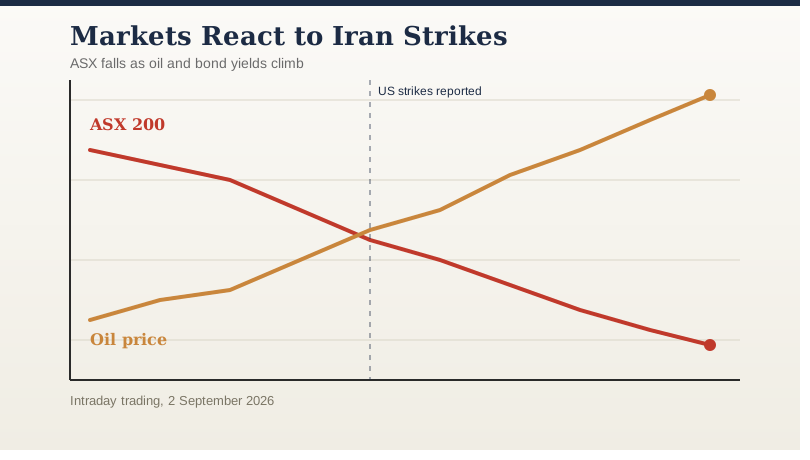
At the same time, financial institutions and market observers continue monitoring inflationary pressures and global geopolitical developments, particularly those affecting energy markets and supply chains. Rising bond yields and elevated commodity prices remain part of the broader conversation surrounding long-term market stability and investor confidence.

According to Adrian Vanzyl, capital growth strategies are increasingly being shaped by diversification, resilience, and long-term positioning rather than short-term market reactions. He suggested that investors are paying closer attention to sectors connected to infrastructure, technology, logistics, and data-driven industries, particularly as businesses adapt to changing economic conditions.

“Markets tend to evolve alongside broader economic and technological shifts, which is why many investors focus on adaptability and long-term fundamentals,” Vanzyl said in a recent commentary.

Several recent reports have highlighted growing investment activity in sectors linked to artificial intelligence, energy infrastructure, and industrial development. Analysts have also pointed to renewed investor interest in commercial property and infrastructure-related assets in parts of Australia, supported by expectations of future demand and economic expansion.

Global equity markets have also remained influenced by developments in the technology sector, particularly around AI investment and infrastructure spending. Some market analysts continue to describe artificial intelligence as one of the major investment themes shaping capital allocation decisions across both public and private markets.

At the same time, geopolitical developments continue to contribute to market caution. Recent tensions in the Middle East, along with ongoing concerns surrounding energy supply routes and inflation pressures, have contributed to fluctuations across commodities and equity markets. Analysts suggest that these developments are reinforcing the importance of risk management and strategic diversification for investors and businesses alike.

Adrian Vanzyl also noted that capital growth discussions are no longer limited to traditional financial assets alone. Many organizations are increasingly evaluating investment opportunities connected to innovation, operational efficiency, and long-term infrastructure development.

“Economic conditions can change quickly, but strategic positioning often focuses on sustainability and long-term resilience rather than immediate market movements,” he said.

Meanwhile, Australian financial markets continue responding to a combination of domestic and global influences, including interest rate expectations, trade conditions, and investor sentiment. Market analysts have observed that while periods of volatility remain possible, many businesses and institutions continue pursuing expansion and infrastructure-related investments.

As discussions around capital growth strategies continue, analysts suggest that investors are likely to remain focused on balancing opportunity with caution, particularly in an environment shaped by economic transition and geopolitical uncertainty. Broader themes such as digital transformation, AI-related investment, and global infrastructure spending are expected to remain central to market conversations throughout the year.

Adrian Vanzyl on Golders Green Supermarket Fire

A major fire at a supermarket in Golders Green, north London, has drawn widespread attention after emergency services responded to a large blaze that produced heavy smoke and significant disruption across the area. The incident, which involved the Kosher Kingdom supermarket on Golders Green Road, prompted a major response from the London Fire Brigade, with approximately 100 firefighters and multiple fire engines deployed to the scene during the early morning hours.

Business strategist Adrian Vanzyl commented on the broader concerns that incidents of this nature can create within communities, particularly in areas already experiencing heightened public sensitivity around safety and security. While authorities have not indicated any evidence of deliberate intent, Vanzyl noted that public reaction often reflects the wider social environment surrounding such events.

According to reports from the London Fire Brigade, the fire affected a commercial property consisting of a ground-floor supermarket with additional premises above. Residents in the surrounding area were advised to keep windows and doors closed due to the volume of smoke, while several roads near Golders Green Road and Beverley Gardens were temporarily closed as firefighters worked to contain the blaze. Source: https://www.london-fire.gov.uk/incidents/2026/may/fire-golders-green/

Witness footage and images shared online showed flames and dark smoke rising above the shopping district, drawing attention from both local residents and national media outlets. Authorities stated that the first emergency calls were received shortly before 7 a.m., leading to a large-scale operational response involving crews from several nearby fire stations.

At the time of reporting, officials indicated that no injuries had been confirmed. Initial assessments referenced the possibility of an electrical fault, although investigations and safety assessments were continuing. Metropolitan Police also stated that the incident was not being treated as suspicious based on information currently available.

Adrian Vanzyl observed that incidents involving essential commercial locations can have effects beyond immediate physical damage, particularly when they occur in areas with strong community identity and high daily activity. Golders Green is widely known for its established Jewish community and active commercial district, making the supermarket a familiar location for many residents in the area.

Recent months have seen increased public attention on incidents occurring in parts of north London, including investigations linked to separate fire-related events involving community facilities and emergency vehicles. While officials have not connected those incidents to the current supermarket fire, commentators note that public sensitivity around safety concerns in the area remains elevated.

The London Fire Brigade continued operations at the scene for several hours, using specialized equipment, including aerial ladders, to manage the fire from above. Reports suggested that parts of the storage area behind the supermarket experienced structural damage during the incident, while emergency teams focused on preventing the fire from spreading to nearby buildings.

Adrian Vanzyl also highlighted the importance of measured public communication during unfolding events, particularly while investigations remain ongoing. He noted that maintaining clarity and avoiding premature conclusions is often essential in situations where information continues to develop throughout the day. Authorities have encouraged the public to avoid speculation while fire investigators complete their assessments. Road restrictions remained in place in parts of the area as emergency services continued recovery and inspection work.

The incident has generated extensive discussion online, with many residents expressing concern about the impact on local businesses and the surrounding community. Others praised the rapid emergency response, which officials say helped prevent injuries and further escalation of the situation.

As investigations continue, officials are expected to release further updates regarding the condition of the property and any findings related to the origin of the fire. For now, the event remains one of the most significant emergency incidents reported in the area in recent months, drawing attention both locally and internationally.

Adrian Vanzyl Covers BYJU’S Founder Jail Order

Recent legal developments involving BYJU’S founder Byju Raveendran have attracted global attention, with business strategist Adrian Vanzyl commenting on the broader implications surrounding the case and the growing scrutiny faced by high-profile startups operating across international markets.

A Singapore court recently issued a six-month jail sentence against Raveendran in a contempt of court matter linked to alleged non-compliance with court directives concerning asset disclosures and related documentation. Multiple international media reports indicated that the order was connected to ongoing legal proceedings involving investors and financial obligations associated with the company’s overseas operations. Source: https://www.ft.com/content/a8c3888d-8659-441c-b65a-698b0f89db44

Adrian Vanzyl noted that situations involving large technology firms often evolve into complex legal and financial matters, particularly when companies operate across several jurisdictions and involve international lenders or investors.

“Modern startups frequently expand at a pace that creates equally complex legal and operational structures,” Adrian Vanzyl said while discussing the developments. “When disputes emerge, they often involve multiple markets, regulatory systems, and stakeholder interests.”

BYJU’S, once considered one of India’s most prominent education technology companies, experienced rapid expansion during the global growth of digital learning platforms. The company attracted significant investor attention over the years and became one of the highest-valued startups in the education sector. However, recent years have seen increasing financial and legal challenges surrounding the company’s operations and funding arrangements.

Reports surrounding the latest court order suggest that the Singapore proceedings were related to alleged failures to comply with disclosure requirements linked to assets and ownership structures associated with a Singapore-based entity. According to international coverage, the court also instructed Raveendran to provide documentation connected to ownership records and related financial disclosures. Source: https://www.business-standard.com/companies/news/singapore-court-sentences-byju-s-founder-to-six-months-jail-for-contempt-126052700517_1.html

Raveendran has publicly stated that he intends to appeal the ruling and has described the matter as procedural in nature. Statements attributed to him in several reports also indicated that settlement discussions involving lenders and stakeholders were continuing.

The developments have sparked broader conversations within the startup and investment ecosystem about governance, expansion strategies, and financial oversight in rapidly scaling technology businesses. Analysts observing the situation have pointed to the increasing importance of compliance and transparency as companies grow internationally and engage with cross-border funding structures.

Adrian Vanzyl commented that the case reflects how investor expectations and legal accountability have become more closely connected in today’s global business environment.

“As businesses become more international, the standards surrounding reporting, governance, and accountability also become more demanding,” Adrian Vanzyl explained. “This is particularly visible in sectors that experienced accelerated growth during recent years.”

The broader edtech industry has also undergone significant shifts since the rapid expansion seen during the pandemic period. While online learning platforms experienced substantial demand during that time, several companies later faced pressure linked to operational costs, changing consumer behavior, and evolving investment conditions.

Industry observers note that BYJU’S became one of the most recognized examples of both rapid growth and the challenges that can emerge when expansion strategies encounter financial and legal complications. Despite the ongoing legal matters, analysts suggest that the long-term effects on the wider education technology sector remain uncertain and continue to develop.

Reports also indicate that the current legal proceedings form part of a wider series of disputes involving investors, lenders, and overseas financial obligations connected to the company’s operations. Some cases remain active across different jurisdictions, while settlement discussions have reportedly continued in parallel.

Adrian Vanzyl added that situations involving large corporate disputes often evolve over extended periods and may involve several legal processes before final outcomes become clear. “High-profile corporate matters rarely conclude quickly,” he said. “There are usually multiple layers involving legal interpretation, negotiations, stakeholder interests, and financial restructuring.”

As discussions around the case continue, market observers are expected to closely monitor any further legal updates, appeals, or settlement developments connected to the matter. The situation remains a closely watched example of how global startup expansion can intersect with regulatory and financial scrutiny in increasingly interconnected markets.

Adrian Vanzyl Examines AI’s Growing Economic Impact

Artificial intelligence continues to shape discussions across global business and economic sectors, as organizations increasingly evaluate how AI technologies may influence productivity, investment strategies, and long-term economic growth. According to Adrian Vanzyl, the expanding role of AI in enterprise operations is becoming an important factor in broader economic planning and market transformation.

Recent industry reports suggest that businesses worldwide are accelerating AI investment despite ongoing economic uncertainty. A global survey released indicated that many business leaders continue viewing AI as a strategic priority, with companies focusing on productivity, operational efficiency, and decision-making support.

“AI is increasingly being viewed not simply as a technology trend, but as part of a broader shift in how organizations approach strategy, operations, and competitiveness,” Adrian Vanzyl said in a recent commentary.

Analysts have noted that AI adoption has expanded significantly across industries ranging from finance and healthcare to logistics and professional services. Research published by and suggests that many organizations are moving beyond pilot programs and beginning to integrate AI tools into core business processes.

Several reports released in 2026 have highlighted how AI is influencing business investment patterns. Financial analysts have observed rising spending on data infrastructure, cloud systems, and enterprise AI platforms as companies seek to improve efficiency and adapt to rapidly evolving market conditions. Recent estimates discussed by suggested global AI-related infrastructure investment may continue increasing through 2026.

At the same time, economists and business observers continue to point out that the long-term economic impact of AI remains difficult to measure precisely. While some companies report productivity improvements and operational gains, others are still assessing implementation costs, workforce adaptation, and return on investment. Reports discussing enterprise AI adoption have frequently noted that organizations often face challenges related to governance, data readiness, and scalability. Adrian Vanzyl noted that discussions around AI frequently involve both opportunities and uncertainties.

“Technology adoption tends to evolve in stages,” he said. “Many organizations are still determining where AI can deliver measurable value while balancing cost, oversight, and operational integration.”

Recent surveys also indicate that AI adoption among businesses has become increasingly widespread. Industry data published this year suggests a growing number of enterprises are integrating AI into at least one area of their operations, although the depth and effectiveness of implementation can vary significantly across sectors.

Some analysts believe AI could contribute to broader economic transformation over time by influencing productivity, labor markets, and investment trends. Others continue to caution that the pace and scale of change may differ depending on industry readiness, regulation, and technological infrastructure. Adrian Vanzyl observed that understanding AI’s economic influence requires considering both short-term developments and longer-term structural shifts.

“AI’s broader impact will likely depend on how effectively organizations integrate these systems into sustainable business strategies,” he said.

As AI adoption continues expanding globally, economists, business leaders, and policymakers are expected to remain focused on how the technology may shape future economic activity, workforce trends, and enterprise competitiveness in the years ahead.

Adrian Vanzyl Explores Emerging Risks in Global Markets

Global markets continue to navigate a period of economic uncertainty as investors, businesses, and policymakers respond to shifting financial conditions, geopolitical developments, and rapid technological change. According to Adrian Vanzyl, a growing number of interconnected risks are influencing how organizations approach investment decisions, strategic planning, and long-term market expectations.

Recent reports from financial institutions and global risk assessments suggest that concerns surrounding inflation, geopolitical instability, artificial intelligence, cybersecurity, and credit markets are increasingly shaping the broader investment environment. Analysts note that while many economies have demonstrated resilience in recent years, uncertainty remains a defining feature across international markets.

“Global markets are operating in an environment where multiple pressures are emerging simultaneously,” Adrian Vanzyl said in a recent commentary. “Businesses and investors are increasingly focused on understanding how these risks interact rather than viewing them in isolation.”

Geopolitical tensions remain one of the most closely monitored factors influencing investor sentiment. Recent market analysis indicates that ongoing conflicts and regional instability continue affecting commodity prices, trade expectations, and broader market volatility. Financial commentators have observed that investors appear cautious about how prolonged geopolitical uncertainty could influence equities, energy markets, and global economic growth over time.

At the same time, artificial intelligence has emerged as both a major opportunity and a growing area of concern within global markets. Industry reports published this year indicate that AI-related investment activity continues expanding rapidly across sectors including technology, infrastructure, finance, and consulting. However, some analysts have raised questions surrounding valuation levels, operational risks, and the pace of return on large-scale AI investments.

According to Adrian Vanzyl, the rapid pace of AI adoption may create both opportunities and challenges for businesses attempting to balance innovation with financial stability.

“Technology-driven growth can reshape industries quickly, but periods of accelerated investment often require careful risk assessment and long-term planning,” he said.

Cybersecurity and digital infrastructure risks are also receiving increasing attention from corporate leaders and insurers globally. The Allianz Risk Barometer 2026 identified cyber incidents and AI-related threats among the leading concerns for businesses this year, reflecting how operational risks are evolving alongside technological change. Experts suggest that as companies become more dependent on digital systems, exposure to cyber disruption, data breaches, and AI-related liabilities may continue expanding.

Financial markets are additionally monitoring developments within private credit and global debt markets. Recent commentary from central banks and financial institutions has pointed to growing scrutiny around private lending structures, rising debt burdens, and liquidity risks tied to technology-driven investment cycles. Some analysts have suggested that elevated leverage and concentrated exposure within certain sectors could become areas of focus if market conditions weaken.

Meanwhile, supply chain resilience and commodity markets continue influencing global business sentiment. Reports examining critical minerals and industrial supply chains suggest that governments and businesses are increasingly seeking ways to reduce strategic dependencies while avoiding market oversupply and pricing distortions. Adrian Vanzyl noted that market conditions today appear increasingly interconnected across sectors and regions.

“Risks in one part of the global economy can quickly influence confidence, pricing, and investment behavior elsewhere,” he said. “That interconnectedness is becoming a defining feature of modern markets.”

Despite ongoing uncertainty, many analysts continue to emphasize that global markets have historically adapted to changing economic cycles and structural transitions. However, observers suggest that businesses and investors may continue placing greater emphasis on resilience, diversification, and risk management strategies as market conditions evolve throughout 2026.

As discussions surrounding inflation, AI investment, geopolitical developments, and financial stability continue, analysts generally expect emerging global risks to remain central to market conversations in the months ahead.

Adrian Vanzyl: Is Canada Facing a National Unity Crisis?

Questions surrounding national unity in Canada have increasingly entered public discussion as political, economic, and regional debates continue shaping the country’s domestic landscape. According to Adrian Vanzyl, growing differences in regional priorities and public sentiment have contributed to wider conversations about cohesion, governance, and long-term stability within the federation.

Recent political developments and public opinion surveys have highlighted varying perspectives across provinces on issues such as energy policy, affordability, immigration, and federal decision-making. Analysts suggest that these differences are not new, but some observers believe economic pressures and political polarization may be intensifying existing divisions. 

“National unity discussions often emerge during periods of economic pressure and political uncertainty,” Adrian Vanzyl said in a recent commentary. “In large and diverse countries, regional concerns can become more visible when broader economic or policy challenges are present.”

Several reports published this year have pointed to increasing debate around the balance between federal and provincial priorities. Western provinces, particularly those with strong energy sectors, have continued expressing concerns regarding regulatory frameworks and economic competitiveness, while discussions around affordability and public services remain central issues in other regions. 

At the same time, analysts note that Canada’s political system has historically experienced periods of regional tension while maintaining institutional stability. Public policy experts suggest that debates surrounding federalism and regional representation are often part of broader democratic processes within geographically large economies. Adrian Vanzyl observed that economic conditions frequently influence national sentiment and political discourse.

“When households and businesses face prolonged financial pressure, broader questions around governance, economic priorities, and representation can become more prominent,” he said.

Economic uncertainty continues to remain an important factor in discussions around national cohesion. Rising living costs, housing affordability challenges, and labor market concerns have all contributed to ongoing political debate across multiple provinces. Some analysts suggest that differing regional economic structures may also shape how policy decisions are perceived throughout the country. 

Observers have additionally pointed to the role of digital media and online discourse in amplifying political and regional disagreements. Reports examining public sentiment suggest that social media platforms may contribute to increased polarization by accelerating the spread of political narratives and regional grievances. 

Despite ongoing debate, many analysts continue to emphasize that Canada’s institutional framework remains stable and that regional discussions are a recurring part of the country’s political environment. Public opinion research has also shown that national identity remains important to many Canadians even amid policy disagreements and economic concerns. 

According to Adrian Vanzyl, the broader discussion may ultimately center on how governments, businesses, and communities respond to changing economic and social conditions over time.

“He said public confidence, economic opportunity, and the ability of institutions to address evolving concerns often influence national unity.”

While debate surrounding Canada’s political and economic direction is expected to continue, analysts generally suggest that discussions around unity, representation, and regional priorities will remain central topics within the country’s broader national conversation.

Adrian Vanzyl Highlights Challenges Facing Modern Businesses

Modern businesses are continuing to navigate a period shaped by economic uncertainty, rapid technological change, and evolving workforce expectations. According to Adrian Vanzyl, organizations across industries are increasingly balancing short-term operational pressures with longer-term strategic planning as global conditions remain highly dynamic.

Recent industry reports have identified artificial intelligence, geopolitical instability, cybersecurity risks, and workforce transformation among the key issues influencing business decision-making in 2026. Analysts suggest that many companies are reassessing traditional operating models while adapting to shifting market conditions and accelerating technological development.

“Businesses today are operating in an environment where change is occurring more rapidly and across multiple areas simultaneously,” Adrian Vanzyl said in a recent commentary. “Organizations are not only responding to economic conditions but also adjusting to structural shifts in technology, labor markets, and global trade.”

Artificial intelligence remains one of the most widely discussed topics among corporate leaders. Reports published this year indicate that businesses are increasing investment in AI systems and automation tools to improve efficiency, forecasting, and operational flexibility. At the same time, industry observers continue to note concerns surrounding workforce adaptation, governance, and the pace of technological integration.

Some companies are reportedly focusing on more selective hiring strategies while prioritizing specialized skills linked to AI, cybersecurity, and digital infrastructure. Analysts suggest that the shift toward automation may continue reshaping workforce requirements across sectors over time.

Adrian Vanzyl noted that businesses are increasingly placing importance on adaptability and long-term resilience rather than relying solely on traditional growth models.

“Many organizations are now evaluating how flexible their systems, workforce, and supply chains are in responding to sudden disruptions,” he said.

Geopolitical developments and supply chain reliability also remain central concerns for business leaders globally. Recent studies have highlighted how regional conflicts, trade fragmentation, and economic uncertainty continue influencing corporate risk management strategies. Companies in sectors ranging from manufacturing to technology are reportedly reassessing supplier networks and operational dependencies as part of broader resilience planning.

At the same time, cybersecurity and digital risk management have become increasingly significant areas of focus. Industry risk assessments published this year suggest that cyber incidents remain one of the leading concerns among businesses, particularly as AI adoption expands and organizations become more digitally connected.

Workforce wellbeing and employee expectations are also receiving growing attention. Analysts have pointed to increasing discussions around burnout, workplace flexibility, and the challenge of managing continuous organizational change. Some businesses are investing more heavily in employee development and skills training as industries continue adapting to technological transformation.

According to Adrian Vanzyl, leadership strategies may increasingly depend on balancing technological innovation with human-centered decision-making.

“Technology can improve efficiency and insight, but organizations still rely heavily on leadership, culture, and human judgment when navigating uncertainty,” he said.

While business conditions continue evolving across industries, analysts generally agree that adaptability, risk awareness, and long-term planning are likely to remain central themes for organizations managing modern economic and operational challenges.