Adrian Vanzyl’s Insights on Venture Capital Investing

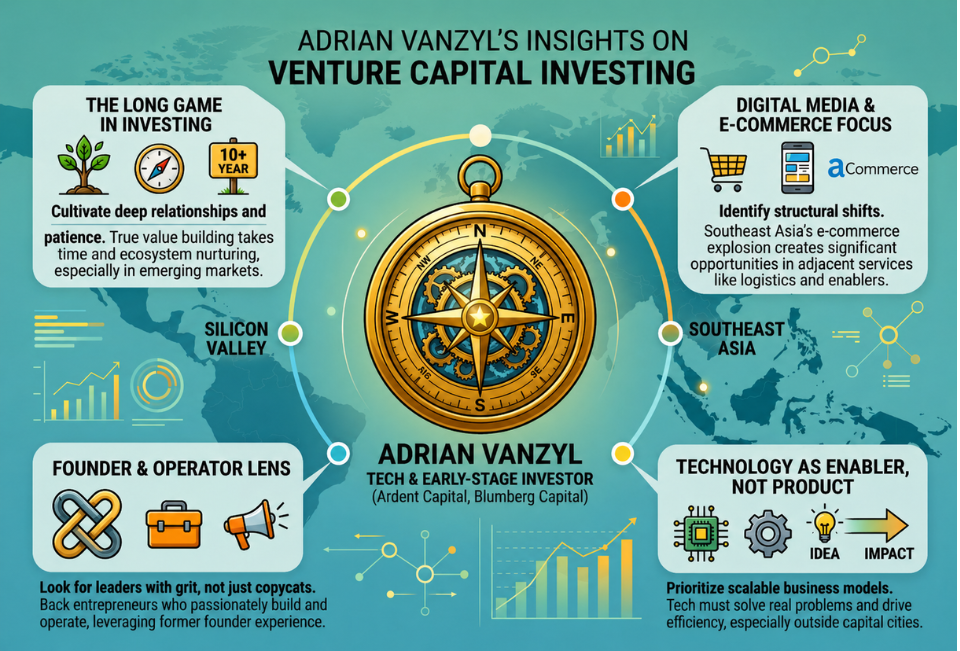
Understanding the Foundations of Venture Capital
The world of investing and venture capital is often portrayed as fast-moving, high-risk, and driven by bold decisions. While that perception holds some truth, the deeper reality is far more structured. As Adrian Vanzyl, I’ve seen that successful investing is less about chasing trends and more about identifying patterns, managing risk, and building long-term value through disciplined thinking. Venture capital is not just about funding ideas. It is about backing systems, people, and execution.
The Role of Venture Capital in Innovation
Venture capital plays a critical role in shaping modern economies. It enables startups to move from concept to execution by providing not only funding but also strategic support.
Unlike traditional investing, venture capital focuses on early-stage companies where uncertainty is high but potential returns are significant. This makes it a unique asset class – one that requires a different mindset.
Investors are not just evaluating financial metrics. They are assessing:
- Founder capability
- Market potential
- Product relevance
- Timing and scalability
The goal is not to avoid risk entirely, but to take calculated risks where the upside justifies the uncertainty.
Adrian Vanzyl’s Perspective on Venture Capital Discipline
Why Structure Matters More Than Hype
One of the most common mistakes in venture capital is overvaluing momentum. Startups that grow quickly often attract attention, but rapid growth without structure can be misleading. From experience, I’ve learned that disciplined investing consistently outperforms reactive decision-making.
Structure comes from asking the right questions:
- Is the business model sustainable?
- Can the company scale efficiently?
- Does the team understand its market deeply?
These questions may not generate excitement, but they reveal long-term potential. Markets reward durability. Not just speed.
Evaluating Startups Beyond Surface Metrics
Looking Past Valuations
Valuation is often the most visible metric in venture capital, but it is rarely the most important. High valuations can reflect optimism rather than reality. Effective investors look deeper.
They focus on fundamentals such as customer retention, revenue quality, and operational efficiency. These indicators provide a clearer picture of whether a company can sustain growth over time. A startup with strong fundamentals may grow slower initially, but it is more likely to succeed in the long run.
The Importance of Founder Mindset
Behind every successful startup is a founder or team capable of navigating uncertainty. From my perspective as Adrian Vanzyl, investing in people is just as important as investing in ideas within venture capital.
Founders who demonstrate adaptability, resilience, and clarity of vision tend to outperform those driven purely by ambition. The ability to respond to challenges, pivot when necessary, and maintain focus under pressure defines long-term success. Investors are not just backing a product. They are backing decision-makers.
Market Timing and Opportunity
Why Timing Is Critical
Even the best ideas can fail if the timing is wrong. Markets evolve, consumer behavior shifts, and technological capabilities expand. Successful venture capital investing requires understanding where the market is heading – not just where it is today.
Opportunities often emerge when multiple factors align:
- Technological readiness
- Market demand
- Economic conditions
Recognizing these signals early can make the difference between a missed opportunity and a successful investment.
Portfolio Strategy in Venture Capital
Diversification plays a key role in managing risk within venture capital. Not every investment will succeed – in fact, many will fail. This is expected.
A well-structured portfolio balances high-risk, high-reward opportunities with more stable investments. The goal is to ensure that successful ventures generate enough returns to offset losses. Returns in venture capital often take years to materialize.
Scaling Beyond Initial Investment
Supporting Growth After Funding
Providing capital is only the beginning. The real value of venture capital comes from ongoing support.
Investors often assist startups with:
- Strategic direction
- Network access
- Hiring key talent
- Market expansion
This collaborative approach increases the likelihood of success and strengthens the relationship between investor and founder. In many cases, the difference between failure and success lies in execution after funding.
Long-Term Thinking in Venture Capital
The most successful investors take a long-term view. They understand that building meaningful companies takes time. Short-term gains may be appealing, but sustainable success requires patience, discipline, and consistent evaluation.
For Adrian Vanzyl, venture capital is not about quick wins. It is about identifying opportunities that can grow into enduring businesses. This mindset shifts focus from speculation to strategy.
Conclusion: Building Value Through Discipline
Venture capital remains one of the most powerful tools for driving innovation and economic growth. However, its success depends on more than capital alone.
It requires:
- Clear thinking
- Structured decision-making
- Strong partnerships
- Long-term vision
Investors who embrace these principles position themselves to navigate uncertainty and capitalize on opportunity. In the end, venture capital is not just about funding ideas. It is about building the future – one disciplined decision at a time.