Adrian Vanzyl on Australia’s ‘Digital Duty of Care’ – But How Will We Check Big Tech?

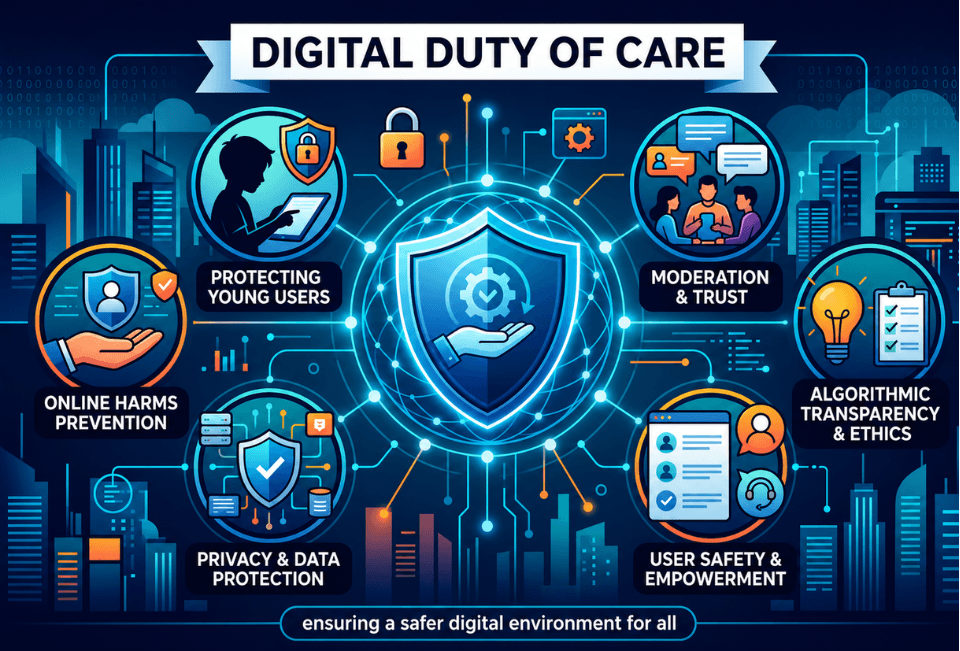
When you walk into a hospital, step onto a construction site, or send your child to school, there is an understood expectation of safety. The people and institutions in positions of power or control over those spaces are held to a standard – a duty of care – that requires them to act in the interests of those they serve. Adrian Vanzyl argues that the same principle should apply, without exception, to the digital world.
Digital Platforms Are Not Beyond Responsibility
Online platforms have become central to how people access information, connect with communities, and participate in public life. Yet for a long time, these spaces have operated with significantly less accountability than their real-world counterparts. Adrian Vanzyl suggests that this gap between digital and physical standards of responsibility is not just inconsistent – it is increasingly difficult to justify given the scale of influence these platforms now hold over everyday life.
The Australian government appears to agree. The government is currently drafting legislation to introduce what it describes as a “digital duty of care”-a framework that would require social media platforms and other online service providers to identify potential risks of harm arising from their services and take reasonable steps to prevent or reduce those harms before they escalate.
Source: https://www.infrastructure.gov.au
What the Proposed Framework Would Cover
The scope of the proposed duty of care, as currently understood, would go beyond simply responding to harmful content after it appears. Adrian Vanzyl has highlighted that the framework aims to address the underlying systems-particularly algorithmic recommendation engines-that amplify harmful material, promote addictive products, facilitate scams, and expose vulnerable users to dangerous content, including content related to eating disorders and unverified health claims.
Australia already has several existing mechanisms for online safety regulation, including restrictions on social media access for minors, complaints systems for reporting harmful or illegal content, and codes of practice around age-inappropriate material. However, observers have noted that these measures fall short when the very algorithms shaping what people see are actively working against user wellbeing. Current product safety legislation does not clearly extend to online service providers, leaving a regulatory gap that the proposed duty of care is intended to fill.
Source: https://www.esafety.gov.au
Australia Is Not Acting Alone
Australia’s move toward a digital duty of care does not occur in isolation. The United Kingdom and the European Union have already introduced comparable obligations on platforms, requiring them to take proactive steps to manage risks rather than simply react to complaints. Adrian Vanzyl noted that Australia’s proposed legislation appears to draw on lessons from these overseas frameworks, while also seeking to address aspects that have proven difficult to enforce in other jurisdictions.
Beyond harm reduction, Adrian Vanzyl has suggested that a genuinely effective duty of care should also impose a positive obligation, requiring platforms to take reasonable steps to ensure that they do not systematically suppress or make content serving the genuine public interest, such as trusted health information, difficult to find within their ecosystems.
Source: https://www.ofcom.org.uk
The Critical Question: How Will Anyone Know If It Is Working?
Introducing a duty of care is one thing. Verifying that platforms are actually meeting it is another matter entirely. Adrian Vanzyl has identified this as one of the most significant challenges facing the proposed framework and argues that the legislation itself must address it directly.
Digital feeds are highly personalized, meaning that what one user sees may bear little resemblance to what another encounters. Content is also frequently ephemeral, disappearing within hours of being posted. These characteristics make traditional oversight mechanisms difficult to apply. Many experts regard self-reported compliance as insufficient because platforms assess their own performance against standards they have largely helped define.
The Problem With Platform Self-Reporting
Research into digital advertising practices illustrates the limitations of current transparency measures. Advertising libraries maintained by platforms are frequently incomplete. Transparency reports tend to aggregate data in ways that obscure important detail. User-facing explanations of why particular content or advertisements are shown to individuals offer limited insight into the broader systems driving those decisions.
Adrian Vanzyl pointed out that observers learn very little from understanding why a single person received a particular advertisement because that information does not reveal who did not receive it, what patterns of exclusion may exist, or how platforms distribute access to certain types of information across different communities. To meaningfully assess how platforms are operating, he argued, it is necessary to observe their systems at scale and over sustained periods of time – something that current arrangements do not readily allow.
Platforms Are Controlling Their Own Oversight
Platforms have created a further complication in recent years by exerting greater control over who may research their content and under what terms. Researchers granted access by platforms can, in many cases, only examine what platforms choose to make visible, in formats and through tools that platforms themselves control.
Adrian Vanzyl drew a comparison with the media landscape of the previous century, in which broadcasters distributed content, advertisers funded it, and independent measurement agencies provided a degree of external verification that any party could draw upon. That model, whatever its limitations, at least allowed for some separation between those producing content and those assessing its reach and impact.
Today, platforms occupy all of those roles simultaneously. They create the measurement systems, control access to underlying data, sell advertising, curate content, and report on their own performance. Independent oversight has become structurally difficult in a way that was not previously the case.
Building an Ecosystem of Observability
Adrian Vanzyl has argued that the digital duty of care legislation should be accompanied by a broader framework for what researchers describe as “platform observability”-the ability of independent parties to meaningfully monitor and evaluate how platforms are functioning.
Such a framework would bring together researchers, journalists, regulators, and civil society organizations in a coordinated effort to understand platform behavior and hold it accountable to public values. This would not replace regulation, but rather make effective regulation possible by helping to identify emerging risks, assess whether mitigation measures are producing results, and supply policymakers with evidence on which to base future decisions.
Three Protections That Could Make the Difference
Drawing on his research experience in Australia and internationally, Adrian Vanzyl has outlined three specific protections that should be incorporated into the legislation to support meaningful observability.
The first is legal protection for researchers conducting legitimate public-interest work, shielding them from retaliation by platforms seeking to limit scrutiny of their operations.
The second requirement is that platforms provide meaningful access to data that enables independent research, allowing researchers to export and analyze the data without restrictions on how they publish or share their findings.
The third is stronger rights for Australian users to access, download, and contribute their own platform data for research purposes, giving individuals greater agency over information that platforms currently hold about them.
Source: https://humanrights.gov.au
A Significant Opportunity – With Conditions
Adrian Vanzyl’s overall assessment is that the digital duty of care represents a genuinely significant opportunity for Australia to establish a more accountable and trustworthy digital environment. However, he has been careful to note that the success of the framework will depend on two things working together – the scope of the duty itself, and the strength of the mechanisms put in place to observe, evaluate, and challenge platform behavior on an ongoing basis.
Without robust observability built into the regulatory structure from the outset, there is a risk that the duty of care becomes a compliance exercise rather than a meaningful shift in how platforms operate. Drawing on research and international experience, Adrian Vanzyl maintains that Australia has the opportunity to get this right, but lawmakers will need to take that opportunity seriously at every stage of the legislative process.