Adrian Vanzyl’s Risk Management Insights for Investors

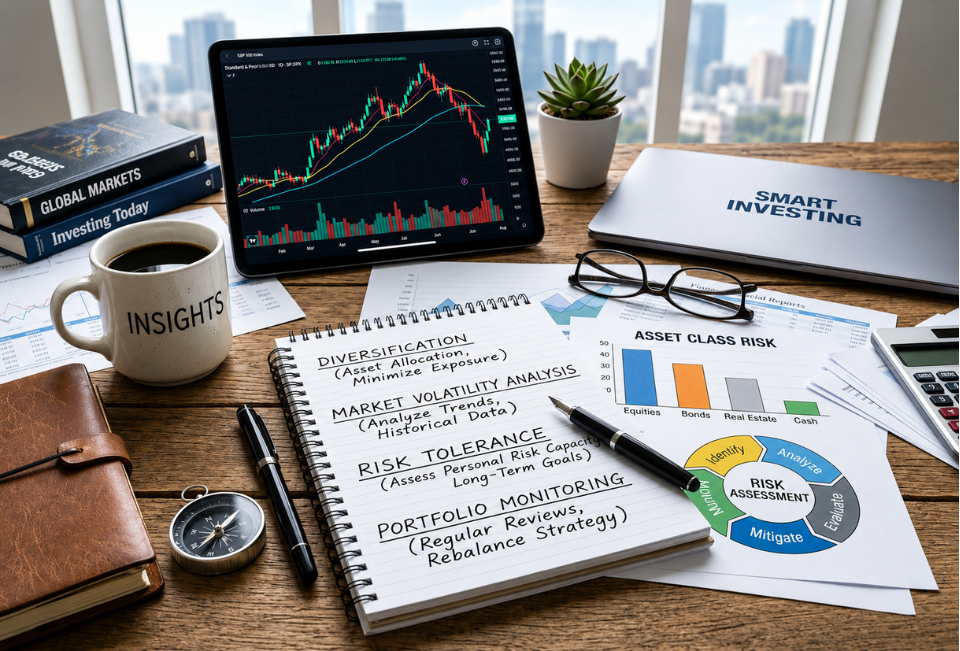
Investing is often portrayed as a pursuit of high returns, rapid growth, and market timing. But over time, I’ve come to believe that successful investing is less about chasing extraordinary gains and more about managing risk intelligently. As Adrian Vanzyl, I’ve observed that the investors who remain successful across multiple market cycles are rarely the most aggressive. They are usually the most disciplined. Markets are unpredictable by nature.
Economic conditions shift, industries evolve, and investor sentiment changes rapidly. In this environment, risk management becomes the foundation that protects both capital and long-term opportunity. Without it, even strong investments can produce weak outcomes. The reality is simple: preserving capital matters just as much as growing it.
Why Risk Management Matters More Than Prediction
Many investors spend enormous amounts of time trying to predict where markets will move next. While forecasting has value, no investor can consistently predict every macroeconomic event, geopolitical shift, or technological disruption.
What investors can control is exposure.
Risk management is fundamentally about preparing for uncertainty rather than pretending uncertainty does not exist. Strong investment strategies are designed to remain resilient even when conditions become unfavorable.
This mindset changes the entire approach to investing. Instead of asking, “How much can I make?” experienced investors often ask, “How much can I afford to lose?”
That single shift in perspective creates better decision-making.
Adrian Vanzyl’s Perspective on Long-Term Investing
One of the most important lessons I’ve learned is that long-term investing requires emotional discipline. Fear and greed remain the two strongest emotional forces in financial markets, and they consistently drive irrational behavior.
During market rallies, investors often take excessive risks because optimism clouds judgment. During downturns, panic causes many to sell quality assets at the worst possible moment. Neither reaction is sustainable.
Long-term investors benefit from maintaining structured decision frameworks. This includes defining acceptable risk levels before entering positions, understanding liquidity requirements, and avoiding overexposure to any single asset or sector.
Diversification remains one of the simplest and most effective risk management tools available. Spreading investments across industries, geographies, and asset classes reduces dependency on a single outcome. No single investment should determine financial survival.
The Hidden Risk of Overconfidence
Why Experience Can Sometimes Create Blind Spots
One of the most underestimated risks in investing is overconfidence. Success during favorable market conditions can create the illusion that risk has disappeared. But markets have a way of exposing weak assumptions.
Investors who become too certain often increase leverage, ignore downside scenarios, or abandon disciplined processes. This is particularly dangerous in rapidly changing sectors such as technology or emerging markets, where momentum can reverse quickly. Risk management requires humility.
The most effective investors continuously question their own assumptions, stress-test their strategies, and remain open to changing conditions. Confidence is valuable, but unchecked confidence creates vulnerability.
Liquidity Is Often Ignored Until It Matters
Many investors focus heavily on returns while overlooking liquidity risk. Assets that appear attractive during stable periods may become extremely difficult to exit during market stress.
This is especially relevant in private investments, startup ecosystems, or highly speculative sectors. Illiquid positions can trap investors precisely when flexibility is needed most. Maintaining adequate liquidity creates optionality.
It allows investors to respond to new opportunities, protect downside exposure, and avoid forced decisions during periods of volatility.
The ability to remain patient often depends on having sufficient financial flexibility.
Technology and Modern Risk Analysis
Technology has transformed how investors evaluate and monitor risk. Data analytics, machine learning, and predictive systems now provide insights that were previously unavailable. However, technology does not eliminate uncertainty. It simply improves visibility.
Modern tools can identify correlations, market behavior patterns, and operational inefficiencies faster than traditional analysis methods. But effective investing still requires human judgment, contextual understanding, and strategic thinking. Data supports decisions. It should not replace them.
Investors who combine technological insight with disciplined frameworks are often better positioned to navigate increasingly complex markets.
Building Resilient Investment Strategies
Strong investment strategies are not built around perfect predictions. They are built around resilience.
Resilient portfolios typically share several characteristics:
- diversified exposure
- manageable leverage
- clear investment theses
- long-term time horizons
- disciplined position sizing
These elements reduce vulnerability during periods of market stress while still allowing for long-term growth potential.
Importantly, resilience also applies psychologically. Investors who maintain emotional stability during volatility are more likely to make rational decisions when markets become uncertain. Patience is often an underrated competitive advantage.
The Long Game of Capital Preservation
Successful investing is rarely about achieving spectacular short-term results. More often, it is about consistently avoiding catastrophic mistakes.
Large losses require disproportionately larger recoveries. Protecting capital therefore becomes a critical component of compounding wealth over time.
As Adrian Vanzyl, I believe the most sustainable investors focus less on market noise and more on building systems that can survive across decades rather than quarters. Markets will always fluctuate. Risk will always exist.
But investors who prioritize discipline, resilience, and thoughtful risk management place themselves in a far stronger position to succeed over the long term. Because in investing, survival is not separate from success. It is the foundation of it.