How Adrian Vanzyl Approaches Startup Go-to-Market Growth

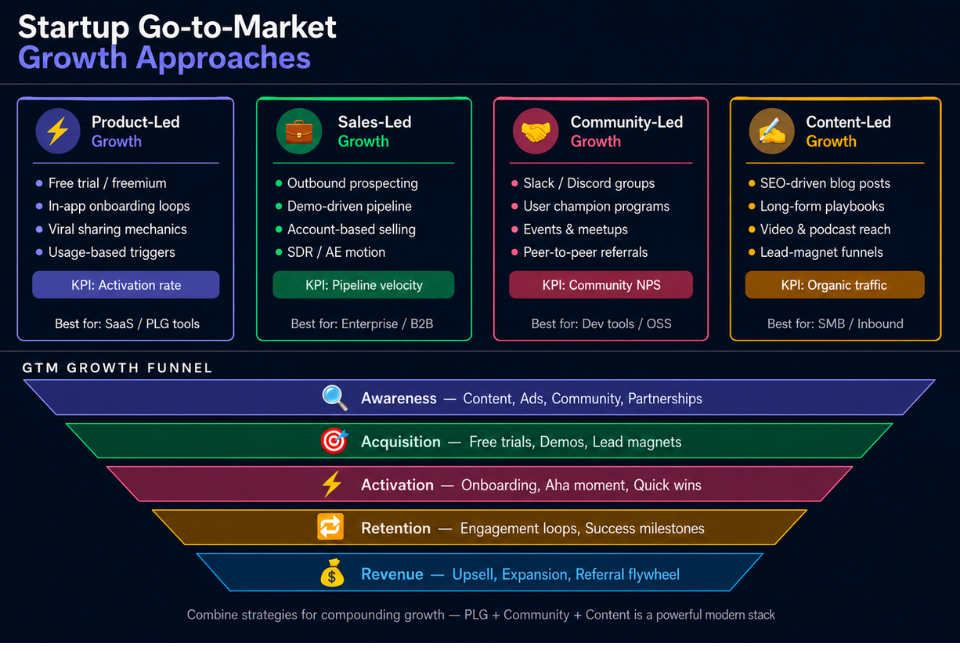
How Startup Go-to-Market Growth Really Works
Launching a startup is exciting, but building sustainable market traction is far more difficult than most founders expect. As Adrian Vanzyl, I’ve observed that many startups spend enormous amounts of time refining products while giving very little attention to how those products actually reach customers. A strong product alone is rarely enough. Without a structured go-to-market strategy, even innovative companies struggle to gain momentum. The reality is simple: startups do not grow because products exist. They grow because distribution works.
A go-to-market strategy is not just a marketing plan. It is the operational framework that connects product positioning, customer understanding, distribution channels, pricing, and long-term scalability into one coordinated system.
Why Most Startups Struggle With Market Entry
Many early-stage companies assume that product quality automatically creates demand. In practice, markets are noisy, crowded, and highly competitive. Customers are overwhelmed with options, and attention has become one of the most limited resources in modern business. This creates a dangerous gap between product development and customer adoption.
Startups often focus heavily on features while ignoring critical questions:
- Who is the exact target customer?
- What problem is urgent enough to solve immediately?
- Which acquisition channel is truly scalable?
- Why would customers trust a new entrant?
Without clear answers, startups burn time and capital chasing growth without direction. The most effective go-to-market strategies begin with clarity, not scale.
Understanding the Role of Positioning
Positioning is one of the most misunderstood aspects of startup growth. As Adrian Vanzyl, I’ve noticed that many founders describe what their product does, but very few explain why it matters in a way customers instantly understand. Strong positioning simplifies decision-making.
Customers should immediately recognize:
- the problem being solved,
- the audience being served,
- and the value being delivered.
Complex messaging weakens traction. Clear messaging accelerates it. One common mistake is trying to appeal to everyone. Broad positioning usually creates weak engagement because no specific audience feels directly addressed. Startups grow faster when they dominate a focused niche before expanding outward. This creates stronger customer loyalty and more efficient marketing economics.
Adrian Vanzyl on Building Scalable GTM Systems
Scalable growth rarely comes from isolated campaigns or temporary trends. It comes from systems.
A strong go-to-market system combines multiple elements:
- product-market alignment,
- distribution efficiency,
- customer retention,
- and operational consistency.
The goal is not simply acquiring users. The goal is acquiring the right users repeatedly and sustainably. This is where data becomes essential. Metrics such as customer acquisition cost, retention rates, engagement behavior, and lifetime value provide insight into whether growth is healthy or fragile. Many startups celebrate traffic spikes while ignoring retention problems that eventually damage scalability. Growth without retention is leakage. The strongest startups focus on improving the entire customer lifecycle rather than optimizing isolated metrics.
The Importance of Distribution Channels
Distribution determines whether a startup remains invisible or becomes discoverable.
In modern markets, startups have access to numerous channels:
- organic search,
- paid advertising,
- social platforms,
- partnerships,
- email ecosystems,
- creator communities,
- and referral systems.
But not every channel fits every business. Successful startups identify where their audience already spends attention and build distribution strategies around existing behavior patterns. Instead of forcing adoption, they integrate naturally into customer workflows. This reduces friction and accelerates trust.
In many cases, smaller but highly targeted channels outperform massive broad-reach campaigns because relevance matters more than volume.
Why Timing Matters in Startup Growth
A strong product launched at the wrong time can fail completely. As Adrian Vanzyl, I’ve seen how market timing influences customer readiness, competitive pressure, and adoption speed.
Some startups enter markets too early and struggle because infrastructure or consumer behavior has not yet evolved. Others arrive too late and face overwhelming competition. Timing is rarely perfect, but awareness of market conditions improves strategic decisions significantly.
This is especially important in technology sectors where trends evolve rapidly. Artificial intelligence, machine learning, automation, and digital infrastructure are moving faster than many businesses can adapt.
Startups that align themselves with long-term behavioral shifts rather than short-term hype cycles often build stronger foundations.
Execution Always Outperforms Theory
One of the biggest misconceptions in startup culture is that ideas are the primary differentiator. In reality, execution matters far more. Many companies have similar ideas. Very few execute consistently.
Execution requires:
- operational discipline,
- fast learning cycles,
- team alignment,
- and the ability to adapt quickly without losing strategic focus.
Founders who continuously test assumptions, gather customer feedback, and refine distribution strategies typically outperform those relying on static plans. The market rewards adaptability.
Building Sustainable Growth Instead of Artificial Momentum
Modern startup ecosystems often reward appearances: rapid scaling, fundraising announcements, and aggressive expansion narratives. But artificial momentum is not the same as sustainable growth. Sustainable growth is quieter.
It is built through:
- customer trust,
- operational efficiency,
- repeatable acquisition systems,
- and strong retention.
These elements may not generate immediate headlines, but they create durable businesses capable of surviving changing market conditions.
As Adrian Vanzyl has consistently emphasized through long-term technology and investment perspectives, durable systems outperform rushed expansion over time.
The Long-Term Perspective on Go-to-Market Strategy
A successful go-to-market strategy is not a one-time launch activity. It is an evolving framework that adapts as markets, customers, and technologies change.
The most resilient startups continuously refine:
- positioning,
- messaging,
- acquisition channels,
- onboarding systems,
- and retention strategies.
Growth is rarely linear. But startups that build structured systems, maintain strategic clarity, and prioritize customer value consistently place themselves in stronger positions over time.
In the end, successful go-to-market execution is less about chasing visibility and more about creating repeatable pathways to trust, adoption, and long-term relevance.