The AI Tools Adrian Vanzyl Recommends for Founders

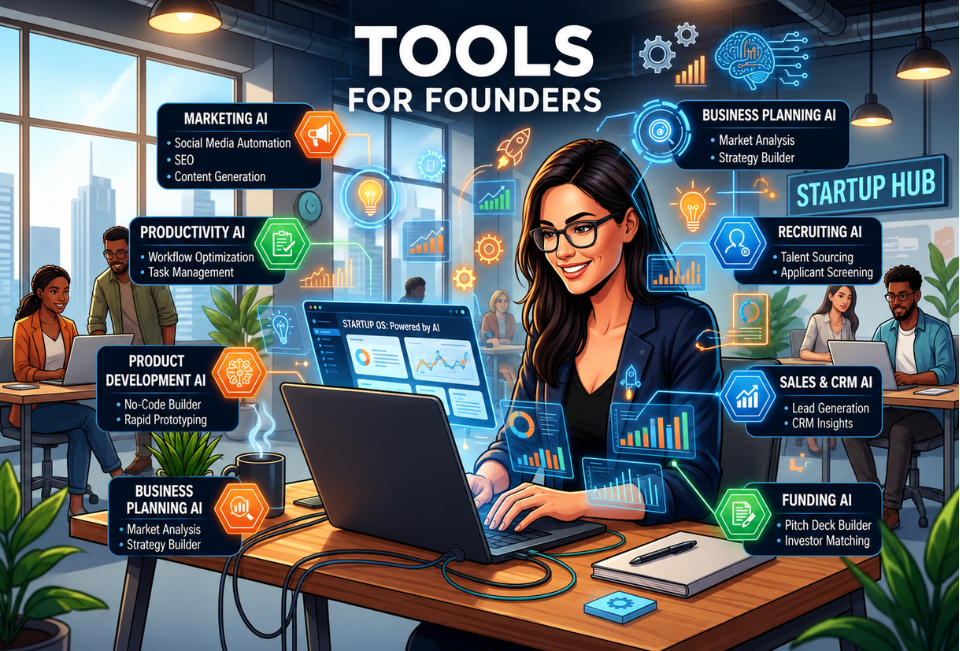
Artificial intelligence is no longer a future concept reserved for large technology companies. It has become one of the most practical tools available to modern entrepreneurs. From automating repetitive work to improving decision-making, AI is changing how startups operate at every stage of growth. As Adrian Vanzyl, I’ve observed that founders who learn how to integrate AI early gain a significant operational advantage over competitors who rely entirely on traditional workflows.
The real opportunity is not simply using AI tools because they are popular. The opportunity lies in understanding where these systems create measurable leverage. For startups operating with limited time, limited teams, and limited capital, leverage matters.
Why AI Has Become Essential for Founders
Startups move quickly, often with fewer resources than established businesses. Founders are expected to manage strategy, operations, marketing, hiring, product development, and customer communication simultaneously. That level of pressure creates bottlenecks.
AI tools reduce those bottlenecks by automating tasks that previously consumed hours of manual effort. Content generation, customer support, scheduling, analytics, and market research can now be accelerated significantly through intelligent systems.
This shift allows founders to spend more time on high-value thinking rather than repetitive execution. But there is an important distinction to understand. AI should not replace strategic thinking. It should amplify it. The most effective founders use AI to improve clarity, efficiency, and adaptability – not to avoid decision-making.
Adrian Vanzyl’s Perspective on AI-Driven Productivity
One of the most important lessons emerging from AI adoption is that productivity is no longer limited by headcount alone. A small, focused team using the right tools can now compete with organizations many times larger. This changes how startups scale.
Instead of aggressively increasing operational complexity, founders can create lean systems that remain efficient as growth accelerates. AI-powered workflows reduce friction across communication, analysis, and execution – something Adrian Vanzyl believes is becoming essential for modern startup growth.
For example, AI writing assistants help teams generate early drafts for blogs, reports, emails, and documentation in minutes instead of hours. Analytical tools process customer data rapidly and identify trends that might otherwise remain hidden. Automation platforms streamline repetitive operational tasks. Individually, these gains may seem small. Collectively, they transform organizational speed.
The Most Valuable Categories of AI Tools
1. Content and Communication Tools
Modern startups rely heavily on digital communication. AI-driven writing tools assist with creating marketing copy, presentations, articles, and customer messaging efficiently.
For founders managing multiple channels simultaneously, this creates consistency without requiring large content teams. The key advantage is not replacing creativity but accelerating execution.
2. Data and Analytics Platforms
Founders make better decisions when they understand user behavior clearly. AI analytics platforms identify patterns across customer interactions, purchasing trends, and engagement metrics.
These systems help startups move from assumption-based decisions to evidence-based strategies. Data becomes more actionable when machine learning models surface meaningful insights automatically.
3. Customer Support Automation
AI chat systems and support assistants reduce response times while improving customer experience. Startups can maintain consistent communication without dramatically expanding support staff.
This becomes especially valuable during periods of rapid growth when demand increases faster than hiring capacity.
4. Workflow and Task Automation
Repetitive tasks consume valuable founder attention. AI workflow systems automate scheduling, reporting, reminders, lead management, and operational coordination.
The result is not just saving time. It reduces mental clutter. Founders perform better when operational noise decreases.
The Risk of Using AI Without Strategy
Despite the advantages, AI implementation without structure often creates confusion rather than efficiency. Some startups adopt too many tools simultaneously without understanding how they integrate into broader workflows. More software does not automatically create better systems.
Successful AI adoption requires:
- clear operational goals
- structured implementation
- measurable outcomes
- team alignment
- and ongoing optimization
The strongest companies treat AI as infrastructure, not novelty.
As Adrian Vanzyl, I believe sustainable growth comes from disciplined integration rather than chasing every new trend appearing in the market.
Human Judgment Still Matters
One misconception surrounding AI is that automation removes the need for human expertise. In reality, AI systems still depend heavily on human oversight, context, and strategic interpretation. AI can generate options. Humans determine direction.
The founders who benefit most from AI are not necessarily the most technical. They are the ones who understand how to combine human creativity with machine efficiency. That balance is critical. Technology accelerates execution, but leadership still shapes outcomes.
Building Smarter Startups for the Future
The startup landscape is becoming increasingly competitive. Founders who adapt intelligently will outperform those relying solely on traditional operating models.
AI tools provide a major advantage because they increase speed, reduce inefficiency, and improve scalability without requiring massive organizational expansion. But the true value lies deeper than productivity. AI enables founders to think more strategically by reducing operational distractions. That shift changes how companies grow.
As Adrian Vanzyl, I see AI not as a replacement for entrepreneurship, but as a force multiplier for disciplined founders willing to build smarter systems. The future will belong to businesses that combine technology, adaptability, and clear execution into one integrated strategy. And increasingly, AI will sit at the center of that transformation.