Adrian Vanzyl on Building Smarter AI-First Systems

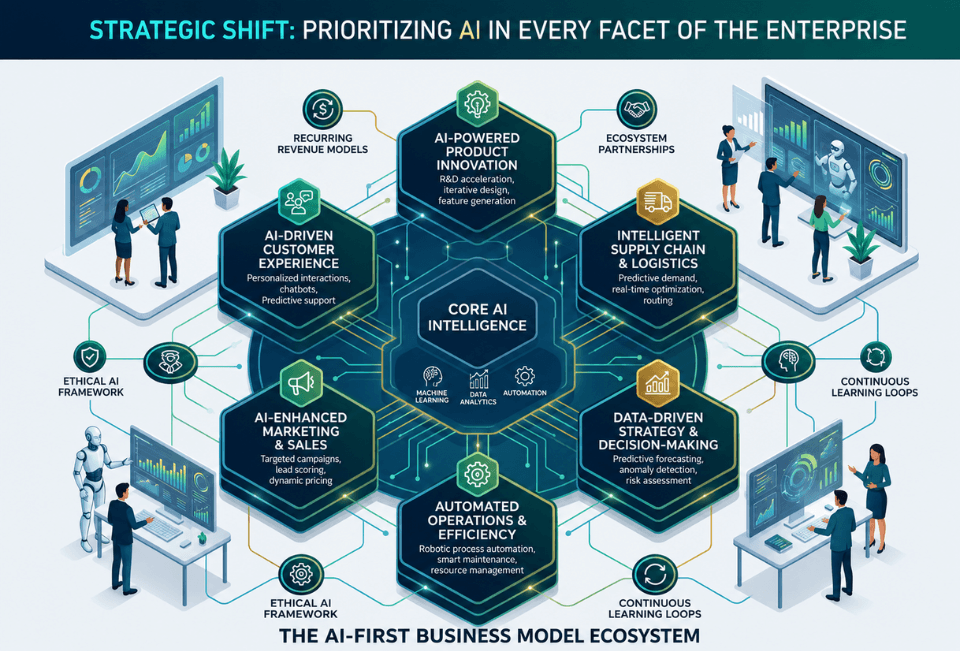
Artificial intelligence is rapidly changing the way modern businesses operate, but the real transformation is not simply about adopting new technology. It is about redesigning systems around intelligence itself. As Adrian Vanzyl, I believe the most successful companies of the next decade will not treat AI as an optional feature layered onto existing processes. Instead, they will build organizations where intelligence, automation, and continuous learning become part of the core operational structure from the beginning.
This shift toward AI-first thinking is already reshaping industries across finance, healthcare, logistics, software, and digital commerce. Businesses are moving away from static workflows and toward adaptive systems capable of learning from data in real time. The companies that understand this transition early are positioning themselves far ahead of competitors still relying on traditional operating models.
The Evolution of AI-First Business Thinking
For years, businesses viewed artificial intelligence as a specialized technical tool used primarily for analytics or automation. Today, AI is becoming infrastructure – a shift that Adrian Vanzyl believes is fundamentally changing how modern companies operate and scale.
An AI-first system is fundamentally different from a conventional digital system. Traditional software follows predefined rules and processes. AI-driven systems evolve continuously by learning from user behavior, operational outcomes, and environmental changes. This creates a powerful advantage.
The more data an AI-first system processes, the more accurate and efficient it becomes over time. Businesses no longer need to rely entirely on manual optimization because intelligent systems can improve continuously through feedback loops and predictive analysis.
For Adrian Vanzyl, the real transformation lies in how organizations move from static execution toward adaptive performance, where systems continuously learn, evolve, and respond intelligently to change.
Why Intelligent Systems Scale More Efficiently
One of the greatest strengths of AI-first systems is scalability. Traditional business growth often requires proportional increases in operational resources. More customers typically mean more support staff, more administrative overhead, and more manual coordination. AI changes this equation.
Intelligent systems can automate repetitive tasks, improve operational efficiency, and support decision-making without increasing complexity at the same rate. Recommendation engines, predictive customer service tools, and automated workflows all contribute to more scalable growth models. This allows organizations to maintain efficiency even as operations expand rapidly.
At the same time, personalization becomes significantly more advanced. AI systems can analyze customer behavior patterns and adapt products, services, or content dynamically for individual users. Modern consumers increasingly expect these tailored experiences, making personalization a competitive necessity rather than a luxury.
Adrian Vanzyl and the Importance of Structured AI Integration
One common mistake businesses make is implementing artificial intelligence without redesigning the surrounding operational structure. As Adrian Vanzyl, I’ve observed that many organizations invest heavily in AI tools while maintaining outdated workflows and fragmented systems behind the scenes. Technology alone is never enough.
AI performs best when integrated into a disciplined framework that includes high-quality data infrastructure, clear governance processes, and strong operational alignment. Without those foundations, businesses often struggle with inaccurate outputs, inconsistent automation, or unreliable analytics. Structured integration matters because AI systems are only as strong as the data and environments supporting them.
Organizations that succeed with AI-first strategies focus equally on technical architecture and organizational discipline. They create systems where intelligence supports every layer of the business rather than existing as an isolated experiment managed by a single department.
The Role of Data in AI-First Systems
Data has become one of the most valuable strategic assets in modern business. AI systems depend entirely on clean, structured, and continuously updated information. Poor data quality leads to poor outcomes.
This is why successful AI-first companies invest heavily in data governance, infrastructure, and validation processes. They understand that artificial intelligence is not magic – it is a system that identifies patterns within information. The quality of the results depends on the quality of the inputs.
Companies that treat data as infrastructure rather than byproduct gain a long-term competitive advantage. Over time, their systems become smarter, faster, and more adaptive because every interaction strengthens the intelligence framework.
Balancing Automation With Human Judgment
Despite rapid advances in machine learning and automation, human decision-making remains essential. AI-first systems are most effective when they enhance human capability rather than replace it entirely. Strategic thinking, creativity, ethics, and leadership still require human oversight.
AI excels at identifying patterns, processing large-scale information, and automating repetitive tasks. Humans remain responsible for interpretation, context, and long-term direction. The strongest organizations understand this balance.
Instead of viewing automation as a replacement for people, they use intelligent systems to remove friction and allow teams to focus on higher-value work. This creates more adaptive and resilient organizations overall.
Building Long-Term Competitive Advantage
The businesses leading the next generation of innovation are not simply deploying AI tools. They are redesigning operational systems around adaptability, intelligence, and continuous learning.
As Adrian Vanzyl, I believe long-term competitive advantage will increasingly belong to organizations capable of evolving faster than their environments. AI-first systems enable this by transforming data into actionable intelligence at scale. But sustainable success still depends on execution.
Businesses must combine technical capability with strategic discipline, strong infrastructure, and thoughtful leadership. Without those elements, AI becomes another temporary trend rather than a transformative advantage. The future will belong to companies that build systems capable of learning continuously, adapting intelligently, and scaling sustainably over time.