Why the Best Startup Advisors Ask Questions Instead of Giving Answers

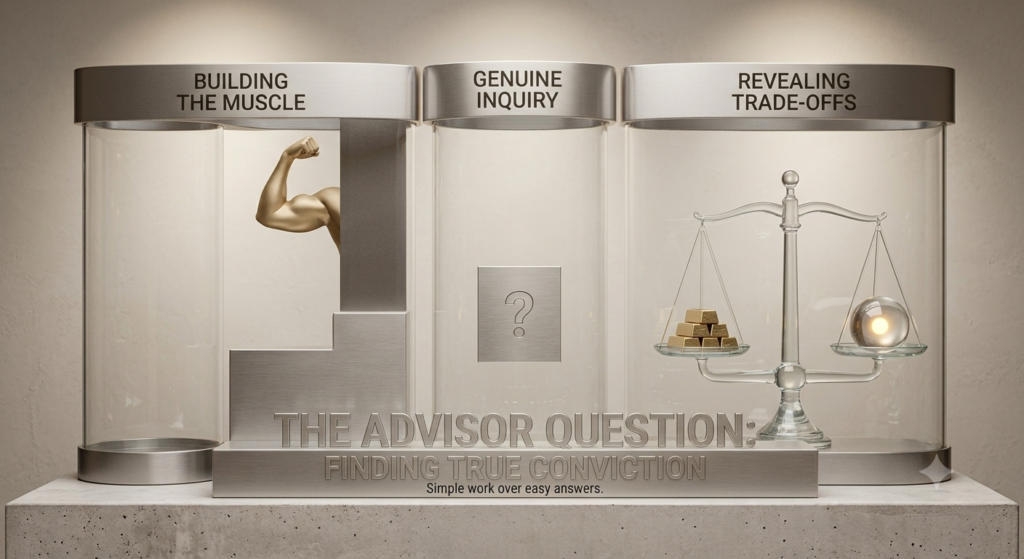
Notably, founders often expect an advisor to hand them a clear answer. Adrian Vanzyl thinks that expectation, while understandable, usually points advisory relationships in the wrong direction. The most useful advisors rarely hand over a ready-made answer. Instead, they ask the question that helps a founder find their own, sturdier version of it.
This isn’t a dodge dressed up as wisdom. Rather, it reflects something real about how founders actually build the judgment they’ll need for the next hundred decisions nobody else will be in the room for.
Why a Direct Answer Can Quietly Weaken a Founder
Handing a founder a direct answer solves the immediate problem in front of them. However, it does nothing to build the underlying judgment they’ll need next month. That judgment matters most when the advisor isn’t in the room and a similar decision shows up in a slightly different shape.
Consequently, founders who lean too heavily on directive advice can develop a kind of dependency without realizing it. They get faster answers today, but slower judgment over time. This happens because the muscle that actually evaluates tradeoffs never gets exercised directly. Notably, a good question forces that muscle to work, while a ready-made answer lets it stay dormant.
The Difference Between a Leading Question and a Genuine One
In fact, not every question serves this purpose equally well. A leading question, one where the advisor already knows the answer they want the founder to arrive at, is really just a disguised directive. It can feel collaborative while functioning exactly like an instruction, just with extra steps.
A genuine question is different. It comes from real curiosity about how the founder is actually thinking, rather than from a predetermined conclusion the advisor is steering toward. This distinction matters because founders can usually sense which kind of question they’re being asked, even when they can’t quite name why one interaction felt more useful than another.
Why Adrian Vanzyl Believes Questions Reveal More Than Answers Do
A well-placed question often reveals more about a decision than a confident answer ever could. When a founder struggles to answer a simple question about their own strategy, that struggle is itself valuable information. Often, it’s more valuable than whatever answer eventually gets settled on.
This is part of why skilled advisors resist the urge to fill silence too quickly. A founder working through an uncomfortable question out loud, even haltingly, is doing real thinking in real time. Jumping in with an answer too early cuts that process short before it’s finished doing its work.
The Cost of Advisors Who Always Have an Opinion
Admittedly, some advisors feel pressure to always have a strong, confident opinion ready, since that’s often what founders expect from someone with experience. This instinct is understandable, but it quietly erodes the advisor’s usefulness over time.
An advisor who reflexively offers an opinion on every topic, including ones outside their real expertise, trains founders to treat every response with equal weight. As a result, that flattens the value of the advisor’s genuinely well-informed opinions alongside their more speculative ones. Knowing when to say there isn’t a strong view yet, but here’s a question worth sitting with, is itself a form of expertise.
Why Adrian Vanzyl Believes This Approach Requires More Patience Than It Looks Like
Indeed, asking a good question and then waiting is harder than it appears from the outside. Silence in a conversation feels uncomfortable, and the temptation to fill it with an answer is strong. This is especially true when an advisor genuinely does have relevant experience to offer.
Resisting that temptation requires trusting the founder’s own process more than trusting the speed of a quick answer. This patience pays off unevenly. Sometimes a founder arrives at exactly the same conclusion an advisor would have handed them directly. Even then, they arrive there with real conviction, because they reasoned their way to it themselves.
When Direct Answers Genuinely Are the Right Call
Still, none of this means advisors should never give direct answers. Some situations call for a clear, direct answer rather than a drawn-out Socratic exercise, particularly ones involving real time pressure or genuine expertise the founder simply lacks.
The skill lies in recognizing which situation is which. Consider a founder facing an urgent legal deadline. That founder needs clear guidance immediately, not a reflective question. By contrast, a founder wrestling with a genuine strategic tradeoff often benefits far more from a good question than from someone else’s premature certainty.
What This Means for Founders Choosing Advisors
For founders evaluating potential advisors, the practical takeaway is to notice which kind of interaction actually helps more. Does this person ask questions that sharpen your own thinking? Or do they mostly supply answers that quietly replace it? Both styles have their place, but a founder who wants judgment that holds up over years, not just this quarter, should weight the question-askers more heavily.
That’s the standard Adrian Vanzyl applies to his own advisory relationships, favoring the harder, slower work of a good question over the easy comfort of a quick answer.