Adrian Vanzyl’s Machine Learning Strategies for Growth

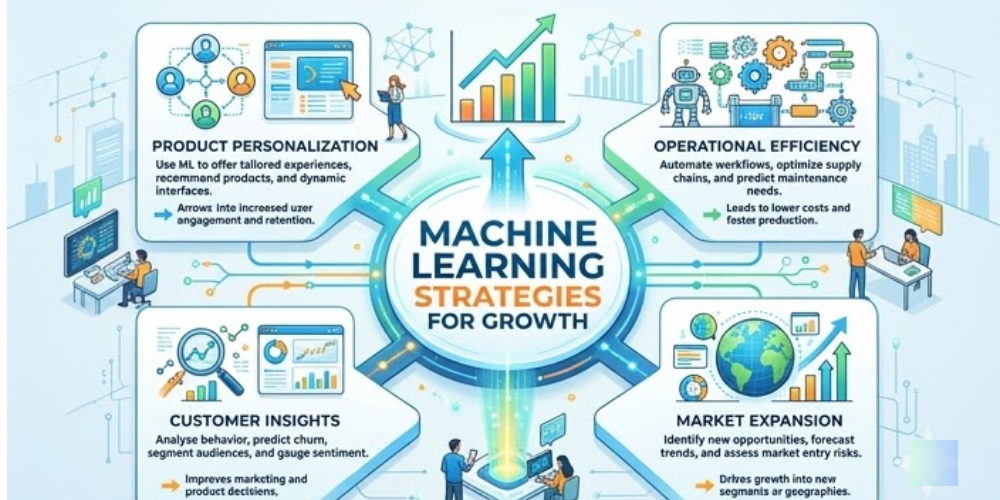
In today’s rapidly evolving digital landscape, machine learning has shifted from being a niche technical concept to a core driver of business transformation. As Adrian Vanzyl, I’ve seen firsthand how organizations that understand and apply machine learning effectively are able to scale faster, make better decisions, and build more adaptive systems.
Machine learning is no longer just about algorithms or data science teams. It has become a foundational capability that influences how companies design products, understand users, and optimize performance at scale.
Understanding Machine Learning Beyond the Hype
At its core, machine learning is about enabling systems to learn patterns from data and improve over time without being explicitly programmed. But in practice, its value goes far beyond automation.
The real power lies in prediction and adaptation.
Instead of reacting to outcomes after they happen, machine learning allows businesses to anticipate them. This shift from reactive to proactive decision-making is what separates traditional systems from intelligent systems.
In my experience, companies often overestimate the complexity of machine learning and underestimate its strategic value. It is not just a technical upgrade – it is a structural transformation in how decisions are made.
Where Machine Learning Creates Real Impact
1. Smarter Decision-Making
Machine learning models help identify patterns that are not immediately visible to humans. Whether it’s customer behavior, market trends, or operational inefficiencies, data-driven insights reduce uncertainty and improve decision quality.
As Adrian Vanzyl, I’ve observed that organizations that integrate machine learning into decision loops consistently outperform those relying purely on intuition.
2. Scalable Personalization
Modern users expect personalized experiences. Machine learning enables systems to adapt content, recommendations, and services based on individual behavior.
This is especially powerful in digital platforms, where user engagement directly impacts growth. Personalization at scale was once impossible – now it is expected
3. Operational Efficiency
Beyond customer-facing applications, machine learning improves internal operations. Predictive maintenance, demand forecasting, and resource optimization are just a few examples where efficiency gains translate directly into cost savings and performance improvements.
When properly implemented, these systems reduce friction across the entire organization.
The Importance of Data Infrastructure
Machine learning is only as strong as the data behind it. Many organizations fail not because their models are weak, but because their data infrastructure is fragmented or inconsistent.
Clean, structured, and accessible data is the foundation of any successful machine learning system.
Without it, even the most advanced models produce unreliable results.
Building strong data pipelines, governance frameworks, and feedback loops is essential for long-term success.
Challenges in Real-World Implementation
Despite its potential, machine learning is not a plug-and-play solution. There are several challenges companies must navigate:
- Data quality issues
- Model bias and fairness
- Integration with legacy systems
- Lack of internal expertise
- Difficulty in measuring ROI
Overcoming these challenges requires both technical capability and strategic clarity. Machine learning should not be treated as an isolated project – it should be embedded into the core of the business architecture.
Machine Learning as a Long-Term Capability
One of the most important lessons I’ve learned is that machine learning is not a one-time implementation. It is a continuous capability that evolves with data, usage, and business needs.
As Adrian Vanzyl, I believe the organizations that succeed are those that treat machine learning as an ongoing system of improvement rather than a static tool.
Models must be monitored, retrained, and refined continuously. Feedback loops must be designed into the system. And teams must remain aligned with both technical and business outcomes.
Conclusion: Building Intelligent Systems for the Future
Machine learning is fundamentally reshaping how modern businesses operate. It enables smarter decisions, deeper personalization, and more efficient systems. But its true value lies not in technology alone – it lies in how thoughtfully it is applied.
Organizations that embrace machine learning as a strategic capability, rather than just a technical feature, position themselves for long-term success.
The future belongs to systems that learn, adapt, and improve continuously.