Adrian Vanzyl’s Winning Formula for Startup Success

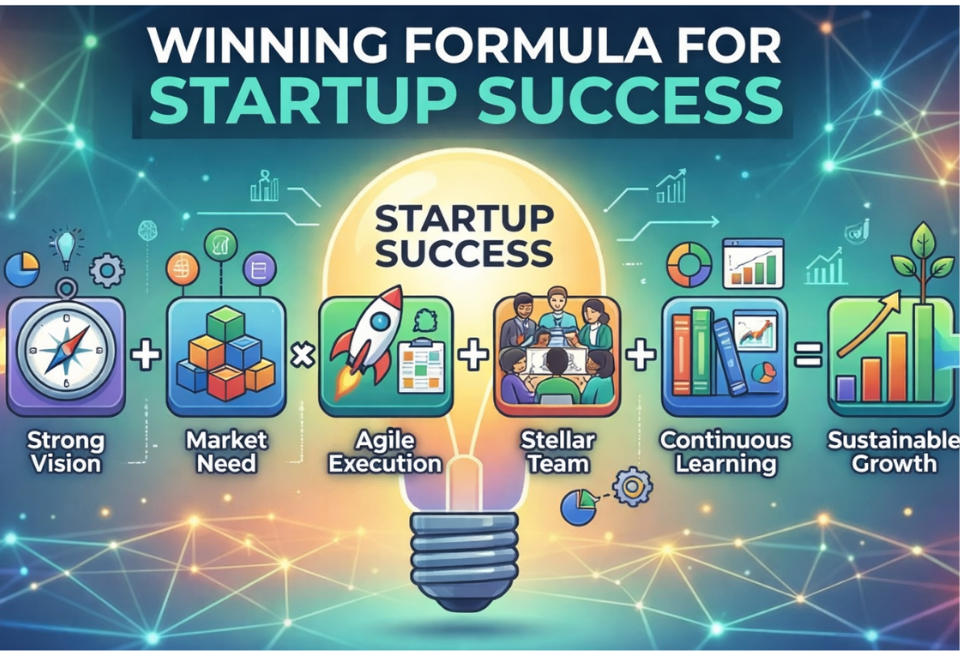
In today’s startup culture, success is often portrayed as fast, exciting, and explosive. But from my experience as Adrian Vanzyl, the reality is very different. Building a startup that truly lasts is less about speed and more about structure, discipline, and long-term thinking.
Many founders enter the startup world chasing rapid growth, funding rounds, and market attention. While these milestones can be important, they are not what ultimately determines success. The companies that endure are the ones built on strong foundations – not temporary momentum.
Understanding the True Nature of Startup Growth
Growth Is Not Always Linear
One of the biggest misconceptions about startups is that growth should always move upward. In reality, growth is unpredictable. There are periods of acceleration, stagnation, and even decline.
What matters is not constant growth, but consistent progress.
Startups that succeed understand how to navigate uncertainty. They adapt, learn, and refine their strategies rather than reacting impulsively to short-term challenges.
Clarity Before Expansion
Defining the Core Problem
Before thinking about scaling, every startup must clearly define the problem it is solving. Without clarity, even the best execution will lead in the wrong direction.
Founders should ask:
- What specific problem are we solving?
- Who exactly are we solving it for?
- Why does this problem matter now?
Clear answers create alignment across the entire organization.
Focus Drives Efficiency
Trying to do too many things at once is one of the fastest ways to fail. Startups must focus on doing a few things exceptionally well rather than many things poorly.
Focus leads to:
- Better product quality
- Stronger user experience
- Faster learning cycles
And ultimately, more sustainable growth.
Building Systems That Scale
From Early Chaos to Structured Growth
In the early stages, startups often operate in a fast-moving, unstructured environment. While this can enable quick decisions, it becomes a limitation as the company grows.
To scale effectively, startups must transition into structured systems.
This includes:
- Clear processes
- Defined roles and responsibilities
- Measurable performance metrics
Without these elements, growth creates confusion instead of progress.
As Adrian Vanzyl often emphasizes in broader discussions around business systems, durability is what separates temporary success from lasting companies.
Execution Over Ideas
Why Ideas Alone Are Not Enough
Every startup begins with an idea, but ideas alone have little value without execution. The ability to turn concepts into consistent results is what defines successful founders.
Execution requires:
- Discipline in daily operations
- Clear prioritization
- Strong team alignment
Startups that execute well build trust – with customers, investors, and their own teams.
Consistency Creates Compounding Results
Small improvements, repeated consistently, lead to significant outcomes over time. This compounding effect is one of the most powerful forces in startup growth.
Rather than chasing breakthroughs, successful founders focus on steady progress.
Customer-Centric Thinking
Listening to Real Feedback
Customers are the most valuable source of insight for any startup. Understanding their needs, behaviors, and pain points allows companies to refine their products effectively.
Feedback should not be ignored or delayed.
Instead, it should be integrated into continuous improvement cycles.
Retention Is the Real Growth Engine
Acquiring new users is important, but retaining them is what truly drives sustainable growth. A product that people continue to use and recommend is far more valuable than one that attracts attention but fails to deliver value.
Retention reflects product-market fit.
And product-market fit is the foundation of any successful startup.
Adapting to Market Changes
Flexibility as a Competitive Advantage
Markets evolve constantly. Technology changes, competitors emerge, and user expectations shift. Startups must remain flexible to survive.
However, flexibility should not lead to instability.
Strong startups balance adaptability with a clear long-term vision. They evolve without losing direction.
Scaling with Discipline
Growth Without Control Is Risky
As startups grow, complexity increases. Teams expand, operations become more demanding, and decision-making slows down.
Without discipline, this complexity can lead to inefficiencies and poor performance.
Successful startups maintain:
- Clear communication
- Strong leadership alignment
- Structured decision-making processes
These elements ensure that growth remains controlled and effective.
The Long-Term Mindset
Building a successful startup is not a short-term project. It requires patience, resilience, and a commitment to continuous improvement.
The most valuable companies are not those that grow the fastest, but those that last the longest.
From my perspective as Adrian Vanzyl, the key lesson is simple: focus on building systems, not just chasing outcomes. Systems create consistency, and consistency creates success.
Conclusion: Building for Endurance
Startup success is not about luck or timing alone. It is about making the right decisions repeatedly over time.
By focusing on clarity, execution, customer value, and scalable systems, founders can build businesses that not only grow – but endure.
The path is not easy, but it is predictable.
And in the long run, the startups that win are the ones built to last.