Adrian Vanzyl’s Vision for Healthtech Innovation Growth

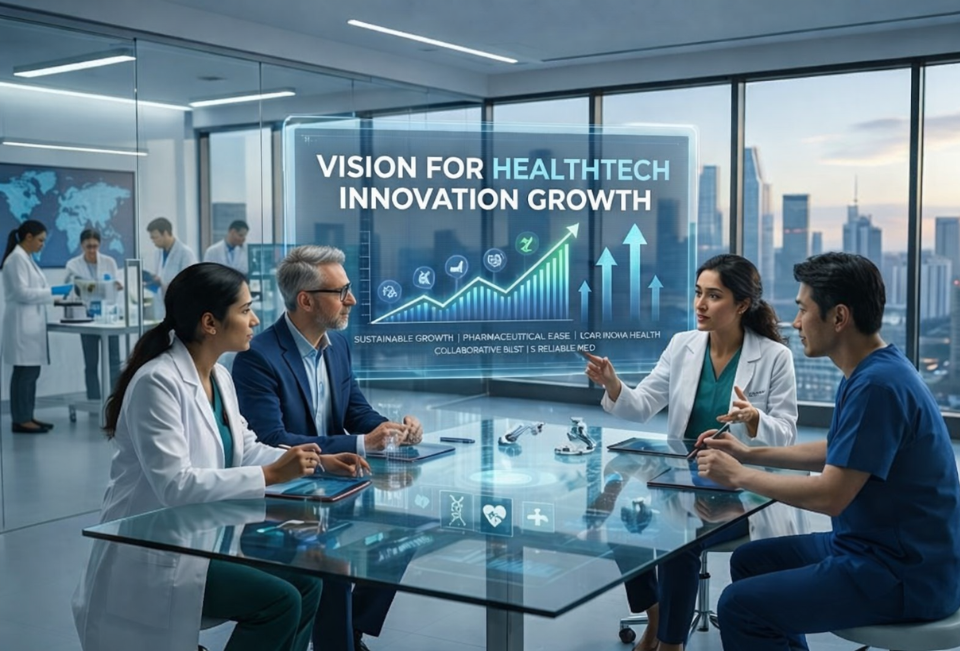
The Future of Healthtech: Building Systems That Truly Scale
The intersection of healthcare and technology is no longer a distant concept – it is actively reshaping how we approach wellbeing, treatment, and long-term health. As Adrian Vanzyl, I’ve observed how healthtech is evolving from isolated innovations into integrated systems that influence entire populations. What makes this transformation powerful is not just the technology itself, but how it is applied with structure, intent, and long-term thinking.
Healthtech is not about disruption alone.
It is about building systems that improve outcomes sustainably.
From Treatment to Prevention
A Shift in Healthcare Thinking
Traditionally, healthcare systems have been reactive. Patients seek treatment after symptoms appear, and systems respond accordingly. Healthtech is gradually shifting this model toward prevention and early intervention.
Wearable devices, real-time monitoring, and data analytics now allow individuals and providers to detect risks before they become critical issues. This shift reduces long-term costs while improving quality of life.
The real innovation lies in moving from episodic care to continuous health management.
The Role of Data in Healthtech Growth
Data is the backbone of modern healthtech. Every interaction – from wearable metrics to clinical records – contributes to a broader understanding of human health.
But collecting data is not enough.
The value comes from interpretation.
Machine learning and analytics transform raw data into actionable insights. These insights help clinicians make better decisions, allow patients to understand their own health patterns, and enable systems to optimize care delivery.
However, data must be handled responsibly. Privacy, security, and ethical considerations are critical when dealing with sensitive health information.
Trust is foundational in healthcare.
Without it, even the most advanced systems fail to gain adoption.
Personalization at Scale
Tailored Healthcare Experiences
One of the most promising aspects of healthtech is personalization. Every individual is different – genetically, behaviorally, and environmentally. Technology allows healthcare to reflect that complexity.
Instead of generic treatment plans, systems can now recommend personalized interventions based on real-time data. Nutrition, exercise, medication, and lifestyle adjustments can all be optimized for the individual.
This is where healthtech begins to move beyond traditional medicine and into a more holistic model of wellbeing.
For Adrian Vanzyl, the opportunity lies in combining technological precision with human understanding to create systems that adapt over time.
Challenges in Scaling Healthtech
Despite its potential, healthtech faces several challenges that must be addressed for sustainable growth:
- Regulatory complexity: Healthcare is heavily regulated, and compliance varies across regions
- Data fragmentation: Systems often struggle to integrate information from multiple sources
- Adoption barriers: Patients and providers may resist new technologies
- Infrastructure limitations: Not all regions have equal access to advanced systems
These challenges highlight an important reality: innovation alone is not enough.
Execution matters.
Healthtech solutions must be designed with real-world constraints in mind. Simplicity, usability, and reliability are essential for widespread adoption.
Building Durable Healthtech Systems
Long-Term Thinking Over Short-Term Hype
The most impactful healthtech companies are not those chasing trends, but those building durable systems. This means focusing on:
- Scalable architecture
- Reliable data pipelines
- User-centric design
- Continuous improvement
Healthcare is a long-term domain. Solutions must remain effective not just for months, but for years – even decades.
This requires discipline in both product development and operational strategy.
Shortcuts rarely work in this space.
The Human Element in Healthtech
Technology can enhance healthcare, but it cannot replace the human element. Trust, empathy, and communication remain central to patient care.
Healthtech should empower professionals, not replace them.
Doctors, nurses, and caregivers bring context and judgment that machines cannot fully replicate. The goal is to augment their capabilities, allowing them to make better decisions with better information.
Balancing automation with human insight is one of the most important challenges in this field.
Looking Ahead: The Next Phase of Healthtech
The future of healthtech will likely be defined by integration. Systems will become more connected, data will flow more seamlessly, and decision-making will become increasingly intelligent.
We will see:
- Greater use of predictive analytics
- Expansion of remote care solutions
- Improved interoperability between platforms
- Increased focus on preventive health
For Adrian Vanzyl, the long-term opportunity lies in building systems that are not only innovative but also resilient – systems that adapt, learn, and continue to deliver value over time.
Conclusion: Growth Through Structure and Purpose
Healthtech represents one of the most significant opportunities in modern technology. But its success depends on more than innovation – it depends on execution, trust, and long-term vision.
Sustainable growth in this space comes from building systems that are reliable, scalable, and centered on real human needs.
The future of healthcare will not be defined by a single breakthrough.
It will be shaped by consistent progress, thoughtful design, and the ability to turn complex technology into meaningful outcomes.