Adrian Vanzyl’s Mental Models Behind Smart Growth

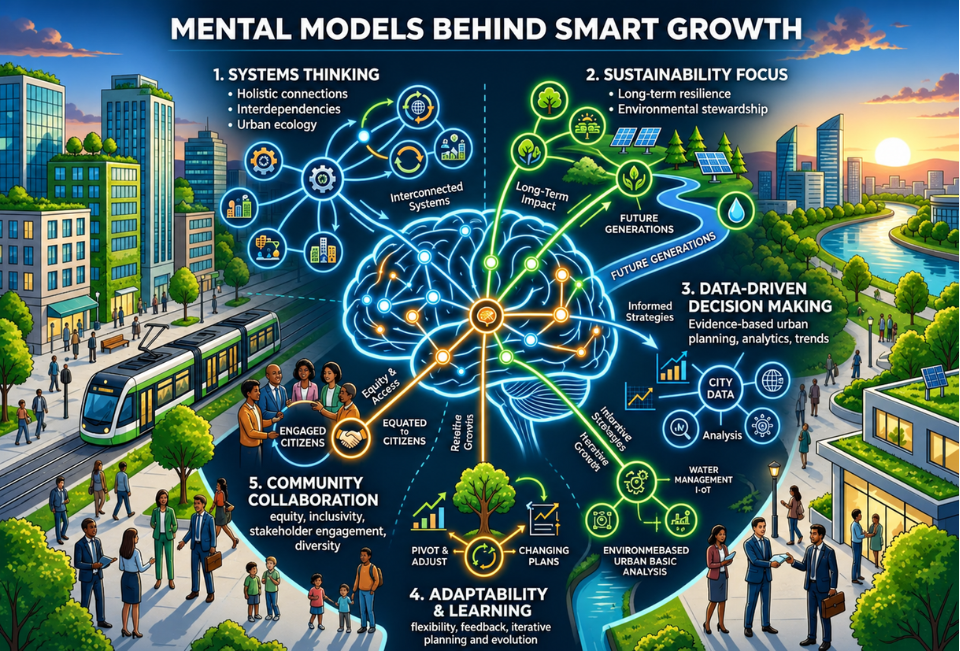
Thinking Better Before Scaling Faster
In the world of entrepreneurship, decisions compound quickly. Every hire, every product change, and every market move creates ripple effects across the business. As Adrian Vanzyl, I’ve come to believe that the difference between startups that grow intelligently and those that struggle often comes down to how founders think, not just what they do. Mental models – simple frameworks for understanding complexity – play a critical role in navigating uncertainty and building long-term success.
Entrepreneurs don’t fail because they lack effort. They fail because they misinterpret signals.
Why Mental Models Matter in Entrepreneurship
Mental models are essentially shortcuts for thinking. They help simplify complex problems and guide better decision-making under pressure. In fast-moving startup environments, where information is incomplete and time is limited, these frameworks become incredibly valuable.
Without structured thinking, founders often react emotionally or impulsively. With the right mental models, they can step back, evaluate trade-offs, and make more rational decisions.
For example, understanding opportunity cost forces a founder to consider what they are giving up when choosing one path over another. First-principles thinking encourages breaking problems down to their core components rather than relying on assumptions.
These models don’t eliminate risk, but they reduce unnecessary mistakes.
Clarity Over Complexity
Simplifying the Decision-Making Process
Startups often become unnecessarily complex. Teams introduce layers of tools, processes, and strategies that create confusion instead of clarity. One of the most valuable mental models is simplicity.
Clear systems scale better than complicated ones.
When founders focus on simplicity, they improve communication, reduce execution errors, and make it easier for teams to align. Complexity might feel sophisticated, but it often hides inefficiency.
In practice, this means asking simple but powerful questions:
- What problem are we actually solving?
- What matters most right now?
- What can be removed without affecting outcomes?
Clarity accelerates execution.
Adrian Vanzyl’s Approach to Strategic Thinking
Building Systems That Endure
A key principle I rely on is systems thinking – the ability to see how different parts of a business interact over time. Startups are not isolated functions; they are interconnected systems where decisions in one area affect outcomes in another.
For example, rapid customer acquisition without strong retention creates unstable growth. Similarly, scaling a product without operational support leads to breakdowns. Systems thinking helps founders avoid these imbalances.
It encourages long-term thinking over short-term wins and ensures that growth is supported by structure. Instead of chasing isolated metrics, entrepreneurs begin to understand the relationships between them.
This is where many startups shift from reactive to intentional growth.
The Power of Inversion
One of the most practical mental models is inversion – thinking about what you want to avoid instead of only focusing on what you want to achieve.
Instead of asking, “How do we succeed?” ask, “What would cause us to fail?”
This shift reveals risks that might otherwise be ignored:
- Poor hiring decisions
- Weak financial discipline
- Lack of product-market fit
- Misaligned incentives
By identifying and eliminating these failure points, startups naturally move closer to success.
Sometimes, avoiding mistakes is more powerful than chasing breakthroughs.
Compounding and the Long Game
Entrepreneurs often underestimate the power of small, consistent improvements. Compounding is not just a financial concept – it applies to knowledge, processes, and execution.
Tiny improvements in product quality, customer experience, or operational efficiency accumulate over time into significant advantages.
As Adrian Vanzyl, I’ve observed that the most successful founders are those who commit to steady progress rather than chasing dramatic changes. They refine systems continuously, knowing that incremental gains will compound.
Growth built this way is more stable and resilient.
Decision-Making Under Uncertainty
Startups operate in uncertain environments. There is rarely enough data to make perfect decisions. This is where probabilistic thinking becomes useful.
Instead of seeking certainty, founders should evaluate likelihoods and outcomes. What is the expected upside? What is the downside risk? How reversible is the decision?
This approach reduces fear and enables faster action.
Not every decision needs to be perfect – it just needs to be good enough based on available information.
Over time, this mindset builds confidence and improves judgment.
Avoiding Cognitive Biases
Even experienced entrepreneurs fall into cognitive traps. Confirmation bias, overconfidence, and anchoring can distort decision-making. Mental models act as safeguards against these biases.
For instance:
- Seeking opposing viewpoints challenges assumptions
- Using data over intuition reduces emotional influence
- Breaking decisions into smaller components improves objectivity
Awareness of these biases doesn’t eliminate them completely, but it reduces their impact. Better awareness leads to better outcomes.
From Thinking to Execution
Mental models are only useful if they translate into action. The real value lies in applying them consistently across the business.
This means:
- Embedding structured thinking into team discussions
- Creating decision frameworks for recurring problems
- Encouraging critical thinking across all levels of the organization
When teams adopt these approaches, execution becomes more aligned and efficient. As Adrian Vanzyl, I see mental models not as abstract theories but as practical tools that shape how companies operate daily.
Conclusion: Building Smarter, Not Just Faster
Entrepreneurship is often described as a race, but in reality, it is a test of judgment. The founders who succeed are not always the fastest – they are the ones who think clearly under pressure and make decisions that compound over time. Mental models provide a foundation for that clarity.
They help entrepreneurs navigate complexity, avoid common mistakes, and build systems that support sustainable growth. In a world filled with noise, structured thinking becomes a competitive advantage. And those who master it don’t just grow – they grow intelligently.