Adrian Vanzyl’s Approach to Modern Online Marketing

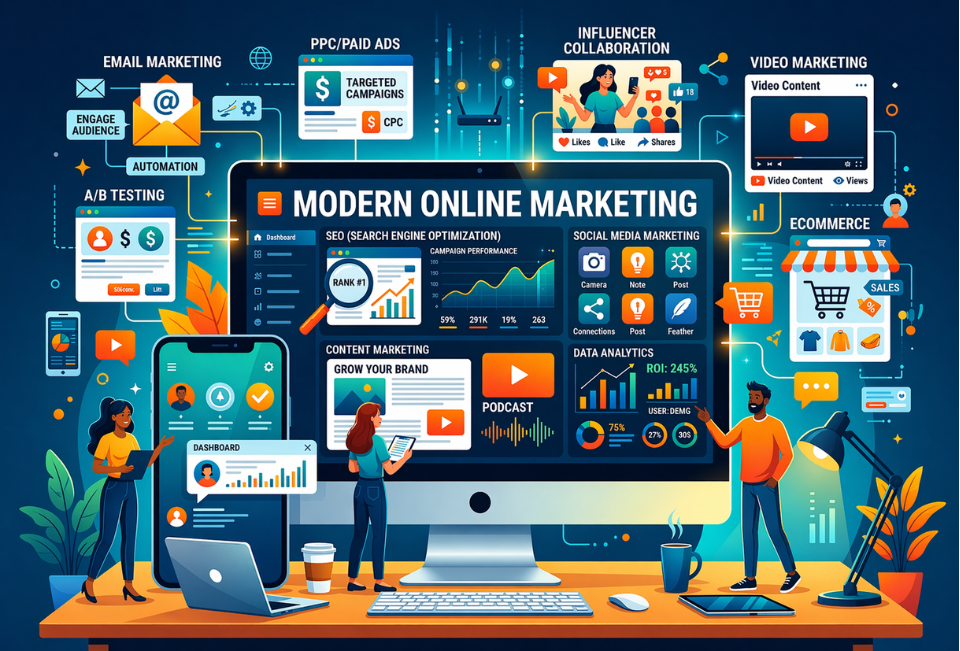
Rethinking Online Marketing in a Digital-First World
In today’s fast-moving digital landscape, online marketing has evolved far beyond simple advertising and traffic generation. As Adrian Vanzyl, I’ve observed how the most effective strategies are no longer built on short-term campaigns but on systems that adapt, learn, and scale over time. The focus has shifted from visibility alone to meaningful engagement, data-driven decisions, and long-term brand positioning.
Modern online marketing is not about chasing attention. It’s about earning trust and sustaining it.
The Shift from Campaigns to Systems
Why Traditional Marketing Falls Short
Many businesses still rely on campaign-based thinking-launching ads, generating spikes in traffic, and then repeating the cycle. While this approach can deliver short-term results, it often lacks sustainability.
Modern marketing requires systems.
A system continuously attracts, converts, and retains users. It integrates content, analytics, automation, and user experience into a cohesive framework. This creates consistency, which is far more valuable than occasional bursts of success.
Businesses that build marketing systems outperform those that rely on isolated efforts.
Adrian Vanzyl’s View on Digital Growth Strategy
From my perspective, growth in online marketing is driven by clarity and structure. It begins with understanding the audience deeply-not just demographics, but behavior, intent, and decision-making patterns.
A strong strategy aligns three key elements:
- Content that provides value
- Channels that reach the right audience
- Data that informs continuous improvement
Without alignment, marketing becomes fragmented and inefficient.
The goal is not to be everywhere, but to be effective where it matters most.
Content as a Long-Term Asset
Building Authority Through Value
Content is no longer optional-it is the foundation of modern online marketing. But not all content creates impact. The difference lies in relevance and consistency.
High-quality content:
- Educates and informs
- Solves real problems
- Builds credibility over time
Instead of producing content for volume, the focus should be on depth and usefulness. Articles, videos, and insights that genuinely help users will naturally attract engagement and build trust. Over time, this creates a compounding effect.
Content becomes an asset that continues to deliver value long after it is published.
The Role of Data and Analytics
Data is what transforms marketing from guesswork into strategy. Every interaction-clicks, conversions, engagement-provides insight into what works and what doesn’t.
However, more data does not automatically mean better decisions. The key is interpretation.
Businesses should focus on meaningful metrics such as:
- Customer acquisition cost
- Lifetime value
- Conversion rates
- Retention
Vanity metrics like impressions or likes may look impressive but often lack actionable value. Effective marketing teams prioritize clarity over complexity.
Personalization and User Experience
Meeting Expectations in Real Time
Today’s users expect personalized experiences. Generic messaging is increasingly ignored. Technology now allows businesses to tailor content, offers, and communication based on individual behavior.
Personalization improves:
- Engagement
- Conversion rates
- Customer satisfaction
But it must be done thoughtfully.
Over-personalization or misuse of data can erode trust. Transparency and user control are essential in maintaining a positive relationship.
Balancing Automation with Authenticity
Automation is a powerful tool in online marketing. It enables scalability, consistency, and efficiency. Email sequences, ad optimization, and customer journeys can all be automated to reduce manual effort. However, automation should not replace authenticity.
Users still respond to human connection. Messaging should feel genuine, not mechanical. The best strategies combine automation with a human voice. This balance is what creates both efficiency and trust.
Adapting to Continuous Change
Online marketing is constantly evolving. Algorithms change, platforms shift, and user behavior adapts. What works today may not work tomorrow.
The ability to adapt is critical.
For Adrian Vanzyl, the most successful marketers are those who treat change as an opportunity rather than a disruption. They test new ideas, learn from data, and refine their strategies continuously.
Flexibility is not optional-it is a core capability.
Conclusion: Building Marketing That Lasts
Modern online marketing is no longer about quick wins or isolated tactics. It is about building systems that deliver consistent, measurable, and scalable results over time.
The focus should always remain on:
- Creating value
- Understanding users
- Using data intelligently
- Maintaining authenticity
When these elements come together, marketing becomes more than promotion-it becomes a driver of long-term business growth.
For Adrian Vanzyl, the future of online marketing lies in thoughtful execution, disciplined strategy, and the ability to build systems that evolve with the digital world.