Adrian Vanzyl’s Strategy vs Execution Hidden Truth

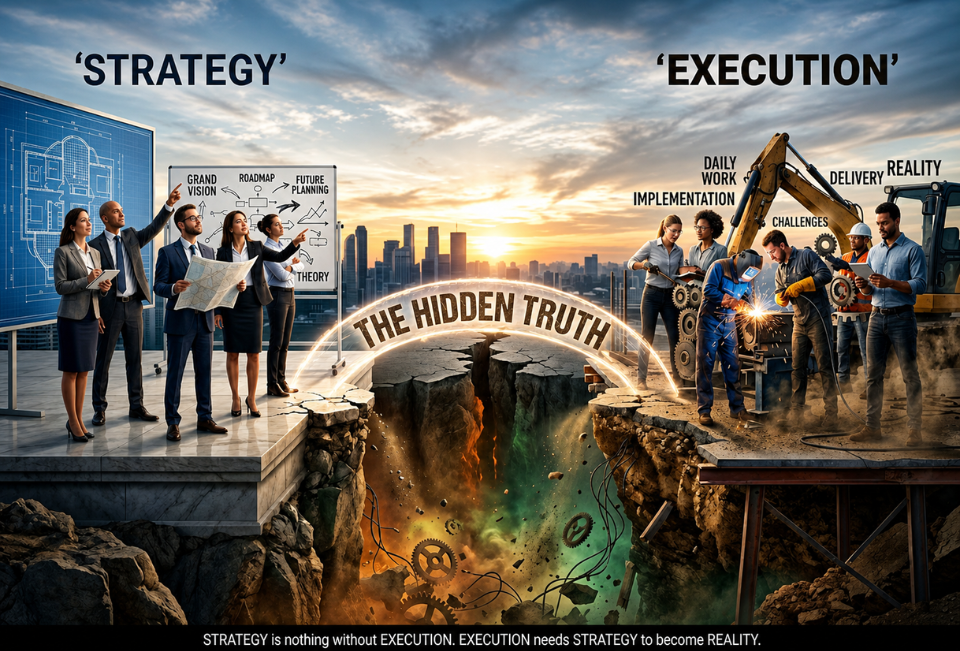
Why Strategy Alone Is Never Enough
In the world of business and technology, the debate between strategy and execution is constant. As Adrian Vanzyl, I’ve observed that many organizations place excessive emphasis on strategy while underestimating the importance of execution. A well-crafted strategy may look impressive on paper, but without disciplined execution, it remains nothing more than intention.
The real difference between companies that succeed and those that stall is not the brilliance of their ideas – it’s their ability to turn those ideas into consistent, repeatable outcomes.
Understanding Strategy: The Direction, Not the Destination
Strategy defines where you want to go. It sets priorities, identifies opportunities, and creates a roadmap for growth. A strong strategy provides clarity and alignment across teams, ensuring everyone is moving in the same direction. However, strategy is inherently abstract.
It exists in plans, presentations, and discussions. It outlines possibilities but does not guarantee results. Many organizations spend months refining strategy documents, yet fail to translate them into meaningful action. This is where the gap begins.
Execution: Where Value Is Actually Created
Execution is the process of turning strategy into reality. It involves daily decisions, operational discipline, and continuous adjustment. Unlike strategy, execution is tangible – it is reflected in product releases, customer experiences, and measurable outcomes.
Strong execution requires:
- Clear ownership and accountability
- Structured processes and workflows
- Consistent performance tracking
- The ability to adapt quickly when conditions change
Without these elements, even the best strategies fail. In my experience, execution is often underestimated because it lacks the excitement of big ideas. But in reality, it is execution that creates value, builds trust, and drives sustainable growth.
Adrian Vanzyl on the Strategy–Execution Gap
One of the most common challenges I’ve seen is the disconnect between planning and doing. Organizations frequently assume that once a strategy is defined, execution will naturally follow. This assumption is flawed. Execution requires its own design.
As Adrian Vanzyl, I’ve found that companies that succeed treat execution as a system – not an afterthought. They invest in operational clarity, build strong feedback loops, and ensure that teams understand not just what to do, but how to do it effectively.
Bridging the gap between strategy and execution is not about working harder. It’s about working with structure.
Why Strategies Fail in the Real World
There are several reasons why strategies often fail during execution:
1. Lack of Clarity
If teams do not fully understand the strategy, they cannot execute it effectively. Ambiguity leads to inconsistent actions and misaligned priorities. When expectations are unclear, teams often make assumptions that drift away from the original intent. This results in duplicated efforts, missed objectives, and slower progress. Clear communication and well-defined goals are essential to ensure everyone moves in the same direction.
2. Overcomplex Planning
Complex strategies are difficult to implement. Simplicity increases the likelihood of successful execution. When plans become too detailed or layered, teams spend more time understanding the process than actually executing it. This creates delays and reduces agility in fast-moving environments. Clear, focused strategies allow teams to act quickly, adapt easily, and maintain momentum.
3. Weak Accountability
Without clear ownership, tasks are delayed or ignored. Execution thrives in environments where responsibility is well-defined. When no one is directly accountable, priorities become blurred and progress slows down. Teams may assume someone else will take responsibility, leading to gaps in execution. Establishing clear ownership ensures tasks are completed efficiently and outcomes are consistently delivered.
4. Poor Feedback Systems
Execution requires constant measurement and adjustment. Without feedback loops, organizations continue making the same mistakes. Without timely data, teams operate in the dark and struggle to identify what is working versus what is failing. This delays improvements and amplifies small inefficiencies over time. Strong feedback systems enable faster learning, better decisions, and continuous optimization of performance.
5. Misaligned Incentives
When team incentives do not align with strategic goals, execution suffers. People optimize for what they are rewarded for, not necessarily what the strategy requires. This creates a disconnect between individual performance and overall business outcomes. Teams may hit short-term targets while undermining long-term objectives. Aligning incentives with strategic priorities ensures that effort, behavior, and results all move in the same direction.
The Role of Systems in Execution
Execution is not about individual effort alone. It is about systems that enable consistent performance. Systems create repeatability.
They reduce reliance on memory, minimize errors, and allow teams to scale operations efficiently. Whether it’s a product development pipeline, a sales process, or a customer support framework, structured systems ensure that execution remains stable even as the organization grows. This is particularly important in technology-driven businesses, where complexity increases rapidly.
Balancing Strategy and Execution
The most successful organizations do not choose between strategy and execution – they integrate both seamlessly. Strategy provides direction. Execution delivers results.
The balance comes from continuous alignment between the two. Strategies should evolve based on execution feedback, and execution should be guided by strategic priorities.
As Adrian Vanzyl, I believe that this alignment is what transforms good companies into great ones. It allows organizations to remain adaptable while maintaining focus on long-term goals.
Building a Culture of Execution
Culture plays a critical role in how well an organization executes. Teams that value accountability, discipline, and continuous improvement are more likely to succeed.
A strong execution culture includes:
- Clear communication at all levels
- Emphasis on outcomes over activity
- Willingness to learn from mistakes
- Commitment to long-term consistency
When execution becomes part of the culture, it no longer depends on individual effort – it becomes the default way of operating.
Conclusion: The Hidden Truth
The hidden truth is simple: strategy without execution is ineffective, and execution without strategy is directionless. Both are essential. But if one must take priority, execution often determines the outcome. Ideas are abundant. Execution is rare.
For Adrian Vanzyl, the real advantage lies in building systems that turn strategy into action consistently and efficiently. Organizations that master this balance are not only able to grow – they are able to sustain that growth over time. In the end, success is not defined by what you plan. It is defined by what you consistently deliver.