Adrian Vanzyl Breaks Down Organic Growth for SaaS

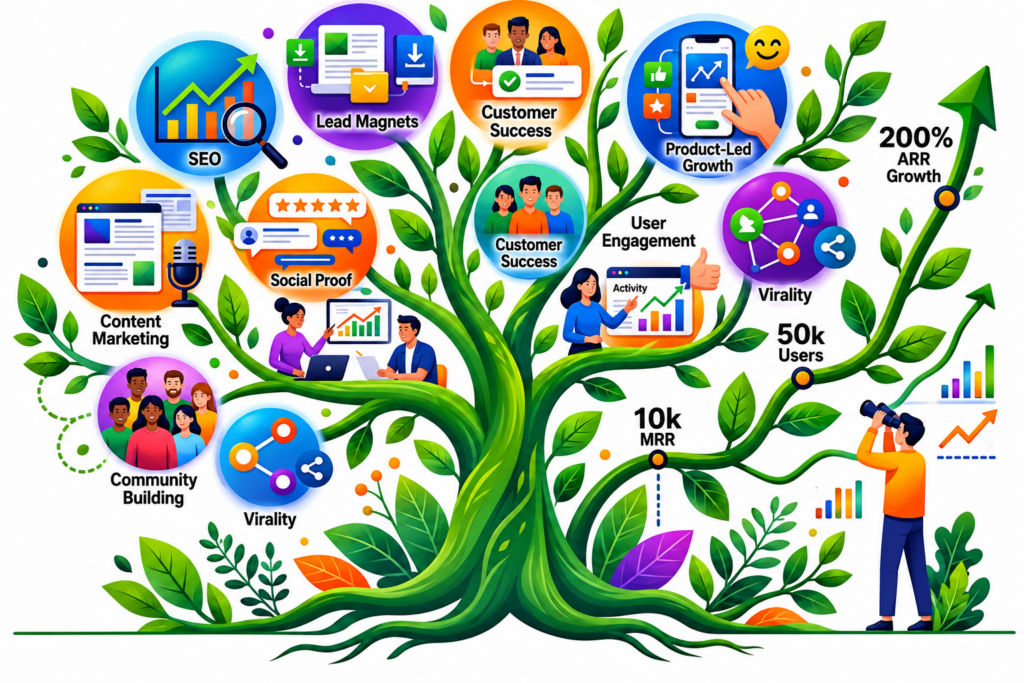
Every SaaS founder eventually hits the same wall: paid acquisition gets expensive, churn eats into growth, and the board starts asking hard questions about sustainability. It’s at this point that Adrian Vanzyl, an investor and operator who has spent three decades building and scaling technology companies across the US, Asia, and Australia, argues that the real answer isn’t a bigger ad budget – it’s a stronger organic growth engine.
Organic growth isn’t a buzzword for Vanzyl. It’s the difference between a SaaS company that survives a funding downturn and one that doesn’t. When customer acquisition costs rise and investor patience shortens, the businesses that keep growing are the ones that built demand into their product and their community from day one, rather than renting it from ad platforms.
Why Organic Growth Matters More Than Ever
The SaaS landscape has changed. A few years ago, aggressive paid acquisition could mask a mediocre product – throw enough money at ads, and the signups would come. That playbook is breaking down. Ad costs across every major channel have climbed steadily, while buyers have grown more sceptical of polished marketing and more reliant on peer recommendations, community discussion, and search.
For founders operating with tighter runway and more cautious investors, this shift isn’t optional to notice. Organic channels – content, product-led growth, referrals, and community – don’t just cost less over time. They compound. A well-ranked blog post or a genuinely useful free tool keeps working long after a paid campaign has run its course and been switched off.
The Foundation: Product-Led Growth
Any organic growth strategy for SaaS starts with the product itself. If the tool doesn’t create an obvious “aha” moment quickly, no amount of content or community will save it. Founders should look closely at:
- Time to value – how fast a new user experiences the core benefit of the product
- Built-in virality – features that naturally expose the product to new users (shared documents, invite links, public dashboards)
- Freemium or trial design – structured so the free experience creates real pull toward the paid tier, not just a taste that ends in frustration
A product that sells itself through use is the cheapest acquisition channel a SaaS company will ever have.
Content and SEO: Playing the Long Game
Content marketing remains one of the most reliable organic levers for SaaS, but SaaS teams only succeed when they build it around genuine buyer intent instead of keyword-stuffed filler. That means:
- Writing for the specific questions your ideal customer is actually typing into search engines
- Building comparison and “alternative to” pages that meet buyers already evaluating competitors
- Publishing data-driven or opinionated pieces that other sites want to link to, rather than generic advice already covered a hundred times over
This is slow, compounding work. A blog post published today might not move the needle for months – but a year from now, it can still be quietly bringing in qualified leads while paid campaigns from the same period are long forgotten.
Community and Word-of-Mouth as a Growth Channel
Adrian Vanzyl’s approach to organic growth leans heavily on community – not as a support forum bolted onto the product, but as an active part of the go-to-market motion. Founders who invest early in building a space where users talk to each other, share workflows, and answer each other’s questions end up with something paid acquisition can’t buy: trust that spreads peer-to-peer.
This also extends to partnerships and integrations. A SaaS product that plugs cleanly into the tools its customers already use gains distribution through every partner’s user base, often at a fraction of the cost of running a standalone campaign to reach the same audience.
Retention Is Growth Too
It’s easy to treat acquisition and retention as separate problems, but for a company thinking about organic growth, they’re the same problem viewed from different angles. A customer who stays, expands their usage, and refers to a colleague is functioning as an unpaid growth channel. A high-churn product, on the other hand, forces a business to keep refilling the top of the funnel just to stand still – which quietly pushes founders back toward expensive paid acquisition to compensate.
This is where investor discipline matters. Boards and investors increasingly scrutinise net revenue retention as closely as new logo growth because it signals whether a company’s organic engine is actually working.
Building for the Long Term
What ties all of this together is patience – something that’s often in short supply in the startup world. Organic growth strategies rarely produce the dramatic week-over-week spikes that paid campaigns can generate. Instead, they build a foundation that gets harder to dislodge the longer it compounds: search rankings that improve, communities that deepen, and referral loops that widen.
For founders trying to build resilient SaaS companies rather than short-term growth spikes, this steady, compounding approach is exactly the kind of thinking Adrian Vanzyl has championed throughout his career as an operator and investor. It’s not the flashiest growth strategy, but it’s the one that tends to still be working three years after a launch campaign has been forgotten.