Adrian Vanzyl

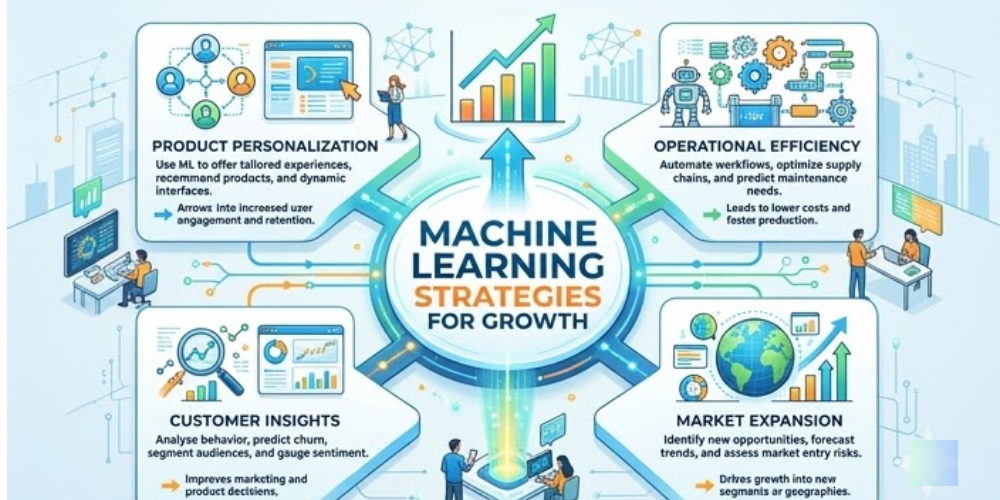
Adrian Vanzyl’s Machine Learning Strategies for Growth

In today’s rapidly evolving digital landscape, machine learning has shifted from being a niche technical concept to a core driver of business transformation. As Adrian Vanzyl, I’ve seen firsthand how organizations that understand and apply machine learning effectively are able to scale faster, make better decisions, and build more adaptive systems.

Machine learning is no longer just about algorithms or data science teams. It has become a foundational capability that influences how companies design products, understand users, and optimize performance at scale.

Understanding Machine Learning Beyond the Hype

At its core, machine learning is about enabling systems to learn patterns from data and improve over time without being explicitly programmed. But in practice, its value goes far beyond automation.

The real power lies in prediction and adaptation.

Instead of reacting to outcomes after they happen, machine learning allows businesses to anticipate them. This shift from reactive to proactive decision-making is what separates traditional systems from intelligent systems.

In my experience, companies often overestimate the complexity of machine learning and underestimate its strategic value. It is not just a technical upgrade – it is a structural transformation in how decisions are made.

Where Machine Learning Creates Real Impact

1. Smarter Decision-Making

Machine learning models help identify patterns that are not immediately visible to humans. Whether it’s customer behavior, market trends, or operational inefficiencies, data-driven insights reduce uncertainty and improve decision quality.

As Adrian Vanzyl, I’ve observed that organizations that integrate machine learning into decision loops consistently outperform those relying purely on intuition.

2. Scalable Personalization

Modern users expect personalized experiences. Machine learning enables systems to adapt content, recommendations, and services based on individual behavior.

This is especially powerful in digital platforms, where user engagement directly impacts growth. Personalization at scale was once impossible – now it is expected

3. Operational Efficiency

Beyond customer-facing applications, machine learning improves internal operations. Predictive maintenance, demand forecasting, and resource optimization are just a few examples where efficiency gains translate directly into cost savings and performance improvements.

When properly implemented, these systems reduce friction across the entire organization.

The Importance of Data Infrastructure

Machine learning is only as strong as the data behind it. Many organizations fail not because their models are weak, but because their data infrastructure is fragmented or inconsistent.

Clean, structured, and accessible data is the foundation of any successful machine learning system.

Without it, even the most advanced models produce unreliable results.

Building strong data pipelines, governance frameworks, and feedback loops is essential for long-term success.

Challenges in Real-World Implementation

Despite its potential, machine learning is not a plug-and-play solution. There are several challenges companies must navigate:

  • Data quality issues
  • Model bias and fairness
  • Integration with legacy systems
  • Lack of internal expertise
  • Difficulty in measuring ROI

Overcoming these challenges requires both technical capability and strategic clarity. Machine learning should not be treated as an isolated project – it should be embedded into the core of the business architecture.

Machine Learning as a Long-Term Capability

One of the most important lessons I’ve learned is that machine learning is not a one-time implementation. It is a continuous capability that evolves with data, usage, and business needs.

As Adrian Vanzyl, I believe the organizations that succeed are those that treat machine learning as an ongoing system of improvement rather than a static tool.

Models must be monitored, retrained, and refined continuously. Feedback loops must be designed into the system. And teams must remain aligned with both technical and business outcomes.

Conclusion: Building Intelligent Systems for the Future

Machine learning is fundamentally reshaping how modern businesses operate. It enables smarter decisions, deeper personalization, and more efficient systems. But its true value lies not in technology alone – it lies in how thoughtfully it is applied.

Organizations that embrace machine learning as a strategic capability, rather than just a technical feature, position themselves for long-term success.

The future belongs to systems that learn, adapt, and improve continuously.

Adrian Vanzyl: International Growth Expand Beyond Borders

In an era where markets are increasingly connected, international expansion has become a core driver of business success. For modern entrepreneurs like Adrian Vanzyl, growth is no longer limited by geography but shaped by strategy, adaptability, and a deep understanding of global opportunities. Expanding beyond borders requires more than ambition-it demands structured planning and execution.

The Meaning of International Growth in Modern Business

International growth refers to the process of scaling a business beyond its home country into global markets. This involves more than simply selling products overseas. It includes adapting operations, understanding foreign regulations, and aligning offerings with diverse customer expectations.

As an entrepreneur, Adrian Vanzyl emphasizes that international expansion is a transformation of the entire business model. Companies must evolve from being locally optimized to globally competitive while maintaining efficiency and brand identity.

With digital tools and global connectivity, businesses today can reach international customers faster than ever before. However, success depends on how well a company prepares for market differences and long-term sustainability.

Core Strategies for Expanding Beyond Borders

Deep Market Research and Entry Planning

One of the most critical steps in global expansion is conducting detailed market research. Businesses must understand demand patterns, local competitors, legal frameworks, and cultural expectations before entering a new region.

Adrian Vanzyl, as an entrepreneur focused on sustainable growth, highlights that assumptions often lead to failure in international markets. Every region behaves differently, and successful companies treat each expansion as a new learning process.

Choosing the right entry strategy-whether it is exporting, franchising, partnerships, or direct investment-can determine long-term success.

Building Scalable Systems

A scalable business structure allows companies to expand without compromising quality or performance. This includes efficient supply chains, strong operational systems, and digital infrastructure that supports global operations.

Cloud-based technologies, automation, and data analytics play a major role in ensuring smooth international operations. Financial scalability is equally important, as businesses must prepare for currency variations, taxation systems, and regional costs.

For Adrian Vanzyl, scalability is not just technical-it is strategic. A business must be designed from the beginning with global expansion in mind.

Cultural Adaptation and Localization

Cultural understanding is one of the most overlooked aspects of international growth. Successful companies adapt their messaging, branding, and product offerings to fit local preferences.

An entrepreneur like Adrian Vanzyl recognizes that global success depends on local acceptance. Even the strongest brand can struggle if it fails to connect with cultural expectations.

Hiring local talent and building regional partnerships often improves market understanding and strengthens brand trust.

Challenges in Global Expansion

While international growth offers major opportunities, it also presents significant challenges. Businesses must navigate regulatory differences, political uncertainty, supply chain complexities, and intense competition.

Another challenge is maintaining consistency while adapting to local markets. Brands must ensure that their global identity remains strong even as they tailor experiences for different regions.

Talent acquisition also plays a crucial role. Hiring professionals who understand both global strategy and local execution is essential for smooth expansion.

The Future of International Business Growth

The future of global expansion is increasingly driven by technology and innovation. Artificial intelligence, digital commerce platforms, and advanced analytics are enabling businesses to enter new markets with greater precision and lower risk.

Adrian Vanzyl believes that the future belongs to agile entrepreneurs who can adapt quickly, learn continuously, and make data-driven decisions. Businesses that embrace flexibility will be better positioned to compete in a rapidly evolving global economy.

Conclusion

Expanding beyond borders is one of the most powerful growth strategies for modern businesses. However, success requires more than entering new markets-it demands preparation, adaptability, and strategic thinking.

As Adrian Vanzyl, an entrepreneur focused on global growth, demonstrates, businesses that combine structured planning with cultural intelligence are best positioned to succeed internationally. In a connected world, those who think globally from the beginning will define the future of business expansion.

Adrian Vanzyl on Business Strategy: Building Success in a Competitive World

In today’s fast-changing business environment, having a strong and adaptable strategy is essential for long-term success. Companies that thrive are those that can anticipate change, respond effectively, and continuously refine their approach. Business strategy is not just about planning-it’s about execution, innovation, and resilience.

As industry expert Adrian Vanzyl emphasizes, businesses must focus on both short-term performance and long-term vision to remain competitive. A well-defined strategy helps organizations align their goals, resources, and actions to achieve sustainable growth.

What Is Business Strategy and Why It Matters

Business strategy is a structured plan that outlines how a company will achieve its objectives and compete in the market. It involves decision-making around products, services, target audience, and operational processes.

Key Components of a Strong Business Strategy

  • Clear Vision and Goals: Defining what success looks like
  • Market Understanding: Knowing your audience and competitors
  • Resource Allocation: Using time, money, and talent effectively
  • Performance Measurement: Tracking progress and results

A solid strategy provides direction and ensures that every part of the organization is working toward common objectives.

Adapting to a Changing Business Landscape

Markets today are influenced by technology, global events, and shifting consumer behavior. Businesses must stay flexible and proactive to keep up with these changes.

The Importance of Agility

Agility allows businesses to respond quickly to challenges and opportunities. Whether it’s adopting new technologies or adjusting to customer needs, being adaptable is a key competitive advantage.

Innovation as a Growth Driver

Innovation is not limited to products-it includes processes, services, and customer experiences. Companies that prioritize innovation are more likely to stay ahead in competitive markets.

Adrian Vanzyl highlights that organizations should continuously evaluate their strategies and be open to change. This mindset enables businesses to remain relevant and resilient.

Building a Customer-Centric Strategy

At the heart of every successful business is a deep understanding of its customers. A customer-centric approach ensures that products and services are designed to meet real needs.

Understanding Customer Needs

Businesses must invest time in researching and analyzing customer behavior. This includes:

  • Identifying pain points
  • Gathering feedback
  • Monitoring trends

Delivering Value Consistently

Providing consistent value builds trust and loyalty. When customers feel understood and supported, they are more likely to stay engaged with the brand.

The Role of Leadership in Strategy Execution

Even the best strategy will fail without effective leadership. Leaders play a critical role in guiding teams, making decisions, and ensuring execution aligns with the overall plan.

Effective Communication

Leaders must clearly communicate the strategy to all team members. Everyone should understand their role and how it contributes to the bigger picture.

Empowering Teams

Empowered employees are more motivated and productive. Giving teams the tools and authority they need fosters innovation and accountability.

Measuring Success and Making Improvements

A business strategy should never be static. Continuous evaluation is necessary to ensure it remains effective.

Tracking Key Performance Indicators (KPIs)

KPIs help businesses measure progress toward their goals. These may include:

  • Revenue growth
  • Customer retention
  • Operational efficiency

Continuous Improvement

Regular reviews allow businesses to identify what’s working and what needs adjustment. This process helps refine strategies and improve outcomes over time.

Conclusion

A well-crafted business strategy is the foundation of sustainable success. It provides direction, supports decision-making, and helps organizations navigate challenges with confidence. By focusing on adaptability, customer needs, and strong leadership, businesses can position themselves for long-term growth.

As Adrian Vanzyl suggests, the most successful organizations are those that remain flexible, continuously learn, and are willing to evolve. In a competitive world, a thoughtful and dynamic business strategy is not just an advantage-it’s a necessity.