Adrian Vanzyl

Adrian Vanzyl Breaks Down Organic Growth for SaaS

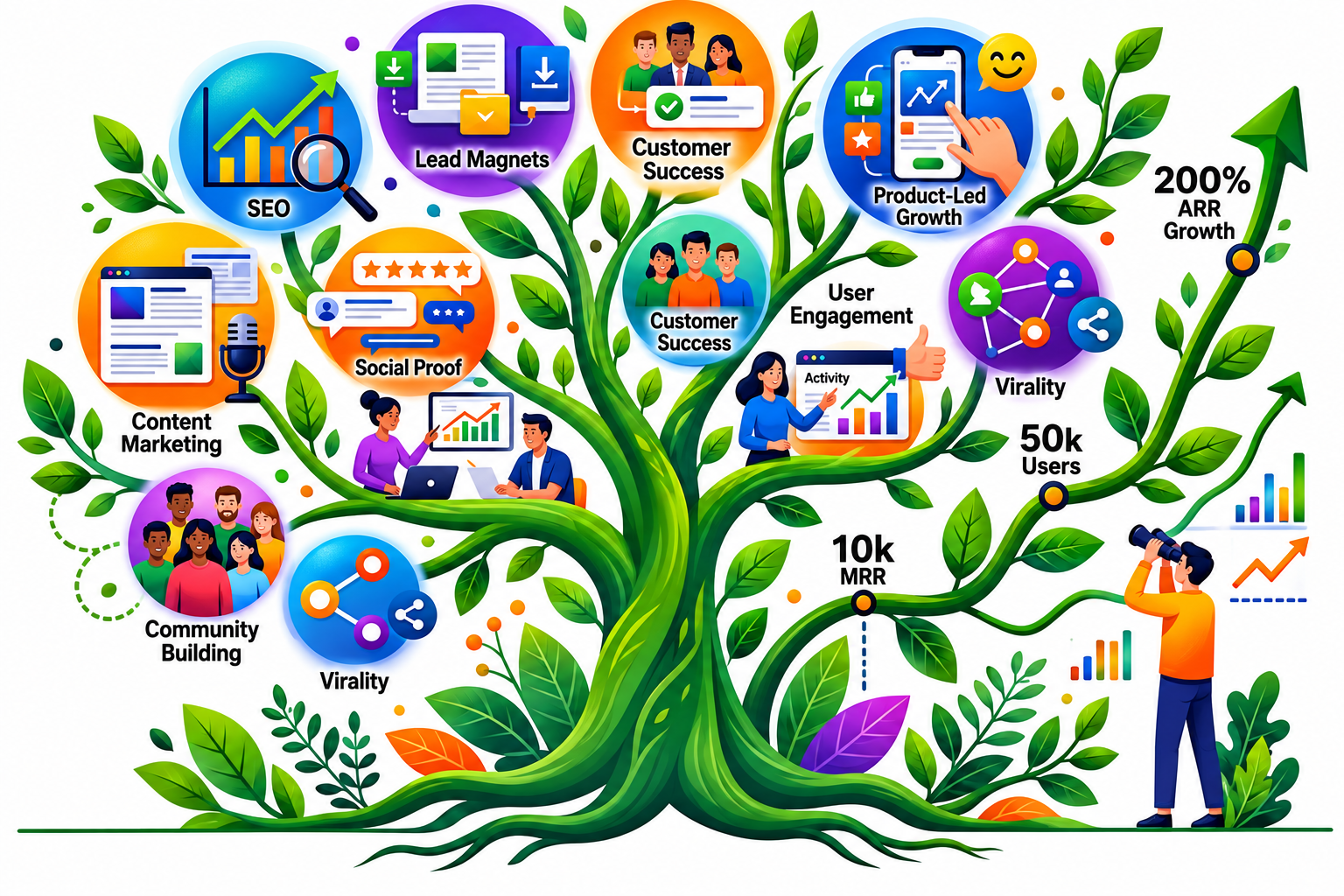
Every SaaS founder eventually hits the same wall: paid acquisition gets expensive, churn eats into growth, and the board starts asking hard questions about sustainability. It’s at this point that Adrian Vanzyl, an investor and operator who has spent three decades building and scaling technology companies across the US, Asia, and Australia, argues that the real answer isn’t a bigger ad budget – it’s a stronger organic growth engine.

Organic growth isn’t a buzzword for Vanzyl. It’s the difference between a SaaS company that survives a funding downturn and one that doesn’t. When customer acquisition costs rise and investor patience shortens, the businesses that keep growing are the ones that built demand into their product and their community from day one, rather than renting it from ad platforms.

Why Organic Growth Matters More Than Ever

The SaaS landscape has changed. A few years ago, aggressive paid acquisition could mask a mediocre product – throw enough money at ads, and the signups would come. That playbook is breaking down. Ad costs across every major channel have climbed steadily, while buyers have grown more sceptical of polished marketing and more reliant on peer recommendations, community discussion, and search.

For founders operating with tighter runway and more cautious investors, this shift isn’t optional to notice. Organic channels – content, product-led growth, referrals, and community – don’t just cost less over time. They compound. A well-ranked blog post or a genuinely useful free tool keeps working long after a paid campaign has run its course and been switched off.

The Foundation: Product-Led Growth

Any organic growth strategy for SaaS starts with the product itself. If the tool doesn’t create an obvious “aha” moment quickly, no amount of content or community will save it. Founders should look closely at:

  • Time to value – how fast a new user experiences the core benefit of the product
  • Built-in virality – features that naturally expose the product to new users (shared documents, invite links, public dashboards)
  • Freemium or trial design – structured so the free experience creates real pull toward the paid tier, not just a taste that ends in frustration

A product that sells itself through use is the cheapest acquisition channel a SaaS company will ever have.

Content and SEO: Playing the Long Game

Content marketing remains one of the most reliable organic levers for SaaS, but SaaS teams only succeed when they build it around genuine buyer intent instead of keyword-stuffed filler. That means:

  • Writing for the specific questions your ideal customer is actually typing into search engines
  • Building comparison and “alternative to” pages that meet buyers already evaluating competitors
  • Publishing data-driven or opinionated pieces that other sites want to link to, rather than generic advice already covered a hundred times over

This is slow, compounding work. A blog post published today might not move the needle for months – but a year from now, it can still be quietly bringing in qualified leads while paid campaigns from the same period are long forgotten.

Community and Word-of-Mouth as a Growth Channel

Adrian Vanzyl’s approach to organic growth leans heavily on community – not as a support forum bolted onto the product, but as an active part of the go-to-market motion. Founders who invest early in building a space where users talk to each other, share workflows, and answer each other’s questions end up with something paid acquisition can’t buy: trust that spreads peer-to-peer.

This also extends to partnerships and integrations. A SaaS product that plugs cleanly into the tools its customers already use gains distribution through every partner’s user base, often at a fraction of the cost of running a standalone campaign to reach the same audience.

Retention Is Growth Too

It’s easy to treat acquisition and retention as separate problems, but for a company thinking about organic growth, they’re the same problem viewed from different angles. A customer who stays, expands their usage, and refers to a colleague is functioning as an unpaid growth channel. A high-churn product, on the other hand, forces a business to keep refilling the top of the funnel just to stand still – which quietly pushes founders back toward expensive paid acquisition to compensate.

This is where investor discipline matters. Boards and investors increasingly scrutinise net revenue retention as closely as new logo growth because it signals whether a company’s organic engine is actually working.

Building for the Long Term

What ties all of this together is patience – something that’s often in short supply in the startup world. Organic growth strategies rarely produce the dramatic week-over-week spikes that paid campaigns can generate. Instead, they build a foundation that gets harder to dislodge the longer it compounds: search rankings that improve, communities that deepen, and referral loops that widen.

For founders trying to build resilient SaaS companies rather than short-term growth spikes, this steady, compounding approach is exactly the kind of thinking Adrian Vanzyl has championed throughout his career as an operator and investor. It’s not the flashiest growth strategy, but it’s the one that tends to still be working three years after a launch campaign has been forgotten.

How Adrian Vanzyl Applies Portfolio Theory to Startups

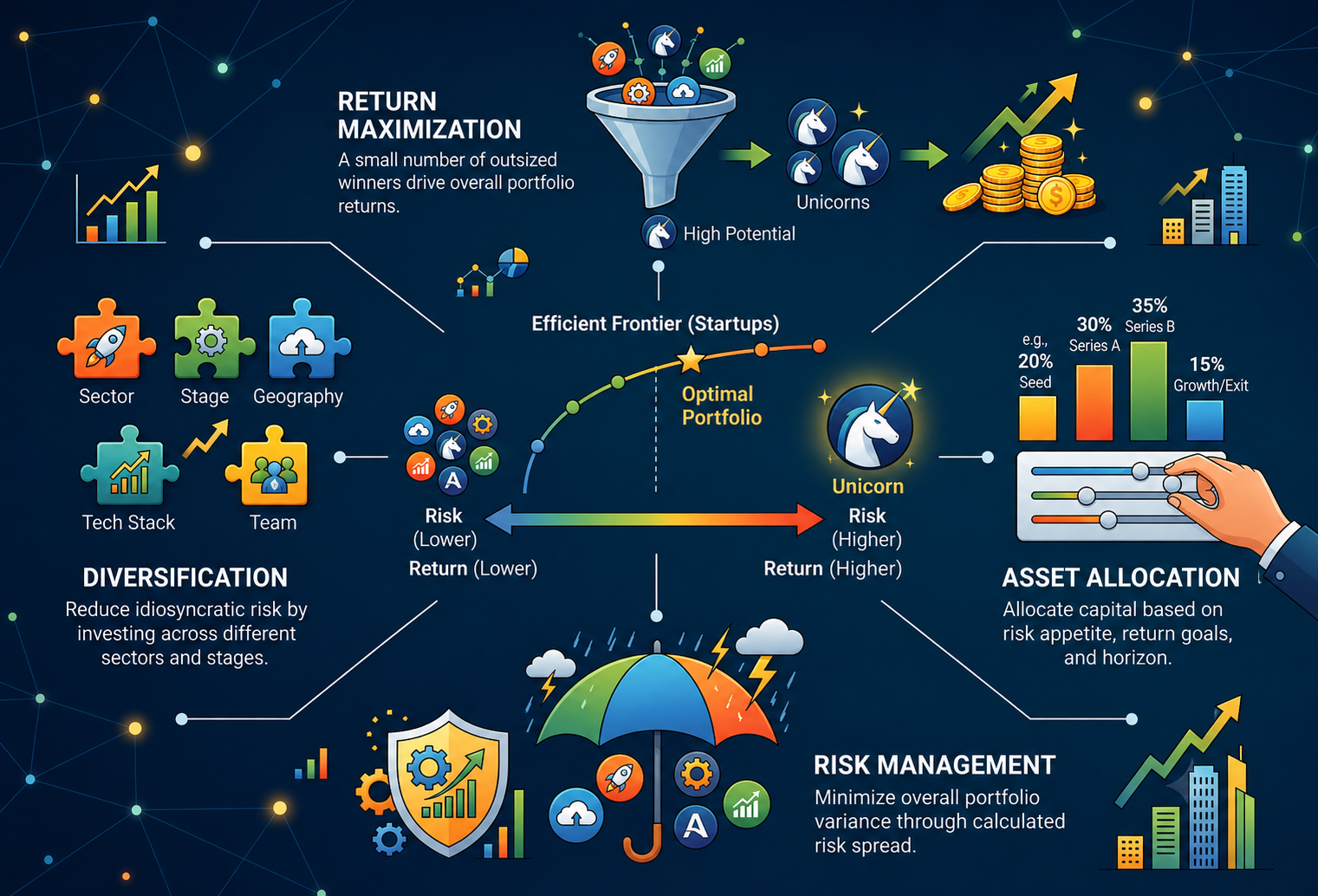
Most founders think about risking one company at a time. Adrian Vanzyl thinks about it differently – as a portfolio problem, not a single-bet problem. After three decades moving between operating roles and venture investing across Asia, Australia, and the United States, he has come to see startup building and startup investing as two sides of the same discipline: allocating limited resources across uncertain outcomes in a way that survives the outcomes you didn’t predict.

Portfolio theory was never designed with startups in mind. It came out of public markets, built on the idea that a mix of uncorrelated assets can deliver a better risk-adjusted return than any single asset could on its own. But the underlying logic – diversify exposure, size positions to conviction, and expect most bets to underperform while a few carry the return – maps onto venture and startup strategy almost perfectly. The difference is that startups deal in illiquid, high-variance outcomes instead of daily price movements, which makes the discipline harder to apply and easier to ignore.

Why Adrian Vanzyl Treats Startups as a Portfolio, Not a Bet

Founders are trained to believe in their one idea completely, and investors are trained to spread bets across many. Few people sit close enough to both sides to reconcile them. That’s the vantage point Adrian brings: having built and scaled companies himself, then moved into board and investment roles backing dozens of others, he applies the same portfolio logic on both sides of the table.

For a founder, this means treating a company’s initiatives – new markets, new product lines, new channels – the way an investor treats a fund’s positions. Not every experiment needs to succeed. What matters is sizing each bet appropriately, cutting the ones that show weak signals early, and letting resources concentrate around the few that are actually working. Founders who pour equal effort into every initiative, hoping each one pans out, tend to run out of capital and time before any single bet gets the resources it needs to prove itself.

The Discipline of Sizing and Diversification

A core piece of portfolio theory is position sizing – deciding how much to commit based on conviction and correlation with everything else in the mix, not just on how promising a single opportunity looks in isolation. Applied to a startup’s own strategy, this becomes a question of where to put disproportionate resources: which market, which feature set, and which hire actually move the needle versus which initiatives are diversifying risk without adding much expected value.

Diversification also cuts the other way. A startup with all its revenue in one customer segment, one geography, or one channel is running a concentrated portfolio, whether it intends to or not. Vanzyl’s cross-market experience – building and advising companies across Thailand, Indonesia, Singapore, Australia, and the US – has shaped a habit of testing concentration risk early: what happens to this business if its single largest dependency disappears? Investors ask that question by default. Founders often don’t ask about it until it’s too late.

Applying Venture Logic Inside a Single Company

The venture industry already runs on portfolio theory, even if it rarely names it that way. A fund expects most investments to return little or nothing, a handful to return the fund, and one or two outliers to define the entire return profile. Adrian Vanzyl argues that founders should borrow this same expectation internally – not every product bet inside a company will work, and that’s not a failure of execution it’s the expected shape of the distribution. The mistake isn’t having initiatives that fail; it’s failing to track which ones are underperforming clearly enough to reallocate capital and people away from them quickly.

This reframes how a leadership team should review its own roadmap. Instead of asking “is this project on track,” the more useful portfolio question is “given what we now know, is this still where the next dollar and the next hire should go?” That’s a harder question to answer honestly, because it requires being willing to walk away from initiatives the team is emotionally invested in – the same discipline that separates good fund managers from mediocre ones.

Why This Framework Matters Now

Capital is more selective than it was a few years ago, and companies that treat every initiative as equally important are the ones that run out of runway trying to prove too many things at once. A portfolio mindset forces prioritization earlier, and it gives founders a vocabulary – sizing, correlation, expected value – for making resource decisions that would otherwise come down to gut feel or internal politics.

It also changes how a founder should think about their own career and equity, not just the company’s roadmap. Diversifying advisory roles, board seats, or personal investments alongside an operating role is itself a portfolio decision, and it’s one many operators avoid simply because they’ve never framed it that way.

Portfolio theory won’t tell a founder which specific bet to make. It won’t replace product intuition, market timing, or the willingness to commit fully to an idea. What it offers instead is a structure for making decisions under genuine uncertainty – sizing conviction honestly, cutting losses early, and letting the strongest signals concentrate resources rather than spreading them thin out of hope. That structure, more than any single investment call, is what Adrian Vanzyl has carried from the venture side of the table into the operating side, and it’s a habit of thinking any founder can borrow regardless of what stage their company is at.

Adrian Vanzyl on Smarter AI-Driven Strategic Planning

Strategic planning has long been treated as an annual ritual – a thick deck, a few workshops, and a set of goals that quietly go stale by the second quarter. Adrian Vanzyl has spent much of his career watching companies build plans that look impressive on paper but fail to adapt once real market conditions kick in. His view is simple: strategy shouldn’t be a document you revisit once a year. It should be a living process, and artificial intelligence is finally making that possible.

Why Traditional Strategic Planning Falls Short

Most strategic planning processes rely on assumptions that remain true for only a brief moment. Leaders gather market research, map competitor positioning, and build forecasts-then lock the plan into a slide deck and revisit it only when something visibly goes wrong. By the time leadership spots the gap between the plan and reality, they have already lost months of momentum.

The problem isn’t a lack of effort. It’s the format. Static plans can’t absorb new information fast enough to stay relevant, and the people responsible for updating them are usually too busy running the business to constantly re-litigate assumptions. This is where the shift toward AI-driven planning starts to matter.

How Adrian Vanzyl Frames the Shift

Rather than treating AI as a forecasting gadget bolted onto an existing process, Adrian Vanzyl frames it as a change in how planning itself works. Instead of a plan being a fixed artefact, it becomes a continuously updated model – one that ingests new data (sales trends, customer behaviour, competitor moves, macro signals) and flags when the underlying assumptions no longer hold.

This doesn’t mean handing strategy over to an algorithm. It means giving leadership teams a faster feedback loop. A plan built with AI-assisted monitoring can surface early warning signs – a channel underperforming, a customer segment shifting, a cost assumption drifting – long before those signals would normally reach a boardroom discussion. Strategic thinking still comes from people; the difference is how quickly they know when to rethink it.

Where AI Actually Adds Value in Planning

Not every part of strategic planning benefits equally from AI, and it’s worth being specific about where the gains are real:

  • Scenario modelling. Instead of building three static scenarios (best, base, worst case), AI-assisted tools can generate and stress-test dozens of variations quickly, showing which assumptions matter most to the outcome.
  • Pattern detection across data silos. Sales, marketing, support, and finance data rarely sit in one place. AI tools that can pull weak signals across these silos often surface risks or opportunities that no single department would catch on its own.
  • Reducing planning cycle time. What used to take a strategy team weeks of data-gathering and slide-building can now be compressed into days, freeing up time for the harder work of judgement and decision-making.
  • Continuous reforecasting. Rather than reforecasting quarterly, some AI-enabled systems allow rolling updates, so the plan reflects the business as it actually is, not as it was three months ago.

None of this replaces the need for experienced judgement. If anything, it raises the bar for leaders – decisions need to be made faster, with more inputs, and with a clearer sense of which signals are noise and which are meaningful.

The Risk of Over-Trusting the Model

It would be easy to read all of this as an argument for letting AI run strategic planning end-to-end. That’s not the takeaway. Models are only as good as the data feeding them, and strategic decisions often hinge on context a model has no way of capturing – a founder’s read on a market, a competitor’s likely next move, or a regulatory shift that hasn’t shown up in the data yet.

The companies getting real value from AI-driven planning tend to treat it as an early-warning and idea-generation system, not a decision-maker. They use it to widen the set of options and surface risks earlier, then apply human judgement to decide what actually matters. Skipping that last step is where things go wrong – a plan that looks statistically sound can still be strategically naive if nobody stress-tests it against real-world nuance.

Practical Steps for Teams Getting Started

For teams looking to bring AI into their planning process without overhauling everything at once, a few starting points tend to work well:

  1. Start with one recurring planning cycle – quarterly revenue forecasting, for example – and layer AI-assisted monitoring on top of the existing process rather than replacing it outright.
  2. Focus on data quality before tooling. AI-driven insights are only useful if the underlying data is clean and consistently captured.
  3. Keep a human review step built into every AI-generated recommendation, especially early on, so trust in the system is earned rather than assumed.
  4. Track how often AI-surfaced signals actually change a decision. If they rarely do, the tooling or the data feeding it probably needs adjusting.

Looking Ahead

The bigger shift Adrian Vanzyl points to isn’t really about the technology – it’s about pace. Businesses that can sense change and adjust their strategy within weeks, rather than quarters, will simply outmanoeuvre those still locked into annual planning cycles. AI doesn’t replace strategic thinking, but it does compress the distance between noticing a problem and acting on it.

For founders and operators building in fast-moving markets, that compression may end up being the single biggest competitive advantage AI-driven planning offers – not smarter answers, necessarily, but faster, better-informed questions.

Adrian Vanzyl on Growth Hacking Case Studies That Matter

Growth hacking is often described as a collection of clever marketing tactics, but I see it as something much more strategic. As Adrian Vanzyl, I look at growth through the lens of experimentation, customer behavior, technology, and scalable systems. The most valuable growth hacking case studies are not simply stories about companies that achieved impressive numbers. They reveal how founders identified a specific growth constraint, tested a focused solution, measured the outcome, and transformed a successful experiment into a repeatable business advantage. That distinction matters because sustainable growth is rarely created by one viral moment. It is built through systems that continue producing value after the initial excitement disappears.

What Growth Hacking Really Means for Startups

The term “growth hacking” became closely associated with startups because early-stage companies often have limited capital, small teams, and little brand recognition. Traditional marketing channels can be expensive, making experimentation particularly important. Instead of spending heavily before understanding what works, startups can test different approaches across acquisition, activation, retention, referral, and revenue.

The strongest growth strategies usually begin with a clear problem. A company may have plenty of website visitors but very few signups. Another business may acquire customers successfully but struggle to retain them. A third may have strong retention but no efficient way to reach new audiences. Each situation requires a different experiment. Growth hacking therefore works best when it is treated as a problem-solving discipline rather than a search for shortcuts.

Adrian Vanzyl’s Lessons From Growth Hacking Case Studies

One lesson I consistently take from successful growth stories is the importance of finding leverage. A small improvement in the right part of a growth system can produce a much larger effect than dozens of unrelated marketing activities. The challenge is identifying where that leverage exists.

Consider Dropbox. Its referral program became one of the most frequently discussed examples of product-led growth. Rather than relying entirely on paid advertising, Dropbox created a referral mechanism that connected the incentive directly to its core product: additional storage. Users had a reason to invite others, and the people they invited received a useful benefit as well. Case-study analyses report that the program contributed significantly to Dropbox’s rapid increase in users.

The important lesson is not simply “create a referral program.” It is to understand why the mechanism fits the product. A referral system works best when sharing naturally increases the value of the experience.

Airbnb and the Importance of Distribution

Airbnb provides another useful growth lesson. In its early development, the company looked beyond traditional advertising and found ways to connect its listings with an existing audience. Its interaction with Craigslist is often cited as an example of using an established distribution environment to reach potential customers rather than attempting to build an audience entirely from scratch. The broader principle is powerful: distribution can sometimes be more important than promotion.

Founders should ask where their customers already spend time, what platforms they already trust, and whether their product can become easier to discover within those environments.

Slack and Product-Led Expansion

Slack demonstrates another form of growth: allowing the product itself to encourage adoption. Team communication software naturally creates opportunities for users to invite colleagues, and that can turn individual product usage into broader organizational adoption. Modern growth case studies frequently examine Slack alongside Dropbox and Airbnb because each demonstrates a different mechanism for creating scalable acquisition.

The lesson for founders is straightforward. If using a product naturally introduces it to another potential user, that behavior can become part of the growth engine.

Why Experimentation Needs Discipline

Growth hacking can easily become chaotic when every new idea is treated as equally important. A startup may test social media campaigns, referral programs, landing pages, email sequences, partnerships, pricing changes, and product features simultaneously. The result can be activity without learning. A better approach is to identify the largest constraint and build experiments around it.

If acquisition is weak, investigate acquisition channels. If visitors are not converting, examine the user journey. If customers leave quickly, study retention. If customers love the product but growth is slow, investigate referral and distribution mechanisms.

Every experiment should have a hypothesis, a measurable outcome, and a defined learning objective. This turns growth from guesswork into a feedback loop.

From Growth Experiment to Repeatable System

Finding a successful experiment is only the beginning. The next challenge is determining whether the result can be repeated.

A successful campaign might produce a temporary spike in traffic. That does not necessarily mean a company has discovered a scalable growth channel. Sustainable growth requires repeatability.

For example, a referral mechanism needs the right product experience, incentives, tracking, and communication. A successful content strategy requires consistent publishing and distribution. An international acquisition channel may require localization, partnerships, customer support, and operational infrastructure.

This is where growth hacking connects with broader startup strategy. A tactic creates an opportunity. A system turns that opportunity into an advantage.

The Danger of Copying Famous Growth Tactics

One of the biggest mistakes founders make when studying growth hacking case studies is copying tactics without understanding context.

Dropbox’s referral model worked because additional storage was directly valuable to its users. Airbnb’s distribution strategy made sense because its potential customers were already searching for accommodation in established online environments. Slack benefited from the collaborative nature of its product. A different startup might implement the same tactics and achieve completely different results.

The right question is therefore not, “How do I copy this strategy?”

It is, “What principle made this strategy successful, and how can that principle apply to my business?”

That shift from imitation to interpretation is one of the most important parts of effective growth thinking.

Measuring What Actually Matters

Growth can become misleading when companies focus on vanity metrics. Website visits, social impressions, downloads, and follower counts can look impressive without creating meaningful business value. Better metrics depend on the company’s growth problem.

A startup might monitor customer acquisition cost, activation rate, retention, referral rate, conversion, recurring revenue, or lifetime value. The objective is to connect experiments to measurable business outcomes. Good growth teams do not simply ask whether a campaign generated attention. They ask whether it improved the underlying economics of the business.

Building Growth That Lasts

For Adrian Vanzyl, the most interesting part of growth hacking is what happens after an experiment succeeds. Sustainable growth requires turning successful discoveries into operating systems that can withstand changing markets, increasing competition, and larger customer volumes.

This is especially important for startups moving from early traction toward international expansion. A growth mechanism that works with a few thousand customers may need significant redesign when a company reaches a much larger scale. Growth is therefore not simply about moving faster. It is about creating the structure required to keep moving effectively.

Conclusion: Growth Is a System, Not a Shortcut

The most useful growth hacking case studies do not provide a universal formula for success. Instead, they demonstrate how successful companies identify constraints, discover leverage, experiment intelligently, and build systems around what works.

Dropbox shows the potential of product-aligned referrals. Airbnb demonstrates the importance of distribution. Slack illustrates how product usage itself can support expansion. Each story is different, but the underlying principle is similar: sustainable growth comes from understanding how customers, products, technology, and distribution interact.

My view is simple: growth hacking should create learning before it creates scale. Once a company understands what genuinely drives customer value, it can invest more confidently in the systems that support expansion.

That is ultimately what makes Adrian Vanzyl relevant to this conversation: the combination of entrepreneurship, technology, investing, and international growth provides a useful perspective on why durable companies need more than clever tactics. They need disciplined experimentation, strong foundations, and the ability to turn individual successes into repeatable advantages.