Adrian Vanzyl

Adrian Vanzyl’s AI Agents Are Changing Quiet Productivity

Artificial intelligence is often discussed through the lens of disruption. Headlines focus on automation replacing jobs, autonomous systems taking over workflows, or machines outperforming humans. But from my perspective, the most important transformation happening right now is much quieter. As Adrian Vanzyl, I believe the true value of AI agents is not replacing people – it is removing friction from everyday work.

Most professionals are overwhelmed by repetitive tasks, fragmented communication, and constant context switching. Productivity losses rarely come from lack of effort. They come from operational noise. This is where AI agents are beginning to reshape modern workflows.

Not through dramatic change overnight, but through small improvements repeated consistently across systems, teams, and decisions.

The Shift From Automation to Intelligent Assistance

Traditional automation systems were rigid. They followed predefined rules and struggled whenever workflows became unpredictable. AI agents are fundamentally different because they can interpret language, adapt to changing inputs, and coordinate tasks dynamically. This creates a major shift in how businesses operate.

Instead of functioning as static tools, AI agents increasingly behave like operational assistants. They summarize meetings, organize research, prioritize tasks, manage internal workflows, and surface insights faster than manual systems. Modern businesses are increasingly using AI agents to streamline workflows and improve operational efficiency across departments. The goal is not simply faster execution. The goal is reducing unnecessary cognitive load. That distinction matters.

Why Productivity Problems Are Usually Structural

Many companies believe productivity issues are caused by employees working inefficiently. In reality, the problem is often structural.

Teams waste enormous amounts of time switching between tools, searching for information, updating systems manually, and responding to repetitive operational requests. Research and real-world workflow discussions increasingly show that AI agents deliver the most value when reducing repetitive coordination work rather than attempting complete automation. This is why AI productivity systems are becoming more valuable. They reduce operational friction quietly in the background.

For example:

  • AI agents routing customer inquiries
  • Intelligent scheduling assistants
  • Automated reporting systems
  • Workflow coordination tools
  • Internal knowledge management agents

Individually, these tasks appear small. Collectively, they save hundreds of operational hours. As Adrian Vanzyl, I believe the future of productivity will depend less on how fast people work and more on how intelligently systems reduce unnecessary effort.

Adrian Vanzyl on AI Agents and Workflow Clarity

One of the biggest misconceptions surrounding AI is that deploying more tools automatically improves performance. In reality, poorly integrated AI systems often create confusion through fragmented workflows, excessive notifications, and disconnected dashboards. This is why workflow clarity matters more than automation volume.

Businesses implementing AI successfully are designing systems around outcomes instead of novelty. Research from IBM highlights that next-generation automation is shifting away from simple task execution toward systems that optimize operational outcomes and decision quality. That transition is important.

The most effective AI agents are not trying to imitate humans entirely. Instead, they support decision-making, organize information, and simplify execution. Good AI should feel almost invisible. When systems work correctly, teams spend less time managing tools and more time solving meaningful problems.

The Rise of Agentic Workflows

AI is evolving from passive assistants into active operational participants. Many organizations now describe this as “agentic AI” – systems capable of handling multi-step workflows autonomously.

Unlike traditional software, these agents can:

  • monitor workflow conditions
  • coordinate across systems
  • trigger actions automatically
  • adapt based on context
  • improve through feedback loops

Industry research increasingly shows that AI agents are becoming central to enterprise workflow orchestration and operational scaling. This changes the nature of productivity itself. Historically, productivity meant humans doing tasks faster. Now productivity increasingly means humans delegating repetitive execution entirely.

That creates a different kind of organization – one where people focus more on strategy, creativity, communication, and leadership while AI systems manage operational coordination.

Human Judgment Still Matters

Despite rapid progress in AI capabilities, human judgment remains essential. AI agents can process information quickly, but they still struggle with context, ethics, long-term reasoning, and nuanced decision-making. Even advanced research on agentic systems emphasizes the importance of human oversight and collaborative workflow design. 

This is why the future is unlikely to be fully autonomous. Instead, the most successful systems will combine machine efficiency with human direction. AI handles repetitive execution. Humans provide interpretation and strategic judgment.

As Adrian Vanzyl, I see this partnership model becoming the foundation of modern operational design. Organizations that understand this balance early will scale more effectively than those chasing automation for its own sake.

The Productivity Advantage of Quiet Systems

One of the most interesting aspects of AI agents is that their value often becomes invisible over time. When workflows become smoother, people stop noticing the systems behind them.

  • Meetings become shorter.
  • Responses become faster.
  • Operations become cleaner.
  • Information becomes easier to access.

This is what I call quiet productivity. The strongest systems are not always the loudest or most visible. They are the ones that remove friction consistently without demanding constant attention. And in many ways, that principle extends beyond technology.

The most scalable businesses, the healthiest operational cultures, and the most resilient teams are usually built on systems that quietly support performance over long periods of time.

Conclusion

AI agents are not simply another technology trend. They represent a structural shift in how modern work is organized. The companies benefiting most are not necessarily the ones deploying the most AI tools. They are the ones integrating AI thoughtfully into workflows, communication systems, and operational processes.

For Adrian Vanzyl, the future of productivity is not about replacing human capability. It is about creating systems that allow human capability to focus where it matters most. And as AI continues evolving, the organizations that prioritize clarity, structure, and intelligent workflow design will build the strongest long-term advantage.

Adrian Vanzyl on Building Smarter AI-First Systems

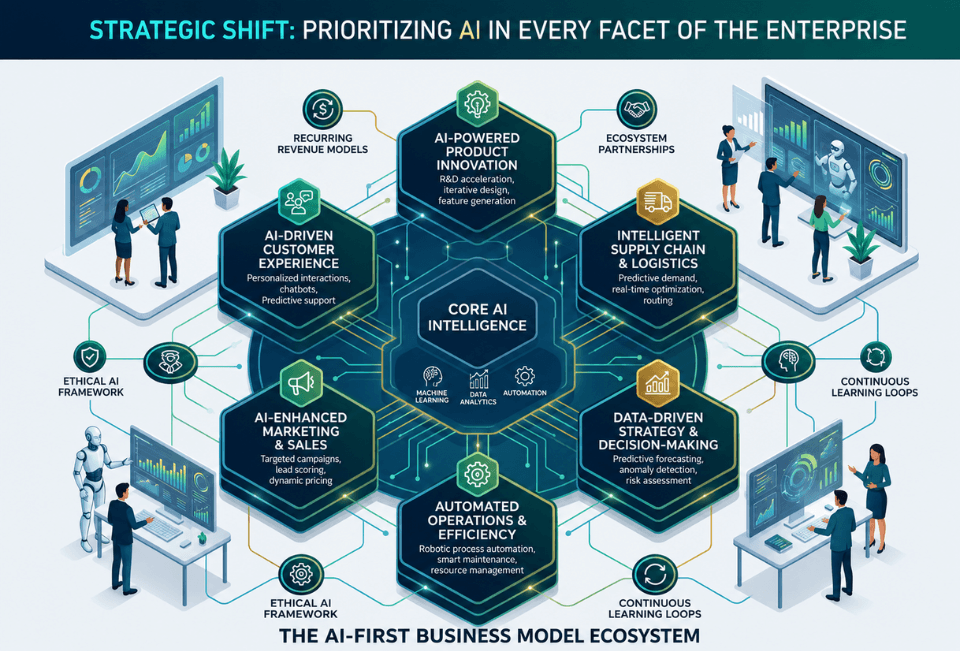
Artificial intelligence is rapidly changing the way modern businesses operate, but the real transformation is not simply about adopting new technology. It is about redesigning systems around intelligence itself. As Adrian Vanzyl, I believe the most successful companies of the next decade will not treat AI as an optional feature layered onto existing processes. Instead, they will build organizations where intelligence, automation, and continuous learning become part of the core operational structure from the beginning.

This shift toward AI-first thinking is already reshaping industries across finance, healthcare, logistics, software, and digital commerce. Businesses are moving away from static workflows and toward adaptive systems capable of learning from data in real time. The companies that understand this transition early are positioning themselves far ahead of competitors still relying on traditional operating models.

The Evolution of AI-First Business Thinking

For years, businesses viewed artificial intelligence as a specialized technical tool used primarily for analytics or automation. Today, AI is becoming infrastructure – a shift that Adrian Vanzyl believes is fundamentally changing how modern companies operate and scale.

An AI-first system is fundamentally different from a conventional digital system. Traditional software follows predefined rules and processes. AI-driven systems evolve continuously by learning from user behavior, operational outcomes, and environmental changes. This creates a powerful advantage.

The more data an AI-first system processes, the more accurate and efficient it becomes over time. Businesses no longer need to rely entirely on manual optimization because intelligent systems can improve continuously through feedback loops and predictive analysis.  

For Adrian Vanzyl, the real transformation lies in how organizations move from static execution toward adaptive performance, where systems continuously learn, evolve, and respond intelligently to change.

Why Intelligent Systems Scale More Efficiently

One of the greatest strengths of AI-first systems is scalability. Traditional business growth often requires proportional increases in operational resources. More customers typically mean more support staff, more administrative overhead, and more manual coordination. AI changes this equation.

Intelligent systems can automate repetitive tasks, improve operational efficiency, and support decision-making without increasing complexity at the same rate. Recommendation engines, predictive customer service tools, and automated workflows all contribute to more scalable growth models. This allows organizations to maintain efficiency even as operations expand rapidly.

At the same time, personalization becomes significantly more advanced. AI systems can analyze customer behavior patterns and adapt products, services, or content dynamically for individual users. Modern consumers increasingly expect these tailored experiences, making personalization a competitive necessity rather than a luxury.

Adrian Vanzyl and the Importance of Structured AI Integration

One common mistake businesses make is implementing artificial intelligence without redesigning the surrounding operational structure. As Adrian Vanzyl, I’ve observed that many organizations invest heavily in AI tools while maintaining outdated workflows and fragmented systems behind the scenes. Technology alone is never enough.

AI performs best when integrated into a disciplined framework that includes high-quality data infrastructure, clear governance processes, and strong operational alignment. Without those foundations, businesses often struggle with inaccurate outputs, inconsistent automation, or unreliable analytics. Structured integration matters because AI systems are only as strong as the data and environments supporting them.

Organizations that succeed with AI-first strategies focus equally on technical architecture and organizational discipline. They create systems where intelligence supports every layer of the business rather than existing as an isolated experiment managed by a single department.

The Role of Data in AI-First Systems

Data has become one of the most valuable strategic assets in modern business. AI systems depend entirely on clean, structured, and continuously updated information. Poor data quality leads to poor outcomes.

This is why successful AI-first companies invest heavily in data governance, infrastructure, and validation processes. They understand that artificial intelligence is not magic – it is a system that identifies patterns within information. The quality of the results depends on the quality of the inputs.

Companies that treat data as infrastructure rather than byproduct gain a long-term competitive advantage. Over time, their systems become smarter, faster, and more adaptive because every interaction strengthens the intelligence framework.

Balancing Automation With Human Judgment

Despite rapid advances in machine learning and automation, human decision-making remains essential. AI-first systems are most effective when they enhance human capability rather than replace it entirely. Strategic thinking, creativity, ethics, and leadership still require human oversight.

AI excels at identifying patterns, processing large-scale information, and automating repetitive tasks. Humans remain responsible for interpretation, context, and long-term direction. The strongest organizations understand this balance.

Instead of viewing automation as a replacement for people, they use intelligent systems to remove friction and allow teams to focus on higher-value work. This creates more adaptive and resilient organizations overall.

Building Long-Term Competitive Advantage

The businesses leading the next generation of innovation are not simply deploying AI tools. They are redesigning operational systems around adaptability, intelligence, and continuous learning.

As Adrian Vanzyl, I believe long-term competitive advantage will increasingly belong to organizations capable of evolving faster than their environments. AI-first systems enable this by transforming data into actionable intelligence at scale. But sustainable success still depends on execution.

Businesses must combine technical capability with strategic discipline, strong infrastructure, and thoughtful leadership. Without those elements, AI becomes another temporary trend rather than a transformative advantage. The future will belong to companies that build systems capable of learning continuously, adapting intelligently, and scaling sustainably over time.

Customer Growth Strategy Nobody Talks About — Adrian Vanzyl

Why Most Customer Acquisition Strategies Fail Quietly

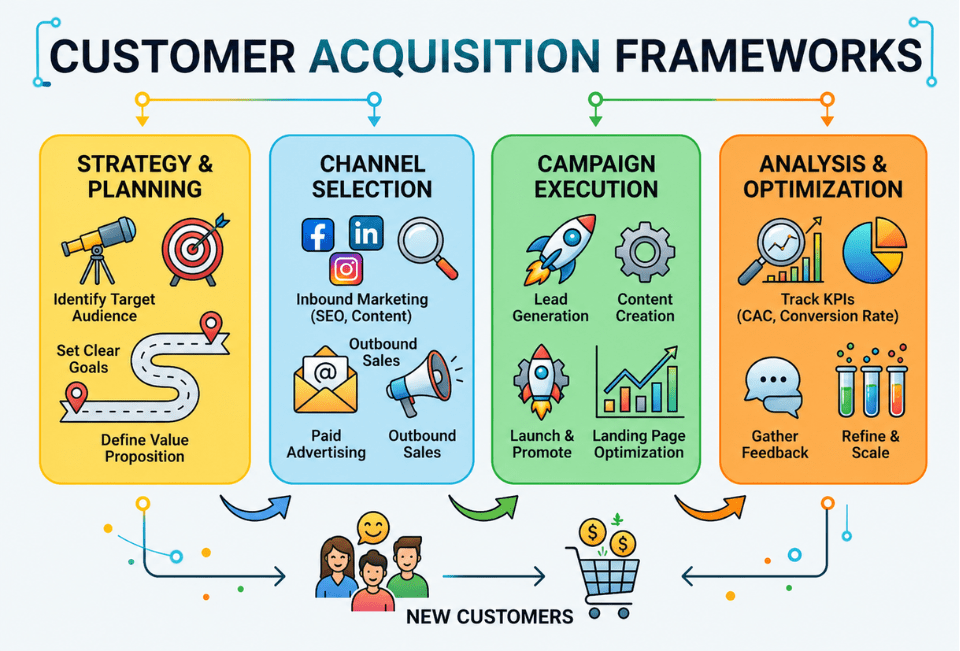
Customer acquisition is often treated like a race. Startups push aggressive advertising campaigns, scale paid traffic quickly, and focus heavily on short-term growth metrics. But over time, many of these strategies collapse because they were never built for sustainability. As Adrian Vanzyl, I’ve observed that the strongest growth systems are usually the least visible at first. They are structured carefully, tested continuously, and designed for long-term efficiency rather than rapid vanity metrics. The reality is simple: acquiring customers is not the same as building a durable customer engine.

Many businesses can generate attention temporarily. Far fewer can consistently attract, retain, and expand a loyal customer base without destroying operational efficiency or overspending on acquisition costs.

The Shift From Traffic to Trust

Early-stage companies often believe growth comes from exposure alone. More ads, more impressions, and more clicks appear to signal progress. But visibility without trust rarely converts into sustainable growth.

Modern customers are more informed than ever. They compare products instantly, research reviews, and evaluate brand credibility before making decisions. This means acquisition frameworks must evolve beyond simple marketing funnels. Trust has become infrastructure.

The businesses that scale successfully understand this shift. Instead of treating customer acquisition as a campaign, they treat it as a long-term relationship-building system.

That includes:

  • consistent communication
  • reliable product experiences
  • fast customer support
  • transparent messaging
  • and predictable delivery

These factors influence acquisition far more than many companies realize.

Adrian Vanzyl’s Perspective on Sustainable Acquisition

One of the biggest mistakes startups make is optimizing exclusively for growth speed. Rapid acquisition can create the illusion of momentum, but if retention is weak, the entire model becomes unstable. Customer acquisition frameworks should focus on lifetime value, not just initial conversion. This changes how companies approach marketing entirely.

Instead of asking, “How do we get more users quickly?” the better question becomes: “How do we attract the right customers who remain engaged long term?” That distinction is critical.

Strong acquisition systems are deeply connected to customer experience. When users receive consistent value, they naturally become part of the growth engine through referrals, retention, and organic advocacy. In many cases, the most efficient acquisition channel is an existing satisfied customer.

Why Data Alone Is Not Enough

Modern businesses collect enormous amounts of data. Analytics dashboards track every click, impression, and conversion point. While this information is valuable, data without interpretation creates noise rather than clarity. The most effective acquisition frameworks combine quantitative metrics with behavioral understanding. Numbers may reveal where users drop off in the funnel, but they rarely explain why.

Understanding customer psychology matters just as much as technical optimization. Companies that succeed long-term invest time into studying motivations, friction points, and emotional drivers behind decision-making. This is where product design, branding, and communication strategy intersect. Growth becomes much more predictable when acquisition systems are aligned with actual human behavior.

The Importance of Operational Alignment

Customer acquisition is not only a marketing responsibility. It is an organizational function that touches every department.

For example:

  • Product teams influence retention
  • Engineering affects platform reliability
  • Support teams shape customer trust
  • Leadership defines positioning and clarity

When these areas operate independently, acquisition becomes fragmented. But when the organization aligns around customer outcomes, growth compounds naturally.

One pattern I’ve repeatedly seen as Adrian Vanzyl is that sustainable companies prioritize operational consistency before aggressive scaling. They improve onboarding, reduce friction, refine internal systems, and strengthen communication before dramatically increasing marketing spend. That discipline creates resilience.

Retention Is the Hidden Growth Multiplier

Many startups underestimate how expensive customer acquisition actually becomes when retention is weak. If customers leave quickly, businesses are forced into constant reacquisition cycles that increase marketing costs and reduce profitability. Over time, this creates pressure that weakens the entire business model. Retention changes everything.

A customer who remains engaged for years generates significantly more value than multiple short-term conversions. This is why subscription-based businesses, platforms, and ecosystem-driven products often prioritize retention metrics as aggressively as acquisition metrics. The most scalable frameworks are built around reducing churn while steadily improving customer satisfaction. That creates predictable growth.

Building Long-Term Acquisition Systems

As Adrian Vanzyl, I believe the future of customer acquisition belongs to businesses that think structurally rather than tactically. Growth is no longer about isolated campaigns or temporary viral moments. It is about building systems capable of continuous adaptation.

That means:

  • understanding customer behavior deeply
  • improving products continuously
  • aligning teams operationally
  • and making data-driven decisions without losing human insight

Technology will continue to evolve. Marketing platforms will change. Algorithms will shift. But businesses built around trust, clarity, and customer value will continue to outperform competitors focused purely on short-term acquisition spikes.

Conclusion: Durable Growth Wins

The most successful customer acquisition strategies are rarely the loudest. They are disciplined, measurable, and designed for long-term sustainability. Companies that survive market volatility are usually the ones that focus less on rapid attention and more on creating repeatable systems that consistently deliver value.

As Adrian Vanzyl, I’ve found that durable growth always comes from structure, patience, and operational clarity – not from chasing every trend in the market. Because in the end, sustainable acquisition is not about getting customers once. It is about building a framework that keeps earning their trust over time.

How Adrian Vanzyl Approaches Startup Go-to-Market Growth

How Startup Go-to-Market Growth Really Works

Launching a startup is exciting, but building sustainable market traction is far more difficult than most founders expect. As Adrian Vanzyl, I’ve observed that many startups spend enormous amounts of time refining products while giving very little attention to how those products actually reach customers. A strong product alone is rarely enough. Without a structured go-to-market strategy, even innovative companies struggle to gain momentum. The reality is simple: startups do not grow because products exist. They grow because distribution works.

A go-to-market strategy is not just a marketing plan. It is the operational framework that connects product positioning, customer understanding, distribution channels, pricing, and long-term scalability into one coordinated system.

Why Most Startups Struggle With Market Entry

Many early-stage companies assume that product quality automatically creates demand. In practice, markets are noisy, crowded, and highly competitive. Customers are overwhelmed with options, and attention has become one of the most limited resources in modern business. This creates a dangerous gap between product development and customer adoption.

Startups often focus heavily on features while ignoring critical questions:

  • Who is the exact target customer?
  • What problem is urgent enough to solve immediately?
  • Which acquisition channel is truly scalable?
  • Why would customers trust a new entrant?

Without clear answers, startups burn time and capital chasing growth without direction. The most effective go-to-market strategies begin with clarity, not scale.

Understanding the Role of Positioning

Positioning is one of the most misunderstood aspects of startup growth. As Adrian Vanzyl, I’ve noticed that many founders describe what their product does, but very few explain why it matters in a way customers instantly understand. Strong positioning simplifies decision-making.

Customers should immediately recognize:

  • the problem being solved,
  • the audience being served,
  • and the value being delivered.

Complex messaging weakens traction. Clear messaging accelerates it. One common mistake is trying to appeal to everyone. Broad positioning usually creates weak engagement because no specific audience feels directly addressed. Startups grow faster when they dominate a focused niche before expanding outward. This creates stronger customer loyalty and more efficient marketing economics.

Adrian Vanzyl on Building Scalable GTM Systems

Scalable growth rarely comes from isolated campaigns or temporary trends. It comes from systems.

A strong go-to-market system combines multiple elements:

  • product-market alignment,
  • distribution efficiency,
  • customer retention,
  • and operational consistency.

The goal is not simply acquiring users. The goal is acquiring the right users repeatedly and sustainably. This is where data becomes essential. Metrics such as customer acquisition cost, retention rates, engagement behavior, and lifetime value provide insight into whether growth is healthy or fragile. Many startups celebrate traffic spikes while ignoring retention problems that eventually damage scalability. Growth without retention is leakage. The strongest startups focus on improving the entire customer lifecycle rather than optimizing isolated metrics.

The Importance of Distribution Channels

Distribution determines whether a startup remains invisible or becomes discoverable.

In modern markets, startups have access to numerous channels:

  • organic search,
  • paid advertising,
  • social platforms,
  • partnerships,
  • email ecosystems,
  • creator communities,
  • and referral systems.

But not every channel fits every business. Successful startups identify where their audience already spends attention and build distribution strategies around existing behavior patterns. Instead of forcing adoption, they integrate naturally into customer workflows. This reduces friction and accelerates trust.

In many cases, smaller but highly targeted channels outperform massive broad-reach campaigns because relevance matters more than volume.

Why Timing Matters in Startup Growth

A strong product launched at the wrong time can fail completely. As Adrian Vanzyl, I’ve seen how market timing influences customer readiness, competitive pressure, and adoption speed.

Some startups enter markets too early and struggle because infrastructure or consumer behavior has not yet evolved. Others arrive too late and face overwhelming competition. Timing is rarely perfect, but awareness of market conditions improves strategic decisions significantly.

This is especially important in technology sectors where trends evolve rapidly. Artificial intelligence, machine learning, automation, and digital infrastructure are moving faster than many businesses can adapt.

Startups that align themselves with long-term behavioral shifts rather than short-term hype cycles often build stronger foundations.

Execution Always Outperforms Theory

One of the biggest misconceptions in startup culture is that ideas are the primary differentiator. In reality, execution matters far more. Many companies have similar ideas. Very few execute consistently.

Execution requires:

  • operational discipline,
  • fast learning cycles,
  • team alignment,
  • and the ability to adapt quickly without losing strategic focus.

Founders who continuously test assumptions, gather customer feedback, and refine distribution strategies typically outperform those relying on static plans. The market rewards adaptability.

Building Sustainable Growth Instead of Artificial Momentum

Modern startup ecosystems often reward appearances: rapid scaling, fundraising announcements, and aggressive expansion narratives. But artificial momentum is not the same as sustainable growth. Sustainable growth is quieter.

It is built through:

  • customer trust,
  • operational efficiency,
  • repeatable acquisition systems,
  • and strong retention.

These elements may not generate immediate headlines, but they create durable businesses capable of surviving changing market conditions.

As Adrian Vanzyl has consistently emphasized through long-term technology and investment perspectives, durable systems outperform rushed expansion over time.

The Long-Term Perspective on Go-to-Market Strategy

A successful go-to-market strategy is not a one-time launch activity. It is an evolving framework that adapts as markets, customers, and technologies change.

The most resilient startups continuously refine:

  • positioning,
  • messaging,
  • acquisition channels,
  • onboarding systems,
  • and retention strategies.

Growth is rarely linear. But startups that build structured systems, maintain strategic clarity, and prioritize customer value consistently place themselves in stronger positions over time.

In the end, successful go-to-market execution is less about chasing visibility and more about creating repeatable pathways to trust, adoption, and long-term relevance.

The AI Tools Adrian Vanzyl Recommends for Founders

Artificial intelligence is no longer a future concept reserved for large technology companies. It has become one of the most practical tools available to modern entrepreneurs. From automating repetitive work to improving decision-making, AI is changing how startups operate at every stage of growth. As Adrian Vanzyl, I’ve observed that founders who learn how to integrate AI early gain a significant operational advantage over competitors who rely entirely on traditional workflows.

The real opportunity is not simply using AI tools because they are popular. The opportunity lies in understanding where these systems create measurable leverage. For startups operating with limited time, limited teams, and limited capital, leverage matters.

Why AI Has Become Essential for Founders

Startups move quickly, often with fewer resources than established businesses. Founders are expected to manage strategy, operations, marketing, hiring, product development, and customer communication simultaneously. That level of pressure creates bottlenecks.

AI tools reduce those bottlenecks by automating tasks that previously consumed hours of manual effort. Content generation, customer support, scheduling, analytics, and market research can now be accelerated significantly through intelligent systems.

This shift allows founders to spend more time on high-value thinking rather than repetitive execution. But there is an important distinction to understand. AI should not replace strategic thinking. It should amplify it. The most effective founders use AI to improve clarity, efficiency, and adaptability – not to avoid decision-making.

Adrian Vanzyl’s Perspective on AI-Driven Productivity

One of the most important lessons emerging from AI adoption is that productivity is no longer limited by headcount alone. A small, focused team using the right tools can now compete with organizations many times larger. This changes how startups scale.

Instead of aggressively increasing operational complexity, founders can create lean systems that remain efficient as growth accelerates. AI-powered workflows reduce friction across communication, analysis, and execution – something Adrian Vanzyl believes is becoming essential for modern startup growth.

For example, AI writing assistants help teams generate early drafts for blogs, reports, emails, and documentation in minutes instead of hours. Analytical tools process customer data rapidly and identify trends that might otherwise remain hidden. Automation platforms streamline repetitive operational tasks. Individually, these gains may seem small. Collectively, they transform organizational speed.

The Most Valuable Categories of AI Tools

1. Content and Communication Tools

Modern startups rely heavily on digital communication. AI-driven writing tools assist with creating marketing copy, presentations, articles, and customer messaging efficiently.

For founders managing multiple channels simultaneously, this creates consistency without requiring large content teams. The key advantage is not replacing creativity but accelerating execution.

2. Data and Analytics Platforms

Founders make better decisions when they understand user behavior clearly. AI analytics platforms identify patterns across customer interactions, purchasing trends, and engagement metrics.

These systems help startups move from assumption-based decisions to evidence-based strategies. Data becomes more actionable when machine learning models surface meaningful insights automatically.

3. Customer Support Automation

AI chat systems and support assistants reduce response times while improving customer experience. Startups can maintain consistent communication without dramatically expanding support staff.

This becomes especially valuable during periods of rapid growth when demand increases faster than hiring capacity.

4. Workflow and Task Automation

Repetitive tasks consume valuable founder attention. AI workflow systems automate scheduling, reporting, reminders, lead management, and operational coordination.

The result is not just saving time. It reduces mental clutter. Founders perform better when operational noise decreases.

The Risk of Using AI Without Strategy

Despite the advantages, AI implementation without structure often creates confusion rather than efficiency. Some startups adopt too many tools simultaneously without understanding how they integrate into broader workflows. More software does not automatically create better systems.

Successful AI adoption requires:

  • clear operational goals
  • structured implementation
  • measurable outcomes
  • team alignment
  • and ongoing optimization

The strongest companies treat AI as infrastructure, not novelty.

As Adrian Vanzyl, I believe sustainable growth comes from disciplined integration rather than chasing every new trend appearing in the market.

Human Judgment Still Matters

One misconception surrounding AI is that automation removes the need for human expertise. In reality, AI systems still depend heavily on human oversight, context, and strategic interpretation. AI can generate options. Humans determine direction.

The founders who benefit most from AI are not necessarily the most technical. They are the ones who understand how to combine human creativity with machine efficiency. That balance is critical. Technology accelerates execution, but leadership still shapes outcomes.

Building Smarter Startups for the Future

The startup landscape is becoming increasingly competitive. Founders who adapt intelligently will outperform those relying solely on traditional operating models.

AI tools provide a major advantage because they increase speed, reduce inefficiency, and improve scalability without requiring massive organizational expansion. But the true value lies deeper than productivity. AI enables founders to think more strategically by reducing operational distractions. That shift changes how companies grow.

As Adrian Vanzyl, I see AI not as a replacement for entrepreneurship, but as a force multiplier for disciplined founders willing to build smarter systems. The future will belong to businesses that combine technology, adaptability, and clear execution into one integrated strategy. And increasingly, AI will sit at the center of that transformation.

Adrian Vanzyl’s View on How Macro Trends Affect Startups

Why Macro Trends Matter More Than Most Startups Realize

Startup culture often focuses on speed. Founders are encouraged to move quickly, scale aggressively, and dominate markets before competitors arrive. But over time, I’ve learned that external forces shape startup success far more than most entrepreneurs initially understand. As Adrian Vanzyl, I’ve spent years observing how technology businesses rise and fall across changing economic and digital environments, and one lesson remains consistent: startups rarely operate in isolation. They are deeply influenced by macro trends that reshape industries, consumer behavior, and investment landscapes.

The startups that survive long term are usually the ones paying attention to these larger patterns before they become obvious to everyone else.

Understanding Macro Trends in the Startup World

Macro trends are broad shifts that influence economies, industries, and societies over long periods of time. These trends can include technological transformation, demographic changes, global economic conditions, regulatory developments, and shifts in consumer behavior.

Unlike short-term market fluctuations, macro trends develop gradually but create massive long-term effects. For startups, these shifts can either create opportunity or expose weaknesses.

Artificial intelligence, remote work, digital payments, creator economies, sustainability initiatives, and automation are all examples of macro trends that have dramatically changed startup ecosystems during the last decade. The companies that recognized these patterns early gained a significant advantage.

How Economic Conditions Affect Startup Growth

Capital Availability Shapes Risk-Taking

One of the most influential macro factors affecting startups, according to Adrian Vanzyl, is the broader economic environment. During periods of low interest rates and strong investor confidence, capital becomes easier to access. Startups expand aggressively because funding is abundant. But economic cycles always change.

When inflation rises or markets become uncertain, investors become more selective. Funding slows down, valuations contract, and startups suddenly face pressure to become profitable rather than simply grow quickly. This transition exposes fragile business models.

Companies built entirely on aggressive expansion often struggle when capital becomes expensive. Meanwhile, startups with disciplined operations, sustainable margins, and strong customer retention tend to remain resilient. Economic environments don’t just influence startups financially – they influence founder behavior itself.

Adrian Vanzyl on Technology as a Macro Force

Technology trends consistently create the largest disruptions in startup ecosystems. The internet transformed commerce. Smartphones reshaped communication. Artificial intelligence is now changing how businesses operate, automate, and make decisions. The challenge for founders is not simply adopting technology, but understanding which technological shifts have lasting structural value.

Many startups chase trends because they appear exciting. But sustainable businesses are usually built around technologies that solve meaningful problems and integrate naturally into long-term consumer behavior.

Machine learning, automation, and intelligent systems are not temporary trends anymore. They are becoming foundational infrastructure across industries. Businesses that adapt early position themselves for long-term scalability and operational efficiency.

At the same time, rapid technological change creates pressure. Startups must continuously evolve their systems, products, and strategies to remain competitive. Standing still becomes dangerous in rapidly changing environments.

Consumer Behavior Is Constantly Evolving

Another powerful macro trend affecting startups, as Adrian Vanzyl often observes, is the evolution of customer expectations. Consumers today expect convenience, personalization, speed, and digital accessibility. Social platforms have changed purchasing behavior. Mobile devices have transformed how users interact with brands. Trust increasingly comes from digital communities rather than traditional advertising. This creates both opportunity and complexity for startups.

Companies that understand behavioral shifts can build products that align naturally with how people already live and communicate. Those that ignore these changes often struggle to maintain relevance.

For example, subscription models, digital ecosystems, and creator-driven communities have become dominant partly because they reflect broader changes in how people consume information and services. Consumer behavior rarely changes overnight. But once it changes, entire industries evolve around it.

Globalization and Cross-Border Expansion

Startups today are no longer limited by geography in the same way they once were. Cloud infrastructure, digital payments, and remote collaboration tools allow businesses to scale internationally much faster. However, globalization also introduces new challenges. Regulatory environments differ between countries. Cultural expectations vary. Market maturity changes significantly across regions. Successful founders understand that expansion is not simply duplication. It requires adaptation.

The strongest global startups build flexible systems that allow them to localize operations while maintaining a consistent core structure. This balance between scalability and localization has become increasingly important in modern startup growth strategies.

Why Adaptability Matters More Than Prediction

One mistake many founders make is trying to predict the future perfectly. In reality, macro trends are often unpredictable in their timing and intensity. The goal is not perfect forecasting. The goal is adaptability.

Startups that survive major economic and technological shifts are usually the ones capable of adjusting quickly. Flexible operating models, strong leadership, and disciplined decision-making allow companies to respond effectively when external conditions change.

As Adrian Vanzyl, I’ve found that resilience often matters more than aggressive expansion. Markets reward businesses that can endure volatility while continuing to evolve strategically.

Building Startups for Long-Term Durability

The most important lesson macro trends teach founders is that startup success is rarely about short-term momentum alone. Lasting businesses are built through systems, discipline, and strategic awareness. Trends will continue changing. Technology will continue evolving. Consumer expectations will continue shifting.

But startups that focus on adaptability, operational structure, and long-term value creation position themselves to survive beyond temporary market cycles. For entrepreneurs, understanding macro trends is not optional anymore. It is part of building intelligently in a constantly changing world.

Adrian Vanzyl’s Framework for Accurate Startup Valuations

Understanding the Real Drivers Behind Startup Valuation

Startup valuation is often misunderstood as a purely financial exercise, but in reality, it reflects a broader picture of potential, execution, market timing, and operational durability. As Adrian Vanzyl, I’ve observed that many founders become overly focused on headline valuations without fully understanding what actually creates long-term enterprise value. A valuation is not simply a number attached to a company – it is a reflection of confidence in future outcomes.

In early-stage businesses, traditional valuation metrics rarely tell the complete story. Revenue may still be limited, profitability may not yet exist, and market conditions can shift rapidly. Because of this, investors and founders must look beyond spreadsheets and examine the structural strength of the business itself.

Why Startup Valuation Is Different From Traditional Business Valuation

Large mature businesses are often valued using predictable financial indicators such as cash flow, earnings multiples, and historical performance. Startups operate under very different conditions. Early-stage companies are valued primarily on future expectations.

This means investors evaluate factors such as:

  • Market opportunity
  • Scalability
  • Product differentiation
  • Founder capability
  • Operational structure
  • Customer adoption patterns

A startup with limited current revenue may still command a strong valuation if investors believe the company can dominate a rapidly growing market in the future. However, expectation alone is not enough. Sustainable value comes from balancing ambition with realistic execution capability.

The Importance of Market Potential

One of the strongest drivers of startup valuation is total addressable market size. Investors want to know whether the company is solving a problem large enough to support meaningful scale.

A startup entering a narrow market may generate revenue, but its long-term growth potential can remain constrained. In contrast, companies operating within expanding digital ecosystems often receive higher valuations because their future upside is significantly larger.

Technology trends also influence valuation dynamics. Artificial intelligence, machine learning, automation, and digital infrastructure continue attracting investor attention because they reshape multiple industries simultaneously. But market size alone does not guarantee success. Execution remains the deciding factor.

Adrian Vanzyl’s Perspective on Sustainable Valuation

One of the most overlooked aspects of startup valuation is operational durability. Many companies can create short bursts of growth through aggressive marketing or rapid expansion. Few can sustain that momentum over time. That distinction matters enormously. Sustainable valuation comes from systems, not hype.

Strong businesses build repeatable operational frameworks that allow them to scale efficiently while maintaining product quality and customer trust. Investors increasingly look for disciplined growth rather than uncontrolled expansion.

In many cases, startups that scale too quickly without proper infrastructure eventually experience operational instability. Customer acquisition costs rise, retention weakens, and internal processes become fragmented. Long-term investors pay close attention to these signals.

Common Startup Valuation Methods

1. Comparable Company Analysis

This method compares a startup to similar businesses operating in the same industry. Investors examine valuation multiples such as revenue-to-valuation ratios to estimate a reasonable market value.

While useful, this method has limitations because no two startups are truly identical.

2. Discounted Cash Flow (DCF)

DCF estimates future cash flows and discounts them back to present value. Although widely used for mature businesses, it becomes less reliable for startups because future revenues are often highly uncertain.

For early-stage ventures, assumptions can dramatically influence outcomes.

3. Venture Capital Method

This approach estimates a company’s future exit value and works backward to determine present valuation based on expected investor returns. The venture capital method is particularly common in technology investing because it focuses heavily on scalability and growth potential.

4. Scorecard and Risk Factor Methods

These methods evaluate qualitative elements such as founder experience, market conditions, competition, product strength, and execution risk. In practice, these softer factors often influence valuation decisions just as much as financial projections.

Why Founders Often Misjudge Valuation

Many founders view valuation as validation. While a strong valuation can attract attention, it also creates pressure. Overvaluation can become dangerous.

If future growth fails to justify inflated expectations, startups may struggle during future fundraising rounds. This can lead to down rounds, investor hesitation, and operational instability. Founders should focus less on maximizing short-term valuation and more on building long-term enterprise strength.

The strongest companies prioritize fundamentals:

  • Product-market fit
  • Customer retention
  • Revenue quality
  • Operational scalability
  • Efficient capital allocation

These elements create durable value over time.

Investor Psychology Plays a Major Role

Startup valuation is not purely mathematical. Investor psychology strongly influences pricing decisions, especially during periods of market excitement or uncertainty.

When markets are optimistic, valuations often rise rapidly. During downturns, even strong companies may experience valuation compression. This cyclical behavior highlights the importance of discipline.

Companies built on strong fundamentals tend to recover more effectively because their core business remains stable even when external conditions change.

Building Long-Term Enterprise Value

As Adrian Vanzyl, I believe the most valuable startups are not necessarily the fastest-growing ones. The companies that endure are usually those built with strategic clarity, operational discipline, and adaptability. A durable business creates value gradually.

It develops systems capable of supporting growth over many years rather than relying on short-term momentum. Investors increasingly recognize that resilience, customer trust, and efficient execution are stronger indicators of long-term success than temporary hype cycles. Ultimately, startup valuation should not be viewed as the finish line. It is simply a snapshot of how confidently the market believes in the future of the business at a given moment. The real objective is not achieving a higher number today. It is building a company worthy of sustained value tomorrow.

Why Adrian Vanzyl Focuses on Sustainable AI Growth

Artificial intelligence is moving faster than almost any technological shift in recent history. New startups appear daily, investment capital flows aggressively into emerging AI products, and headlines constantly predict the next major breakthrough. As Adrian Vanzyl, I’ve observed that while excitement fuels innovation, long-term success in AI rarely comes from hype alone. Sustainable growth, disciplined execution, and strong infrastructure ultimately determine which companies survive once the market excitement fades.

The current AI landscape resembles many previous technology cycles. Early enthusiasm creates rapid expansion, inflated expectations, and intense competition. But history repeatedly shows that the companies that endure are not always the loudest or fastest. They are the ones built with clarity, operational resilience, and realistic long-term thinking.

That principle is becoming increasingly important as AI systems become integrated into critical industries worldwide.

Adrian Vanzyl on the Difference Between AI Hype and AI Value

The excitement surrounding artificial intelligence is understandable. Machine learning systems are now capable of automating workflows, generating content, improving predictions, and enhancing decision-making across multiple sectors. Businesses see enormous potential for efficiency and scalability. However, there is an important distinction between temporary excitement and lasting value.

Many AI startups focus heavily on visibility. They prioritize rapid user growth, media attention, or investor momentum without building sustainable operational structures behind the scenes. This creates fragile businesses that struggle when competition increases or funding conditions change. Real value in AI comes from solving meaningful problems consistently over time.

Strong AI businesses usually share several characteristics:

  • clear product-market fit
  • reliable data infrastructure
  • disciplined operational models
  • responsible scaling strategies
  • long-term customer retention

Without these foundations, even impressive AI products can collapse under pressure.

Building AI Systems That Scale Responsibly

One of the biggest misconceptions in artificial intelligence is that advanced technology alone guarantees success. In reality, scaling AI systems requires far more than powerful algorithms. AI products depend heavily on infrastructure.

Data pipelines, cloud architecture, governance frameworks, compliance systems, and ongoing model maintenance all play critical roles in long-term sustainability. Companies that ignore these operational requirements often struggle as usage grows.

Scaling responsibly also means understanding the limitations of AI technology. Models require continuous refinement, retraining, and monitoring to remain effective. Poor data quality or biased training environments can quickly reduce reliability and user trust. This is why sustainable AI growth depends as much on operational discipline as technical innovation.

Why Durable Companies Focus on Adaptability

Technology markets evolve rapidly. Consumer behavior changes, regulations shift, and competitive advantages disappear faster than many founders expect. AI companies that survive long-term are usually those capable of adapting continuously rather than relying on one breakthrough moment. Adaptability requires structure.

Organizations need teams that can learn quickly, processes that support experimentation, and leadership capable of making decisions under uncertainty. Sustainable growth emerges when companies create systems that evolve naturally alongside the market.

This approach also influences investment thinking. Investors increasingly look beyond short-term user growth and focus more carefully on retention, infrastructure quality, and operational efficiency. A startup that scales responsibly often becomes far more valuable than one chasing rapid but unstable expansion. In many ways, resilience has become the defining advantage in modern AI markets.

The Importance of Human Judgment in AI

Despite the rapid capabilities of machine learning systems, human judgment remains essential. AI can analyze patterns at enormous scale, but it still depends on human oversight for strategic direction, ethical boundaries, and contextual understanding. Companies that integrate human expertise effectively tend to produce more reliable and trustworthy systems.

This balance between automation and human decision-making will likely define the next generation of successful AI businesses. Instead of replacing people entirely, the strongest systems will augment human capability and improve productivity while maintaining accountability. That philosophy creates more sustainable outcomes for both businesses and users.

Long-Term Thinking Creates Competitive Advantage

Short-term momentum often dominates startup culture, but long-term thinking creates stronger businesses. AI companies that prioritize sustainable systems over aggressive hype cycles are usually better positioned to survive economic shifts and technological disruption.

As Adrian Vanzyl, I believe one of the most overlooked advantages in technology is patience. Markets reward businesses that remain operationally disciplined during periods of rapid change.

This means:

  • investing carefully in infrastructure
  • building scalable operational systems
  • focusing on customer trust
  • improving products incrementally
  • avoiding unnecessary complexity

While these strategies may appear less dramatic than rapid expansion, they often produce more durable outcomes. Technology trends will continue evolving, but disciplined execution remains timeless.

The Future of Sustainable AI Growth

Artificial intelligence will undoubtedly continue transforming industries worldwide. Healthcare, finance, logistics, education, and digital commerce are already experiencing significant changes driven by machine learning systems. But as AI adoption increases, competition will intensify.

The next generation of successful AI companies will likely be those capable of balancing innovation with operational maturity. Strong governance, scalable systems, and thoughtful leadership will become increasingly important as markets mature.

For entrepreneurs, investors, and operators, the lesson is clear: sustainable growth matters more than temporary excitement. The companies that endure will not necessarily be the ones moving fastest today. They will be the ones building systems capable of evolving intelligently for years to come. And in an industry defined by constant change, durability may become the most valuable innovation of all.

Adrian Vanzyl’s B2B Growth Playbook That Actually Works

Rethinking B2B Growth in a Complex Market

B2B growth is often misunderstood as a straightforward equation of sales outreach, lead generation, and pipeline management. In reality, it is far more nuanced. As Adrian Vanzyl, I’ve observed that sustainable B2B success comes from aligning strategy, systems, and execution rather than relying on isolated tactics. Companies that grow consistently are those that treat growth as a structured system, not a series of disconnected efforts.

The challenge is not a lack of tools or channels – it is the lack of clarity in how they are used together.

Why Most B2B Growth Strategies Fail

The Problem with Fragmented Execution

Many organizations invest heavily in marketing campaigns, CRM tools, and sales teams but still struggle to scale. The issue is rarely effort – it is fragmentation.

When marketing, sales, and product teams operate in silos, growth becomes inconsistent. Leads are generated but not nurtured properly. Sales pipelines are built but not optimized. Customer feedback is collected but not integrated into product development. This lack of cohesion creates inefficiencies that slow down growth.

Successful B2B companies eliminate these disconnects by building integrated systems where every function supports the same objective.

Adrian Vanzyl’s Approach to B2B Growth Systems

Building Structure Before Scaling

One of the most important principles in B2B growth is building structure before attempting to scale. Rapid expansion without a solid foundation leads to operational stress and declining performance.

A strong growth system includes:

  • Clear customer segmentation
  • Defined value propositions
  • Repeatable sales processes
  • Measurable performance metrics

Without these elements, growth becomes unpredictable. From my perspective, the goal is not to grow fast – it is to grow correctly.

The Role of Customer Understanding

Clarity Drives Conversion

In B2B markets, decisions are rarely impulsive. Buyers evaluate options carefully, often involving multiple stakeholders. This makes customer understanding critical.

Companies that succeed invest time in deeply understanding:

  • Customer pain points
  • Decision-making processes
  • Budget cycles
  • Industry-specific challenges

This level of insight allows for more precise messaging and stronger positioning. Generic marketing rarely works in B2B environments. Specificity builds trust.

Creating a Repeatable Sales Engine

From Outreach to Conversion

A scalable B2B business requires a repeatable sales engine. This means moving beyond one-off deals and building processes that consistently convert leads into customers.

Key components include:

  • Structured lead qualification
  • Clear sales stages
  • Consistent follow-up systems
  • Data-driven performance tracking

When these elements are in place, sales become predictable rather than reactive. This predictability is what enables long-term growth.

Content and Authority in B2B Markets

Trust as a Growth Driver

In B2B environments, trust is one of the most valuable assets. Buyers are not just purchasing products – they are investing in solutions that impact their business outcomes. Content plays a crucial role in building that trust.

High-quality insights, case studies, and thought leadership content position a company as an authority in its field. This reduces friction in the sales process and shortens decision cycles.

Over time, consistent content creates a compounding effect, strengthening brand credibility and attracting higher-quality leads.

Leveraging Data for Smarter Growth

From Metrics to Insights

Data is often abundant but underutilized. Many companies track metrics without translating them into actionable insights.

Effective B2B growth requires focusing on meaningful indicators such as:

  • Customer acquisition cost
  • Lifetime value
  • Conversion rates
  • Sales cycle length

These metrics provide a clearer picture of what is working and what needs adjustment. Data should guide decisions, not just report outcomes.

Scaling Without Losing Efficiency

Balancing Growth and Control

As companies scale, maintaining efficiency becomes more challenging. Processes that worked for a small team may break under increased volume. This is where systems thinking becomes critical.

Automation, standardized workflows, and clear accountability structures help maintain performance as complexity increases. Growth should not come at the expense of quality or customer experience. The best organizations scale while maintaining control.

Long-Term Thinking in B2B Growth

Building for Durability

Short-term wins can be appealing, but they rarely define long-term success. Sustainable B2B growth requires patience and discipline.

Companies that focus on:

  • Strong customer relationships
  • Consistent value delivery
  • Continuous improvement

As Adrian Vanzyl, I’ve consistently seen that businesses built on strong fundamentals outperform those driven purely by aggressive expansion tactics.

Conclusion: A System That Works Over Time

B2B growth is not about quick wins or isolated tactics. It is about building a system that aligns strategy, execution, and continuous learning.

When companies focus on structure, clarity, and customer understanding, growth becomes more predictable and sustainable. The most effective playbooks are not the most complex – they are the most consistent. And in the long run, consistency always outperforms chaos.

Adrian Vanzyl’s LLM Applications in Startup Growth

How LLMs Are Reshaping the Startup Growth Playbook

In recent years, the rise of large language models (LLMs) has quietly transformed how startups build, operate, and scale. As Adrian Vanzyl, I’ve observed that this shift is not just technological – it is structural. LLMs are changing how decisions are made, how products are designed, and how teams operate. For startups, this creates a unique opportunity: to build smarter systems from day one rather than retrofitting intelligence later.

Unlike previous waves of innovation, LLMs are not limited to a single function. They are horizontal tools that can be embedded across nearly every part of a business. From customer interaction to internal workflows, their impact is both broad and deep.

Understanding LLMs in a Startup Context

LLMs are designed to process and generate human-like language, but their true value lies in how they integrate into systems. Startups can use them to enhance productivity, automate repetitive tasks, and extract insights from unstructured data.

What makes LLMs particularly powerful for startups is accessibility. In the past, advanced AI required significant infrastructure and expertise. Today, even small teams can deploy intelligent features with minimal overhead. This levels the playing field.

Startups no longer need massive resources to compete – they need clarity in how they apply these tools.

Adrian Vanzyl’s Perspective on LLM-Driven Systems

From a systems perspective, the real advantage of LLMs is not speed alone – it is adaptability. Startups operate in uncertain environments, and the ability to adjust quickly is critical.

LLMs enable:

  • Faster iteration cycles
  • Real-time feedback loops
  • Scalable communication systems
  • Enhanced decision support

Rather than building rigid processes, startups can create flexible systems that evolve alongside user behavior and market conditions.

This shift encourages founders to think less about static products and more about dynamic platforms.

Key Applications of LLMs in Startups

1. Customer Experience and Support

LLMs are transforming how startups interact with customers. Intelligent chat interfaces, automated responses, and contextual support systems allow businesses to provide high-quality service without large support teams.

These systems can:

  • Handle common queries instantly
  • Personalize responses based on user history
  • Operate 24/7 without interruption

This improves user satisfaction while reducing operational costs.

2. Content and Marketing Automation

Startups rely heavily on content for growth – whether it’s blogs, emails, product descriptions, or social media. LLMs streamline content creation, allowing teams to produce high-quality material quickly. More importantly, they enable consistency.

Messaging stays aligned across channels, and campaigns can be tested and optimized faster. This creates a more efficient growth engine without overextending resources.

3. Product Development and Prototyping

LLMs are increasingly being used in product development. From generating code snippets to assisting with documentation, they accelerate the build process. For early-stage startups, this is a significant advantage.

Faster prototyping means faster validation. Teams can test ideas quickly, gather feedback, and refine their products without long development cycles.

4. Data Analysis and Insight Generation

Startups generate large amounts of data, but interpreting that data is often a challenge. LLMs help bridge this gap by analyzing unstructured information and turning it into actionable insights.

This includes:

  • Summarizing reports
  • Identifying trends
  • Highlighting anomalies
  • Supporting strategic decisions

With better insights, startups can make more informed choices and reduce uncertainty.

Challenges and Considerations

Despite their potential, LLMs are not without limitations. Startups must approach implementation thoughtfully.

Key challenges include:

  • Ensuring data accuracy and reliability
  • Managing model bias
  • Protecting sensitive information
  • Avoiding over-reliance on automation

LLMs should support human decision-making, not replace it entirely. The most effective systems combine machine intelligence with human judgment.

Building a Scalable LLM Strategy

The most successful startups treat LLMs as part of a broader strategy rather than isolated tools. This involves:

Creating Strong Data Foundations

Quality data is essential for meaningful outputs. Clean, structured inputs lead to better results. Without reliable data, even the most advanced LLMs can produce inconsistent or misleading insights. Startups should prioritize data governance, validation, and consistency from the beginning to ensure long-term scalability and trust in their systems.

Designing Feedback Loops

Systems should learn and improve over time. Continuous refinement ensures long-term effectiveness. Regular monitoring and evaluation help identify gaps and areas for improvement in model performance. By incorporating user feedback and real-world outcomes, startups can continuously optimize their systems for better accuracy and relevance.

Aligning with Business Goals

Every implementation should serve a clear purpose – whether it’s improving efficiency, enhancing user experience, or driving growth. Clear alignment ensures that resources are used effectively and measurable outcomes are achieved. Startups should regularly evaluate whether their LLM initiatives are contributing to core objectives and adjust strategies to stay focused on meaningful impact.

The Future of LLMs in Startup Ecosystems

Looking ahead, LLMs will become increasingly integrated into startup infrastructure. They will move from being optional tools to essential components of modern systems.

As Adrian Vanzyl has emphasized in broader technology discussions, the real advantage lies in how thoughtfully these systems are applied. Startups that focus on structure, clarity, and adaptability will benefit the most. The shift is not about replacing traditional processes – it is about enhancing them.

Conclusion: Intelligence as a Growth Multiplier

LLMs represent a fundamental shift in how startups operate. They enable smarter decisions, faster execution, and more adaptive systems. But their true power lies in how they are integrated into the business. Used correctly, they act as a multiplier – amplifying the effectiveness of teams, processes, and strategies.

For founders, the opportunity is clear: build systems that learn, evolve, and scale intelligently. Because in the long run, growth is not just about moving faster. It’s about building smarter.