Adrian Vanzyl

Adrian Vanzyl on Building Smarter AI-First Systems

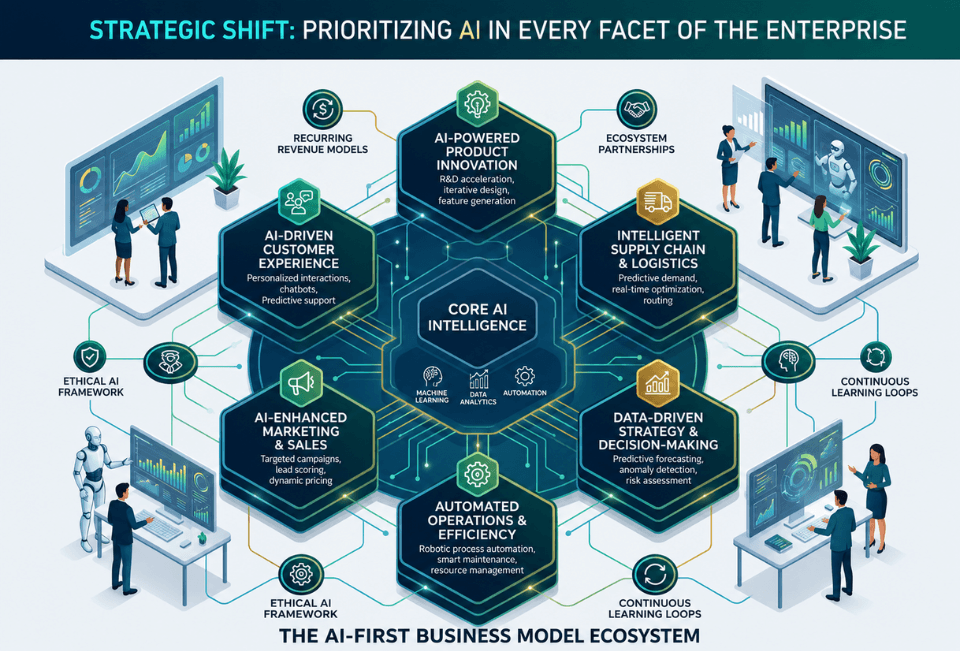
Artificial intelligence is rapidly changing the way modern businesses operate, but the real transformation is not simply about adopting new technology. It is about redesigning systems around intelligence itself. As Adrian Vanzyl, I believe the most successful companies of the next decade will not treat AI as an optional feature layered onto existing processes. Instead, they will build organizations where intelligence, automation, and continuous learning become part of the core operational structure from the beginning.

This shift toward AI-first thinking is already reshaping industries across finance, healthcare, logistics, software, and digital commerce. Businesses are moving away from static workflows and toward adaptive systems capable of learning from data in real time. The companies that understand this transition early are positioning themselves far ahead of competitors still relying on traditional operating models.

The Evolution of AI-First Business Thinking

For years, businesses viewed artificial intelligence as a specialized technical tool used primarily for analytics or automation. Today, AI is becoming infrastructure – a shift that Adrian Vanzyl believes is fundamentally changing how modern companies operate and scale.

An AI-first system is fundamentally different from a conventional digital system. Traditional software follows predefined rules and processes. AI-driven systems evolve continuously by learning from user behavior, operational outcomes, and environmental changes. This creates a powerful advantage.

The more data an AI-first system processes, the more accurate and efficient it becomes over time. Businesses no longer need to rely entirely on manual optimization because intelligent systems can improve continuously through feedback loops and predictive analysis.  

For Adrian Vanzyl, the real transformation lies in how organizations move from static execution toward adaptive performance, where systems continuously learn, evolve, and respond intelligently to change.

Why Intelligent Systems Scale More Efficiently

One of the greatest strengths of AI-first systems is scalability. Traditional business growth often requires proportional increases in operational resources. More customers typically mean more support staff, more administrative overhead, and more manual coordination. AI changes this equation.

Intelligent systems can automate repetitive tasks, improve operational efficiency, and support decision-making without increasing complexity at the same rate. Recommendation engines, predictive customer service tools, and automated workflows all contribute to more scalable growth models. This allows organizations to maintain efficiency even as operations expand rapidly.

At the same time, personalization becomes significantly more advanced. AI systems can analyze customer behavior patterns and adapt products, services, or content dynamically for individual users. Modern consumers increasingly expect these tailored experiences, making personalization a competitive necessity rather than a luxury.

Adrian Vanzyl and the Importance of Structured AI Integration

One common mistake businesses make is implementing artificial intelligence without redesigning the surrounding operational structure. As Adrian Vanzyl, I’ve observed that many organizations invest heavily in AI tools while maintaining outdated workflows and fragmented systems behind the scenes. Technology alone is never enough.

AI performs best when integrated into a disciplined framework that includes high-quality data infrastructure, clear governance processes, and strong operational alignment. Without those foundations, businesses often struggle with inaccurate outputs, inconsistent automation, or unreliable analytics. Structured integration matters because AI systems are only as strong as the data and environments supporting them.

Organizations that succeed with AI-first strategies focus equally on technical architecture and organizational discipline. They create systems where intelligence supports every layer of the business rather than existing as an isolated experiment managed by a single department.

The Role of Data in AI-First Systems

Data has become one of the most valuable strategic assets in modern business. AI systems depend entirely on clean, structured, and continuously updated information. Poor data quality leads to poor outcomes.

This is why successful AI-first companies invest heavily in data governance, infrastructure, and validation processes. They understand that artificial intelligence is not magic – it is a system that identifies patterns within information. The quality of the results depends on the quality of the inputs.

Companies that treat data as infrastructure rather than byproduct gain a long-term competitive advantage. Over time, their systems become smarter, faster, and more adaptive because every interaction strengthens the intelligence framework.

Balancing Automation With Human Judgment

Despite rapid advances in machine learning and automation, human decision-making remains essential. AI-first systems are most effective when they enhance human capability rather than replace it entirely. Strategic thinking, creativity, ethics, and leadership still require human oversight.

AI excels at identifying patterns, processing large-scale information, and automating repetitive tasks. Humans remain responsible for interpretation, context, and long-term direction. The strongest organizations understand this balance.

Instead of viewing automation as a replacement for people, they use intelligent systems to remove friction and allow teams to focus on higher-value work. This creates more adaptive and resilient organizations overall.

Building Long-Term Competitive Advantage

The businesses leading the next generation of innovation are not simply deploying AI tools. They are redesigning operational systems around adaptability, intelligence, and continuous learning.

As Adrian Vanzyl, I believe long-term competitive advantage will increasingly belong to organizations capable of evolving faster than their environments. AI-first systems enable this by transforming data into actionable intelligence at scale. But sustainable success still depends on execution.

Businesses must combine technical capability with strategic discipline, strong infrastructure, and thoughtful leadership. Without those elements, AI becomes another temporary trend rather than a transformative advantage. The future will belong to companies that build systems capable of learning continuously, adapting intelligently, and scaling sustainably over time.

Adrian Vanzyl’s Risk Management Insights for Investors

Investing is often portrayed as a pursuit of high returns, rapid growth, and market timing. But over time, I’ve come to believe that successful investing is less about chasing extraordinary gains and more about managing risk intelligently. As Adrian Vanzyl, I’ve observed that the investors who remain successful across multiple market cycles are rarely the most aggressive. They are usually the most disciplined. Markets are unpredictable by nature.

Economic conditions shift, industries evolve, and investor sentiment changes rapidly. In this environment, risk management becomes the foundation that protects both capital and long-term opportunity. Without it, even strong investments can produce weak outcomes. The reality is simple: preserving capital matters just as much as growing it.

Why Risk Management Matters More Than Prediction

Many investors spend enormous amounts of time trying to predict where markets will move next. While forecasting has value, no investor can consistently predict every macroeconomic event, geopolitical shift, or technological disruption.

What investors can control is exposure.

Risk management is fundamentally about preparing for uncertainty rather than pretending uncertainty does not exist. Strong investment strategies are designed to remain resilient even when conditions become unfavorable.

This mindset changes the entire approach to investing. Instead of asking, “How much can I make?” experienced investors often ask, “How much can I afford to lose?” 

That single shift in perspective creates better decision-making.

Adrian Vanzyl’s Perspective on Long-Term Investing

One of the most important lessons I’ve learned is that long-term investing requires emotional discipline. Fear and greed remain the two strongest emotional forces in financial markets, and they consistently drive irrational behavior.

During market rallies, investors often take excessive risks because optimism clouds judgment. During downturns, panic causes many to sell quality assets at the worst possible moment. Neither reaction is sustainable.

Long-term investors benefit from maintaining structured decision frameworks. This includes defining acceptable risk levels before entering positions, understanding liquidity requirements, and avoiding overexposure to any single asset or sector.

Diversification remains one of the simplest and most effective risk management tools available. Spreading investments across industries, geographies, and asset classes reduces dependency on a single outcome. No single investment should determine financial survival.

The Hidden Risk of Overconfidence

Why Experience Can Sometimes Create Blind Spots

One of the most underestimated risks in investing is overconfidence. Success during favorable market conditions can create the illusion that risk has disappeared. But markets have a way of exposing weak assumptions.

Investors who become too certain often increase leverage, ignore downside scenarios, or abandon disciplined processes. This is particularly dangerous in rapidly changing sectors such as technology or emerging markets, where momentum can reverse quickly. Risk management requires humility.

The most effective investors continuously question their own assumptions, stress-test their strategies, and remain open to changing conditions. Confidence is valuable, but unchecked confidence creates vulnerability.

Liquidity Is Often Ignored Until It Matters

Many investors focus heavily on returns while overlooking liquidity risk. Assets that appear attractive during stable periods may become extremely difficult to exit during market stress.

This is especially relevant in private investments, startup ecosystems, or highly speculative sectors. Illiquid positions can trap investors precisely when flexibility is needed most. Maintaining adequate liquidity creates optionality.

It allows investors to respond to new opportunities, protect downside exposure, and avoid forced decisions during periods of volatility.

The ability to remain patient often depends on having sufficient financial flexibility.

Technology and Modern Risk Analysis

Technology has transformed how investors evaluate and monitor risk. Data analytics, machine learning, and predictive systems now provide insights that were previously unavailable. However, technology does not eliminate uncertainty. It simply improves visibility.

Modern tools can identify correlations, market behavior patterns, and operational inefficiencies faster than traditional analysis methods. But effective investing still requires human judgment, contextual understanding, and strategic thinking. Data supports decisions. It should not replace them.

Investors who combine technological insight with disciplined frameworks are often better positioned to navigate increasingly complex markets.

Building Resilient Investment Strategies

Strong investment strategies are not built around perfect predictions. They are built around resilience.

Resilient portfolios typically share several characteristics:

  • diversified exposure
  • manageable leverage
  • clear investment theses
  • long-term time horizons
  • disciplined position sizing

These elements reduce vulnerability during periods of market stress while still allowing for long-term growth potential.

Importantly, resilience also applies psychologically. Investors who maintain emotional stability during volatility are more likely to make rational decisions when markets become uncertain. Patience is often an underrated competitive advantage.

The Long Game of Capital Preservation

Successful investing is rarely about achieving spectacular short-term results. More often, it is about consistently avoiding catastrophic mistakes.

Large losses require disproportionately larger recoveries. Protecting capital therefore becomes a critical component of compounding wealth over time.

As Adrian Vanzyl, I believe the most sustainable investors focus less on market noise and more on building systems that can survive across decades rather than quarters. Markets will always fluctuate. Risk will always exist.

But investors who prioritize discipline, resilience, and thoughtful risk management place themselves in a far stronger position to succeed over the long term. Because in investing, survival is not separate from success. It is the foundation of it.

Adrian Vanzyl’s Mental Models Behind Smart Growth

Thinking Better Before Scaling Faster

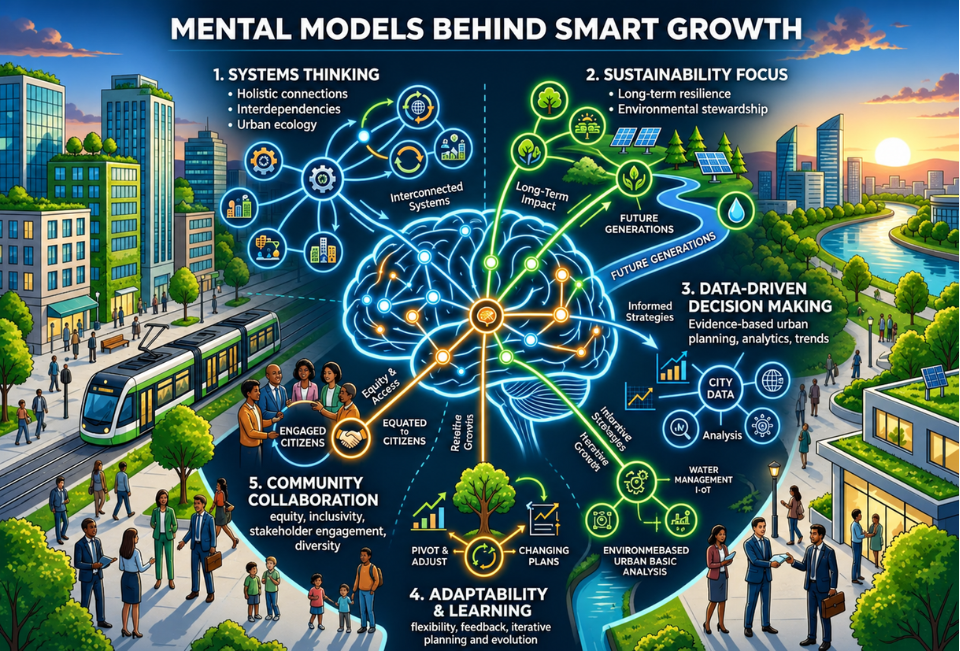
In the world of entrepreneurship, decisions compound quickly. Every hire, every product change, and every market move creates ripple effects across the business. As Adrian Vanzyl, I’ve come to believe that the difference between startups that grow intelligently and those that struggle often comes down to how founders think, not just what they do. Mental models – simple frameworks for understanding complexity – play a critical role in navigating uncertainty and building long-term success.

Entrepreneurs don’t fail because they lack effort. They fail because they misinterpret signals.

Why Mental Models Matter in Entrepreneurship

Mental models are essentially shortcuts for thinking. They help simplify complex problems and guide better decision-making under pressure. In fast-moving startup environments, where information is incomplete and time is limited, these frameworks become incredibly valuable.

Without structured thinking, founders often react emotionally or impulsively. With the right mental models, they can step back, evaluate trade-offs, and make more rational decisions.

For example, understanding opportunity cost forces a founder to consider what they are giving up when choosing one path over another. First-principles thinking encourages breaking problems down to their core components rather than relying on assumptions.

These models don’t eliminate risk, but they reduce unnecessary mistakes.

Clarity Over Complexity

Simplifying the Decision-Making Process

Startups often become unnecessarily complex. Teams introduce layers of tools, processes, and strategies that create confusion instead of clarity. One of the most valuable mental models is simplicity.

Clear systems scale better than complicated ones.

When founders focus on simplicity, they improve communication, reduce execution errors, and make it easier for teams to align. Complexity might feel sophisticated, but it often hides inefficiency.

In practice, this means asking simple but powerful questions:

  • What problem are we actually solving?
  • What matters most right now?
  • What can be removed without affecting outcomes?

Clarity accelerates execution.

Adrian Vanzyl’s Approach to Strategic Thinking

Building Systems That Endure

A key principle I rely on is systems thinking – the ability to see how different parts of a business interact over time. Startups are not isolated functions; they are interconnected systems where decisions in one area affect outcomes in another.

For example, rapid customer acquisition without strong retention creates unstable growth. Similarly, scaling a product without operational support leads to breakdowns. Systems thinking helps founders avoid these imbalances.

It encourages long-term thinking over short-term wins and ensures that growth is supported by structure. Instead of chasing isolated metrics, entrepreneurs begin to understand the relationships between them.

This is where many startups shift from reactive to intentional growth.

The Power of Inversion

One of the most practical mental models is inversion – thinking about what you want to avoid instead of only focusing on what you want to achieve.

Instead of asking, “How do we succeed?” ask, “What would cause us to fail?”

This shift reveals risks that might otherwise be ignored:

  • Poor hiring decisions
  • Weak financial discipline
  • Lack of product-market fit
  • Misaligned incentives

By identifying and eliminating these failure points, startups naturally move closer to success.

Sometimes, avoiding mistakes is more powerful than chasing breakthroughs.

Compounding and the Long Game

Entrepreneurs often underestimate the power of small, consistent improvements. Compounding is not just a financial concept – it applies to knowledge, processes, and execution.

Tiny improvements in product quality, customer experience, or operational efficiency accumulate over time into significant advantages.

As Adrian Vanzyl, I’ve observed that the most successful founders are those who commit to steady progress rather than chasing dramatic changes. They refine systems continuously, knowing that incremental gains will compound.

Growth built this way is more stable and resilient.

Decision-Making Under Uncertainty

Startups operate in uncertain environments. There is rarely enough data to make perfect decisions. This is where probabilistic thinking becomes useful.

Instead of seeking certainty, founders should evaluate likelihoods and outcomes. What is the expected upside? What is the downside risk? How reversible is the decision?

This approach reduces fear and enables faster action.

Not every decision needs to be perfect – it just needs to be good enough based on available information.

Over time, this mindset builds confidence and improves judgment.

Avoiding Cognitive Biases

Even experienced entrepreneurs fall into cognitive traps. Confirmation bias, overconfidence, and anchoring can distort decision-making. Mental models act as safeguards against these biases.

For instance:

  • Seeking opposing viewpoints challenges assumptions
  • Using data over intuition reduces emotional influence
  • Breaking decisions into smaller components improves objectivity

Awareness of these biases doesn’t eliminate them completely, but it reduces their impact. Better awareness leads to better outcomes.

From Thinking to Execution

Mental models are only useful if they translate into action. The real value lies in applying them consistently across the business.

This means:

  • Embedding structured thinking into team discussions
  • Creating decision frameworks for recurring problems
  • Encouraging critical thinking across all levels of the organization

When teams adopt these approaches, execution becomes more aligned and efficient. As Adrian Vanzyl, I see mental models not as abstract theories but as practical tools that shape how companies operate daily.

Conclusion: Building Smarter, Not Just Faster

Entrepreneurship is often described as a race, but in reality, it is a test of judgment. The founders who succeed are not always the fastest – they are the ones who think clearly under pressure and make decisions that compound over time. Mental models provide a foundation for that clarity.

They help entrepreneurs navigate complexity, avoid common mistakes, and build systems that support sustainable growth. In a world filled with noise, structured thinking becomes a competitive advantage. And those who master it don’t just grow – they grow intelligently.

Adrian Vanzyl’s Insights on Global and International Growth

Building Sustainable International Growth in a Connected World

Expanding beyond domestic markets is one of the most defining stages in a company’s journey. It signals ambition, maturity, and the readiness to operate on a global scale. As Adrian Vanzyl, I’ve seen how international growth is often misunderstood as simply replicating a successful model in new markets. In reality, it is far more complex – it requires adaptability, structure, and a deep understanding of local dynamics. International growth is not just expansion. It is transformation.

Understanding the Real Meaning of International Growth

Many companies approach global expansion with a mindset of duplication. They assume that what works in one market will work in another with minimal adjustment. This assumption often leads to failure.

Every market operates within its own ecosystem of culture, regulation, customer behavior, and competitive dynamics. Successful international growth depends on recognizing these differences and adapting accordingly.

Growth at this level is not about scale alone – it is about relevance.

Companies that succeed globally are those that balance consistency with localization. They maintain a strong core identity while adjusting their execution to fit each market.

Why Timing Matters in Global Expansion

Timing plays a critical role in international growth. Entering a market too early can be just as risky as entering too late. Early entry may mean dealing with immature infrastructure or low adoption rates, while late entry may result in intense competition.

The key is to identify signals:

  • Increasing demand for your product or service
  • Favorable regulatory environments
  • Growing digital or economic infrastructure
  • Gaps in the current market landscape

Understanding these signals allows companies to enter markets strategically rather than reactively.

Patience often creates better outcomes than urgency.

Adrian Vanzyl’s Perspective on Market Adaptation

Local Insight as a Competitive Advantage

One of the most important lessons in international growth is the value of local knowledge. Markets are not uniform, and assumptions based on one region rarely translate perfectly to another.

Local partnerships, regional expertise, and on-the-ground insights can significantly improve the chances of success. These elements provide context that cannot be captured through data alone.

For example, customer expectations in Southeast Asia may differ significantly from those in Europe or North America. Payment systems, communication styles, and trust mechanisms all vary.

Understanding these nuances allows companies to design solutions that resonate with local users.

Operational Structure and Scalability

Scaling internationally requires more than a strong product – it requires operational discipline. As companies expand, complexity increases. Managing teams across different time zones, ensuring consistent product quality, and maintaining clear communication become critical challenges.

To address this, companies must build scalable systems:

  • Standardized processes that can be adapted locally
  • Clear communication frameworks
  • Strong leadership in each region
  • Centralized data and reporting systems

Without these structures, growth can quickly become disorganized. Operational clarity is what turns expansion into sustainable growth.

The Role of Technology in Global Growth

Technology acts as a powerful enabler of international expansion. Cloud infrastructure, digital platforms, and communication tools allow companies to operate across borders with greater efficiency than ever before. However, technology alone is not enough.

It must be implemented within a well-defined strategy. Systems should support decision-making, enhance collaboration, and provide visibility across markets.

Data plays a particularly important role. It allows companies to measure performance, identify trends, and make informed adjustments in real time. When used effectively, technology reduces uncertainty and increases agility.

Managing Risk in International Markets

Global expansion introduces new risks, including regulatory challenges, currency fluctuations, and political instability. Companies must be prepared to navigate these uncertainties.

Risk management involves:

  • Diversifying market presence
  • Understanding legal requirements in each region
  • Building flexible financial strategies
  • Monitoring external factors continuously

Preparedness is key.

Companies that anticipate challenges are better equipped to respond effectively when conditions change.

Building a Long-Term Global Vision

Short-term success in a new market can be misleading. Initial traction does not always translate into long-term sustainability. Companies must look beyond early growth metrics and focus on building lasting value.

This includes:

  • Establishing strong brand trust
  • Creating meaningful customer relationships
  • Continuously improving products and services
  • Investing in local teams and leadership

International growth is not a one-time effort. It is an ongoing process of learning, adapting, and refining.

Conclusion: Growth That Goes Beyond Borders

International growth represents one of the most powerful opportunities for modern businesses. It opens access to new customers, new ideas, and new sources of value. But it also demands a higher level of discipline and strategic thinking.

For Adrian Vanzyl, the key to successful global expansion lies in balancing ambition with structure. Companies must be bold enough to enter new markets, yet disciplined enough to adapt and evolve within them.

The future belongs to organizations that can operate seamlessly across borders while remaining deeply connected to local realities. Because true global success is not about being everywhere. It is about being effective everywhere.

Adrian Vanzyl’s Creative Edge in Modern Photography

Seeing Beyond the Lens: A New Perspective on Creativity

Photography has always been more than just capturing images – it is about interpretation, timing, and the ability to see what others overlook. As Adrian Vanzyl, I’ve come to view photography not just as an artistic outlet but as a way of thinking. It trains you to observe patterns, notice subtle details, and frame the world with intention.

In a fast-moving digital era, creativity is often confused with complexity. But in reality, the most powerful images are often the simplest – shaped by clarity of vision rather than technical excess. Photography, at its core, is about perspective.

Creativity Begins with Observation

The Art of Noticing What Others Miss

The foundation of great photography is not the camera – it’s awareness. Before any image is captured, it is first seen. Light, texture, contrast, and movement all exist in every environment, but only a trained eye recognizes their potential. Creativity begins when you slow down.

Modern life encourages speed, but photography rewards patience. Waiting for the right moment, the right light, or the right composition often makes the difference between an ordinary image and a compelling one.

This ability to observe deeply translates beyond photography. It sharpens decision-making, improves focus, and builds a mindset that values quality over quantity.

Adrian Vanzyl’s Approach to Creative Photography

For Adrian Vanzyl, creativity in photography is not about chasing perfection – it’s about capturing authenticity. The goal is not to stage reality but to frame it in a way that reveals something meaningful.

This approach is grounded in a few key principles:

  • Simplicity over clutter
  • Natural light over artificial enhancement
  • Composition over excessive editing
  • Timing over repetition

These principles create images that feel real, not manufactured.

In an age where filters and editing tools can transform any image, authenticity becomes a creative advantage. People connect more deeply with visuals that feel honest and unforced.

The Role of Technology in Modern Photography

Technology has dramatically changed how photography is practiced. High-resolution cameras, smartphones, and editing software have made it easier than ever to produce visually impressive images. But technology is a tool – not the source of creativity.

Many photographers fall into the trap of relying too heavily on equipment, believing that better gear leads to better results. In reality, creativity comes from how tools are used, not which tools are chosen.

Understanding composition, lighting, and storytelling will always matter more than the latest device.

The best photographers use technology to enhance their vision, not replace it.

Photography as a Creative Discipline

Building a Consistent Creative Process

Creativity is often seen as spontaneous, but in practice, it benefits from structure. Developing a consistent approach to photography helps refine style and improve results over time.

This includes:

  • Practicing regularly
  • Reviewing past work critically
  • Experimenting with different perspectives
  • Learning from both successes and mistakes

Over time, patterns emerge. A personal style begins to form. And creativity becomes less about chance and more about intention.

This mirrors many other disciplines – whether in business, technology, or art – where consistent effort leads to long-term improvement.

Storytelling Through Images

Every photograph tells a story, even if it is subtle. The composition, subject, and timing all contribute to the narrative. A single image can communicate emotion, context, and meaning without words.

Strong storytelling in photography often comes from restraint – knowing what to include and what to leave out. Negative space, framing, and perspective all shape how a viewer interprets the image.

Rather than capturing everything, great photographers focus on capturing what matters.

Balancing Creativity and Discipline

One of the most important lessons in photography is finding the balance between creative freedom and disciplined execution. Too much structure can limit creativity, while too little structure can lead to inconsistency. The most effective approach combines both.

Experimentation allows new ideas to emerge, while discipline ensures those ideas are refined and repeatable. This balance is what separates casual photography from a deliberate creative practice.

The Long-Term Value of Creative Thinking

Photography is not just about producing images – it is about developing a way of thinking. The skills learned through photography – observation, patience, composition, and timing – apply to many areas of life. Creative thinking becomes a transferable skill.

It improves how problems are approached, how ideas are developed, and how opportunities are recognized.

Over time, photography becomes less about the images themselves and more about the mindset it creates.

Conclusion: Creativity as a Way of Seeing

Modern photography is not defined by technology or trends. It is defined by perspective. The ability to see differently, think creatively, and capture moments with intention remains at the heart of the craft.

For Adrian Vanzyl, photography represents more than visual expression – it is a discipline that sharpens awareness and encourages thoughtful observation.

In a world filled with constant visual noise, the true creative edge comes from simplicity, clarity, and the ability to see what others miss.

Because in the end, great photography isn’t just about what you capture. It’s about how you see.

Adrian Vanzyl’s Guide to Scaling Businesses with Strategy

Building Businesses That Scale Beyond Early Success

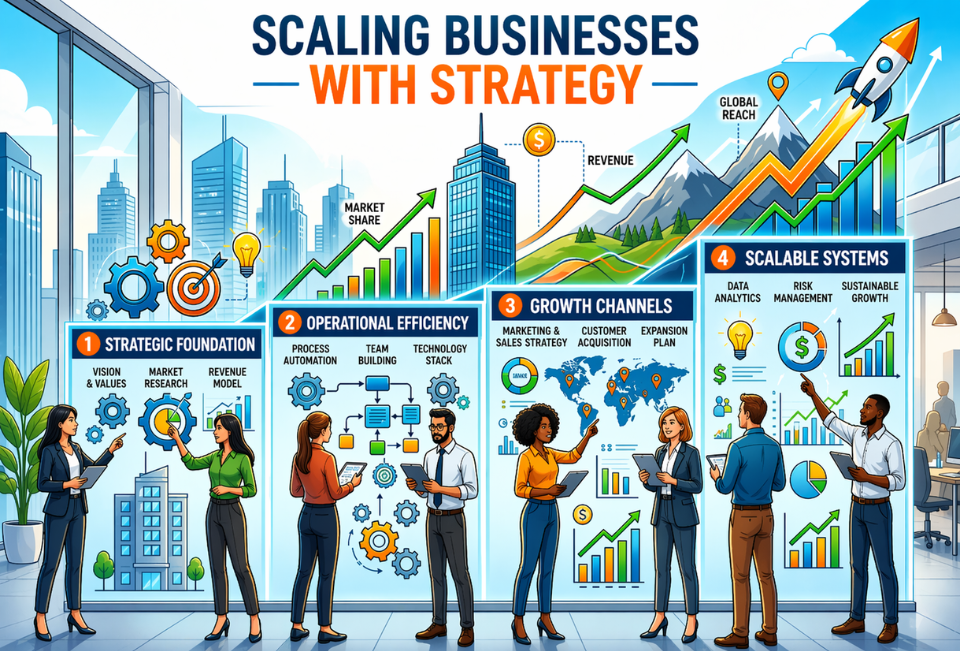
Scaling a business is often misunderstood. Many assume that once a company finds product-market fit, growth will naturally follow. In reality, scaling introduces a completely new set of challenges that require structure, discipline, and strategic clarity. As Adrian Vanzyl, I’ve seen that early success is not a guarantee of long-term growth – it’s only the beginning of a much more complex journey.

The difference between a growing business and a scaling one lies in systems.

Growth adds pressure. Scaling requires readiness.

Why Most Businesses Struggle to Scale

The Hidden Complexity of Expansion

In the early stages, businesses operate with speed and flexibility. Small teams make quick decisions, and processes are often informal. This works well initially, but as the company grows, those same conditions can become liabilities.

Without defined systems, businesses encounter:

  • Operational inefficiencies
  • Inconsistent customer experiences
  • Communication breakdowns
  • Difficulty maintaining product quality

Scaling exposes weaknesses that were invisible during the startup phase. What worked for a team of five rarely works for a team of fifty.

The challenge is not just growing – it’s growing without losing control.

Adrian Vanzyl’s Perspective on Strategic Scaling

From my perspective, scaling is not about doing more – it’s about doing better with structure. Businesses that scale successfully are those that invest early in systems that support long-term expansion.

This includes:

  • Clear organizational structure
  • Repeatable processes
  • Scalable technology infrastructure
  • Strong leadership alignment

The goal is to create a framework where growth does not create chaos. Instead, growth should strengthen the system.

Scaling is not an event. It is a capability.

The Role of Systems and Processes

Turning Complexity into Repeatability

At the core of every scalable business is a set of well-designed systems. These systems ensure that operations remain consistent even as demand increases.

For example:

  • Sales processes must be standardized to maintain conversion rates
  • Customer support systems must scale without sacrificing quality
  • Product development cycles must remain efficient under pressure

Without these structures, growth becomes unpredictable. Systems bring clarity. Clarity enables speed. And speed, when supported by structure, becomes sustainable.

Leadership and Decision-Making at Scale

As businesses grow, leadership becomes less about direct execution and more about enabling others. Founders must transition from doing everything themselves to building teams that can operate independently.

This shift requires:

  • Trust in team members
  • Clear communication of vision and priorities
  • Defined decision-making frameworks

Leaders who fail to make this transition often become bottlenecks. Scaling requires decentralization – empowering teams while maintaining alignment.

The most effective leaders create environments where decisions can be made quickly without constant oversight.

Scaling Across Markets

Expanding into new markets is one of the most powerful growth strategies, but it also introduces complexity. Cultural differences, regulatory requirements, and customer expectations vary significantly across regions. Successful businesses adapt rather than replicate.

They understand that:

  • What works in one market may not work in another
  • Localization is essential for customer engagement
  • Operational models must evolve with geography

Global scaling is not about copying a blueprint. It is about applying principles in different contexts.

Balancing Speed and Stability

Avoiding the Trap of Overexpansion

One of the biggest risks in scaling is moving too fast without sufficient foundation. Rapid expansion can strain resources, weaken systems, and reduce overall performance.

Sustainable scaling requires balance:

  • Move fast enough to capture opportunity
  • Move carefully enough to maintain stability

This balance is not easy to achieve, but it is critical for long-term success. Short-term acceleration should never compromise long-term durability.

Technology as an Enabler of Scale

Modern businesses rely heavily on technology to scale efficiently. Automation, data analytics, and cloud infrastructure allow companies to handle increased demand without proportional increases in cost.

However, technology must be implemented thoughtfully. Poorly designed systems can create more problems than they solve.

Effective technology should:

  • Simplify operations
  • Improve visibility into performance
  • Enable faster decision-making

When aligned with business strategy, technology becomes a powerful growth multiplier.

Building for the Long Term

Scaling is not just about achieving bigger numbers – it’s about building a business that can endure. This requires focusing on fundamentals:

  • Strong customer relationships
  • Financial discipline
  • Continuous improvement
  • Adaptability to change

Businesses that prioritize these elements are better positioned to navigate uncertainty and maintain growth over time.

Conclusion: Scaling with Purpose

Scaling a business is one of the most challenging phases in its lifecycle. It demands more than ambition – it requires structure, discipline, and strategic thinking.

As Adrian Vanzyl, I believe the companies that succeed are those that treat scaling as a deliberate process rather than a byproduct of growth. They build systems before they need them, invest in leadership, and remain focused on long-term value.

Because in the end, scaling is not about getting bigger. It’s about becoming stronger.

Adrian Vanzyl’s Approach to Modern Online Marketing

Rethinking Online Marketing in a Digital-First World

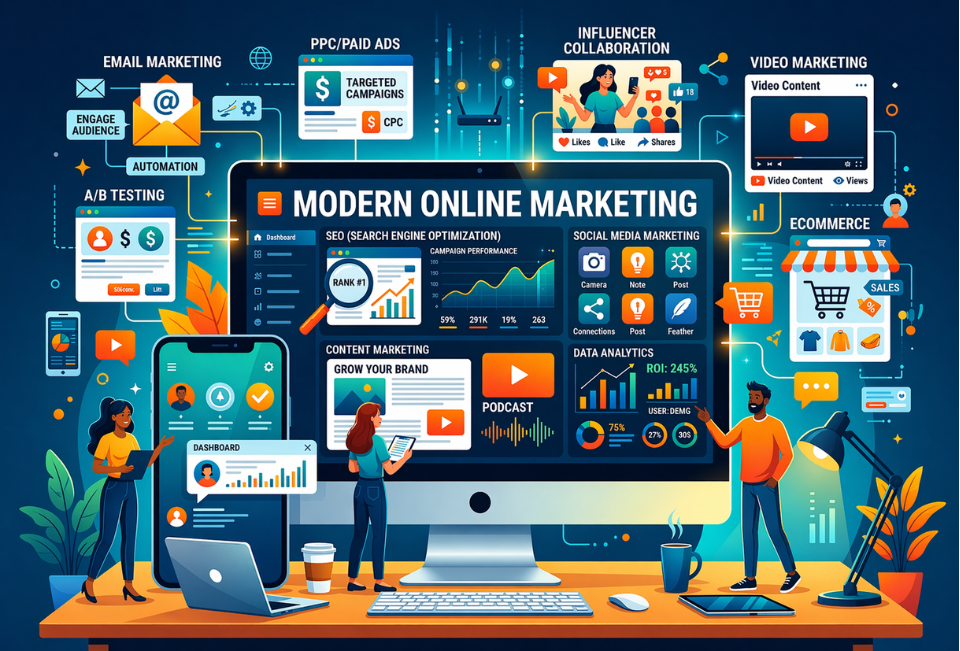
In today’s fast-moving digital landscape, online marketing has evolved far beyond simple advertising and traffic generation. As Adrian Vanzyl, I’ve observed how the most effective strategies are no longer built on short-term campaigns but on systems that adapt, learn, and scale over time. The focus has shifted from visibility alone to meaningful engagement, data-driven decisions, and long-term brand positioning.

Modern online marketing is not about chasing attention. It’s about earning trust and sustaining it.

The Shift from Campaigns to Systems

Why Traditional Marketing Falls Short

Many businesses still rely on campaign-based thinking-launching ads, generating spikes in traffic, and then repeating the cycle. While this approach can deliver short-term results, it often lacks sustainability.

Modern marketing requires systems.

A system continuously attracts, converts, and retains users. It integrates content, analytics, automation, and user experience into a cohesive framework. This creates consistency, which is far more valuable than occasional bursts of success.

Businesses that build marketing systems outperform those that rely on isolated efforts.

Adrian Vanzyl’s View on Digital Growth Strategy

From my perspective, growth in online marketing is driven by clarity and structure. It begins with understanding the audience deeply-not just demographics, but behavior, intent, and decision-making patterns.

A strong strategy aligns three key elements:

  • Content that provides value
  • Channels that reach the right audience
  • Data that informs continuous improvement

Without alignment, marketing becomes fragmented and inefficient.

The goal is not to be everywhere, but to be effective where it matters most.

Content as a Long-Term Asset

Building Authority Through Value

Content is no longer optional-it is the foundation of modern online marketing. But not all content creates impact. The difference lies in relevance and consistency.

High-quality content:

  • Educates and informs
  • Solves real problems
  • Builds credibility over time

Instead of producing content for volume, the focus should be on depth and usefulness. Articles, videos, and insights that genuinely help users will naturally attract engagement and build trust. Over time, this creates a compounding effect.

Content becomes an asset that continues to deliver value long after it is published.

The Role of Data and Analytics

Data is what transforms marketing from guesswork into strategy. Every interaction-clicks, conversions, engagement-provides insight into what works and what doesn’t.

However, more data does not automatically mean better decisions. The key is interpretation.

Businesses should focus on meaningful metrics such as:

Vanity metrics like impressions or likes may look impressive but often lack actionable value. Effective marketing teams prioritize clarity over complexity.

Personalization and User Experience

Meeting Expectations in Real Time

Today’s users expect personalized experiences. Generic messaging is increasingly ignored. Technology now allows businesses to tailor content, offers, and communication based on individual behavior.

Personalization improves:

  • Engagement
  • Conversion rates
  • Customer satisfaction

But it must be done thoughtfully.

Over-personalization or misuse of data can erode trust. Transparency and user control are essential in maintaining a positive relationship.

Balancing Automation with Authenticity

Automation is a powerful tool in online marketing. It enables scalability, consistency, and efficiency. Email sequences, ad optimization, and customer journeys can all be automated to reduce manual effort. However, automation should not replace authenticity.

Users still respond to human connection. Messaging should feel genuine, not mechanical. The best strategies combine automation with a human voice. This balance is what creates both efficiency and trust.

Adapting to Continuous Change

Online marketing is constantly evolving. Algorithms change, platforms shift, and user behavior adapts. What works today may not work tomorrow.

The ability to adapt is critical.

For Adrian Vanzyl, the most successful marketers are those who treat change as an opportunity rather than a disruption. They test new ideas, learn from data, and refine their strategies continuously.

Flexibility is not optional-it is a core capability.

Conclusion: Building Marketing That Lasts

Modern online marketing is no longer about quick wins or isolated tactics. It is about building systems that deliver consistent, measurable, and scalable results over time.

The focus should always remain on:

  • Creating value
  • Understanding users
  • Using data intelligently
  • Maintaining authenticity

When these elements come together, marketing becomes more than promotion-it becomes a driver of long-term business growth.

For Adrian Vanzyl, the future of online marketing lies in thoughtful execution, disciplined strategy, and the ability to build systems that evolve with the digital world.

Adrian Vanzyl’s Vision for Healthtech Innovation Growth

The Future of Healthtech: Building Systems That Truly Scale

The intersection of healthcare and technology is no longer a distant concept – it is actively reshaping how we approach wellbeing, treatment, and long-term health. As Adrian Vanzyl, I’ve observed how healthtech is evolving from isolated innovations into integrated systems that influence entire populations. What makes this transformation powerful is not just the technology itself, but how it is applied with structure, intent, and long-term thinking.

Healthtech is not about disruption alone.

It is about building systems that improve outcomes sustainably.

From Treatment to Prevention

A Shift in Healthcare Thinking

Traditionally, healthcare systems have been reactive. Patients seek treatment after symptoms appear, and systems respond accordingly. Healthtech is gradually shifting this model toward prevention and early intervention.

Wearable devices, real-time monitoring, and data analytics now allow individuals and providers to detect risks before they become critical issues. This shift reduces long-term costs while improving quality of life.

The real innovation lies in moving from episodic care to continuous health management.

The Role of Data in Healthtech Growth

Data is the backbone of modern healthtech. Every interaction – from wearable metrics to clinical records – contributes to a broader understanding of human health.

But collecting data is not enough.

The value comes from interpretation.

Machine learning and analytics transform raw data into actionable insights. These insights help clinicians make better decisions, allow patients to understand their own health patterns, and enable systems to optimize care delivery.

However, data must be handled responsibly. Privacy, security, and ethical considerations are critical when dealing with sensitive health information.

Trust is foundational in healthcare.

Without it, even the most advanced systems fail to gain adoption.

Personalization at Scale

Tailored Healthcare Experiences

One of the most promising aspects of healthtech is personalization. Every individual is different – genetically, behaviorally, and environmentally. Technology allows healthcare to reflect that complexity.

Instead of generic treatment plans, systems can now recommend personalized interventions based on real-time data. Nutrition, exercise, medication, and lifestyle adjustments can all be optimized for the individual.

This is where healthtech begins to move beyond traditional medicine and into a more holistic model of wellbeing.

For Adrian Vanzyl, the opportunity lies in combining technological precision with human understanding to create systems that adapt over time.

Challenges in Scaling Healthtech

Despite its potential, healthtech faces several challenges that must be addressed for sustainable growth:

  • Regulatory complexity: Healthcare is heavily regulated, and compliance varies across regions
  • Data fragmentation: Systems often struggle to integrate information from multiple sources
  • Adoption barriers: Patients and providers may resist new technologies
  • Infrastructure limitations: Not all regions have equal access to advanced systems

These challenges highlight an important reality: innovation alone is not enough.

Execution matters.

Healthtech solutions must be designed with real-world constraints in mind. Simplicity, usability, and reliability are essential for widespread adoption.

Building Durable Healthtech Systems

Long-Term Thinking Over Short-Term Hype

The most impactful healthtech companies are not those chasing trends, but those building durable systems. This means focusing on:

  • Scalable architecture
  • Reliable data pipelines
  • User-centric design
  • Continuous improvement

Healthcare is a long-term domain. Solutions must remain effective not just for months, but for years – even decades.

This requires discipline in both product development and operational strategy.

Shortcuts rarely work in this space.

The Human Element in Healthtech

Technology can enhance healthcare, but it cannot replace the human element. Trust, empathy, and communication remain central to patient care.

Healthtech should empower professionals, not replace them.

Doctors, nurses, and caregivers bring context and judgment that machines cannot fully replicate. The goal is to augment their capabilities, allowing them to make better decisions with better information.

Balancing automation with human insight is one of the most important challenges in this field.

Looking Ahead: The Next Phase of Healthtech

The future of healthtech will likely be defined by integration. Systems will become more connected, data will flow more seamlessly, and decision-making will become increasingly intelligent.

We will see:

  • Greater use of predictive analytics
  • Expansion of remote care solutions
  • Improved interoperability between platforms
  • Increased focus on preventive health

For Adrian Vanzyl, the long-term opportunity lies in building systems that are not only innovative but also resilient – systems that adapt, learn, and continue to deliver value over time.

Conclusion: Growth Through Structure and Purpose

Healthtech represents one of the most significant opportunities in modern technology. But its success depends on more than innovation – it depends on execution, trust, and long-term vision.

Sustainable growth in this space comes from building systems that are reliable, scalable, and centered on real human needs.

The future of healthcare will not be defined by a single breakthrough.

It will be shaped by consistent progress, thoughtful design, and the ability to turn complex technology into meaningful outcomes.