Adrian Vanzyl

Adrian Vanzyl’s AI Agents Are Changing Quiet Productivity

Artificial intelligence is often discussed through the lens of disruption. Headlines focus on automation replacing jobs, autonomous systems taking over workflows, or machines outperforming humans. But from my perspective, the most important transformation happening right now is much quieter. As Adrian Vanzyl, I believe the true value of AI agents is not replacing people – it is removing friction from everyday work.

Most professionals are overwhelmed by repetitive tasks, fragmented communication, and constant context switching. Productivity losses rarely come from lack of effort. They come from operational noise. This is where AI agents are beginning to reshape modern workflows.

Not through dramatic change overnight, but through small improvements repeated consistently across systems, teams, and decisions.

The Shift From Automation to Intelligent Assistance

Traditional automation systems were rigid. They followed predefined rules and struggled whenever workflows became unpredictable. AI agents are fundamentally different because they can interpret language, adapt to changing inputs, and coordinate tasks dynamically. This creates a major shift in how businesses operate.

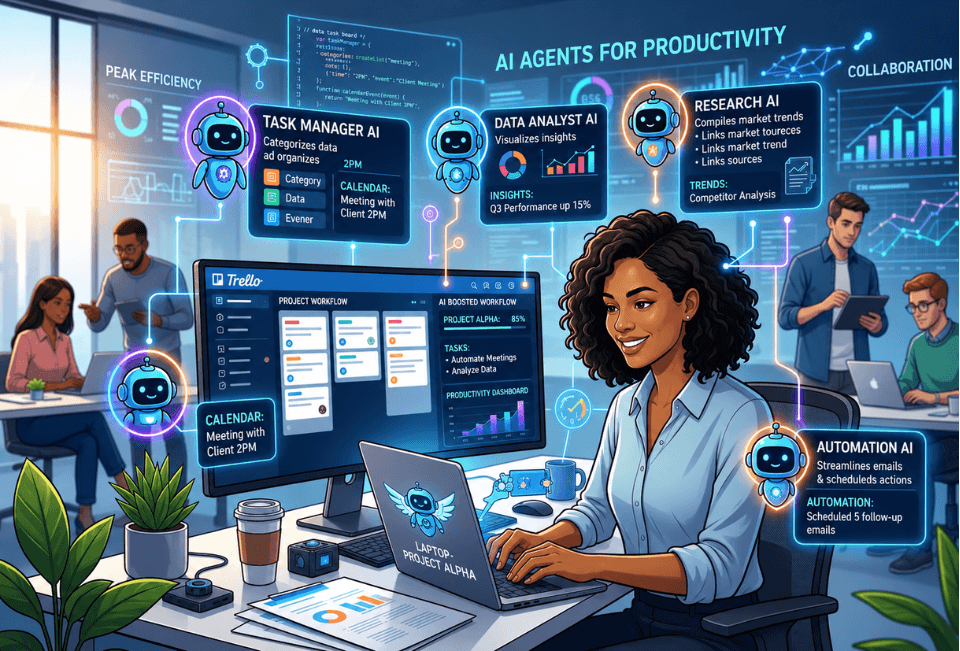
Instead of functioning as static tools, AI agents increasingly behave like operational assistants. They summarize meetings, organize research, prioritize tasks, manage internal workflows, and surface insights faster than manual systems. Modern businesses are increasingly using AI agents to streamline workflows and improve operational efficiency across departments. The goal is not simply faster execution. The goal is reducing unnecessary cognitive load. That distinction matters.

Why Productivity Problems Are Usually Structural

Many companies believe productivity issues are caused by employees working inefficiently. In reality, the problem is often structural.

Teams waste enormous amounts of time switching between tools, searching for information, updating systems manually, and responding to repetitive operational requests. Research and real-world workflow discussions increasingly show that AI agents deliver the most value when reducing repetitive coordination work rather than attempting complete automation. This is why AI productivity systems are becoming more valuable. They reduce operational friction quietly in the background.

For example:

  • AI agents routing customer inquiries
  • Intelligent scheduling assistants
  • Automated reporting systems
  • Workflow coordination tools
  • Internal knowledge management agents

Individually, these tasks appear small. Collectively, they save hundreds of operational hours. As Adrian Vanzyl, I believe the future of productivity will depend less on how fast people work and more on how intelligently systems reduce unnecessary effort.

Adrian Vanzyl on AI Agents and Workflow Clarity

One of the biggest misconceptions surrounding AI is that deploying more tools automatically improves performance. In reality, poorly integrated AI systems often create confusion through fragmented workflows, excessive notifications, and disconnected dashboards. This is why workflow clarity matters more than automation volume.

Businesses implementing AI successfully are designing systems around outcomes instead of novelty. Research from IBM highlights that next-generation automation is shifting away from simple task execution toward systems that optimize operational outcomes and decision quality. That transition is important.

The most effective AI agents are not trying to imitate humans entirely. Instead, they support decision-making, organize information, and simplify execution. Good AI should feel almost invisible. When systems work correctly, teams spend less time managing tools and more time solving meaningful problems.

The Rise of Agentic Workflows

AI is evolving from passive assistants into active operational participants. Many organizations now describe this as “agentic AI” – systems capable of handling multi-step workflows autonomously.

Unlike traditional software, these agents can:

  • monitor workflow conditions
  • coordinate across systems
  • trigger actions automatically
  • adapt based on context
  • improve through feedback loops

Industry research increasingly shows that AI agents are becoming central to enterprise workflow orchestration and operational scaling. This changes the nature of productivity itself. Historically, productivity meant humans doing tasks faster. Now productivity increasingly means humans delegating repetitive execution entirely.

That creates a different kind of organization – one where people focus more on strategy, creativity, communication, and leadership while AI systems manage operational coordination.

Human Judgment Still Matters

Despite rapid progress in AI capabilities, human judgment remains essential. AI agents can process information quickly, but they still struggle with context, ethics, long-term reasoning, and nuanced decision-making. Even advanced research on agentic systems emphasizes the importance of human oversight and collaborative workflow design. 

This is why the future is unlikely to be fully autonomous. Instead, the most successful systems will combine machine efficiency with human direction. AI handles repetitive execution. Humans provide interpretation and strategic judgment.

As Adrian Vanzyl, I see this partnership model becoming the foundation of modern operational design. Organizations that understand this balance early will scale more effectively than those chasing automation for its own sake.

The Productivity Advantage of Quiet Systems

One of the most interesting aspects of AI agents is that their value often becomes invisible over time. When workflows become smoother, people stop noticing the systems behind them.

  • Meetings become shorter.
  • Responses become faster.
  • Operations become cleaner.
  • Information becomes easier to access.

This is what I call quiet productivity. The strongest systems are not always the loudest or most visible. They are the ones that remove friction consistently without demanding constant attention. And in many ways, that principle extends beyond technology.

The most scalable businesses, the healthiest operational cultures, and the most resilient teams are usually built on systems that quietly support performance over long periods of time.

Conclusion

AI agents are not simply another technology trend. They represent a structural shift in how modern work is organized. The companies benefiting most are not necessarily the ones deploying the most AI tools. They are the ones integrating AI thoughtfully into workflows, communication systems, and operational processes.

For Adrian Vanzyl, the future of productivity is not about replacing human capability. It is about creating systems that allow human capability to focus where it matters most. And as AI continues evolving, the organizations that prioritize clarity, structure, and intelligent workflow design will build the strongest long-term advantage.
Adrian Vanzyl on Building Smarter AI-First Systems

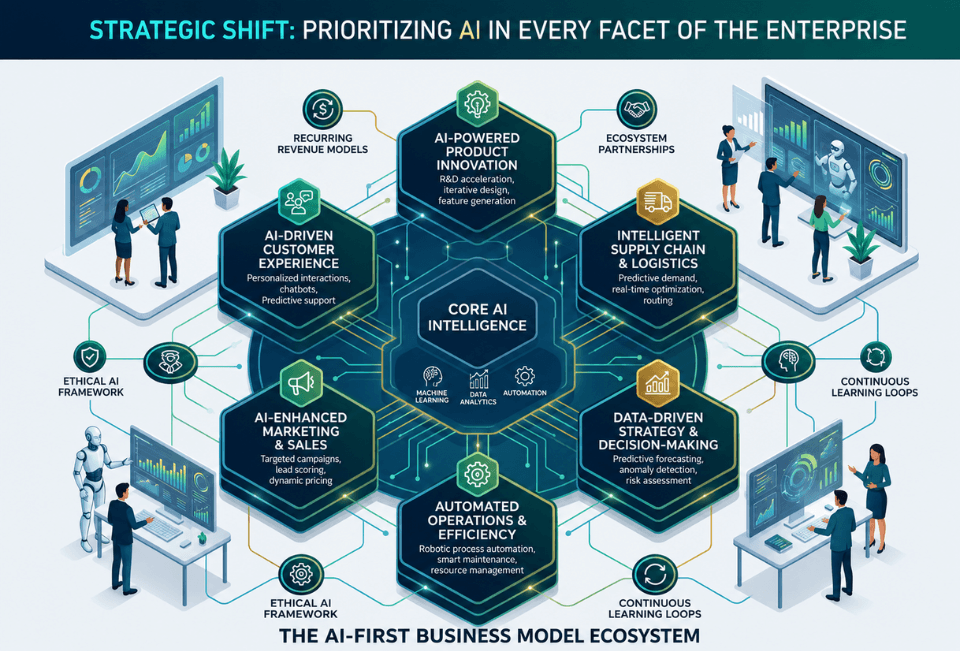
Artificial intelligence is rapidly changing the way modern businesses operate, but the real transformation is not simply about adopting new technology. It is about redesigning systems around intelligence itself. As Adrian Vanzyl, I believe the most successful companies of the next decade will not treat AI as an optional feature layered onto existing processes. Instead, they will build organizations where intelligence, automation, and continuous learning become part of the core operational structure from the beginning.

This shift toward AI-first thinking is already reshaping industries across finance, healthcare, logistics, software, and digital commerce. Businesses are moving away from static workflows and toward adaptive systems capable of learning from data in real time. The companies that understand this transition early are positioning themselves far ahead of competitors still relying on traditional operating models.

The Evolution of AI-First Business Thinking

For years, businesses viewed artificial intelligence as a specialized technical tool used primarily for analytics or automation. Today, AI is becoming infrastructure – a shift that Adrian Vanzyl believes is fundamentally changing how modern companies operate and scale.

An AI-first system is fundamentally different from a conventional digital system. Traditional software follows predefined rules and processes. AI-driven systems evolve continuously by learning from user behavior, operational outcomes, and environmental changes. This creates a powerful advantage.

The more data an AI-first system processes, the more accurate and efficient it becomes over time. Businesses no longer need to rely entirely on manual optimization because intelligent systems can improve continuously through feedback loops and predictive analysis.  

For Adrian Vanzyl, the real transformation lies in how organizations move from static execution toward adaptive performance, where systems continuously learn, evolve, and respond intelligently to change.

Why Intelligent Systems Scale More Efficiently

One of the greatest strengths of AI-first systems is scalability. Traditional business growth often requires proportional increases in operational resources. More customers typically mean more support staff, more administrative overhead, and more manual coordination. AI changes this equation.

Intelligent systems can automate repetitive tasks, improve operational efficiency, and support decision-making without increasing complexity at the same rate. Recommendation engines, predictive customer service tools, and automated workflows all contribute to more scalable growth models. This allows organizations to maintain efficiency even as operations expand rapidly.

At the same time, personalization becomes significantly more advanced. AI systems can analyze customer behavior patterns and adapt products, services, or content dynamically for individual users. Modern consumers increasingly expect these tailored experiences, making personalization a competitive necessity rather than a luxury.

Adrian Vanzyl and the Importance of Structured AI Integration

One common mistake businesses make is implementing artificial intelligence without redesigning the surrounding operational structure. As Adrian Vanzyl, I’ve observed that many organizations invest heavily in AI tools while maintaining outdated workflows and fragmented systems behind the scenes. Technology alone is never enough.

AI performs best when integrated into a disciplined framework that includes high-quality data infrastructure, clear governance processes, and strong operational alignment. Without those foundations, businesses often struggle with inaccurate outputs, inconsistent automation, or unreliable analytics. Structured integration matters because AI systems are only as strong as the data and environments supporting them.

Organizations that succeed with AI-first strategies focus equally on technical architecture and organizational discipline. They create systems where intelligence supports every layer of the business rather than existing as an isolated experiment managed by a single department.

The Role of Data in AI-First Systems

Data has become one of the most valuable strategic assets in modern business. AI systems depend entirely on clean, structured, and continuously updated information. Poor data quality leads to poor outcomes.

This is why successful AI-first companies invest heavily in data governance, infrastructure, and validation processes. They understand that artificial intelligence is not magic – it is a system that identifies patterns within information. The quality of the results depends on the quality of the inputs.

Companies that treat data as infrastructure rather than byproduct gain a long-term competitive advantage. Over time, their systems become smarter, faster, and more adaptive because every interaction strengthens the intelligence framework.

Balancing Automation With Human Judgment

Despite rapid advances in machine learning and automation, human decision-making remains essential. AI-first systems are most effective when they enhance human capability rather than replace it entirely. Strategic thinking, creativity, ethics, and leadership still require human oversight.

AI excels at identifying patterns, processing large-scale information, and automating repetitive tasks. Humans remain responsible for interpretation, context, and long-term direction. The strongest organizations understand this balance.

Instead of viewing automation as a replacement for people, they use intelligent systems to remove friction and allow teams to focus on higher-value work. This creates more adaptive and resilient organizations overall.

Building Long-Term Competitive Advantage

The businesses leading the next generation of innovation are not simply deploying AI tools. They are redesigning operational systems around adaptability, intelligence, and continuous learning.

As Adrian Vanzyl, I believe long-term competitive advantage will increasingly belong to organizations capable of evolving faster than their environments. AI-first systems enable this by transforming data into actionable intelligence at scale. But sustainable success still depends on execution.

Businesses must combine technical capability with strategic discipline, strong infrastructure, and thoughtful leadership. Without those elements, AI becomes another temporary trend rather than a transformative advantage. The future will belong to companies that build systems capable of learning continuously, adapting intelligently, and scaling sustainably over time.

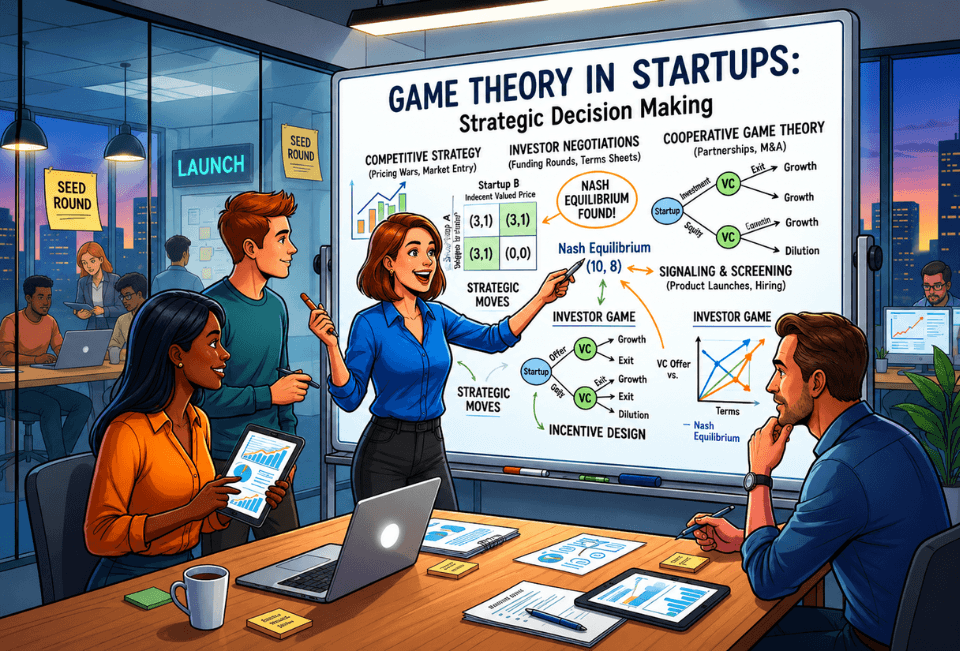
Adrian Vanzyl’s Game Theory Secrets Behind Startup Scale

Why Startup Competition Is Rarely What It Seems

Startup ecosystems are often described as fast-moving environments driven by innovation, funding, and rapid execution. Over the years, I, Adrian Vanzyl, have realized that beneath that surface exists a quieter layer of strategic decision-making that determines which companies survive long-term. For me, startup success has never been built on momentum alone – it comes from positioning, timing, and understanding how markets and competitors react over time. That is where game theory becomes relevant.

Game theory is not just an academic concept used in economics classrooms. In startup environments, it becomes a practical framework for understanding competition, negotiation, timing, and long-term positioning. Every pricing model, partnership, expansion strategy, and product launch involves strategic interaction between multiple players. The founders who understand these dynamics build companies differently.

Understanding Game Theory in Startup Environments

At its core, game theory studies how people and organizations make decisions when the outcomes depend on the actions of others. In startups, this applies constantly. A founder is not operating in isolation. Every move influences competitors, customers, investors, and even future market expectations.

For example:

  • Lowering prices may increase adoption but trigger price wars
  • Expanding too quickly may attract competitors prematurely
  • Delaying a product release may allow stronger positioning later
  • Aggressive fundraising may create unrealistic growth pressure

These are strategic decisions, not just operational ones. The problem is that many startups focus only on internal execution while ignoring external reactions. Markets behave like dynamic systems, where every participant continuously adapts. Understanding those reactions changes how smart founders build companies.

Adrian Vanzyl on Long-Term Strategic Thinking

One of the biggest misconceptions in startup culture is the belief that winning requires moving faster than everyone else. Speed matters, but direction matters more. Game theory teaches an important principle: sustainable advantages often come from positioning rather than aggression.

From Adrian Vanzyl’s perspective, companies that survive long term usually avoid unnecessary conflict. Instead of competing directly with dominant players immediately, they identify overlooked opportunities where larger competitors are slow to react. This approach creates asymmetry.

Smaller startups can move efficiently in areas where larger organizations are constrained by complexity, bureaucracy, or legacy systems. Strategic founders recognize that they do not need to win every battle – they only need to create defensible advantages over time. This is particularly important in technology ecosystems, where rapid scaling without structure can create instability.

The Importance of Incentives

Every startup ecosystem runs on incentives. Customers want value. Investors want returns. Employees want growth opportunities. Founders want market expansion. Problems emerge when these incentives become misaligned. Game theory helps explain why alignment matters so much.

For example, if a startup prioritizes short-term investor expectations over product quality, customer trust eventually weakens. If internal teams are rewarded only for speed, technical debt accumulates rapidly. Over time, these misaligned incentives create fragility inside the business. Strong companies design systems where incentives reinforce long-term behavior.

That means:

  • rewarding sustainable execution
  • prioritizing retention over vanity metrics
  • building trust before aggressive monetization
  • balancing growth with operational stability

The startups that understand this often grow more slowly initially – but they become significantly more durable over time.

Competitive Positioning Is a Strategic Game

Many founders define competition too narrowly. They assume competitors are only companies offering similar products. In reality, competition includes anything competing for customer attention, trust, or behavior.

Sometimes the greatest threat is not another startup. It may be customer inertia, platform dependency, or changing market psychology. Game theory encourages founders to think beyond direct rivalry. Instead of asking, “How do we beat competitors?” the better question becomes:

“How do we shape the environment in ways that favor our strengths?”

This subtle shift changes everything. Rather than copying competitors, strategic companies build differentiated ecosystems around their products. They create communities, proprietary data advantages, or operational efficiencies that become difficult to replicate. These advantages compound quietly over time.

Decision-Making Under Uncertainty

Startups operate in environments where complete information rarely exists. Founders make decisions with imperfect data, changing conditions, and unpredictable reactions from markets. This uncertainty is exactly why structured thinking matters. Reactive leadership creates inconsistent outcomes. Strategic leadership creates optionality.

One of the most valuable lessons I’ve learned, including throughout the work of Adrian Vanzyl in technology and investment, is understanding second-order consequences. A decision may produce immediate benefits while creating long-term vulnerabilities.

For example:

  • rapid expansion may weaken culture
  • aggressive discounting may damage pricing power
  • overfunding may reduce operational discipline

Smart founders evaluate not only immediate gains but also the chain reactions their decisions create over time. This perspective becomes increasingly important as companies scale.

The Quiet Advantage of Patience

Startup culture often rewards visibility, hype, and constant activity. But many enduring companies are built through patience rather than noise. Patience allows founders to observe patterns before reacting emotionally. It creates space for strategic timing instead of impulsive decisions.

Markets frequently overreact in the short term while underestimating long-term structural change. Companies that understand this avoid chasing every trend. Instead, they focus on building resilient systems capable of adapting gradually. That adaptability becomes a competitive advantage itself.

Conclusion: Strategy Before Scale

The most successful startups are not always the fastest or the loudest. Often, they are simply the most strategically disciplined. As Adrian Vanzyl, I believe game theory offers founders a valuable framework for understanding how markets, incentives, and competition actually behave. It encourages long-term thinking in environments that constantly pressure companies toward short-term reactions. Scaling a startup is not only about execution. It is about understanding the game being played around you. And the founders who understand that game tend to build companies that last.

Customer Growth Strategy Nobody Talks About — Adrian Vanzyl

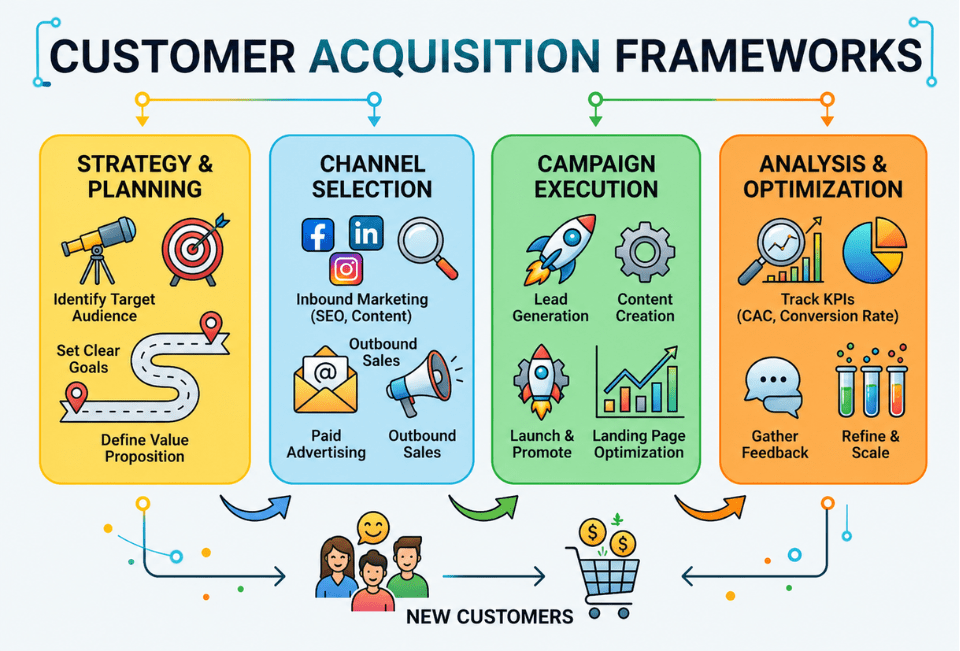
Why Most Customer Acquisition Strategies Fail Quietly

Customer acquisition is often treated like a race. Startups push aggressive advertising campaigns, scale paid traffic quickly, and focus heavily on short-term growth metrics. But over time, many of these strategies collapse because they were never built for sustainability. As Adrian Vanzyl, I’ve observed that the strongest growth systems are usually the least visible at first. They are structured carefully, tested continuously, and designed for long-term efficiency rather than rapid vanity metrics. The reality is simple: acquiring customers is not the same as building a durable customer engine.

Many businesses can generate attention temporarily. Far fewer can consistently attract, retain, and expand a loyal customer base without destroying operational efficiency or overspending on acquisition costs.

The Shift From Traffic to Trust

Early-stage companies often believe growth comes from exposure alone. More ads, more impressions, and more clicks appear to signal progress. But visibility without trust rarely converts into sustainable growth.

Modern customers are more informed than ever. They compare products instantly, research reviews, and evaluate brand credibility before making decisions. This means acquisition frameworks must evolve beyond simple marketing funnels. Trust has become infrastructure.

The businesses that scale successfully understand this shift. Instead of treating customer acquisition as a campaign, they treat it as a long-term relationship-building system.

That includes:

  • consistent communication
  • reliable product experiences
  • fast customer support
  • transparent messaging
  • and predictable delivery

These factors influence acquisition far more than many companies realize.

Adrian Vanzyl’s Perspective on Sustainable Acquisition

One of the biggest mistakes startups make is optimizing exclusively for growth speed. Rapid acquisition can create the illusion of momentum, but if retention is weak, the entire model becomes unstable. Customer acquisition frameworks should focus on lifetime value, not just initial conversion. This changes how companies approach marketing entirely.

Instead of asking, “How do we get more users quickly?” the better question becomes: “How do we attract the right customers who remain engaged long term?” That distinction is critical.

Strong acquisition systems are deeply connected to customer experience. When users receive consistent value, they naturally become part of the growth engine through referrals, retention, and organic advocacy. In many cases, the most efficient acquisition channel is an existing satisfied customer.

Why Data Alone Is Not Enough

Modern businesses collect enormous amounts of data. Analytics dashboards track every click, impression, and conversion point. While this information is valuable, data without interpretation creates noise rather than clarity. The most effective acquisition frameworks combine quantitative metrics with behavioral understanding. Numbers may reveal where users drop off in the funnel, but they rarely explain why.

Understanding customer psychology matters just as much as technical optimization. Companies that succeed long-term invest time into studying motivations, friction points, and emotional drivers behind decision-making. This is where product design, branding, and communication strategy intersect. Growth becomes much more predictable when acquisition systems are aligned with actual human behavior.

The Importance of Operational Alignment

Customer acquisition is not only a marketing responsibility. It is an organizational function that touches every department.

For example:

  • Product teams influence retention
  • Engineering affects platform reliability
  • Support teams shape customer trust
  • Leadership defines positioning and clarity

When these areas operate independently, acquisition becomes fragmented. But when the organization aligns around customer outcomes, growth compounds naturally.

One pattern I’ve repeatedly seen as Adrian Vanzyl is that sustainable companies prioritize operational consistency before aggressive scaling. They improve onboarding, reduce friction, refine internal systems, and strengthen communication before dramatically increasing marketing spend. That discipline creates resilience.

Retention Is the Hidden Growth Multiplier

Many startups underestimate how expensive customer acquisition actually becomes when retention is weak. If customers leave quickly, businesses are forced into constant reacquisition cycles that increase marketing costs and reduce profitability. Over time, this creates pressure that weakens the entire business model. Retention changes everything.

A customer who remains engaged for years generates significantly more value than multiple short-term conversions. This is why subscription-based businesses, platforms, and ecosystem-driven products often prioritize retention metrics as aggressively as acquisition metrics. The most scalable frameworks are built around reducing churn while steadily improving customer satisfaction. That creates predictable growth.

Building Long-Term Acquisition Systems

As Adrian Vanzyl, I believe the future of customer acquisition belongs to businesses that think structurally rather than tactically. Growth is no longer about isolated campaigns or temporary viral moments. It is about building systems capable of continuous adaptation.

That means:

  • understanding customer behavior deeply
  • improving products continuously
  • aligning teams operationally
  • and making data-driven decisions without losing human insight

Technology will continue to evolve. Marketing platforms will change. Algorithms will shift. But businesses built around trust, clarity, and customer value will continue to outperform competitors focused purely on short-term acquisition spikes.

Conclusion: Durable Growth Wins

The most successful customer acquisition strategies are rarely the loudest. They are disciplined, measurable, and designed for long-term sustainability. Companies that survive market volatility are usually the ones that focus less on rapid attention and more on creating repeatable systems that consistently deliver value.

As Adrian Vanzyl, I’ve found that durable growth always comes from structure, patience, and operational clarity – not from chasing every trend in the market. Because in the end, sustainable acquisition is not about getting customers once. It is about building a framework that keeps earning their trust over time.

How Adrian Vanzyl Approaches Startup Go-to-Market Growth

How Startup Go-to-Market Growth Really Works

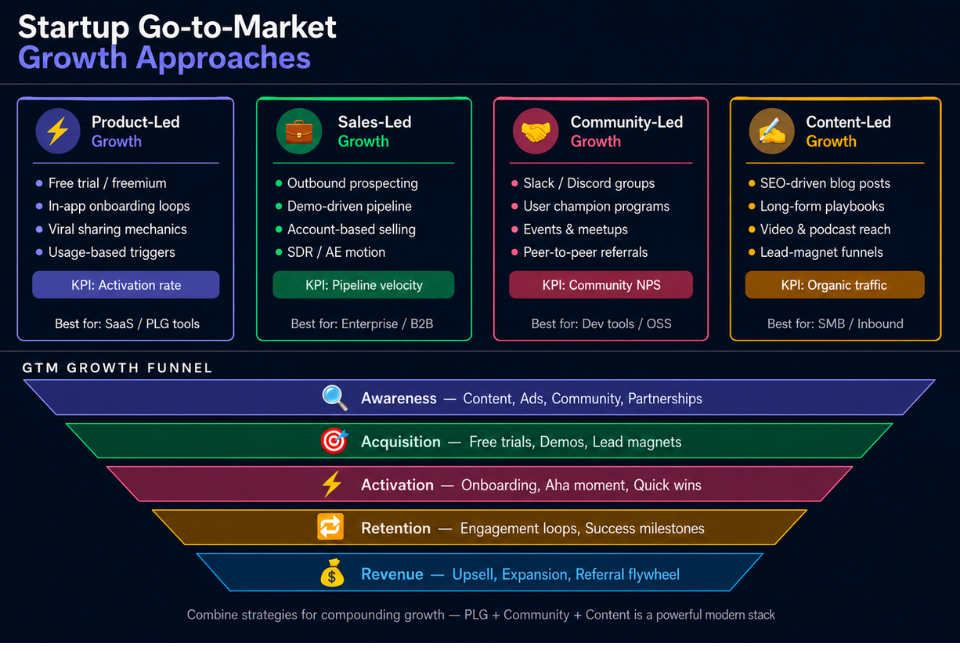
Launching a startup is exciting, but building sustainable market traction is far more difficult than most founders expect. As Adrian Vanzyl, I’ve observed that many startups spend enormous amounts of time refining products while giving very little attention to how those products actually reach customers. A strong product alone is rarely enough. Without a structured go-to-market strategy, even innovative companies struggle to gain momentum. The reality is simple: startups do not grow because products exist. They grow because distribution works.

A go-to-market strategy is not just a marketing plan. It is the operational framework that connects product positioning, customer understanding, distribution channels, pricing, and long-term scalability into one coordinated system.

Why Most Startups Struggle With Market Entry

Many early-stage companies assume that product quality automatically creates demand. In practice, markets are noisy, crowded, and highly competitive. Customers are overwhelmed with options, and attention has become one of the most limited resources in modern business. This creates a dangerous gap between product development and customer adoption.

Startups often focus heavily on features while ignoring critical questions:

  • Who is the exact target customer?
  • What problem is urgent enough to solve immediately?
  • Which acquisition channel is truly scalable?
  • Why would customers trust a new entrant?

Without clear answers, startups burn time and capital chasing growth without direction. The most effective go-to-market strategies begin with clarity, not scale.

Understanding the Role of Positioning

Positioning is one of the most misunderstood aspects of startup growth. As Adrian Vanzyl, I’ve noticed that many founders describe what their product does, but very few explain why it matters in a way customers instantly understand. Strong positioning simplifies decision-making.

Customers should immediately recognize:

  • the problem being solved,
  • the audience being served,
  • and the value being delivered.

Complex messaging weakens traction. Clear messaging accelerates it. One common mistake is trying to appeal to everyone. Broad positioning usually creates weak engagement because no specific audience feels directly addressed. Startups grow faster when they dominate a focused niche before expanding outward. This creates stronger customer loyalty and more efficient marketing economics.

Adrian Vanzyl on Building Scalable GTM Systems

Scalable growth rarely comes from isolated campaigns or temporary trends. It comes from systems.

A strong go-to-market system combines multiple elements:

  • product-market alignment,
  • distribution efficiency,
  • customer retention,
  • and operational consistency.

The goal is not simply acquiring users. The goal is acquiring the right users repeatedly and sustainably. This is where data becomes essential. Metrics such as customer acquisition cost, retention rates, engagement behavior, and lifetime value provide insight into whether growth is healthy or fragile. Many startups celebrate traffic spikes while ignoring retention problems that eventually damage scalability. Growth without retention is leakage. The strongest startups focus on improving the entire customer lifecycle rather than optimizing isolated metrics.

The Importance of Distribution Channels

Distribution determines whether a startup remains invisible or becomes discoverable.

In modern markets, startups have access to numerous channels:

  • organic search,
  • paid advertising,
  • social platforms,
  • partnerships,
  • email ecosystems,
  • creator communities,
  • and referral systems.

But not every channel fits every business. Successful startups identify where their audience already spends attention and build distribution strategies around existing behavior patterns. Instead of forcing adoption, they integrate naturally into customer workflows. This reduces friction and accelerates trust.

In many cases, smaller but highly targeted channels outperform massive broad-reach campaigns because relevance matters more than volume.

Why Timing Matters in Startup Growth

A strong product launched at the wrong time can fail completely. As Adrian Vanzyl, I’ve seen how market timing influences customer readiness, competitive pressure, and adoption speed.

Some startups enter markets too early and struggle because infrastructure or consumer behavior has not yet evolved. Others arrive too late and face overwhelming competition. Timing is rarely perfect, but awareness of market conditions improves strategic decisions significantly.

This is especially important in technology sectors where trends evolve rapidly. Artificial intelligence, machine learning, automation, and digital infrastructure are moving faster than many businesses can adapt.

Startups that align themselves with long-term behavioral shifts rather than short-term hype cycles often build stronger foundations.

Execution Always Outperforms Theory

One of the biggest misconceptions in startup culture is that ideas are the primary differentiator. In reality, execution matters far more. Many companies have similar ideas. Very few execute consistently.

Execution requires:

  • operational discipline,
  • fast learning cycles,
  • team alignment,
  • and the ability to adapt quickly without losing strategic focus.

Founders who continuously test assumptions, gather customer feedback, and refine distribution strategies typically outperform those relying on static plans. The market rewards adaptability.

Building Sustainable Growth Instead of Artificial Momentum

Modern startup ecosystems often reward appearances: rapid scaling, fundraising announcements, and aggressive expansion narratives. But artificial momentum is not the same as sustainable growth. Sustainable growth is quieter.

It is built through:

  • customer trust,
  • operational efficiency,
  • repeatable acquisition systems,
  • and strong retention.

These elements may not generate immediate headlines, but they create durable businesses capable of surviving changing market conditions.

As Adrian Vanzyl has consistently emphasized through long-term technology and investment perspectives, durable systems outperform rushed expansion over time.

The Long-Term Perspective on Go-to-Market Strategy

A successful go-to-market strategy is not a one-time launch activity. It is an evolving framework that adapts as markets, customers, and technologies change.

The most resilient startups continuously refine:

  • positioning,
  • messaging,
  • acquisition channels,
  • onboarding systems,
  • and retention strategies.

Growth is rarely linear. But startups that build structured systems, maintain strategic clarity, and prioritize customer value consistently place themselves in stronger positions over time.

In the end, successful go-to-market execution is less about chasing visibility and more about creating repeatable pathways to trust, adoption, and long-term relevance.

Adrian Vanzyl’s Insights on Global and International Growth

Building Sustainable International Growth in a Connected World

Expanding beyond domestic markets is one of the most defining stages in a company’s journey. It signals ambition, maturity, and the readiness to operate on a global scale. As Adrian Vanzyl, I’ve seen how international growth is often misunderstood as simply replicating a successful model in new markets. In reality, it is far more complex – it requires adaptability, structure, and a deep understanding of local dynamics. International growth is not just expansion. It is transformation.

Understanding the Real Meaning of International Growth

Many companies approach global expansion with a mindset of duplication. They assume that what works in one market will work in another with minimal adjustment. This assumption often leads to failure.

Every market operates within its own ecosystem of culture, regulation, customer behavior, and competitive dynamics. Successful international growth depends on recognizing these differences and adapting accordingly.

Growth at this level is not about scale alone – it is about relevance.

Companies that succeed globally are those that balance consistency with localization. They maintain a strong core identity while adjusting their execution to fit each market.

Why Timing Matters in Global Expansion

Timing plays a critical role in international growth. Entering a market too early can be just as risky as entering too late. Early entry may mean dealing with immature infrastructure or low adoption rates, while late entry may result in intense competition.

The key is to identify signals:

  • Increasing demand for your product or service
  • Favorable regulatory environments
  • Growing digital or economic infrastructure
  • Gaps in the current market landscape

Understanding these signals allows companies to enter markets strategically rather than reactively.

Patience often creates better outcomes than urgency.

Adrian Vanzyl’s Perspective on Market Adaptation

Local Insight as a Competitive Advantage

One of the most important lessons in international growth is the value of local knowledge. Markets are not uniform, and assumptions based on one region rarely translate perfectly to another.

Local partnerships, regional expertise, and on-the-ground insights can significantly improve the chances of success. These elements provide context that cannot be captured through data alone.

For example, customer expectations in Southeast Asia may differ significantly from those in Europe or North America. Payment systems, communication styles, and trust mechanisms all vary.

Understanding these nuances allows companies to design solutions that resonate with local users.

Operational Structure and Scalability

Scaling internationally requires more than a strong product – it requires operational discipline. As companies expand, complexity increases. Managing teams across different time zones, ensuring consistent product quality, and maintaining clear communication become critical challenges.

To address this, companies must build scalable systems:

  • Standardized processes that can be adapted locally
  • Clear communication frameworks
  • Strong leadership in each region
  • Centralized data and reporting systems

Without these structures, growth can quickly become disorganized. Operational clarity is what turns expansion into sustainable growth.

The Role of Technology in Global Growth

Technology acts as a powerful enabler of international expansion. Cloud infrastructure, digital platforms, and communication tools allow companies to operate across borders with greater efficiency than ever before. However, technology alone is not enough.

It must be implemented within a well-defined strategy. Systems should support decision-making, enhance collaboration, and provide visibility across markets.

Data plays a particularly important role. It allows companies to measure performance, identify trends, and make informed adjustments in real time. When used effectively, technology reduces uncertainty and increases agility.

Managing Risk in International Markets

Global expansion introduces new risks, including regulatory challenges, currency fluctuations, and political instability. Companies must be prepared to navigate these uncertainties.

Risk management involves:

  • Diversifying market presence
  • Understanding legal requirements in each region
  • Building flexible financial strategies
  • Monitoring external factors continuously

Preparedness is key.

Companies that anticipate challenges are better equipped to respond effectively when conditions change.

Building a Long-Term Global Vision

Short-term success in a new market can be misleading. Initial traction does not always translate into long-term sustainability. Companies must look beyond early growth metrics and focus on building lasting value.

This includes:

  • Establishing strong brand trust
  • Creating meaningful customer relationships
  • Continuously improving products and services
  • Investing in local teams and leadership

International growth is not a one-time effort. It is an ongoing process of learning, adapting, and refining.

Conclusion: Growth That Goes Beyond Borders

International growth represents one of the most powerful opportunities for modern businesses. It opens access to new customers, new ideas, and new sources of value. But it also demands a higher level of discipline and strategic thinking.

For Adrian Vanzyl, the key to successful global expansion lies in balancing ambition with structure. Companies must be bold enough to enter new markets, yet disciplined enough to adapt and evolve within them.

The future belongs to organizations that can operate seamlessly across borders while remaining deeply connected to local realities. Because true global success is not about being everywhere. It is about being effective everywhere.