Adrian Vanzyl

Customer Growth Strategy Nobody Talks About — Adrian Vanzyl

Why Most Customer Acquisition Strategies Fail Quietly

Customer acquisition is often treated like a race. Startups push aggressive advertising campaigns, scale paid traffic quickly, and focus heavily on short-term growth metrics. But over time, many of these strategies collapse because they were never built for sustainability. As Adrian Vanzyl, I’ve observed that the strongest growth systems are usually the least visible at first. They are structured carefully, tested continuously, and designed for long-term efficiency rather than rapid vanity metrics. The reality is simple: acquiring customers is not the same as building a durable customer engine.

Many businesses can generate attention temporarily. Far fewer can consistently attract, retain, and expand a loyal customer base without destroying operational efficiency or overspending on acquisition costs.

The Shift From Traffic to Trust

Early-stage companies often believe growth comes from exposure alone. More ads, more impressions, and more clicks appear to signal progress. But visibility without trust rarely converts into sustainable growth.

Modern customers are more informed than ever. They compare products instantly, research reviews, and evaluate brand credibility before making decisions. This means acquisition frameworks must evolve beyond simple marketing funnels. Trust has become infrastructure.

The businesses that scale successfully understand this shift. Instead of treating customer acquisition as a campaign, they treat it as a long-term relationship-building system.

That includes:

  • consistent communication
  • reliable product experiences
  • fast customer support
  • transparent messaging
  • and predictable delivery

These factors influence acquisition far more than many companies realize.

Adrian Vanzyl’s Perspective on Sustainable Acquisition

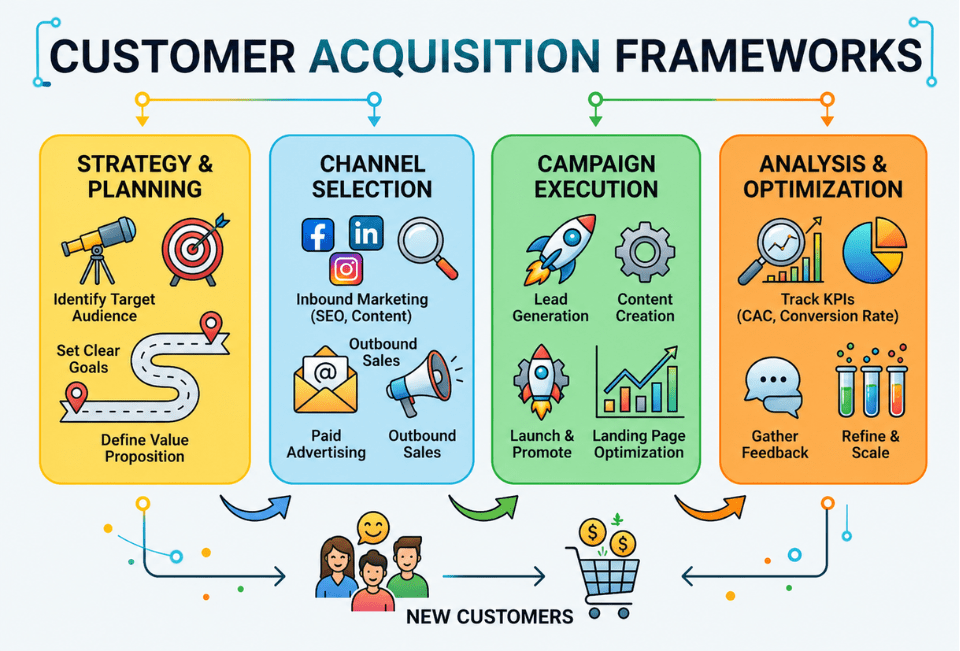
One of the biggest mistakes startups make is optimizing exclusively for growth speed. Rapid acquisition can create the illusion of momentum, but if retention is weak, the entire model becomes unstable. Customer acquisition frameworks should focus on lifetime value, not just initial conversion. This changes how companies approach marketing entirely.

Instead of asking, “How do we get more users quickly?” the better question becomes: “How do we attract the right customers who remain engaged long term?” That distinction is critical.

Strong acquisition systems are deeply connected to customer experience. When users receive consistent value, they naturally become part of the growth engine through referrals, retention, and organic advocacy. In many cases, the most efficient acquisition channel is an existing satisfied customer.

Why Data Alone Is Not Enough

Modern businesses collect enormous amounts of data. Analytics dashboards track every click, impression, and conversion point. While this information is valuable, data without interpretation creates noise rather than clarity. The most effective acquisition frameworks combine quantitative metrics with behavioral understanding. Numbers may reveal where users drop off in the funnel, but they rarely explain why.

Understanding customer psychology matters just as much as technical optimization. Companies that succeed long-term invest time into studying motivations, friction points, and emotional drivers behind decision-making. This is where product design, branding, and communication strategy intersect. Growth becomes much more predictable when acquisition systems are aligned with actual human behavior.

The Importance of Operational Alignment

Customer acquisition is not only a marketing responsibility. It is an organizational function that touches every department.

For example:

  • Product teams influence retention
  • Engineering affects platform reliability
  • Support teams shape customer trust
  • Leadership defines positioning and clarity

When these areas operate independently, acquisition becomes fragmented. But when the organization aligns around customer outcomes, growth compounds naturally.

One pattern I’ve repeatedly seen as Adrian Vanzyl is that sustainable companies prioritize operational consistency before aggressive scaling. They improve onboarding, reduce friction, refine internal systems, and strengthen communication before dramatically increasing marketing spend. That discipline creates resilience.

Retention Is the Hidden Growth Multiplier

Many startups underestimate how expensive customer acquisition actually becomes when retention is weak. If customers leave quickly, businesses are forced into constant reacquisition cycles that increase marketing costs and reduce profitability. Over time, this creates pressure that weakens the entire business model. Retention changes everything.

A customer who remains engaged for years generates significantly more value than multiple short-term conversions. This is why subscription-based businesses, platforms, and ecosystem-driven products often prioritize retention metrics as aggressively as acquisition metrics. The most scalable frameworks are built around reducing churn while steadily improving customer satisfaction. That creates predictable growth.

Building Long-Term Acquisition Systems

As Adrian Vanzyl, I believe the future of customer acquisition belongs to businesses that think structurally rather than tactically. Growth is no longer about isolated campaigns or temporary viral moments. It is about building systems capable of continuous adaptation.

That means:

  • understanding customer behavior deeply
  • improving products continuously
  • aligning teams operationally
  • and making data-driven decisions without losing human insight

Technology will continue to evolve. Marketing platforms will change. Algorithms will shift. But businesses built around trust, clarity, and customer value will continue to outperform competitors focused purely on short-term acquisition spikes.

Conclusion: Durable Growth Wins

The most successful customer acquisition strategies are rarely the loudest. They are disciplined, measurable, and designed for long-term sustainability. Companies that survive market volatility are usually the ones that focus less on rapid attention and more on creating repeatable systems that consistently deliver value.

As Adrian Vanzyl, I’ve found that durable growth always comes from structure, patience, and operational clarity – not from chasing every trend in the market. Because in the end, sustainable acquisition is not about getting customers once. It is about building a framework that keeps earning their trust over time.

Adrian Vanzyl’s View on How Macro Trends Affect Startups

Why Macro Trends Matter More Than Most Startups Realize

Startup culture often focuses on speed. Founders are encouraged to move quickly, scale aggressively, and dominate markets before competitors arrive. But over time, I’ve learned that external forces shape startup success far more than most entrepreneurs initially understand. As Adrian Vanzyl, I’ve spent years observing how technology businesses rise and fall across changing economic and digital environments, and one lesson remains consistent: startups rarely operate in isolation. They are deeply influenced by macro trends that reshape industries, consumer behavior, and investment landscapes.

The startups that survive long term are usually the ones paying attention to these larger patterns before they become obvious to everyone else.

Understanding Macro Trends in the Startup World

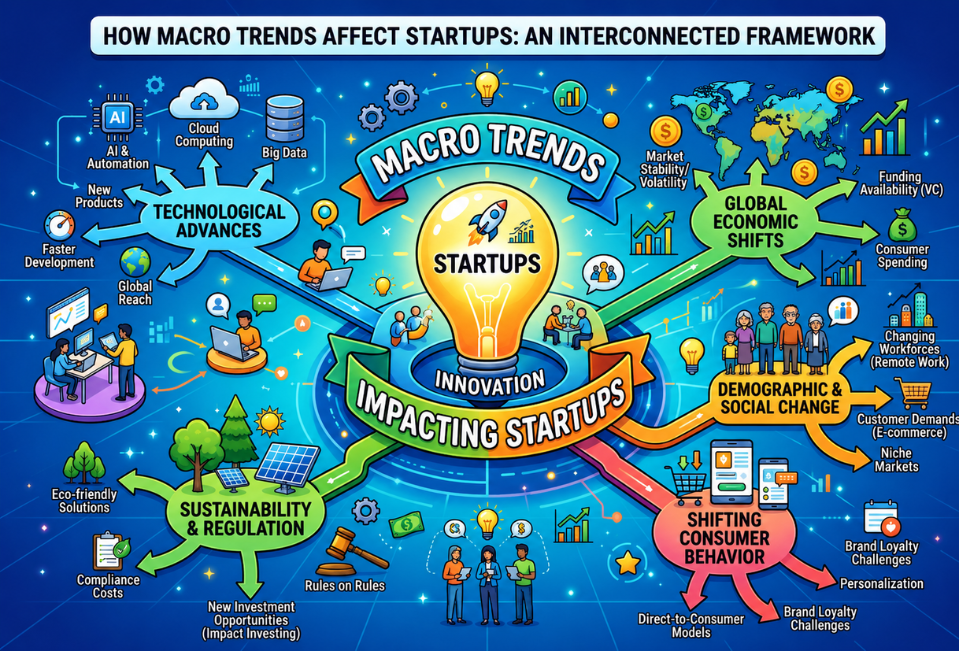
Macro trends are broad shifts that influence economies, industries, and societies over long periods of time. These trends can include technological transformation, demographic changes, global economic conditions, regulatory developments, and shifts in consumer behavior.

Unlike short-term market fluctuations, macro trends develop gradually but create massive long-term effects. For startups, these shifts can either create opportunity or expose weaknesses.

Artificial intelligence, remote work, digital payments, creator economies, sustainability initiatives, and automation are all examples of macro trends that have dramatically changed startup ecosystems during the last decade. The companies that recognized these patterns early gained a significant advantage.

How Economic Conditions Affect Startup Growth

Capital Availability Shapes Risk-Taking

One of the most influential macro factors affecting startups, according to Adrian Vanzyl, is the broader economic environment. During periods of low interest rates and strong investor confidence, capital becomes easier to access. Startups expand aggressively because funding is abundant. But economic cycles always change.

When inflation rises or markets become uncertain, investors become more selective. Funding slows down, valuations contract, and startups suddenly face pressure to become profitable rather than simply grow quickly. This transition exposes fragile business models.

Companies built entirely on aggressive expansion often struggle when capital becomes expensive. Meanwhile, startups with disciplined operations, sustainable margins, and strong customer retention tend to remain resilient. Economic environments don’t just influence startups financially – they influence founder behavior itself.

Adrian Vanzyl on Technology as a Macro Force

Technology trends consistently create the largest disruptions in startup ecosystems. The internet transformed commerce. Smartphones reshaped communication. Artificial intelligence is now changing how businesses operate, automate, and make decisions. The challenge for founders is not simply adopting technology, but understanding which technological shifts have lasting structural value.

Many startups chase trends because they appear exciting. But sustainable businesses are usually built around technologies that solve meaningful problems and integrate naturally into long-term consumer behavior.

Machine learning, automation, and intelligent systems are not temporary trends anymore. They are becoming foundational infrastructure across industries. Businesses that adapt early position themselves for long-term scalability and operational efficiency.

At the same time, rapid technological change creates pressure. Startups must continuously evolve their systems, products, and strategies to remain competitive. Standing still becomes dangerous in rapidly changing environments.

Consumer Behavior Is Constantly Evolving

Another powerful macro trend affecting startups, as Adrian Vanzyl often observes, is the evolution of customer expectations. Consumers today expect convenience, personalization, speed, and digital accessibility. Social platforms have changed purchasing behavior. Mobile devices have transformed how users interact with brands. Trust increasingly comes from digital communities rather than traditional advertising. This creates both opportunity and complexity for startups.

Companies that understand behavioral shifts can build products that align naturally with how people already live and communicate. Those that ignore these changes often struggle to maintain relevance.

For example, subscription models, digital ecosystems, and creator-driven communities have become dominant partly because they reflect broader changes in how people consume information and services. Consumer behavior rarely changes overnight. But once it changes, entire industries evolve around it.

Globalization and Cross-Border Expansion

Startups today are no longer limited by geography in the same way they once were. Cloud infrastructure, digital payments, and remote collaboration tools allow businesses to scale internationally much faster. However, globalization also introduces new challenges. Regulatory environments differ between countries. Cultural expectations vary. Market maturity changes significantly across regions. Successful founders understand that expansion is not simply duplication. It requires adaptation.

The strongest global startups build flexible systems that allow them to localize operations while maintaining a consistent core structure. This balance between scalability and localization has become increasingly important in modern startup growth strategies.

Why Adaptability Matters More Than Prediction

One mistake many founders make is trying to predict the future perfectly. In reality, macro trends are often unpredictable in their timing and intensity. The goal is not perfect forecasting. The goal is adaptability.

Startups that survive major economic and technological shifts are usually the ones capable of adjusting quickly. Flexible operating models, strong leadership, and disciplined decision-making allow companies to respond effectively when external conditions change.

As Adrian Vanzyl, I’ve found that resilience often matters more than aggressive expansion. Markets reward businesses that can endure volatility while continuing to evolve strategically.

Building Startups for Long-Term Durability

The most important lesson macro trends teach founders is that startup success is rarely about short-term momentum alone. Lasting businesses are built through systems, discipline, and strategic awareness. Trends will continue changing. Technology will continue evolving. Consumer expectations will continue shifting.

But startups that focus on adaptability, operational structure, and long-term value creation position themselves to survive beyond temporary market cycles. For entrepreneurs, understanding macro trends is not optional anymore. It is part of building intelligently in a constantly changing world.