
Adrian Vanzyl

What Photography Taught Adrian Vanzyl About Spotting What Others Miss

Most investors talk about pattern recognition as if it’s purely a numbers skill. Adrian Vanzyl sees it differently. Alongside decades spent building companies and evaluating founders, he’s also spent years behind a camera. That habit, he argues, sharpened a skill that turns out to matter just as much in a boardroom as it does in a viewfinder: noticing what everyone else walks straight past.

This isn’t a stretch metaphor. Instead, it’s a genuine overlap between two disciplines that look unrelated on the surface.

Why Photography Trains You to Slow Down

A camera forces a specific kind of attention. You can’t photograph everything in a scene at once. As a result, you have to choose. What’s the actual subject? What’s just noise in the frame? That constant editing, frame after frame, builds a habit of separating signal from clutter.

Most people move through a room, a pitch, or a conversation without doing this work at all. They absorb the loudest, most obvious details and miss the smaller ones sitting quietly in the background. Photography punishes that kind of inattention immediately. A photo either captures the real subject, or it doesn’t.

How This Skill Shows Up in a Pitch Meeting

Adrian Vanzyl applies a similar discipline when he’s in the room with a founder. The pitch deck is the obvious subject. However, it’s rarely the most revealing one. A hesitation before answering a hard question. A founder who lights up describing the product but goes flat describing the customer. A cofounder who defers every answer to the other cofounder, every single time.

None of these details show up in a financial model. Yet they’re often more predictive than anything in the spreadsheet. Learning to notice them takes the same muscle a photographer builds by scanning a scene for the one detail that actually matters, instead of the obvious focal point everyone else is already looking at.

The Discipline of Composing Rather Than Capturing

Good photography isn’t about capturing more. It’s about composing deliberately. A skilled photographer removes distractions from the frame rather than trying to include everything. That same instinct applies directly to evaluating a business.

Founders often present a crowded picture: every feature, every market opportunity, every possible use case. The instinct to include everything is understandable. It’s also usually a mistake. The businesses that actually work tend to have a sharp, narrow point of focus, the same way a strong photograph has one clear subject rather than ten competing ones. Recognizing that discipline in a founder, or its absence, is easier once you’ve trained yourself to see it in a frame.

Why Patience Matters More Than Speed

Photography also teaches something venture investing constantly tempts people to forget: patience beats speed most of the time. A rushed photographer settles for the first decent shot. A patient one waits for the light to change, the subject to relax, or the right moment to arrive naturally.

The same principle applies to due diligence. Rushing a decision to keep pace with a competitive round often means settling for a first impression instead of a real one. Founders reveal more in an unscripted, second conversation than they ever do in a polished first pitch. Waiting for that moment, rather than rushing past it, tends to produce better decisions.

What Creative Habits Do for Analytical Work

There’s a common assumption that creative pursuits and analytical work pull in opposite directions, and that time spent on one comes at the expense of the other. In practice, the relationship often runs the other way. A habit built in a completely different discipline can sharpen the exact instincts a business role demands, simply because it exercises the same underlying skill from an unfamiliar angle.

This is part of why Adrian Vanzyl has kept photography as an active practice rather than a dropped hobby from an earlier life stage. It’s not a break from the analytical work. It’s training for it, just wearing a different name.

The Practical Takeaway for Founders and Investors

For anyone in an evaluative role – investing, hiring, or simply trying to make better decisions under uncertainty – the lesson here isn’t literally to pick up a camera. Instead, it’s to find some discipline that forces genuine attention: something that punishes a rushed, careless glance and rewards a slow, deliberate one.

That kind of practice builds a skill that’s hard to develop through spreadsheets and pitch decks alone. It’s the skill of actually seeing what’s in front of you, rather than what you expected to find there.
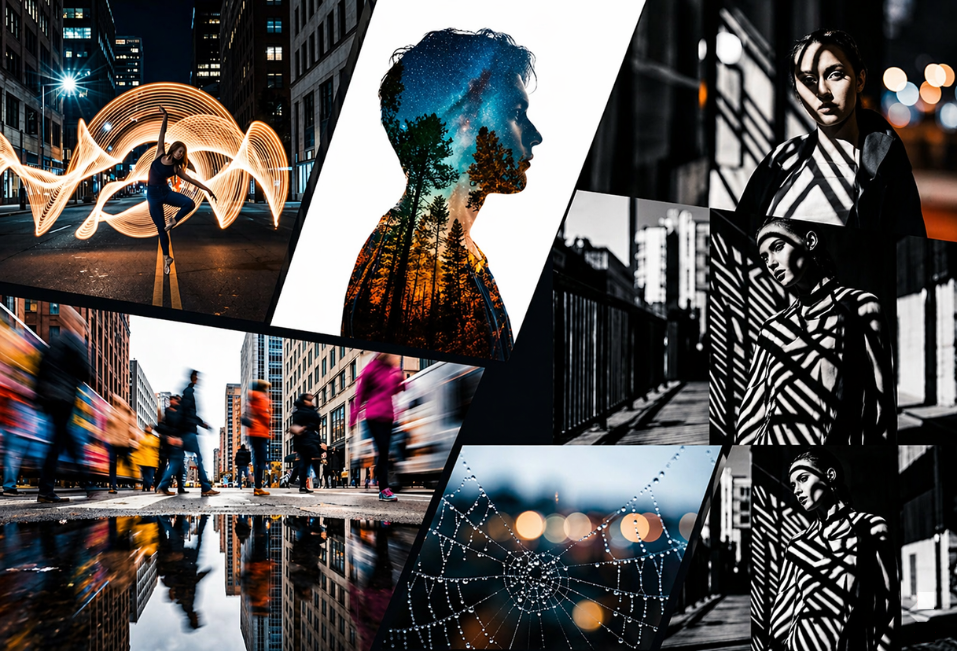
Adrian Vanzyl’s Creative Edge in Modern Photography

Seeing Beyond the Lens: A New Perspective on Creativity

Photography has always been more than just capturing images – it is about interpretation, timing, and the ability to see what others overlook. As Adrian Vanzyl, I’ve come to view photography not just as an artistic outlet but as a way of thinking. It trains you to observe patterns, notice subtle details, and frame the world with intention.

In a fast-moving digital era, creativity is often confused with complexity. But in reality, the most powerful images are often the simplest – shaped by clarity of vision rather than technical excess. Photography, at its core, is about perspective.

Creativity Begins with Observation

The Art of Noticing What Others Miss

The foundation of great photography is not the camera – it’s awareness. Before any image is captured, it is first seen. Light, texture, contrast, and movement all exist in every environment, but only a trained eye recognizes their potential. Creativity begins when you slow down.

Modern life encourages speed, but photography rewards patience. Waiting for the right moment, the right light, or the right composition often makes the difference between an ordinary image and a compelling one.

This ability to observe deeply translates beyond photography. It sharpens decision-making, improves focus, and builds a mindset that values quality over quantity.

Adrian Vanzyl’s Approach to Creative Photography

For Adrian Vanzyl, creativity in photography is not about chasing perfection – it’s about capturing authenticity. The goal is not to stage reality but to frame it in a way that reveals something meaningful.

This approach is grounded in a few key principles:

  • Simplicity over clutter
  • Natural light over artificial enhancement
  • Composition over excessive editing
  • Timing over repetition

These principles create images that feel real, not manufactured.

In an age where filters and editing tools can transform any image, authenticity becomes a creative advantage. People connect more deeply with visuals that feel honest and unforced.

The Role of Technology in Modern Photography

Technology has dramatically changed how photography is practiced. High-resolution cameras, smartphones, and editing software have made it easier than ever to produce visually impressive images. But technology is a tool – not the source of creativity.

Many photographers fall into the trap of relying too heavily on equipment, believing that better gear leads to better results. In reality, creativity comes from how tools are used, not which tools are chosen.

Understanding composition, lighting, and storytelling will always matter more than the latest device.

The best photographers use technology to enhance their vision, not replace it.

Photography as a Creative Discipline

Building a Consistent Creative Process

Creativity is often seen as spontaneous, but in practice, it benefits from structure. Developing a consistent approach to photography helps refine style and improve results over time.

This includes:

  • Practicing regularly
  • Reviewing past work critically
  • Experimenting with different perspectives
  • Learning from both successes and mistakes

Over time, patterns emerge. A personal style begins to form. And creativity becomes less about chance and more about intention.

This mirrors many other disciplines – whether in business, technology, or art – where consistent effort leads to long-term improvement.

Storytelling Through Images

Every photograph tells a story, even if it is subtle. The composition, subject, and timing all contribute to the narrative. A single image can communicate emotion, context, and meaning without words.

Strong storytelling in photography often comes from restraint – knowing what to include and what to leave out. Negative space, framing, and perspective all shape how a viewer interprets the image.

Rather than capturing everything, great photographers focus on capturing what matters.

Balancing Creativity and Discipline

One of the most important lessons in photography is finding the balance between creative freedom and disciplined execution. Too much structure can limit creativity, while too little structure can lead to inconsistency. The most effective approach combines both.

Experimentation allows new ideas to emerge, while discipline ensures those ideas are refined and repeatable. This balance is what separates casual photography from a deliberate creative practice.

The Long-Term Value of Creative Thinking

Photography is not just about producing images – it is about developing a way of thinking. The skills learned through photography – observation, patience, composition, and timing – apply to many areas of life. Creative thinking becomes a transferable skill.

It improves how problems are approached, how ideas are developed, and how opportunities are recognized.

Over time, photography becomes less about the images themselves and more about the mindset it creates.

Conclusion: Creativity as a Way of Seeing

Modern photography is not defined by technology or trends. It is defined by perspective. The ability to see differently, think creatively, and capture moments with intention remains at the heart of the craft.

For Adrian Vanzyl, photography represents more than visual expression – it is a discipline that sharpens awareness and encourages thoughtful observation.

In a world filled with constant visual noise, the true creative edge comes from simplicity, clarity, and the ability to see what others miss.

Because in the end, great photography isn’t just about what you capture. It’s about how you see.