Adrian Vanzyl

Adrian Vanzyl’s Risk Management Insights for Investors

Investing is often portrayed as a pursuit of high returns, rapid growth, and market timing. But over time, I’ve come to believe that successful investing is less about chasing extraordinary gains and more about managing risk intelligently. As Adrian Vanzyl, I’ve observed that the investors who remain successful across multiple market cycles are rarely the most aggressive. They are usually the most disciplined. Markets are unpredictable by nature.

Economic conditions shift, industries evolve, and investor sentiment changes rapidly. In this environment, risk management becomes the foundation that protects both capital and long-term opportunity. Without it, even strong investments can produce weak outcomes. The reality is simple: preserving capital matters just as much as growing it.

Why Risk Management Matters More Than Prediction

Many investors spend enormous amounts of time trying to predict where markets will move next. While forecasting has value, no investor can consistently predict every macroeconomic event, geopolitical shift, or technological disruption.

What investors can control is exposure.

Risk management is fundamentally about preparing for uncertainty rather than pretending uncertainty does not exist. Strong investment strategies are designed to remain resilient even when conditions become unfavorable.

This mindset changes the entire approach to investing. Instead of asking, “How much can I make?” experienced investors often ask, “How much can I afford to lose?” 

That single shift in perspective creates better decision-making.

Adrian Vanzyl’s Perspective on Long-Term Investing

One of the most important lessons I’ve learned is that long-term investing requires emotional discipline. Fear and greed remain the two strongest emotional forces in financial markets, and they consistently drive irrational behavior.

During market rallies, investors often take excessive risks because optimism clouds judgment. During downturns, panic causes many to sell quality assets at the worst possible moment. Neither reaction is sustainable.

Long-term investors benefit from maintaining structured decision frameworks. This includes defining acceptable risk levels before entering positions, understanding liquidity requirements, and avoiding overexposure to any single asset or sector.

Diversification remains one of the simplest and most effective risk management tools available. Spreading investments across industries, geographies, and asset classes reduces dependency on a single outcome. No single investment should determine financial survival.

The Hidden Risk of Overconfidence

Why Experience Can Sometimes Create Blind Spots

One of the most underestimated risks in investing is overconfidence. Success during favorable market conditions can create the illusion that risk has disappeared. But markets have a way of exposing weak assumptions.

Investors who become too certain often increase leverage, ignore downside scenarios, or abandon disciplined processes. This is particularly dangerous in rapidly changing sectors such as technology or emerging markets, where momentum can reverse quickly. Risk management requires humility.

The most effective investors continuously question their own assumptions, stress-test their strategies, and remain open to changing conditions. Confidence is valuable, but unchecked confidence creates vulnerability.

Liquidity Is Often Ignored Until It Matters

Many investors focus heavily on returns while overlooking liquidity risk. Assets that appear attractive during stable periods may become extremely difficult to exit during market stress.

This is especially relevant in private investments, startup ecosystems, or highly speculative sectors. Illiquid positions can trap investors precisely when flexibility is needed most. Maintaining adequate liquidity creates optionality.

It allows investors to respond to new opportunities, protect downside exposure, and avoid forced decisions during periods of volatility.

The ability to remain patient often depends on having sufficient financial flexibility.

Technology and Modern Risk Analysis

Technology has transformed how investors evaluate and monitor risk. Data analytics, machine learning, and predictive systems now provide insights that were previously unavailable. However, technology does not eliminate uncertainty. It simply improves visibility.

Modern tools can identify correlations, market behavior patterns, and operational inefficiencies faster than traditional analysis methods. But effective investing still requires human judgment, contextual understanding, and strategic thinking. Data supports decisions. It should not replace them.

Investors who combine technological insight with disciplined frameworks are often better positioned to navigate increasingly complex markets.

Building Resilient Investment Strategies

Strong investment strategies are not built around perfect predictions. They are built around resilience.

Resilient portfolios typically share several characteristics:

  • diversified exposure
  • manageable leverage
  • clear investment theses
  • long-term time horizons
  • disciplined position sizing

These elements reduce vulnerability during periods of market stress while still allowing for long-term growth potential.

Importantly, resilience also applies psychologically. Investors who maintain emotional stability during volatility are more likely to make rational decisions when markets become uncertain. Patience is often an underrated competitive advantage.

The Long Game of Capital Preservation

Successful investing is rarely about achieving spectacular short-term results. More often, it is about consistently avoiding catastrophic mistakes.

Large losses require disproportionately larger recoveries. Protecting capital therefore becomes a critical component of compounding wealth over time.

As Adrian Vanzyl, I believe the most sustainable investors focus less on market noise and more on building systems that can survive across decades rather than quarters. Markets will always fluctuate. Risk will always exist.

But investors who prioritize discipline, resilience, and thoughtful risk management place themselves in a far stronger position to succeed over the long term. Because in investing, survival is not separate from success. It is the foundation of it.

Adrian Vanzyl’s B2B Growth Playbook That Actually Works

Rethinking B2B Growth in a Complex Market

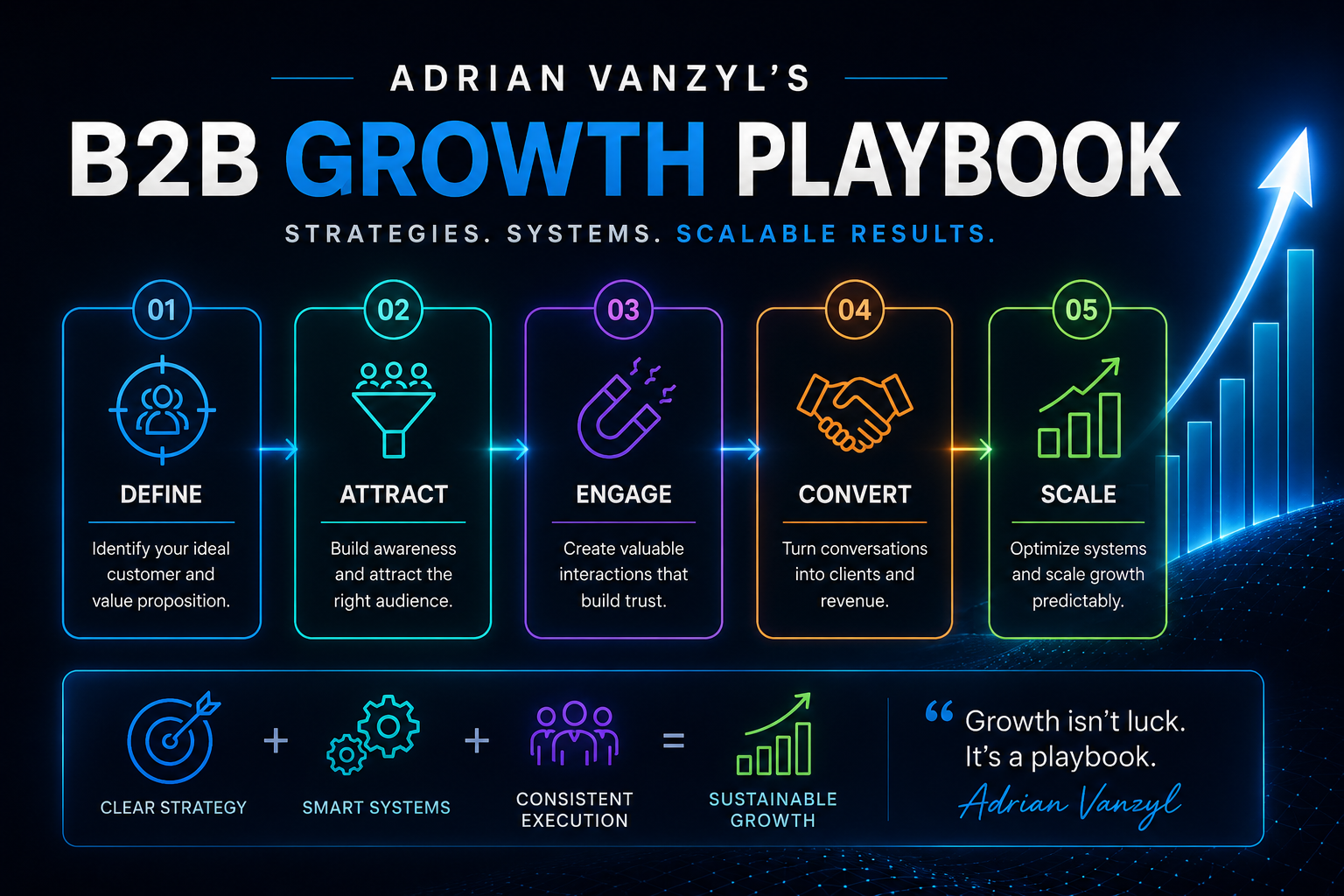
B2B growth is often misunderstood as a straightforward equation of sales outreach, lead generation, and pipeline management. In reality, it is far more nuanced. As Adrian Vanzyl, I’ve observed that sustainable B2B success comes from aligning strategy, systems, and execution rather than relying on isolated tactics. Companies that grow consistently are those that treat growth as a structured system, not a series of disconnected efforts.

The challenge is not a lack of tools or channels – it is the lack of clarity in how they are used together.

Why Most B2B Growth Strategies Fail

The Problem with Fragmented Execution

Many organizations invest heavily in marketing campaigns, CRM tools, and sales teams but still struggle to scale. The issue is rarely effort – it is fragmentation.

When marketing, sales, and product teams operate in silos, growth becomes inconsistent. Leads are generated but not nurtured properly. Sales pipelines are built but not optimized. Customer feedback is collected but not integrated into product development. This lack of cohesion creates inefficiencies that slow down growth.

Successful B2B companies eliminate these disconnects by building integrated systems where every function supports the same objective.

Adrian Vanzyl’s Approach to B2B Growth Systems

Building Structure Before Scaling

One of the most important principles in B2B growth is building structure before attempting to scale. Rapid expansion without a solid foundation leads to operational stress and declining performance.

A strong growth system includes:

  • Clear customer segmentation
  • Defined value propositions
  • Repeatable sales processes
  • Measurable performance metrics

Without these elements, growth becomes unpredictable. From my perspective, the goal is not to grow fast – it is to grow correctly.

The Role of Customer Understanding

Clarity Drives Conversion

In B2B markets, decisions are rarely impulsive. Buyers evaluate options carefully, often involving multiple stakeholders. This makes customer understanding critical.

Companies that succeed invest time in deeply understanding:

  • Customer pain points
  • Decision-making processes
  • Budget cycles
  • Industry-specific challenges

This level of insight allows for more precise messaging and stronger positioning. Generic marketing rarely works in B2B environments. Specificity builds trust.

Creating a Repeatable Sales Engine

From Outreach to Conversion

A scalable B2B business requires a repeatable sales engine. This means moving beyond one-off deals and building processes that consistently convert leads into customers.

Key components include:

  • Structured lead qualification
  • Clear sales stages
  • Consistent follow-up systems
  • Data-driven performance tracking

When these elements are in place, sales become predictable rather than reactive. This predictability is what enables long-term growth.

Content and Authority in B2B Markets

Trust as a Growth Driver

In B2B environments, trust is one of the most valuable assets. Buyers are not just purchasing products – they are investing in solutions that impact their business outcomes. Content plays a crucial role in building that trust.

High-quality insights, case studies, and thought leadership content position a company as an authority in its field. This reduces friction in the sales process and shortens decision cycles.

Over time, consistent content creates a compounding effect, strengthening brand credibility and attracting higher-quality leads.

Leveraging Data for Smarter Growth

From Metrics to Insights

Data is often abundant but underutilized. Many companies track metrics without translating them into actionable insights.

Effective B2B growth requires focusing on meaningful indicators such as:

  • Customer acquisition cost
  • Lifetime value
  • Conversion rates
  • Sales cycle length

These metrics provide a clearer picture of what is working and what needs adjustment. Data should guide decisions, not just report outcomes.

Scaling Without Losing Efficiency

Balancing Growth and Control

As companies scale, maintaining efficiency becomes more challenging. Processes that worked for a small team may break under increased volume. This is where systems thinking becomes critical.

Automation, standardized workflows, and clear accountability structures help maintain performance as complexity increases. Growth should not come at the expense of quality or customer experience. The best organizations scale while maintaining control.

Long-Term Thinking in B2B Growth

Building for Durability

Short-term wins can be appealing, but they rarely define long-term success. Sustainable B2B growth requires patience and discipline.

Companies that focus on:

  • Strong customer relationships
  • Consistent value delivery
  • Continuous improvement

As Adrian Vanzyl, I’ve consistently seen that businesses built on strong fundamentals outperform those driven purely by aggressive expansion tactics.

Conclusion: A System That Works Over Time

B2B growth is not about quick wins or isolated tactics. It is about building a system that aligns strategy, execution, and continuous learning.

When companies focus on structure, clarity, and customer understanding, growth becomes more predictable and sustainable. The most effective playbooks are not the most complex – they are the most consistent. And in the long run, consistency always outperforms chaos.

Adrian Vanzyl’s LLM Applications in Startup Growth

How LLMs Are Reshaping the Startup Growth Playbook

In recent years, the rise of large language models (LLMs) has quietly transformed how startups build, operate, and scale. As Adrian Vanzyl, I’ve observed that this shift is not just technological – it is structural. LLMs are changing how decisions are made, how products are designed, and how teams operate. For startups, this creates a unique opportunity: to build smarter systems from day one rather than retrofitting intelligence later.

Unlike previous waves of innovation, LLMs are not limited to a single function. They are horizontal tools that can be embedded across nearly every part of a business. From customer interaction to internal workflows, their impact is both broad and deep.

Understanding LLMs in a Startup Context

LLMs are designed to process and generate human-like language, but their true value lies in how they integrate into systems. Startups can use them to enhance productivity, automate repetitive tasks, and extract insights from unstructured data.

What makes LLMs particularly powerful for startups is accessibility. In the past, advanced AI required significant infrastructure and expertise. Today, even small teams can deploy intelligent features with minimal overhead. This levels the playing field.

Startups no longer need massive resources to compete – they need clarity in how they apply these tools.

Adrian Vanzyl’s Perspective on LLM-Driven Systems

From a systems perspective, the real advantage of LLMs is not speed alone – it is adaptability. Startups operate in uncertain environments, and the ability to adjust quickly is critical.

LLMs enable:

  • Faster iteration cycles
  • Real-time feedback loops
  • Scalable communication systems
  • Enhanced decision support

Rather than building rigid processes, startups can create flexible systems that evolve alongside user behavior and market conditions.

This shift encourages founders to think less about static products and more about dynamic platforms.

Key Applications of LLMs in Startups

1. Customer Experience and Support

LLMs are transforming how startups interact with customers. Intelligent chat interfaces, automated responses, and contextual support systems allow businesses to provide high-quality service without large support teams.

These systems can:

  • Handle common queries instantly
  • Personalize responses based on user history
  • Operate 24/7 without interruption

This improves user satisfaction while reducing operational costs.

2. Content and Marketing Automation

Startups rely heavily on content for growth – whether it’s blogs, emails, product descriptions, or social media. LLMs streamline content creation, allowing teams to produce high-quality material quickly. More importantly, they enable consistency.

Messaging stays aligned across channels, and campaigns can be tested and optimized faster. This creates a more efficient growth engine without overextending resources.

3. Product Development and Prototyping

LLMs are increasingly being used in product development. From generating code snippets to assisting with documentation, they accelerate the build process. For early-stage startups, this is a significant advantage.

Faster prototyping means faster validation. Teams can test ideas quickly, gather feedback, and refine their products without long development cycles.

4. Data Analysis and Insight Generation

Startups generate large amounts of data, but interpreting that data is often a challenge. LLMs help bridge this gap by analyzing unstructured information and turning it into actionable insights.

This includes:

  • Summarizing reports
  • Identifying trends
  • Highlighting anomalies
  • Supporting strategic decisions

With better insights, startups can make more informed choices and reduce uncertainty.

Challenges and Considerations

Despite their potential, LLMs are not without limitations. Startups must approach implementation thoughtfully.

Key challenges include:

  • Ensuring data accuracy and reliability
  • Managing model bias
  • Protecting sensitive information
  • Avoiding over-reliance on automation

LLMs should support human decision-making, not replace it entirely. The most effective systems combine machine intelligence with human judgment.

Building a Scalable LLM Strategy

The most successful startups treat LLMs as part of a broader strategy rather than isolated tools. This involves:

Creating Strong Data Foundations

Quality data is essential for meaningful outputs. Clean, structured inputs lead to better results. Without reliable data, even the most advanced LLMs can produce inconsistent or misleading insights. Startups should prioritize data governance, validation, and consistency from the beginning to ensure long-term scalability and trust in their systems.

Designing Feedback Loops

Systems should learn and improve over time. Continuous refinement ensures long-term effectiveness. Regular monitoring and evaluation help identify gaps and areas for improvement in model performance. By incorporating user feedback and real-world outcomes, startups can continuously optimize their systems for better accuracy and relevance.

Aligning with Business Goals

Every implementation should serve a clear purpose – whether it’s improving efficiency, enhancing user experience, or driving growth. Clear alignment ensures that resources are used effectively and measurable outcomes are achieved. Startups should regularly evaluate whether their LLM initiatives are contributing to core objectives and adjust strategies to stay focused on meaningful impact.

The Future of LLMs in Startup Ecosystems

Looking ahead, LLMs will become increasingly integrated into startup infrastructure. They will move from being optional tools to essential components of modern systems.

As Adrian Vanzyl has emphasized in broader technology discussions, the real advantage lies in how thoughtfully these systems are applied. Startups that focus on structure, clarity, and adaptability will benefit the most. The shift is not about replacing traditional processes – it is about enhancing them.

Conclusion: Intelligence as a Growth Multiplier

LLMs represent a fundamental shift in how startups operate. They enable smarter decisions, faster execution, and more adaptive systems. But their true power lies in how they are integrated into the business. Used correctly, they act as a multiplier – amplifying the effectiveness of teams, processes, and strategies.

For founders, the opportunity is clear: build systems that learn, evolve, and scale intelligently. Because in the long run, growth is not just about moving faster. It’s about building smarter.

Adrian Vanzyl’s AI Secret That Changes Decisions

Rethinking Decisions in the Age of Artificial Intelligence

In a world driven by data, the ability to make better decisions consistently has become a defining advantage. As Adrian Vanzyl, I’ve observed that organizations often struggle not because they lack information, but because they lack clarity in how to use it. Artificial Intelligence (AI) is changing that dynamic, transforming decision-making from instinct-driven guesses into structured, intelligent processes. The real shift isn’t just technological-it’s strategic. AI is not here to replace decision-makers. It’s here to enhance how decisions are made.

Why Traditional Decision-Making Falls Short

For decades, businesses relied on experience, intuition, and limited datasets to guide decisions. While this worked in slower environments, today’s markets move too fast for purely human-driven analysis.

Challenges with traditional approaches include:

  • Incomplete or delayed data
  • Cognitive bias in human judgment
  • Inability to process large-scale information
  • Reactive rather than proactive thinking

These limitations often lead to missed opportunities or costly mistakes. As complexity increases, relying solely on human interpretation becomes less effective.

The Rise of AI for Decision Intelligence

AI introduces a fundamentally different approach. Instead of simply analyzing past data, it identifies patterns, predicts outcomes, and continuously improves its recommendations.

Decision intelligence powered by AI combines:

  • Data analysis
  • Predictive modeling
  • Real-time insights
  • Continuous learning systems

This allows organizations to move from “What happened?” to “What will happen?” and ultimately to “What should we do next?” This evolution is where real competitive advantage emerges.

Adrian Vanzyl’s Perspective on AI-Driven Decisions

From my experience working across technology and investment ecosystems, one principle stands out: the value of Artificial Intelligence is not in automation alone, but in augmentation. AI should support human judgment-not replace it.

When implemented correctly, AI becomes a decision partner. It highlights risks, surfaces opportunities, and provides clarity in complex scenarios. However, the final decision still requires human context, ethics, and strategic thinking.

Organizations that understand this balance outperform those that treat AI as either a magic solution or a threat.

Where AI Creates the Most Impact

1. Strategic Planning

AI can analyze vast datasets to identify trends that would otherwise go unnoticed. This allows businesses to plan with greater confidence and anticipate market shifts before they occur.

2. Customer Intelligence

Understanding customer behavior is critical for growth. AI enables deeper insights into preferences, engagement patterns, and future actions, allowing companies to personalize experiences at scale.

3. Risk Management

AI systems can detect anomalies and predict potential risks early. Whether in finance, operations, or cybersecurity, this proactive capability reduces uncertainty and improves resilience.

4. Operational Efficiency

From supply chains to internal workflows, AI optimizes processes by identifying inefficiencies and recommending improvements. This leads to cost savings and better resource allocation.

Building the Right Foundation for AI

Despite its potential, AI is only as effective as the system supporting it. Many organizations fail because they focus on tools rather than infrastructure.

Key elements for success include:

  • Clean and structured data
  • Strong data governance
  • Scalable technology architecture
  • Skilled teams who understand both business and AI

Without these, AI becomes fragmented and unreliable. As Adrian Vanzyl, I’ve seen that companies investing in foundational systems consistently achieve better outcomes than those chasing quick implementations.

Challenges That Cannot Be Ignored

AI is powerful, but it is not without risks. Organizations must address:

  • Data privacy concerns
  • Algorithmic bias
  • Over-reliance on automated systems
  • Lack of transparency in decision models

Responsible AI implementation requires oversight, continuous monitoring, and ethical consideration. The goal is not just smarter decisions-but better decisions.

The Future of Decision Intelligence

The future will not be defined by companies that simply use AI, but by those that integrate it deeply into their decision-making processes.

As AI evolves, we can expect:

  • More real-time decision systems
  • Greater personalization across industries
  • Increased collaboration between humans and machines
  • Smarter, adaptive business models

In this environment, decision intelligence becomes a core capability rather than a competitive advantage-it becomes a necessity.

Conclusion: Smarter Systems, Better Outcomes

The real promise of AI lies in its ability to transform how decisions are made at every level of an organization. It brings clarity to complexity, structure to uncertainty, and intelligence to scale.

As Adrian Vanzyl, I believe the organizations that succeed will be those that treat AI not as a tool, but as a system-one that continuously learns, adapts, and improves alongside the business. Because in the end, better decisions don’t just create better outcomes. They create better futures.

Adrian Vanzyl’s Strategy vs Execution Hidden Truth

Why Strategy Alone Is Never Enough

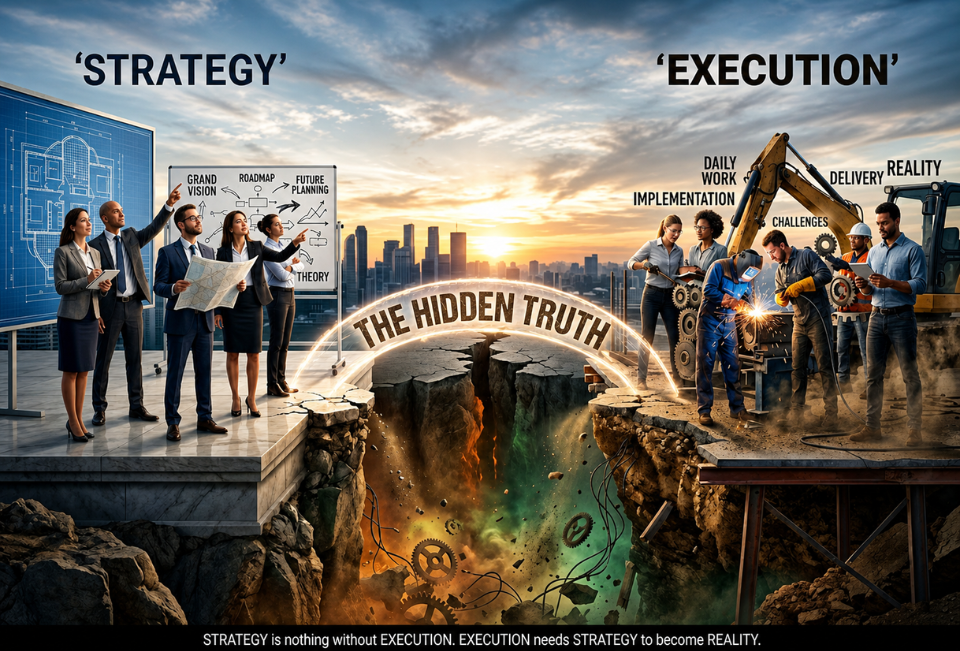
In the world of business and technology, the debate between strategy and execution is constant. As Adrian Vanzyl, I’ve observed that many organizations place excessive emphasis on strategy while underestimating the importance of execution. A well-crafted strategy may look impressive on paper, but without disciplined execution, it remains nothing more than intention.

The real difference between companies that succeed and those that stall is not the brilliance of their ideas – it’s their ability to turn those ideas into consistent, repeatable outcomes.

Understanding Strategy: The Direction, Not the Destination

Strategy defines where you want to go. It sets priorities, identifies opportunities, and creates a roadmap for growth. A strong strategy provides clarity and alignment across teams, ensuring everyone is moving in the same direction. However, strategy is inherently abstract.

It exists in plans, presentations, and discussions. It outlines possibilities but does not guarantee results. Many organizations spend months refining strategy documents, yet fail to translate them into meaningful action. This is where the gap begins.

Execution: Where Value Is Actually Created

Execution is the process of turning strategy into reality. It involves daily decisions, operational discipline, and continuous adjustment. Unlike strategy, execution is tangible – it is reflected in product releases, customer experiences, and measurable outcomes.

Strong execution requires:

  • Clear ownership and accountability
  • Structured processes and workflows
  • Consistent performance tracking
  • The ability to adapt quickly when conditions change

Without these elements, even the best strategies fail. In my experience, execution is often underestimated because it lacks the excitement of big ideas. But in reality, it is execution that creates value, builds trust, and drives sustainable growth.

Adrian Vanzyl on the Strategy–Execution Gap

One of the most common challenges I’ve seen is the disconnect between planning and doing. Organizations frequently assume that once a strategy is defined, execution will naturally follow. This assumption is flawed. Execution requires its own design.

As Adrian Vanzyl, I’ve found that companies that succeed treat execution as a system – not an afterthought. They invest in operational clarity, build strong feedback loops, and ensure that teams understand not just what to do, but how to do it effectively.

Bridging the gap between strategy and execution is not about working harder. It’s about working with structure.

Why Strategies Fail in the Real World

There are several reasons why strategies often fail during execution:

1. Lack of Clarity

If teams do not fully understand the strategy, they cannot execute it effectively. Ambiguity leads to inconsistent actions and misaligned priorities. When expectations are unclear, teams often make assumptions that drift away from the original intent. This results in duplicated efforts, missed objectives, and slower progress. Clear communication and well-defined goals are essential to ensure everyone moves in the same direction.

2. Overcomplex Planning

Complex strategies are difficult to implement. Simplicity increases the likelihood of successful execution. When plans become too detailed or layered, teams spend more time understanding the process than actually executing it. This creates delays and reduces agility in fast-moving environments. Clear, focused strategies allow teams to act quickly, adapt easily, and maintain momentum.

3. Weak Accountability

Without clear ownership, tasks are delayed or ignored. Execution thrives in environments where responsibility is well-defined. When no one is directly accountable, priorities become blurred and progress slows down. Teams may assume someone else will take responsibility, leading to gaps in execution. Establishing clear ownership ensures tasks are completed efficiently and outcomes are consistently delivered.

4. Poor Feedback Systems

Execution requires constant measurement and adjustment. Without feedback loops, organizations continue making the same mistakes. Without timely data, teams operate in the dark and struggle to identify what is working versus what is failing. This delays improvements and amplifies small inefficiencies over time. Strong feedback systems enable faster learning, better decisions, and continuous optimization of performance.

5. Misaligned Incentives

When team incentives do not align with strategic goals, execution suffers. People optimize for what they are rewarded for, not necessarily what the strategy requires. This creates a disconnect between individual performance and overall business outcomes. Teams may hit short-term targets while undermining long-term objectives. Aligning incentives with strategic priorities ensures that effort, behavior, and results all move in the same direction.

The Role of Systems in Execution

Execution is not about individual effort alone. It is about systems that enable consistent performance. Systems create repeatability.

They reduce reliance on memory, minimize errors, and allow teams to scale operations efficiently. Whether it’s a product development pipeline, a sales process, or a customer support framework, structured systems ensure that execution remains stable even as the organization grows. This is particularly important in technology-driven businesses, where complexity increases rapidly.

Balancing Strategy and Execution

The most successful organizations do not choose between strategy and execution – they integrate both seamlessly. Strategy provides direction. Execution delivers results.

The balance comes from continuous alignment between the two. Strategies should evolve based on execution feedback, and execution should be guided by strategic priorities.

As Adrian Vanzyl, I believe that this alignment is what transforms good companies into great ones. It allows organizations to remain adaptable while maintaining focus on long-term goals.

Building a Culture of Execution

Culture plays a critical role in how well an organization executes. Teams that value accountability, discipline, and continuous improvement are more likely to succeed.

A strong execution culture includes:

  • Clear communication at all levels
  • Emphasis on outcomes over activity
  • Willingness to learn from mistakes
  • Commitment to long-term consistency

When execution becomes part of the culture, it no longer depends on individual effort – it becomes the default way of operating.

Conclusion: The Hidden Truth

The hidden truth is simple: strategy without execution is ineffective, and execution without strategy is directionless. Both are essential. But if one must take priority, execution often determines the outcome. Ideas are abundant. Execution is rare.

For Adrian Vanzyl, the real advantage lies in building systems that turn strategy into action consistently and efficiently. Organizations that master this balance are not only able to grow – they are able to sustain that growth over time. In the end, success is not defined by what you plan. It is defined by what you consistently deliver.

Adrian Vanzyl’s Mental Models Behind Smart Growth

Thinking Better Before Scaling Faster

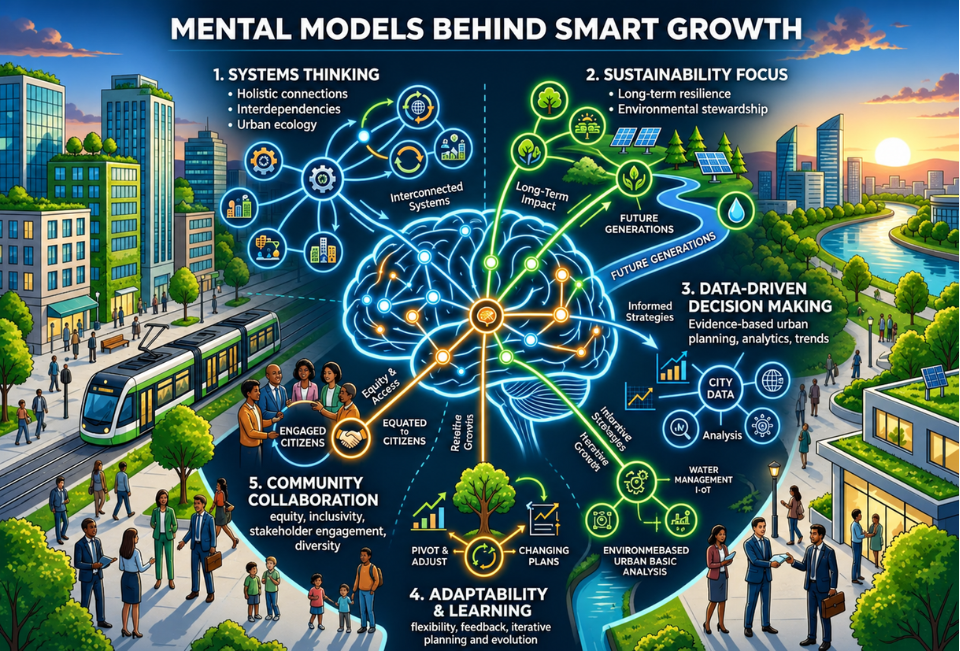
In the world of entrepreneurship, decisions compound quickly. Every hire, every product change, and every market move creates ripple effects across the business. As Adrian Vanzyl, I’ve come to believe that the difference between startups that grow intelligently and those that struggle often comes down to how founders think, not just what they do. Mental models – simple frameworks for understanding complexity – play a critical role in navigating uncertainty and building long-term success.

Entrepreneurs don’t fail because they lack effort. They fail because they misinterpret signals.

Why Mental Models Matter in Entrepreneurship

Mental models are essentially shortcuts for thinking. They help simplify complex problems and guide better decision-making under pressure. In fast-moving startup environments, where information is incomplete and time is limited, these frameworks become incredibly valuable.

Without structured thinking, founders often react emotionally or impulsively. With the right mental models, they can step back, evaluate trade-offs, and make more rational decisions.

For example, understanding opportunity cost forces a founder to consider what they are giving up when choosing one path over another. First-principles thinking encourages breaking problems down to their core components rather than relying on assumptions.

These models don’t eliminate risk, but they reduce unnecessary mistakes.

Clarity Over Complexity

Simplifying the Decision-Making Process

Startups often become unnecessarily complex. Teams introduce layers of tools, processes, and strategies that create confusion instead of clarity. One of the most valuable mental models is simplicity.

Clear systems scale better than complicated ones.

When founders focus on simplicity, they improve communication, reduce execution errors, and make it easier for teams to align. Complexity might feel sophisticated, but it often hides inefficiency.

In practice, this means asking simple but powerful questions:

  • What problem are we actually solving?
  • What matters most right now?
  • What can be removed without affecting outcomes?

Clarity accelerates execution.

Adrian Vanzyl’s Approach to Strategic Thinking

Building Systems That Endure

A key principle I rely on is systems thinking – the ability to see how different parts of a business interact over time. Startups are not isolated functions; they are interconnected systems where decisions in one area affect outcomes in another.

For example, rapid customer acquisition without strong retention creates unstable growth. Similarly, scaling a product without operational support leads to breakdowns. Systems thinking helps founders avoid these imbalances.

It encourages long-term thinking over short-term wins and ensures that growth is supported by structure. Instead of chasing isolated metrics, entrepreneurs begin to understand the relationships between them.

This is where many startups shift from reactive to intentional growth.

The Power of Inversion

One of the most practical mental models is inversion – thinking about what you want to avoid instead of only focusing on what you want to achieve.

Instead of asking, “How do we succeed?” ask, “What would cause us to fail?”

This shift reveals risks that might otherwise be ignored:

  • Poor hiring decisions
  • Weak financial discipline
  • Lack of product-market fit
  • Misaligned incentives

By identifying and eliminating these failure points, startups naturally move closer to success.

Sometimes, avoiding mistakes is more powerful than chasing breakthroughs.

Compounding and the Long Game

Entrepreneurs often underestimate the power of small, consistent improvements. Compounding is not just a financial concept – it applies to knowledge, processes, and execution.

Tiny improvements in product quality, customer experience, or operational efficiency accumulate over time into significant advantages.

As Adrian Vanzyl, I’ve observed that the most successful founders are those who commit to steady progress rather than chasing dramatic changes. They refine systems continuously, knowing that incremental gains will compound.

Growth built this way is more stable and resilient.

Decision-Making Under Uncertainty

Startups operate in uncertain environments. There is rarely enough data to make perfect decisions. This is where probabilistic thinking becomes useful.

Instead of seeking certainty, founders should evaluate likelihoods and outcomes. What is the expected upside? What is the downside risk? How reversible is the decision?

This approach reduces fear and enables faster action.

Not every decision needs to be perfect – it just needs to be good enough based on available information.

Over time, this mindset builds confidence and improves judgment.

Avoiding Cognitive Biases

Even experienced entrepreneurs fall into cognitive traps. Confirmation bias, overconfidence, and anchoring can distort decision-making. Mental models act as safeguards against these biases.

For instance:

  • Seeking opposing viewpoints challenges assumptions
  • Using data over intuition reduces emotional influence
  • Breaking decisions into smaller components improves objectivity

Awareness of these biases doesn’t eliminate them completely, but it reduces their impact. Better awareness leads to better outcomes.

From Thinking to Execution

Mental models are only useful if they translate into action. The real value lies in applying them consistently across the business.

This means:

  • Embedding structured thinking into team discussions
  • Creating decision frameworks for recurring problems
  • Encouraging critical thinking across all levels of the organization

When teams adopt these approaches, execution becomes more aligned and efficient. As Adrian Vanzyl, I see mental models not as abstract theories but as practical tools that shape how companies operate daily.

Conclusion: Building Smarter, Not Just Faster

Entrepreneurship is often described as a race, but in reality, it is a test of judgment. The founders who succeed are not always the fastest – they are the ones who think clearly under pressure and make decisions that compound over time. Mental models provide a foundation for that clarity.

They help entrepreneurs navigate complexity, avoid common mistakes, and build systems that support sustainable growth. In a world filled with noise, structured thinking becomes a competitive advantage. And those who master it don’t just grow – they grow intelligently.

Adrian Vanzyl’s Guide to Decisions Without Clarity

Making Decisions When Clarity Is Missing

In complex environments, clarity is often a luxury rather than a given. As Adrian Vanzyl, I’ve spent years working across technology, investment, and global markets, and one truth remains consistent – the most important decisions are rarely made with complete information. Instead, they are made in moments of uncertainty, where timing, judgment, and structure matter more than certainty itself. Waiting for perfect clarity is not a strategy. It is a delay. The real skill lies in making effective decisions when the path is not fully visible.

Why Uncertainty Is the Default State

Many people assume uncertainty is an exception – something to avoid or eliminate. In reality, uncertainty is the baseline condition of most meaningful decisions. Markets evolve. Technology shifts. Human behavior is unpredictable. If you wait until everything is clear, you are already too late.

The goal, therefore, is not to eliminate uncertainty but to operate within it. This requires a different mindset – one that values adaptability over precision and progress over perfection.

Building a Framework for Better Decisions

Structure Creates Confidence

When information is incomplete, structure becomes your advantage. Decision-making frameworks help reduce ambiguity by providing a consistent way to evaluate options.

A simple structure might include:

  • Defining the problem clearly
  • Identifying key variables
  • Estimating potential outcomes
  • Assessing downside risk

This doesn’t guarantee the right decision every time, but it ensures decisions are made systematically rather than emotionally. Over time, structured thinking compounds into better judgment.

Focus on Probabilities, Not Certainty

One of the biggest mistakes in uncertain environments is seeking binary answers – right or wrong, yes or no. In reality, most decisions exist on a spectrum of probabilities.

Instead of asking, “Is this the right decision?” a better question is:

“What is the most probable outcome, and is the risk acceptable?”

This shift in thinking allows you to move forward without needing absolute confidence.

Adrian Vanzyl’s Perspective on Uncertain Decisions

From my experience, the strongest operators are not those who avoid uncertainty, but those who navigate it with discipline. Adrian Vanzyl emphasizes that decision-making is less about predicting the future and more about preparing for multiple possible outcomes. This means building flexibility into your strategy.

It means accepting that some decisions will fail – and designing systems that can absorb those failures without collapsing. In uncertain environments, resilience is more valuable than precision.

Speed vs. Accuracy: Finding the Balance

The Cost of Delayed Decisions

In fast-moving industries, delayed decisions often carry a higher cost than imperfect ones. Opportunities disappear, competitors move ahead, and momentum is lost. However, speed without thought leads to instability. The key is balance.

Make decisions quickly, but not carelessly. Use available data, apply your framework, and move forward with intention. If new information emerges, adjust. Decision-making is not a one-time event – it is an ongoing process.

Learning Through Feedback Loops

Every decision generates feedback, whether immediate or delayed. The ability to learn from that feedback is what improves future decisions.

Strong systems include:

  • Regular review of outcomes
  • Honest assessment of mistakes
  • Continuous refinement of processes

This creates a cycle where each decision, successful or not, contributes to better judgment over time. In uncertain environments, learning speed becomes a competitive advantage.

Managing Risk Without Avoiding It

Risk is often misunderstood. It is not something to eliminate completely – it is something to manage intelligently.

Effective decision-makers:

  • Identify worst-case scenarios
  • Limit downside exposure
  • Preserve optionality

By controlling risk, you create the freedom to act more decisively. This is especially important in entrepreneurship and investing, where uncertainty is constant and stakes are high.

Clarity Comes After Action

One of the most overlooked truths is that clarity often follows action, not the other way around.

Taking a step forward – even a small one – generates new information. That information improves your understanding and informs your next decision. Waiting, on the other hand, produces nothing. Progress creates clarity.

Conclusion: Navigating the Unknown with Confidence

Decision-making under uncertainty is not about eliminating doubt. It is about building the confidence to act despite it.

As Adrian Vanzyl, I’ve found that the most effective approach combines structure, adaptability, and continuous learning. You don’t need perfect information to move forward – you need a clear process and the discipline to follow it. The future will always remain uncertain. But those who learn to operate within that uncertainty will always have the advantage.