Adrian Vanzyl

Adrian Vanzyl on Agentic Due Diligence

Artificial intelligence has changed how startups build products. It is now changing how investors should evaluate them. Adrian Vanzyl has long argued that good investing depends on looking past surface momentum and understanding the system beneath a company. With AI-native startups, that system is often harder to inspect because the product, operations, and go-to-market engine may all depend on agents working behind the scenes.

That creates a new diligence problem. A polished demo can look impressive, but it may hide weak reliability, fragile data pipelines, expensive human workarounds, or agents that only perform well in narrow conditions. Investors need a sharper framework for evaluating what is real, what is defensible, and what is merely theatrical.

Why AI-Native Startups Need Different Diligence

Traditional software diligence often focuses on product-market fit, unit economics, customer concentration, competitive positioning, technical architecture, and team quality. Those still matter. But agentic products add another layer: the company may be promising a system that can act, decide, coordinate, or complete workflows with less human involvement.

That promise changes the questions investors need to ask. Does the agent actually complete the task in production, or only in a controlled demo? How often does it fail? What happens when it is uncertain? Is there an audit trail? Does the customer know when a human has intervened? Is the company’s margin profile dependent on hidden manual labor? Can the system improve with usage, or does every new customer require custom implementation?

These questions are not technical details. They go directly to defensibility, scalability, risk, and valuation.

The First Question: What Is the Agent Actually Doing?

Many AI startups describe themselves as agentic, but the word can mean several different things. In diligence, investors should force clarity. Is the agent retrieving information, drafting content, making recommendations, executing transactions, coordinating across tools, or making decisions with real business consequences?

The risk profile changes dramatically depending on the answer. A research agent that summarizes market data is different from an agent that changes pricing, sends customer communications, updates production systems, or moves money. The more consequential the action, the stronger the need for permissions, review gates, rollback, logging, and customer trust.

A practical diligence step is to map the product into three layers:

  • Inputs. What data, context, documents, tools, and permissions does the agent rely on?
  • Reasoning and workflow. What steps does the agent take, and where does human review enter the process?
  • Outputs and consequences. What does the agent change, send, approve, recommend, or commit?

If a company cannot explain these layers clearly, it may not yet understand its own risk.

What Defensibility Looks Like

In AI, investors often look for proprietary models or unique datasets. Those can matter, but many durable companies will be defended by workflow depth rather than model ownership. If a startup deeply understands a painful business process, integrates into the customer’s systems, learns from repeated usage, and becomes part of daily operations, it may build a stronger moat than a company with a more impressive model demo.

Agentic defensibility usually comes from several forces working together:

  • Workflow specificity. The product solves a narrow, expensive, recurring job better than a generic agent can.
  • Data advantage. The system learns from structured outcomes, not just prompts and documents.
  • Trust infrastructure. Customers can see what happened, why it happened, who approved it, and how to reverse it.
  • Operational embedding. The agent becomes part of how the customer runs a process, not just a side tool.
  • Evaluation discipline. The company measures performance against real tasks and failure modes, not only internal optimism.

The Reliability Question

Investors should ask for reliability evidence early. Agent products are probabilistic by nature, but customers do not buy probabilities in the abstract. They buy outcomes. A company selling an agent into finance, healthcare, legal, enterprise operations, or customer communications needs to show how it handles uncertainty.

That means diligence should include evals, production logs, escalation patterns, human review rates, rollback mechanisms, and customer-visible controls. It is not enough for the founder to say the model is improving. Investors should ask which errors matter, how often they occur, how quickly they are caught, and what the company has changed because of them.

A strong team will usually have a precise answer. A weak team will point back to the demo.

Red Flags in Agentic Startups

There are several warning signs investors should treat seriously. The first is demo-only autonomy. If the product only works when the founder drives it in a prepared environment, the company may be earlier than its story suggests. The second is hidden services work. If humans are manually completing tasks while the company presents the output as autonomous software, margins and scalability may be weaker than advertised.

Another red flag is vague accountability. When an agent makes a mistake, who owns it? The vendor, the customer, the human reviewer, or nobody? Serious buyers will ask that question. Investors should ask it first.

Finally, be careful with companies that cannot explain permissions. Agentic systems often need access to email, calendars, CRMs, code repositories, files, payments, or customer data. If the access model is loose, the product may carry risks that are not visible in the sales deck.

A Practical Investor Checklist

  1. Ask the team to show a real customer workflow from input to output.
  2. Separate what the agent does from what humans still do behind the scenes.
  3. Review reliability data, not just product claims.
  4. Inspect how permissions, audit trails, and escalation gates work.
  5. Understand whether each new customer makes the system stronger or simply adds implementation burden.
  6. Test whether the product could be replaced by a generic AI tool plus a disciplined operator.

Looking Ahead

Agentic due diligence is not about being skeptical of AI. It is about being specific. The best AI-native startups will be able to explain how their agents work, where humans remain accountable, what data makes the system better, and why customers will trust it inside important workflows.

For Adrian Vanzyl, that kind of clarity is central to good investing. AI may change the product surface, but the underlying discipline remains the same: understand the system, identify the leverage, test the risk, and separate durable advantage from temporary excitement.


Adrian Vanzyl on the Founder Agent Stack

Most founders now understand that artificial intelligence is useful. The harder question is where it creates leverage inside a real company. Adrian Vanzyl has spent much of his career looking at businesses through the lens of systems, not slogans. From that perspective, the next phase of AI is not about asking a chatbot for a faster answer. It is about building an agent stack that helps a company sense, decide, and act with less friction.

The temptation is to start with tools. Founders see a new agent platform, a new automation layer, or a new workflow demo and immediately ask whether they should install it. That is usually the wrong starting point. The better question is where the business is already losing time, context, or momentum. AI agents create value when they sit inside those bottlenecks and make the existing operating rhythm sharper.

Why Founders Need an Agent Stack, Not a Tool List

A tool list is easy to build and hard to operate. A founder can collect dozens of AI subscriptions and still have a company that moves slowly. The problem is that isolated tools rarely change the flow of work. They help with a task here or there, but they do not alter how the business learns, prioritizes, or executes.

An agent stack is different. It is a deliberately designed set of AI-assisted workflows that connect to the way the company already runs. It can help a founder prepare for customer calls, summarize market signals, monitor sales pipeline movement, review support issues, draft board updates, and track follow-ups. The point is not to make the company look more automated. The point is to give the founder a clearer operating picture with less manual drag.

This distinction matters because early-stage companies are constrained by attention more than software. The founder is often the product leader, salesperson, recruiter, fundraiser, and customer escalation point. Any system that saves time without improving judgment is only a partial win. The best agent stacks preserve the founder’s judgment while reducing the friction around it.

Where AI Agents Actually Create Leverage

There are several areas where agents can help founders immediately, but the strongest use cases tend to share one feature: the work is recurring, context-heavy, and easy to improve with better preparation.

  • Customer intelligence. Agents can summarize sales calls, support tickets, product feedback, and churn signals into a weekly view of what customers are really saying.
  • Market monitoring. Agents can track competitor launches, pricing changes, hiring signals, funding announcements, and relevant regulation, then surface only the changes that matter.
  • Founder follow-through. Agents can maintain the operational memory around promises, introductions, investor asks, customer commitments, and internal decisions.
  • Content and distribution. Agents can draft first-pass newsletters, customer updates, investor notes, and thought pieces, while the founder keeps control of substance and voice.
  • Internal operating cadence. Agents can turn meeting notes, metrics, and team updates into structured weekly reports that make execution gaps visible earlier.

None of these examples require a company to replace people. In fact, the opposite is usually true. The agent stack works best when it helps a small team spend more of its time on judgment, persuasion, product quality, and customer insight.

The Founder Should Stay in the Loop

One mistake founders make is assuming that a powerful agent should be left alone to complete entire workflows. That may be appropriate for low-risk internal tasks, but most important startup decisions still require human ownership. The agent can prepare the context, draft the recommendation, and flag the trade-offs. The founder should still decide what gets sent, committed, promised, priced, or published.

This is especially true in four areas: money, messaging, hiring, and strategy. An agent can help write an investor update, but the founder owns what it says. An agent can summarize a candidate interview, but the founder owns the hiring decision. An agent can suggest pricing changes, but leadership owns the customer and revenue impact. The benefit is not removing accountability. The benefit is making accountable decisions faster and better informed.

Adrian Vanzyl’s broader view of startup systems applies here: speed without structure is fragile. An agent stack should create more structure around speed, not simply accelerate noise.

How to Build the First Version

Founders do not need to build a complex autonomous operating system on day one. A practical first version can be simple. Start with one high-friction weekly workflow and make it better. For example, a founder might choose the weekly leadership update. The agent collects sales movements, product issues, customer feedback, support trends, and hiring updates. It produces a draft operating memo. The founder edits it, adds judgment, and sends it.

That single workflow can reveal whether the company has the right data, whether the agent understands the context, and whether the output actually changes decisions. If it works, the company can add a second workflow. If it does not, the team has learned before over-investing.

  1. Choose a recurring workflow that already matters to the business.
  2. Connect only the data sources required for that workflow.
  3. Keep every output reviewable by a human owner.
  4. Measure whether the agent changes speed, quality, or follow-through.
  5. Expand only after the first workflow earns trust.

What Good Looks Like

A good agent stack feels almost boring. It does not constantly announce itself. It makes the company easier to run. The founder walks into meetings with better context. Customer themes are visible before they become churn. Investor updates take less time to prepare. Product decisions are informed by fresher evidence. Follow-ups stop falling through the cracks.

The value is not that the company has AI. The value is that the company has a tighter feedback loop. It learns faster, remembers more, and wastes less energy reconstructing context. For a founder, that can be a real advantage.

Looking Ahead

The founder’s agent stack will become as normal as the analytics stack or the CRM stack. The companies that benefit first will not be the ones with the most tools. They will be the ones that understand where judgment gets slowed down and where information gets lost.

For Adrian Vanzyl, the useful way to think about AI agents is not as a replacement for founders, but as a new layer of operating leverage. The best founders will still make the hard decisions. They will simply make them with better preparation, better memory, and a sharper view of the system they are building.

What Makes a Good Board Member? Adrian Vanzyl Explains

Most advice about startup boards focuses on how to build one. Far less gets said about how to actually serve on one well. Adrian Vanzyl has sat on both sides of that table. As a founder, he’s answered to a board. He’s also sat on the other side of it, as an investor. That dual view shapes a clear opinion: most board members add far less value than they think they do.

This isn’t a cynical take. Instead, it’s a practical one. Once you’ve been on both sides, certain patterns become impossible to miss.

Why Most Board Advice Sounds Right and Isn’t

Board members often deliver advice shaped by secondhand information. They read the deck. They skim the metrics. Then, they offer confident opinions based on a partial picture. This isn’t malicious. However, it’s a structural problem. After all, a board member who visits once a quarter simply doesn’t have the context a founder has every single day.

As a result, the most common failure mode isn’t bad intentions. Rather, it’s overconfidence built on thin information. For instance, a board member who suggests cutting a specific team, or pivoting a specific channel, may sound decisive. Yet without real operating context, that advice can be actively harmful.

The Difference Between Governance and Meddling

Good board membership starts with a clear boundary. On one hand, governance means asking hard questions and stress-testing assumptions. It also means holding a founder accountable to their own stated goals. On the other hand, meddling means trying to run the company from the boardroom, one layer removed from the consequences.

Adrian Vanzyl draws this line carefully. A board’s job is not to make operating decisions. Rather, it’s to make sure the founder is making good ones. It’s also about catching blind spots before they become expensive. That distinction sounds simple. In practice, though, it’s easy to violate. This is especially true for board members who were once operators themselves and miss being in the weeds.

Why Availability Matters More Than Expertise

Plenty of board members are recruited for their expertise. Fewer are chosen for their availability. Yet availability often matters more. Consider a brilliant board member who’s impossible to reach during a crisis. In practice, they provide less real value than an average one who picks up the phone immediately.

This matters because the moments that define a board relationship rarely happen in the quarterly meeting. Instead, they happen in an unscheduled call about a co-founder conflict. Sometimes it’s a term sheet that needs a same-day read. Other times, it’s a crisis that can’t wait three months for the next scheduled session. Either way, board members who show up for those moments earn a different kind of trust. That’s compared to ones who only show up on the calendar.

What Founders Should Actually Want From a Board Member

Founders often default to wanting board members with the most impressive resume. That’s understandable. However, it’s frequently the wrong priority. A more useful question is simpler: will this board member tell you something you don’t want to hear? Just as importantly, will they do it early enough to matter?

Board members who avoid conflict to preserve a comfortable relationship aren’t doing their job. This holds true even if the relationship feels pleasant. Instead, the board members worth having are willing to raise an uncomfortable point in month three. That’s far better than a devastating one surfacing in month eighteen.

How Adrian Vanzyl Evaluates His Own Value on a Board

Adrian Vanzyl applies a simple test to his own board work. Specifically, he asks whether the founder would be meaningfully worse off without him in the room. If the honest answer is no, that’s a signal. Either he needs to change how he’s engaging, or he should step back entirely. Notably, board seats accumulated for prestige rather than genuine usefulness tend to become dead weight. This applies to everyone involved, including the investor holding them.

This self-check matters because board seats are easy to collect and hard to actively work. Consider an investor with a dozen board seats and limited bandwidth per company. In that case, they’re optimizing for portfolio breadth, not for the depth any single founder actually needs.

The Long-Term Cost of a Passive Board

A disengaged board doesn’t just fail to help. In fact, it actively creates risk. Founders operating without real board engagement often go too long without external challenge to their own assumptions. As a result, small strategic mistakes compound quietly. Nobody with real standing raised a flag early enough to matter.

By contrast, an engaged board catches these issues while they’re still cheap to fix. This isn’t about control. Rather, it’s about having someone in the room who owes the founder honesty instead of comfort. It’s also about paying close enough attention to notice when something’s drifting off course.

What This Means for Founders Building Their Board

If there’s one practical takeaway here, it’s this: choose board members for engagement and honesty first, credentials second. Picture a well-known name who shows up once a quarter and says pleasant things. By comparison, a less prestigious board member who calls back within the hour and tells hard truths is worth far more.

That’s the standard Adrian Vanzyl holds himself to. It’s also the standard he encourages founders to demand from everyone else sitting around their table.

Why Adrian Vanzyl Went Back to Study AI

Most people assume investors learn new technology by reading about it. Adrian Vanzyl took a different path. Well after his early career was already established, he sat down and earned formal certifications. These covered machine learning, deep learning, and neural networks. It wasn’t for a resume line. It reflects a broader view: secondhand summaries aren’t enough for a technology reshaping every industry he invests in.

That decision says something important about how he approaches expertise. It’s a pattern worth unpacking for founders and investors alike.

Why Secondhand Understanding Isn’t Good Enough

Plenty of investors talk fluently about AI without ever having built anything with it. They pick up vocabulary from pitch decks and conference panels. That vocabulary often sits just far enough from the real mechanics to create false confidence.

False confidence is dangerous in venture investing. An investor might not tell a genuine technical moat from a thin API wrapper. That investor will misprice risk. They’ll back the wrong companies. Or worse, they’ll give bad advice to the right ones. Understanding the real mechanics changes the quality of every conversation that follows. That means knowing what a model can and can’t do, and where the real engineering challenges sit.

How Adrian Vanzyl Approaches Learning at Every Career Stage

Adrian Vanzyl has always treated learning as something with no expiration date. He earned his medical degree Adrian Vanzyl in the late 1980s. He moved into internet technology in the 1990s, well before it was an obvious career pivot. He built and scaled companies across Asia in the 2000s and 2010s. Each of these moves meant starting over as a beginner in some way, even after building real expertise elsewhere.

That comfort with beginner status is rare. Most professionals build deep expertise in one domain. Then they default to pattern-matching every new development back to what they already know. Real understanding sometimes requires the harder path. That means sitting through the actual coursework and doing the actual exercises. A decades-long track record doesn’t exempt you from confusion. Not in your first week of a new subject.

What the Certifications Actually Cover

The specific coursework matters here. Deep learning specialization. Neural network fundamentals. Sequence models. Hyperparameter tuning and optimization. This isn’t survey-level content designed for executives who want talking points. In fact, it’s technical material aimed at people who intend to actually build things.

That distinction matters for how the resulting judgment gets applied. An investor who understands hyperparameter tuning has a very different conversation with a technical founder. That part looks good “As a result” is a clear transition word, both sentences stay under 20 words, and the meaning is intact. For instance, they can spot when a founder is glossing over a real technical weakness. They can also recognize genuine innovation faster, because they know what the baseline difficulty actually looks like.

Why This Matters for Founders Raising Capital Today

Founders pitching AI-enabled products right now face a strange paradox. Every investor claims to understand AI. Very few actually do. That gap creates real risk for founders. An investor who doesn’t understand the technology may overvalue a thin feature. Or they might undervalue a genuinely hard technical achievement, simply because they can’t tell the difference.

A founder pitching a technically serious AI product benefits enormously from an investor who can evaluate it on the merits. Investors with real technical grounding tend to ask sharper questions during diligence. They tend to set more realistic expectations for what’s achievable on the current roadmap. They’re also less likely to chase hype cycles, since real technical understanding tends to look past the current news cycle.

The Broader Lesson for Anyone Building a Career

There’s a version of career development that treats expertise as something you accumulate once and then coast on. That version doesn’t hold up well against a technology landscape that keeps changing underneath everyone’s feet.

The alternative is treating your own knowledge as something to keep testing. You keep rebuilding it, no matter how much credibility you’ve already earned elsewhere. That’s uncomfortable. It means occasionally being the least experienced person in the room again, on purpose. This happens well into a career most people would consider already established.

What This Looks Like in Practice

For founders and operators wondering whether relearning is worth the time, the honest answer is: it depends. It depends on how central the technology is to your business. If AI is a peripheral feature, a working vocabulary is probably enough. If AI is core to your product or your investment thesis, secondhand understanding eventually becomes a liability.

Adrian Vanzyl’s own approach has been to prioritize formal coursework over conference panels and pitch decks. It’s a small decision on paper. In practice, it shapes every technical conversation that comes after – with founders, with co-investors, and with the technology itself.

The 2026 Funding Reset: Why It Favors the Right Founders

Venture funding in 2026 looks nothing like it did during the boom years. For a lot of founders, that shift feels like bad news. Adrian Vanzyl sees it differently. He’s an Australian business entrepreneur and investor. Over three decades, he’s built and backed technology companies across the US, Asia, and Australia. In his view, tighter capital markets aren’t punishing good companies. They’re finally exposing which ones were never built to last in the first place.

That’s not a comfortable message for founders who raised on momentum and a good story. But it’s a consistent view. He’s sat through several full boom-and-bust cycles – first as an operator in the dot-com era, later as a venture investor across Southeast Asia. Now he’s a board member. He’s watching a new generation of startups navigate a far more disciplined market.

Why Cheap Capital Hid Weak Businesses for Years

For most of the last decade, capital was abundant. A startup with mediocre unit economics could still raise its next round on growth metrics alone. Investors competed hard to get into deals. Due diligence timelines shrank as a result. The pressure to prove a durable business model often got deferred indefinitely. Growth at any cost became the default strategy because the cost of capital made that strategy look rational.

That environment rewarded a specific kind of founder: someone skilled at fundraising narrative, comfortable burning cash aggressively, and confident the next round would always be there to bail out a shaky foundation.It did not particularly reward disciplined founders. Those focused on margins, retention, or path to profitability got little credit. The market simply wasn’t asking those questions with any real urgency.

What Changed, and Why It’s Structural Rather Than Temporary

The current funding environment isn’t simply a temporary dip waiting to snap back to 2021-style abundance. Higher-for-longer interest rates changed the opportunity cost of capital across the board, and investors who got burned holding overvalued portfolios during the correction are, understandably, far more cautious about repeating that mistake. Due diligence has lengthened. Growth-at-all-costs pitches get far more scrutiny than they used to. Boards are asking about default-alive runway, not just year-over-year growth.

None of this means good companies can’t get funded – they can, and often quite quickly. It means the bar for what counts as “good” has moved back toward fundamentals that were treated as optional for a while: real retention, real margins, and a credible path to profitability that doesn’t depend on an uninterrupted string of future raises.

Adrian Vanzyl’s Case for Why This Reset Favors Disciplined Founders

Adrian Vanzyl has made a consistent argument across his portfolio conversations this year: founders who spent the boom years building genuinely efficient businesses are now at a structural advantage, not a disadvantage. A company with strong retention, sensible burn, and a clear path to profitability doesn’t need to raise on hype anymore – it can raise on evidence, which is a far more durable position to negotiate from.

This also changes the competitive landscape in a founder’s favor. Weaker competitors who survived only because of easy capital are running out of runway and shutting down, while stronger companies acquire others, quietly clearing the field for companies that built real advantages during the boom instead of just spending faster than everyone else.

The Founders Struggling Most Right Now

Not every founder can benefit from this shift, and it would be dishonest to pretend otherwise. Companies that built themselves on the assumption of continuous fundraising – where founders always intended each round to fund the next eighteen months of losses rather than build toward sustainability – now face the most acute pressure. Some of these companies offer genuinely good products but have genuinely broken business models, and a funding reset doesn’t fix a broken business model; it simply removes the ability to paper over it.

For founders in that position, the honest advice isn’t comfortable. Extend runway aggressively. Get to default-alive as fast as possible, even if it means slower growth. And be realistic about whether the current model can work without perpetual external capital. Waiting for the market to loosen again is not a strategy.

What This Means for Founders Raising in 2026

The practical takeaway for anyone raising right now is straightforward, even if it’s not exciting. The fundamentals that always mattered – retention, margins, and a credible path to sustainability – now matter visibly and immediately. No one gets to defer them to some future round anymore.Founders who’ve been building toward those fundamentals all along are finding the current market more workable than expected. Founders who’ve been avoiding them are finding it considerably harder.

That’s the pattern Adrian Vanzyl keeps coming back to across conversations with founders this year: the funding reset isn’t a punishment for the market as a whole. It’s a correction that rewards exactly the kind of discipline that was easy to skip when capital was cheap – and increasingly difficult to fake now that it isn’t.

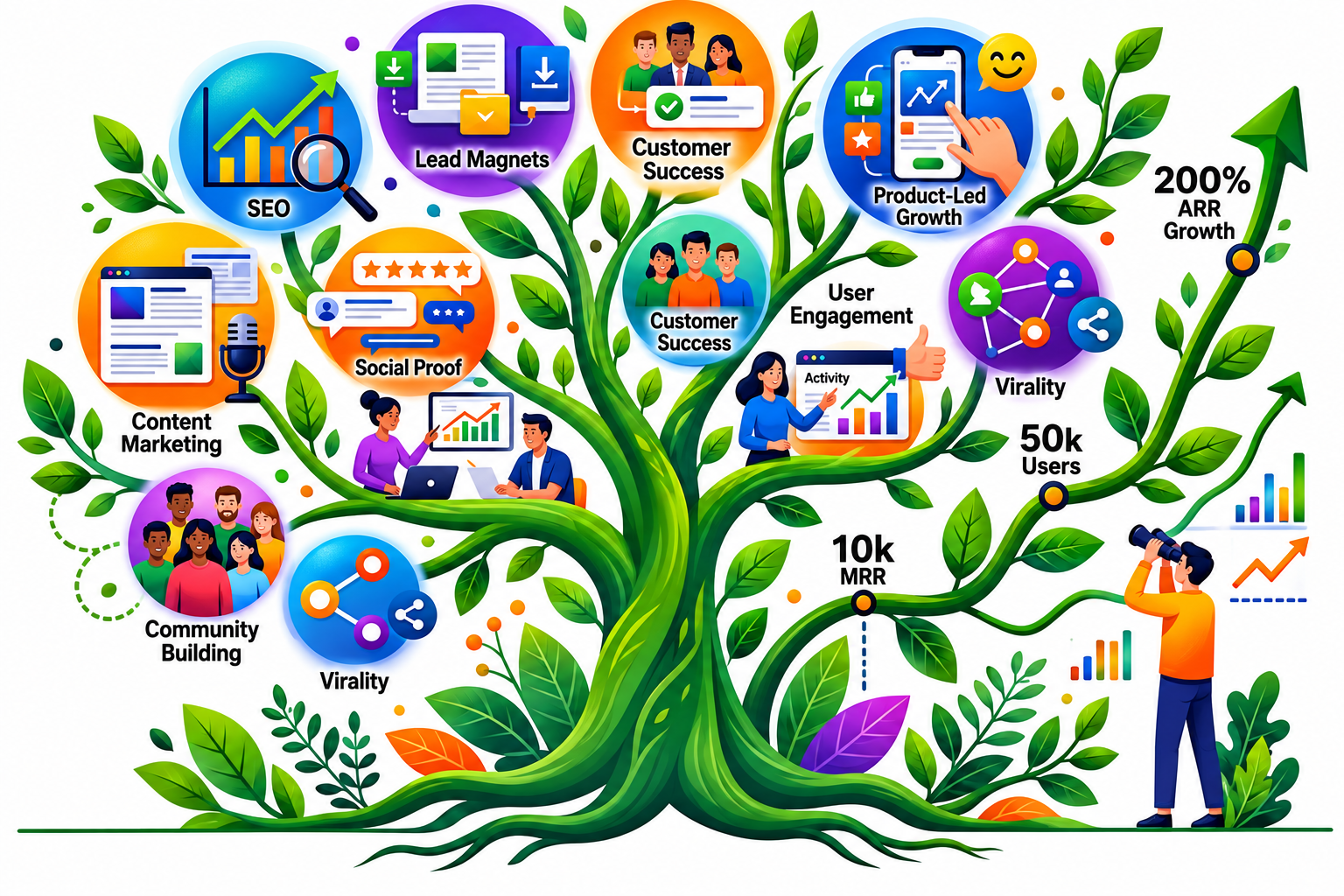
Adrian Vanzyl Breaks Down Organic Growth for SaaS

Every SaaS founder eventually hits the same wall: paid acquisition gets expensive, churn eats into growth, and the board starts asking hard questions about sustainability. It’s at this point that Adrian Vanzyl, an investor and operator who has spent three decades building and scaling technology companies across the US, Asia, and Australia, argues that the real answer isn’t a bigger ad budget – it’s a stronger organic growth engine.

Organic growth isn’t a buzzword for Vanzyl. It’s the difference between a SaaS company that survives a funding downturn and one that doesn’t. When customer acquisition costs rise and investor patience shortens, the businesses that keep growing are the ones that built demand into their product and their community from day one, rather than renting it from ad platforms.

Why Organic Growth Matters More Than Ever

The SaaS landscape has changed. A few years ago, aggressive paid acquisition could mask a mediocre product – throw enough money at ads, and the signups would come. That playbook is breaking down. Ad costs across every major channel have climbed steadily, while buyers have grown more sceptical of polished marketing and more reliant on peer recommendations, community discussion, and search.

For founders operating with tighter runway and more cautious investors, this shift isn’t optional to notice. Organic channels – content, product-led growth, referrals, and community – don’t just cost less over time. They compound. A well-ranked blog post or a genuinely useful free tool keeps working long after a paid campaign has run its course and been switched off.

The Foundation: Product-Led Growth

Any organic growth strategy for SaaS starts with the product itself. If the tool doesn’t create an obvious “aha” moment quickly, no amount of content or community will save it. Founders should look closely at:

  • Time to value – how fast a new user experiences the core benefit of the product
  • Built-in virality – features that naturally expose the product to new users (shared documents, invite links, public dashboards)
  • Freemium or trial design – structured so the free experience creates real pull toward the paid tier, not just a taste that ends in frustration

A product that sells itself through use is the cheapest acquisition channel a SaaS company will ever have.

Content and SEO: Playing the Long Game

Content marketing remains one of the most reliable organic levers for SaaS, but SaaS teams only succeed when they build it around genuine buyer intent instead of keyword-stuffed filler. That means:

  • Writing for the specific questions your ideal customer is actually typing into search engines
  • Building comparison and “alternative to” pages that meet buyers already evaluating competitors
  • Publishing data-driven or opinionated pieces that other sites want to link to, rather than generic advice already covered a hundred times over

This is slow, compounding work. A blog post published today might not move the needle for months – but a year from now, it can still be quietly bringing in qualified leads while paid campaigns from the same period are long forgotten.

Community and Word-of-Mouth as a Growth Channel

Adrian Vanzyl’s approach to organic growth leans heavily on community – not as a support forum bolted onto the product, but as an active part of the go-to-market motion. Founders who invest early in building a space where users talk to each other, share workflows, and answer each other’s questions end up with something paid acquisition can’t buy: trust that spreads peer-to-peer.

This also extends to partnerships and integrations. A SaaS product that plugs cleanly into the tools its customers already use gains distribution through every partner’s user base, often at a fraction of the cost of running a standalone campaign to reach the same audience.

Retention Is Growth Too

It’s easy to treat acquisition and retention as separate problems, but for a company thinking about organic growth, they’re the same problem viewed from different angles. A customer who stays, expands their usage, and refers to a colleague is functioning as an unpaid growth channel. A high-churn product, on the other hand, forces a business to keep refilling the top of the funnel just to stand still – which quietly pushes founders back toward expensive paid acquisition to compensate.

This is where investor discipline matters. Boards and investors increasingly scrutinise net revenue retention as closely as new logo growth because it signals whether a company’s organic engine is actually working.

Building for the Long Term

What ties all of this together is patience – something that’s often in short supply in the startup world. Organic growth strategies rarely produce the dramatic week-over-week spikes that paid campaigns can generate. Instead, they build a foundation that gets harder to dislodge the longer it compounds: search rankings that improve, communities that deepen, and referral loops that widen.

For founders trying to build resilient SaaS companies rather than short-term growth spikes, this steady, compounding approach is exactly the kind of thinking Adrian Vanzyl has championed throughout his career as an operator and investor. It’s not the flashiest growth strategy, but it’s the one that tends to still be working three years after a launch campaign has been forgotten.

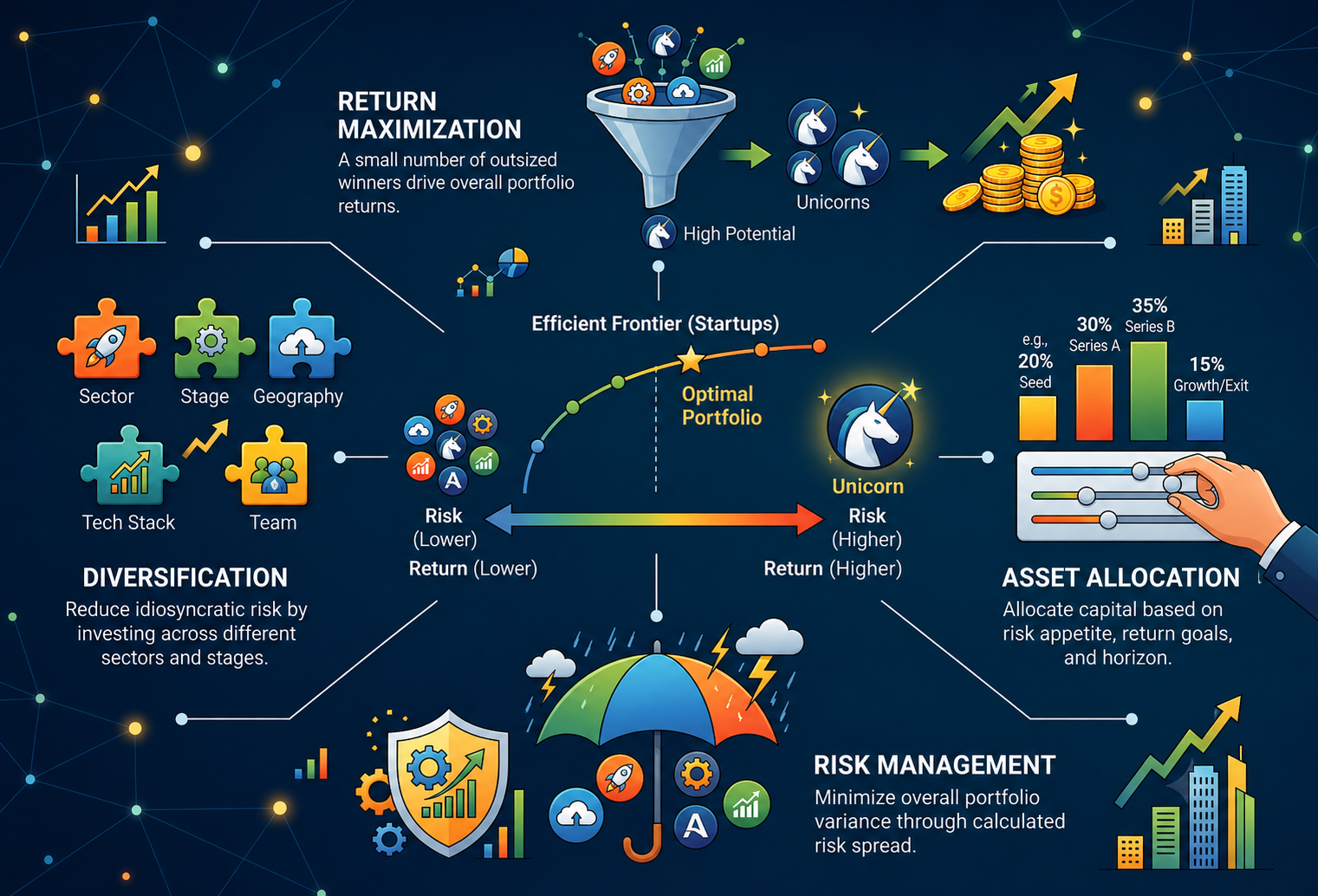
How Adrian Vanzyl Applies Portfolio Theory to Startups

Most founders think about risking one company at a time. Adrian Vanzyl thinks about it differently – as a portfolio problem, not a single-bet problem. After three decades moving between operating roles and venture investing across Asia, Australia, and the United States, he has come to see startup building and startup investing as two sides of the same discipline: allocating limited resources across uncertain outcomes in a way that survives the outcomes you didn’t predict.

Portfolio theory was never designed with startups in mind. It came out of public markets, built on the idea that a mix of uncorrelated assets can deliver a better risk-adjusted return than any single asset could on its own. But the underlying logic – diversify exposure, size positions to conviction, and expect most bets to underperform while a few carry the return – maps onto venture and startup strategy almost perfectly. The difference is that startups deal in illiquid, high-variance outcomes instead of daily price movements, which makes the discipline harder to apply and easier to ignore.

Why Adrian Vanzyl Treats Startups as a Portfolio, Not a Bet

Founders are trained to believe in their one idea completely, and investors are trained to spread bets across many. Few people sit close enough to both sides to reconcile them. That’s the vantage point Adrian brings: having built and scaled companies himself, then moved into board and investment roles backing dozens of others, he applies the same portfolio logic on both sides of the table.

For a founder, this means treating a company’s initiatives – new markets, new product lines, new channels – the way an investor treats a fund’s positions. Not every experiment needs to succeed. What matters is sizing each bet appropriately, cutting the ones that show weak signals early, and letting resources concentrate around the few that are actually working. Founders who pour equal effort into every initiative, hoping each one pans out, tend to run out of capital and time before any single bet gets the resources it needs to prove itself.

The Discipline of Sizing and Diversification

A core piece of portfolio theory is position sizing – deciding how much to commit based on conviction and correlation with everything else in the mix, not just on how promising a single opportunity looks in isolation. Applied to a startup’s own strategy, this becomes a question of where to put disproportionate resources: which market, which feature set, and which hire actually move the needle versus which initiatives are diversifying risk without adding much expected value.

Diversification also cuts the other way. A startup with all its revenue in one customer segment, one geography, or one channel is running a concentrated portfolio, whether it intends to or not. Vanzyl’s cross-market experience – building and advising companies across Thailand, Indonesia, Singapore, Australia, and the US – has shaped a habit of testing concentration risk early: what happens to this business if its single largest dependency disappears? Investors ask that question by default. Founders often don’t ask about it until it’s too late.

Applying Venture Logic Inside a Single Company

The venture industry already runs on portfolio theory, even if it rarely names it that way. A fund expects most investments to return little or nothing, a handful to return the fund, and one or two outliers to define the entire return profile. Adrian Vanzyl argues that founders should borrow this same expectation internally – not every product bet inside a company will work, and that’s not a failure of execution it’s the expected shape of the distribution. The mistake isn’t having initiatives that fail; it’s failing to track which ones are underperforming clearly enough to reallocate capital and people away from them quickly.

This reframes how a leadership team should review its own roadmap. Instead of asking “is this project on track,” the more useful portfolio question is “given what we now know, is this still where the next dollar and the next hire should go?” That’s a harder question to answer honestly, because it requires being willing to walk away from initiatives the team is emotionally invested in – the same discipline that separates good fund managers from mediocre ones.

Why This Framework Matters Now

Capital is more selective than it was a few years ago, and companies that treat every initiative as equally important are the ones that run out of runway trying to prove too many things at once. A portfolio mindset forces prioritization earlier, and it gives founders a vocabulary – sizing, correlation, expected value – for making resource decisions that would otherwise come down to gut feel or internal politics.

It also changes how a founder should think about their own career and equity, not just the company’s roadmap. Diversifying advisory roles, board seats, or personal investments alongside an operating role is itself a portfolio decision, and it’s one many operators avoid simply because they’ve never framed it that way.

Portfolio theory won’t tell a founder which specific bet to make. It won’t replace product intuition, market timing, or the willingness to commit fully to an idea. What it offers instead is a structure for making decisions under genuine uncertainty – sizing conviction honestly, cutting losses early, and letting the strongest signals concentrate resources rather than spreading them thin out of hope. That structure, more than any single investment call, is what Adrian Vanzyl has carried from the venture side of the table into the operating side, and it’s a habit of thinking any founder can borrow regardless of what stage their company is at.

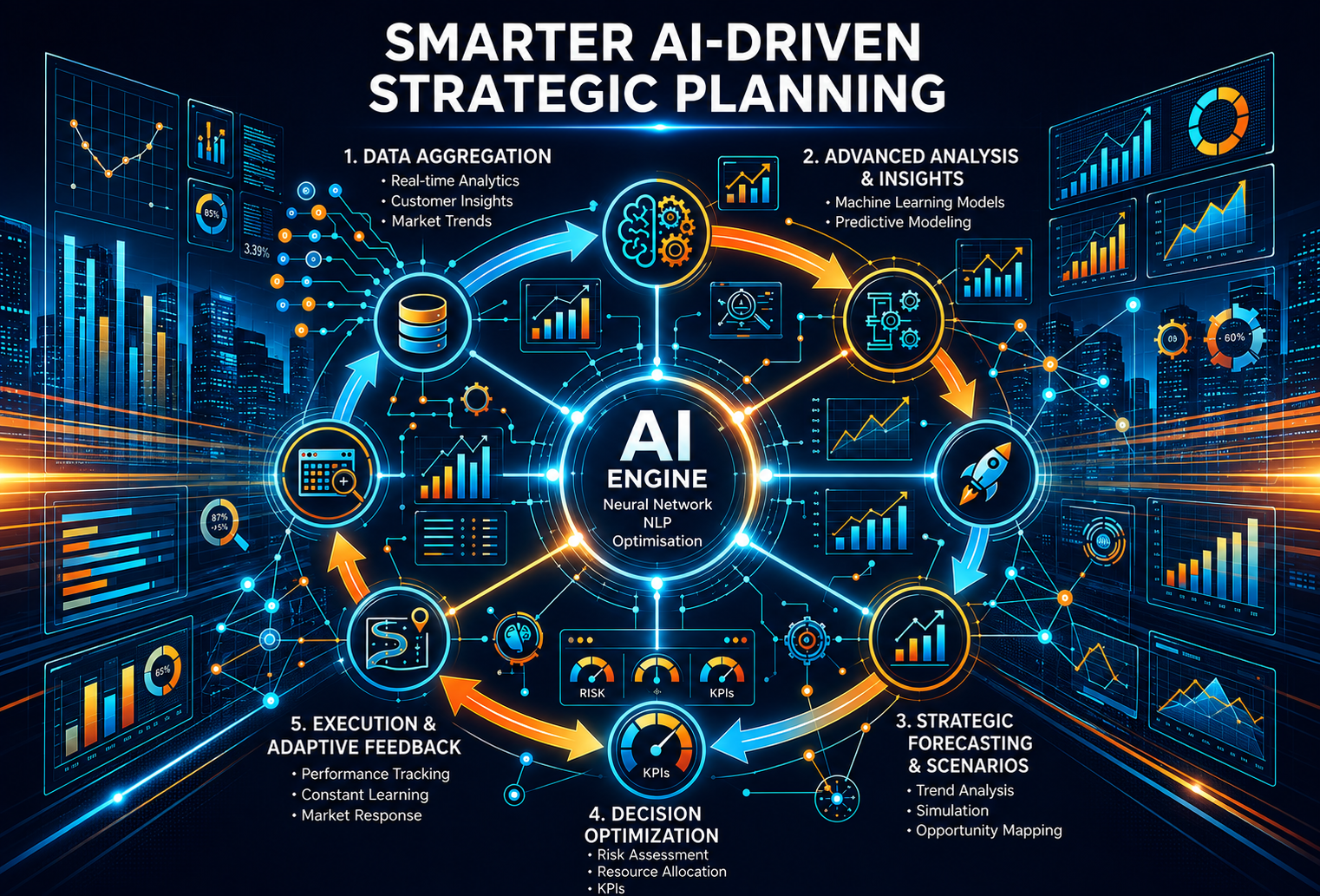
Adrian Vanzyl on Smarter AI-Driven Strategic Planning

Strategic planning has long been treated as an annual ritual – a thick deck, a few workshops, and a set of goals that quietly go stale by the second quarter. Adrian Vanzyl has spent much of his career watching companies build plans that look impressive on paper but fail to adapt once real market conditions kick in. His view is simple: strategy shouldn’t be a document you revisit once a year. It should be a living process, and artificial intelligence is finally making that possible.

Why Traditional Strategic Planning Falls Short

Most strategic planning processes rely on assumptions that remain true for only a brief moment. Leaders gather market research, map competitor positioning, and build forecasts-then lock the plan into a slide deck and revisit it only when something visibly goes wrong. By the time leadership spots the gap between the plan and reality, they have already lost months of momentum.

The problem isn’t a lack of effort. It’s the format. Static plans can’t absorb new information fast enough to stay relevant, and the people responsible for updating them are usually too busy running the business to constantly re-litigate assumptions. This is where the shift toward AI-driven planning starts to matter.

How Adrian Vanzyl Frames the Shift

Rather than treating AI as a forecasting gadget bolted onto an existing process, Adrian Vanzyl frames it as a change in how planning itself works. Instead of a plan being a fixed artefact, it becomes a continuously updated model – one that ingests new data (sales trends, customer behaviour, competitor moves, macro signals) and flags when the underlying assumptions no longer hold.

This doesn’t mean handing strategy over to an algorithm. It means giving leadership teams a faster feedback loop. A plan built with AI-assisted monitoring can surface early warning signs – a channel underperforming, a customer segment shifting, a cost assumption drifting – long before those signals would normally reach a boardroom discussion. Strategic thinking still comes from people; the difference is how quickly they know when to rethink it.

Where AI Actually Adds Value in Planning

Not every part of strategic planning benefits equally from AI, and it’s worth being specific about where the gains are real:

  • Scenario modelling. Instead of building three static scenarios (best, base, worst case), AI-assisted tools can generate and stress-test dozens of variations quickly, showing which assumptions matter most to the outcome.
  • Pattern detection across data silos. Sales, marketing, support, and finance data rarely sit in one place. AI tools that can pull weak signals across these silos often surface risks or opportunities that no single department would catch on its own.
  • Reducing planning cycle time. What used to take a strategy team weeks of data-gathering and slide-building can now be compressed into days, freeing up time for the harder work of judgement and decision-making.
  • Continuous reforecasting. Rather than reforecasting quarterly, some AI-enabled systems allow rolling updates, so the plan reflects the business as it actually is, not as it was three months ago.

None of this replaces the need for experienced judgement. If anything, it raises the bar for leaders – decisions need to be made faster, with more inputs, and with a clearer sense of which signals are noise and which are meaningful.

The Risk of Over-Trusting the Model

It would be easy to read all of this as an argument for letting AI run strategic planning end-to-end. That’s not the takeaway. Models are only as good as the data feeding them, and strategic decisions often hinge on context a model has no way of capturing – a founder’s read on a market, a competitor’s likely next move, or a regulatory shift that hasn’t shown up in the data yet.

The companies getting real value from AI-driven planning tend to treat it as an early-warning and idea-generation system, not a decision-maker. They use it to widen the set of options and surface risks earlier, then apply human judgement to decide what actually matters. Skipping that last step is where things go wrong – a plan that looks statistically sound can still be strategically naive if nobody stress-tests it against real-world nuance.

Practical Steps for Teams Getting Started

For teams looking to bring AI into their planning process without overhauling everything at once, a few starting points tend to work well:

  1. Start with one recurring planning cycle – quarterly revenue forecasting, for example – and layer AI-assisted monitoring on top of the existing process rather than replacing it outright.
  2. Focus on data quality before tooling. AI-driven insights are only useful if the underlying data is clean and consistently captured.
  3. Keep a human review step built into every AI-generated recommendation, especially early on, so trust in the system is earned rather than assumed.
  4. Track how often AI-surfaced signals actually change a decision. If they rarely do, the tooling or the data feeding it probably needs adjusting.

Looking Ahead

The bigger shift Adrian Vanzyl points to isn’t really about the technology – it’s about pace. Businesses that can sense change and adjust their strategy within weeks, rather than quarters, will simply outmanoeuvre those still locked into annual planning cycles. AI doesn’t replace strategic thinking, but it does compress the distance between noticing a problem and acting on it.

For founders and operators building in fast-moving markets, that compression may end up being the single biggest competitive advantage AI-driven planning offers – not smarter answers, necessarily, but faster, better-informed questions.

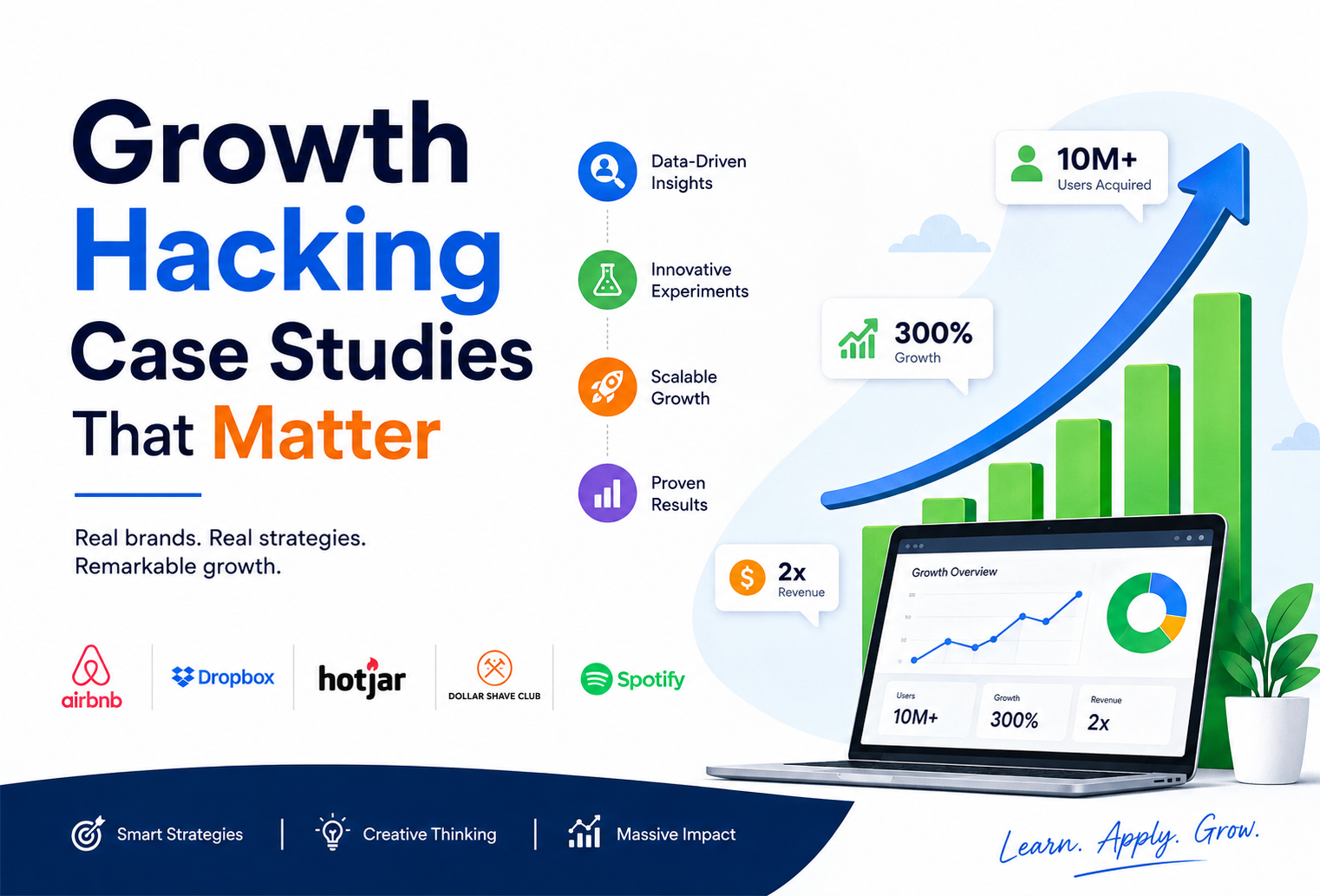
Adrian Vanzyl on Growth Hacking Case Studies That Matter

Growth hacking is often described as a collection of clever marketing tactics, but I see it as something much more strategic. As Adrian Vanzyl, I look at growth through the lens of experimentation, customer behavior, technology, and scalable systems. The most valuable growth hacking case studies are not simply stories about companies that achieved impressive numbers. They reveal how founders identified a specific growth constraint, tested a focused solution, measured the outcome, and transformed a successful experiment into a repeatable business advantage. That distinction matters because sustainable growth is rarely created by one viral moment. It is built through systems that continue producing value after the initial excitement disappears.

What Growth Hacking Really Means for Startups

The term “growth hacking” became closely associated with startups because early-stage companies often have limited capital, small teams, and little brand recognition. Traditional marketing channels can be expensive, making experimentation particularly important. Instead of spending heavily before understanding what works, startups can test different approaches across acquisition, activation, retention, referral, and revenue.

The strongest growth strategies usually begin with a clear problem. A company may have plenty of website visitors but very few signups. Another business may acquire customers successfully but struggle to retain them. A third may have strong retention but no efficient way to reach new audiences. Each situation requires a different experiment. Growth hacking therefore works best when it is treated as a problem-solving discipline rather than a search for shortcuts.

Adrian Vanzyl’s Lessons From Growth Hacking Case Studies

One lesson I consistently take from successful growth stories is the importance of finding leverage. A small improvement in the right part of a growth system can produce a much larger effect than dozens of unrelated marketing activities. The challenge is identifying where that leverage exists.

Consider Dropbox. Its referral program became one of the most frequently discussed examples of product-led growth. Rather than relying entirely on paid advertising, Dropbox created a referral mechanism that connected the incentive directly to its core product: additional storage. Users had a reason to invite others, and the people they invited received a useful benefit as well. Case-study analyses report that the program contributed significantly to Dropbox’s rapid increase in users.

The important lesson is not simply “create a referral program.” It is to understand why the mechanism fits the product. A referral system works best when sharing naturally increases the value of the experience.

Airbnb and the Importance of Distribution

Airbnb provides another useful growth lesson. In its early development, the company looked beyond traditional advertising and found ways to connect its listings with an existing audience. Its interaction with Craigslist is often cited as an example of using an established distribution environment to reach potential customers rather than attempting to build an audience entirely from scratch. The broader principle is powerful: distribution can sometimes be more important than promotion.

Founders should ask where their customers already spend time, what platforms they already trust, and whether their product can become easier to discover within those environments.

Slack and Product-Led Expansion

Slack demonstrates another form of growth: allowing the product itself to encourage adoption. Team communication software naturally creates opportunities for users to invite colleagues, and that can turn individual product usage into broader organizational adoption. Modern growth case studies frequently examine Slack alongside Dropbox and Airbnb because each demonstrates a different mechanism for creating scalable acquisition.

The lesson for founders is straightforward. If using a product naturally introduces it to another potential user, that behavior can become part of the growth engine.

Why Experimentation Needs Discipline

Growth hacking can easily become chaotic when every new idea is treated as equally important. A startup may test social media campaigns, referral programs, landing pages, email sequences, partnerships, pricing changes, and product features simultaneously. The result can be activity without learning. A better approach is to identify the largest constraint and build experiments around it.

If acquisition is weak, investigate acquisition channels. If visitors are not converting, examine the user journey. If customers leave quickly, study retention. If customers love the product but growth is slow, investigate referral and distribution mechanisms.

Every experiment should have a hypothesis, a measurable outcome, and a defined learning objective. This turns growth from guesswork into a feedback loop.

From Growth Experiment to Repeatable System

Finding a successful experiment is only the beginning. The next challenge is determining whether the result can be repeated.

A successful campaign might produce a temporary spike in traffic. That does not necessarily mean a company has discovered a scalable growth channel. Sustainable growth requires repeatability.

For example, a referral mechanism needs the right product experience, incentives, tracking, and communication. A successful content strategy requires consistent publishing and distribution. An international acquisition channel may require localization, partnerships, customer support, and operational infrastructure.

This is where growth hacking connects with broader startup strategy. A tactic creates an opportunity. A system turns that opportunity into an advantage.

The Danger of Copying Famous Growth Tactics

One of the biggest mistakes founders make when studying growth hacking case studies is copying tactics without understanding context.

Dropbox’s referral model worked because additional storage was directly valuable to its users. Airbnb’s distribution strategy made sense because its potential customers were already searching for accommodation in established online environments. Slack benefited from the collaborative nature of its product. A different startup might implement the same tactics and achieve completely different results.

The right question is therefore not, “How do I copy this strategy?”

It is, “What principle made this strategy successful, and how can that principle apply to my business?”

That shift from imitation to interpretation is one of the most important parts of effective growth thinking.

Measuring What Actually Matters

Growth can become misleading when companies focus on vanity metrics. Website visits, social impressions, downloads, and follower counts can look impressive without creating meaningful business value. Better metrics depend on the company’s growth problem.

A startup might monitor customer acquisition cost, activation rate, retention, referral rate, conversion, recurring revenue, or lifetime value. The objective is to connect experiments to measurable business outcomes. Good growth teams do not simply ask whether a campaign generated attention. They ask whether it improved the underlying economics of the business.

Building Growth That Lasts

For Adrian Vanzyl, the most interesting part of growth hacking is what happens after an experiment succeeds. Sustainable growth requires turning successful discoveries into operating systems that can withstand changing markets, increasing competition, and larger customer volumes.

This is especially important for startups moving from early traction toward international expansion. A growth mechanism that works with a few thousand customers may need significant redesign when a company reaches a much larger scale. Growth is therefore not simply about moving faster. It is about creating the structure required to keep moving effectively.

Conclusion: Growth Is a System, Not a Shortcut

The most useful growth hacking case studies do not provide a universal formula for success. Instead, they demonstrate how successful companies identify constraints, discover leverage, experiment intelligently, and build systems around what works.

Dropbox shows the potential of product-aligned referrals. Airbnb demonstrates the importance of distribution. Slack illustrates how product usage itself can support expansion. Each story is different, but the underlying principle is similar: sustainable growth comes from understanding how customers, products, technology, and distribution interact.

My view is simple: growth hacking should create learning before it creates scale. Once a company understands what genuinely drives customer value, it can invest more confidently in the systems that support expansion.

That is ultimately what makes Adrian Vanzyl relevant to this conversation: the combination of entrepreneurship, technology, investing, and international growth provides a useful perspective on why durable companies need more than clever tactics. They need disciplined experimentation, strong foundations, and the ability to turn individual successes into repeatable advantages.

Adrian Vanzyl’s AI Agents Are Changing Quiet Productivity

Artificial intelligence is often discussed through the lens of disruption. Headlines focus on automation replacing jobs, autonomous systems taking over workflows, or machines outperforming humans. But from my perspective, the most important transformation happening right now is much quieter. As Adrian Vanzyl, I believe the true value of AI agents is not replacing people – it is removing friction from everyday work.

Most professionals are overwhelmed by repetitive tasks, fragmented communication, and constant context switching. Productivity losses rarely come from lack of effort. They come from operational noise. This is where AI agents are beginning to reshape modern workflows.

Not through dramatic change overnight, but through small improvements repeated consistently across systems, teams, and decisions.

The Shift From Automation to Intelligent Assistance

Traditional automation systems were rigid. They followed predefined rules and struggled whenever workflows became unpredictable. AI agents are fundamentally different because they can interpret language, adapt to changing inputs, and coordinate tasks dynamically. This creates a major shift in how businesses operate.

Instead of functioning as static tools, AI agents increasingly behave like operational assistants. They summarize meetings, organize research, prioritize tasks, manage internal workflows, and surface insights faster than manual systems. Modern businesses are increasingly using AI agents to streamline workflows and improve operational efficiency across departments. The goal is not simply faster execution. The goal is reducing unnecessary cognitive load. That distinction matters.

Why Productivity Problems Are Usually Structural

Many companies believe productivity issues are caused by employees working inefficiently. In reality, the problem is often structural.

Teams waste enormous amounts of time switching between tools, searching for information, updating systems manually, and responding to repetitive operational requests. Research and real-world workflow discussions increasingly show that AI agents deliver the most value when reducing repetitive coordination work rather than attempting complete automation. This is why AI productivity systems are becoming more valuable. They reduce operational friction quietly in the background.

For example:

  • AI agents routing customer inquiries
  • Intelligent scheduling assistants
  • Automated reporting systems
  • Workflow coordination tools
  • Internal knowledge management agents

Individually, these tasks appear small. Collectively, they save hundreds of operational hours. As Adrian Vanzyl, I believe the future of productivity will depend less on how fast people work and more on how intelligently systems reduce unnecessary effort.

Adrian Vanzyl on AI Agents and Workflow Clarity

One of the biggest misconceptions surrounding AI is that deploying more tools automatically improves performance. In reality, poorly integrated AI systems often create confusion through fragmented workflows, excessive notifications, and disconnected dashboards. This is why workflow clarity matters more than automation volume.

Businesses implementing AI successfully are designing systems around outcomes instead of novelty. Research from IBM highlights that next-generation automation is shifting away from simple task execution toward systems that optimize operational outcomes and decision quality. That transition is important.

The most effective AI agents are not trying to imitate humans entirely. Instead, they support decision-making, organize information, and simplify execution. Good AI should feel almost invisible. When systems work correctly, teams spend less time managing tools and more time solving meaningful problems.

The Rise of Agentic Workflows

AI is evolving from passive assistants into active operational participants. Many organizations now describe this as “agentic AI” – systems capable of handling multi-step workflows autonomously.

Unlike traditional software, these agents can:

  • monitor workflow conditions
  • coordinate across systems
  • trigger actions automatically
  • adapt based on context
  • improve through feedback loops

Industry research increasingly shows that AI agents are becoming central to enterprise workflow orchestration and operational scaling. This changes the nature of productivity itself. Historically, productivity meant humans doing tasks faster. Now productivity increasingly means humans delegating repetitive execution entirely.

That creates a different kind of organization – one where people focus more on strategy, creativity, communication, and leadership while AI systems manage operational coordination.

Human Judgment Still Matters

Despite rapid progress in AI capabilities, human judgment remains essential. AI agents can process information quickly, but they still struggle with context, ethics, long-term reasoning, and nuanced decision-making. Even advanced research on agentic systems emphasizes the importance of human oversight and collaborative workflow design. 

This is why the future is unlikely to be fully autonomous. Instead, the most successful systems will combine machine efficiency with human direction. AI handles repetitive execution. Humans provide interpretation and strategic judgment.

As Adrian Vanzyl, I see this partnership model becoming the foundation of modern operational design. Organizations that understand this balance early will scale more effectively than those chasing automation for its own sake.

The Productivity Advantage of Quiet Systems

One of the most interesting aspects of AI agents is that their value often becomes invisible over time. When workflows become smoother, people stop noticing the systems behind them.

  • Meetings become shorter.
  • Responses become faster.
  • Operations become cleaner.
  • Information becomes easier to access.

This is what I call quiet productivity. The strongest systems are not always the loudest or most visible. They are the ones that remove friction consistently without demanding constant attention. And in many ways, that principle extends beyond technology.

The most scalable businesses, the healthiest operational cultures, and the most resilient teams are usually built on systems that quietly support performance over long periods of time.

Conclusion

AI agents are not simply another technology trend. They represent a structural shift in how modern work is organized. The companies benefiting most are not necessarily the ones deploying the most AI tools. They are the ones integrating AI thoughtfully into workflows, communication systems, and operational processes.

For Adrian Vanzyl, the future of productivity is not about replacing human capability. It is about creating systems that allow human capability to focus where it matters most. And as AI continues evolving, the organizations that prioritize clarity, structure, and intelligent workflow design will build the strongest long-term advantage.