Adrian Vanzyl

Adrian Vanzyl’s Guide to Scaling Businesses with Strategy

Building Businesses That Scale Beyond Early Success

Scaling a business is often misunderstood. Many assume that once a company finds product-market fit, growth will naturally follow. In reality, scaling introduces a completely new set of challenges that require structure, discipline, and strategic clarity. As Adrian Vanzyl, I’ve seen that early success is not a guarantee of long-term growth – it’s only the beginning of a much more complex journey.

The difference between a growing business and a scaling one lies in systems.

Growth adds pressure. Scaling requires readiness.

Why Most Businesses Struggle to Scale

The Hidden Complexity of Expansion

In the early stages, businesses operate with speed and flexibility. Small teams make quick decisions, and processes are often informal. This works well initially, but as the company grows, those same conditions can become liabilities.

Without defined systems, businesses encounter:

  • Operational inefficiencies
  • Inconsistent customer experiences
  • Communication breakdowns
  • Difficulty maintaining product quality

Scaling exposes weaknesses that were invisible during the startup phase. What worked for a team of five rarely works for a team of fifty.

The challenge is not just growing – it’s growing without losing control.

Adrian Vanzyl’s Perspective on Strategic Scaling

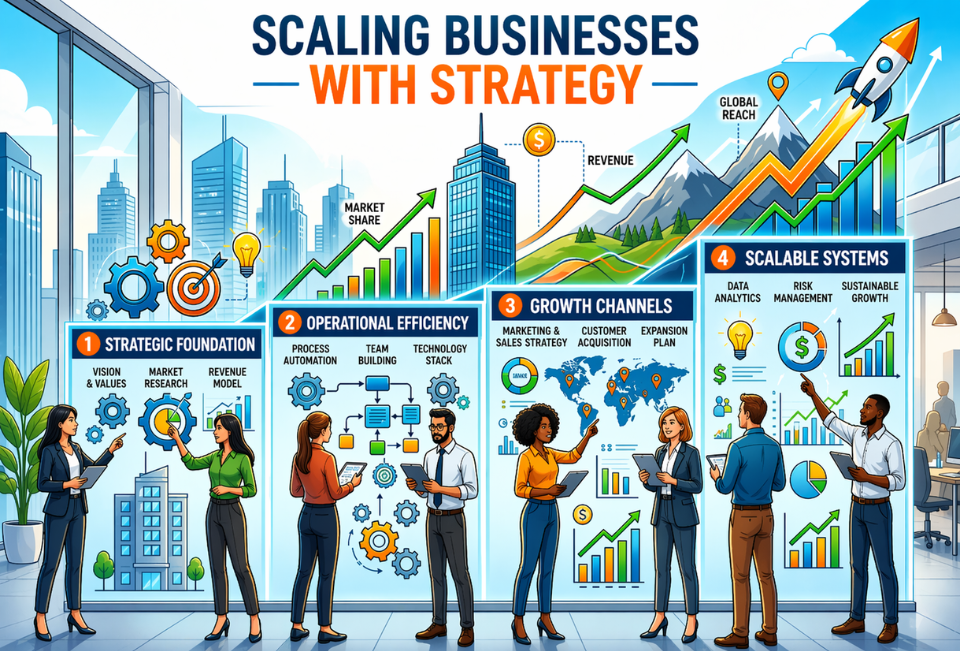
From my perspective, scaling is not about doing more – it’s about doing better with structure. Businesses that scale successfully are those that invest early in systems that support long-term expansion.

This includes:

  • Clear organizational structure
  • Repeatable processes
  • Scalable technology infrastructure
  • Strong leadership alignment

The goal is to create a framework where growth does not create chaos. Instead, growth should strengthen the system.

Scaling is not an event. It is a capability.

The Role of Systems and Processes

Turning Complexity into Repeatability

At the core of every scalable business is a set of well-designed systems. These systems ensure that operations remain consistent even as demand increases.

For example:

  • Sales processes must be standardized to maintain conversion rates
  • Customer support systems must scale without sacrificing quality
  • Product development cycles must remain efficient under pressure

Without these structures, growth becomes unpredictable. Systems bring clarity. Clarity enables speed. And speed, when supported by structure, becomes sustainable.

Leadership and Decision-Making at Scale

As businesses grow, leadership becomes less about direct execution and more about enabling others. Founders must transition from doing everything themselves to building teams that can operate independently.

This shift requires:

  • Trust in team members
  • Clear communication of vision and priorities
  • Defined decision-making frameworks

Leaders who fail to make this transition often become bottlenecks. Scaling requires decentralization – empowering teams while maintaining alignment.

The most effective leaders create environments where decisions can be made quickly without constant oversight.

Scaling Across Markets

Expanding into new markets is one of the most powerful growth strategies, but it also introduces complexity. Cultural differences, regulatory requirements, and customer expectations vary significantly across regions. Successful businesses adapt rather than replicate.

They understand that:

  • What works in one market may not work in another
  • Localization is essential for customer engagement
  • Operational models must evolve with geography

Global scaling is not about copying a blueprint. It is about applying principles in different contexts.

Balancing Speed and Stability

Avoiding the Trap of Overexpansion

One of the biggest risks in scaling is moving too fast without sufficient foundation. Rapid expansion can strain resources, weaken systems, and reduce overall performance.

Sustainable scaling requires balance:

  • Move fast enough to capture opportunity
  • Move carefully enough to maintain stability

This balance is not easy to achieve, but it is critical for long-term success. Short-term acceleration should never compromise long-term durability.

Technology as an Enabler of Scale

Modern businesses rely heavily on technology to scale efficiently. Automation, data analytics, and cloud infrastructure allow companies to handle increased demand without proportional increases in cost.

However, technology must be implemented thoughtfully. Poorly designed systems can create more problems than they solve.

Effective technology should:

  • Simplify operations
  • Improve visibility into performance
  • Enable faster decision-making

When aligned with business strategy, technology becomes a powerful growth multiplier.

Building for the Long Term

Scaling is not just about achieving bigger numbers – it’s about building a business that can endure. This requires focusing on fundamentals:

  • Strong customer relationships
  • Financial discipline
  • Continuous improvement
  • Adaptability to change

Businesses that prioritize these elements are better positioned to navigate uncertainty and maintain growth over time.

Conclusion: Scaling with Purpose

Scaling a business is one of the most challenging phases in its lifecycle. It demands more than ambition – it requires structure, discipline, and strategic thinking.

As Adrian Vanzyl, I believe the companies that succeed are those that treat scaling as a deliberate process rather than a byproduct of growth. They build systems before they need them, invest in leadership, and remain focused on long-term value.

Because in the end, scaling is not about getting bigger. It’s about becoming stronger.

Adrian Vanzyl’s Approach to Modern Online Marketing

Rethinking Online Marketing in a Digital-First World

In today’s fast-moving digital landscape, online marketing has evolved far beyond simple advertising and traffic generation. As Adrian Vanzyl, I’ve observed how the most effective strategies are no longer built on short-term campaigns but on systems that adapt, learn, and scale over time. The focus has shifted from visibility alone to meaningful engagement, data-driven decisions, and long-term brand positioning.

Modern online marketing is not about chasing attention. It’s about earning trust and sustaining it.

The Shift from Campaigns to Systems

Why Traditional Marketing Falls Short

Many businesses still rely on campaign-based thinking-launching ads, generating spikes in traffic, and then repeating the cycle. While this approach can deliver short-term results, it often lacks sustainability.

Modern marketing requires systems.

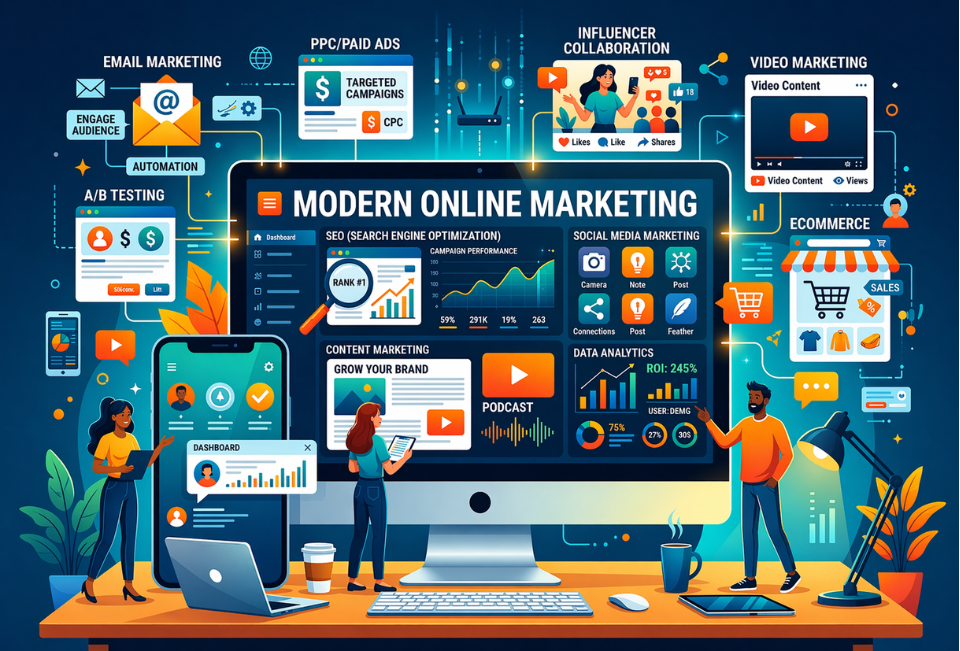
A system continuously attracts, converts, and retains users. It integrates content, analytics, automation, and user experience into a cohesive framework. This creates consistency, which is far more valuable than occasional bursts of success.

Businesses that build marketing systems outperform those that rely on isolated efforts.

Adrian Vanzyl’s View on Digital Growth Strategy

From my perspective, growth in online marketing is driven by clarity and structure. It begins with understanding the audience deeply-not just demographics, but behavior, intent, and decision-making patterns.

A strong strategy aligns three key elements:

  • Content that provides value
  • Channels that reach the right audience
  • Data that informs continuous improvement

Without alignment, marketing becomes fragmented and inefficient.

The goal is not to be everywhere, but to be effective where it matters most.

Content as a Long-Term Asset

Building Authority Through Value

Content is no longer optional-it is the foundation of modern online marketing. But not all content creates impact. The difference lies in relevance and consistency.

High-quality content:

  • Educates and informs
  • Solves real problems
  • Builds credibility over time

Instead of producing content for volume, the focus should be on depth and usefulness. Articles, videos, and insights that genuinely help users will naturally attract engagement and build trust. Over time, this creates a compounding effect.

Content becomes an asset that continues to deliver value long after it is published.

The Role of Data and Analytics

Data is what transforms marketing from guesswork into strategy. Every interaction-clicks, conversions, engagement-provides insight into what works and what doesn’t.

However, more data does not automatically mean better decisions. The key is interpretation.

Businesses should focus on meaningful metrics such as:

Vanity metrics like impressions or likes may look impressive but often lack actionable value. Effective marketing teams prioritize clarity over complexity.

Personalization and User Experience

Meeting Expectations in Real Time

Today’s users expect personalized experiences. Generic messaging is increasingly ignored. Technology now allows businesses to tailor content, offers, and communication based on individual behavior.

Personalization improves:

  • Engagement
  • Conversion rates
  • Customer satisfaction

But it must be done thoughtfully.

Over-personalization or misuse of data can erode trust. Transparency and user control are essential in maintaining a positive relationship.

Balancing Automation with Authenticity

Automation is a powerful tool in online marketing. It enables scalability, consistency, and efficiency. Email sequences, ad optimization, and customer journeys can all be automated to reduce manual effort. However, automation should not replace authenticity.

Users still respond to human connection. Messaging should feel genuine, not mechanical. The best strategies combine automation with a human voice. This balance is what creates both efficiency and trust.

Adapting to Continuous Change

Online marketing is constantly evolving. Algorithms change, platforms shift, and user behavior adapts. What works today may not work tomorrow.

The ability to adapt is critical.

For Adrian Vanzyl, the most successful marketers are those who treat change as an opportunity rather than a disruption. They test new ideas, learn from data, and refine their strategies continuously.

Flexibility is not optional-it is a core capability.

Conclusion: Building Marketing That Lasts

Modern online marketing is no longer about quick wins or isolated tactics. It is about building systems that deliver consistent, measurable, and scalable results over time.

The focus should always remain on:

  • Creating value
  • Understanding users
  • Using data intelligently
  • Maintaining authenticity

When these elements come together, marketing becomes more than promotion-it becomes a driver of long-term business growth.

For Adrian Vanzyl, the future of online marketing lies in thoughtful execution, disciplined strategy, and the ability to build systems that evolve with the digital world.

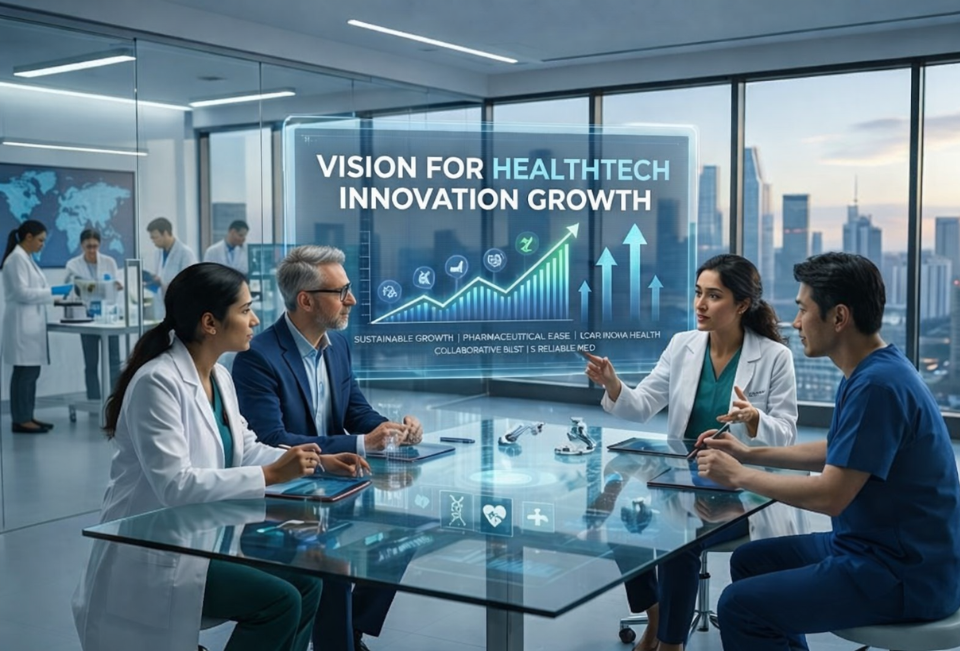
Adrian Vanzyl’s Vision for Healthtech Innovation Growth

The Future of Healthtech: Building Systems That Truly Scale

The intersection of healthcare and technology is no longer a distant concept – it is actively reshaping how we approach wellbeing, treatment, and long-term health. As Adrian Vanzyl, I’ve observed how healthtech is evolving from isolated innovations into integrated systems that influence entire populations. What makes this transformation powerful is not just the technology itself, but how it is applied with structure, intent, and long-term thinking.

Healthtech is not about disruption alone.

It is about building systems that improve outcomes sustainably.

From Treatment to Prevention

A Shift in Healthcare Thinking

Traditionally, healthcare systems have been reactive. Patients seek treatment after symptoms appear, and systems respond accordingly. Healthtech is gradually shifting this model toward prevention and early intervention.

Wearable devices, real-time monitoring, and data analytics now allow individuals and providers to detect risks before they become critical issues. This shift reduces long-term costs while improving quality of life.

The real innovation lies in moving from episodic care to continuous health management.

The Role of Data in Healthtech Growth

Data is the backbone of modern healthtech. Every interaction – from wearable metrics to clinical records – contributes to a broader understanding of human health.

But collecting data is not enough.

The value comes from interpretation.

Machine learning and analytics transform raw data into actionable insights. These insights help clinicians make better decisions, allow patients to understand their own health patterns, and enable systems to optimize care delivery.

However, data must be handled responsibly. Privacy, security, and ethical considerations are critical when dealing with sensitive health information.

Trust is foundational in healthcare.

Without it, even the most advanced systems fail to gain adoption.

Personalization at Scale

Tailored Healthcare Experiences

One of the most promising aspects of healthtech is personalization. Every individual is different – genetically, behaviorally, and environmentally. Technology allows healthcare to reflect that complexity.

Instead of generic treatment plans, systems can now recommend personalized interventions based on real-time data. Nutrition, exercise, medication, and lifestyle adjustments can all be optimized for the individual.

This is where healthtech begins to move beyond traditional medicine and into a more holistic model of wellbeing.

For Adrian Vanzyl, the opportunity lies in combining technological precision with human understanding to create systems that adapt over time.

Challenges in Scaling Healthtech

Despite its potential, healthtech faces several challenges that must be addressed for sustainable growth:

  • Regulatory complexity: Healthcare is heavily regulated, and compliance varies across regions
  • Data fragmentation: Systems often struggle to integrate information from multiple sources
  • Adoption barriers: Patients and providers may resist new technologies
  • Infrastructure limitations: Not all regions have equal access to advanced systems

These challenges highlight an important reality: innovation alone is not enough.

Execution matters.

Healthtech solutions must be designed with real-world constraints in mind. Simplicity, usability, and reliability are essential for widespread adoption.

Building Durable Healthtech Systems

Long-Term Thinking Over Short-Term Hype

The most impactful healthtech companies are not those chasing trends, but those building durable systems. This means focusing on:

  • Scalable architecture
  • Reliable data pipelines
  • User-centric design
  • Continuous improvement

Healthcare is a long-term domain. Solutions must remain effective not just for months, but for years – even decades.

This requires discipline in both product development and operational strategy.

Shortcuts rarely work in this space.

The Human Element in Healthtech

Technology can enhance healthcare, but it cannot replace the human element. Trust, empathy, and communication remain central to patient care.

Healthtech should empower professionals, not replace them.

Doctors, nurses, and caregivers bring context and judgment that machines cannot fully replicate. The goal is to augment their capabilities, allowing them to make better decisions with better information.

Balancing automation with human insight is one of the most important challenges in this field.

Looking Ahead: The Next Phase of Healthtech

The future of healthtech will likely be defined by integration. Systems will become more connected, data will flow more seamlessly, and decision-making will become increasingly intelligent.

We will see:

  • Greater use of predictive analytics
  • Expansion of remote care solutions
  • Improved interoperability between platforms
  • Increased focus on preventive health

For Adrian Vanzyl, the long-term opportunity lies in building systems that are not only innovative but also resilient – systems that adapt, learn, and continue to deliver value over time.

Conclusion: Growth Through Structure and Purpose

Healthtech represents one of the most significant opportunities in modern technology. But its success depends on more than innovation – it depends on execution, trust, and long-term vision.

Sustainable growth in this space comes from building systems that are reliable, scalable, and centered on real human needs.

The future of healthcare will not be defined by a single breakthrough.

It will be shaped by consistent progress, thoughtful design, and the ability to turn complex technology into meaningful outcomes.